
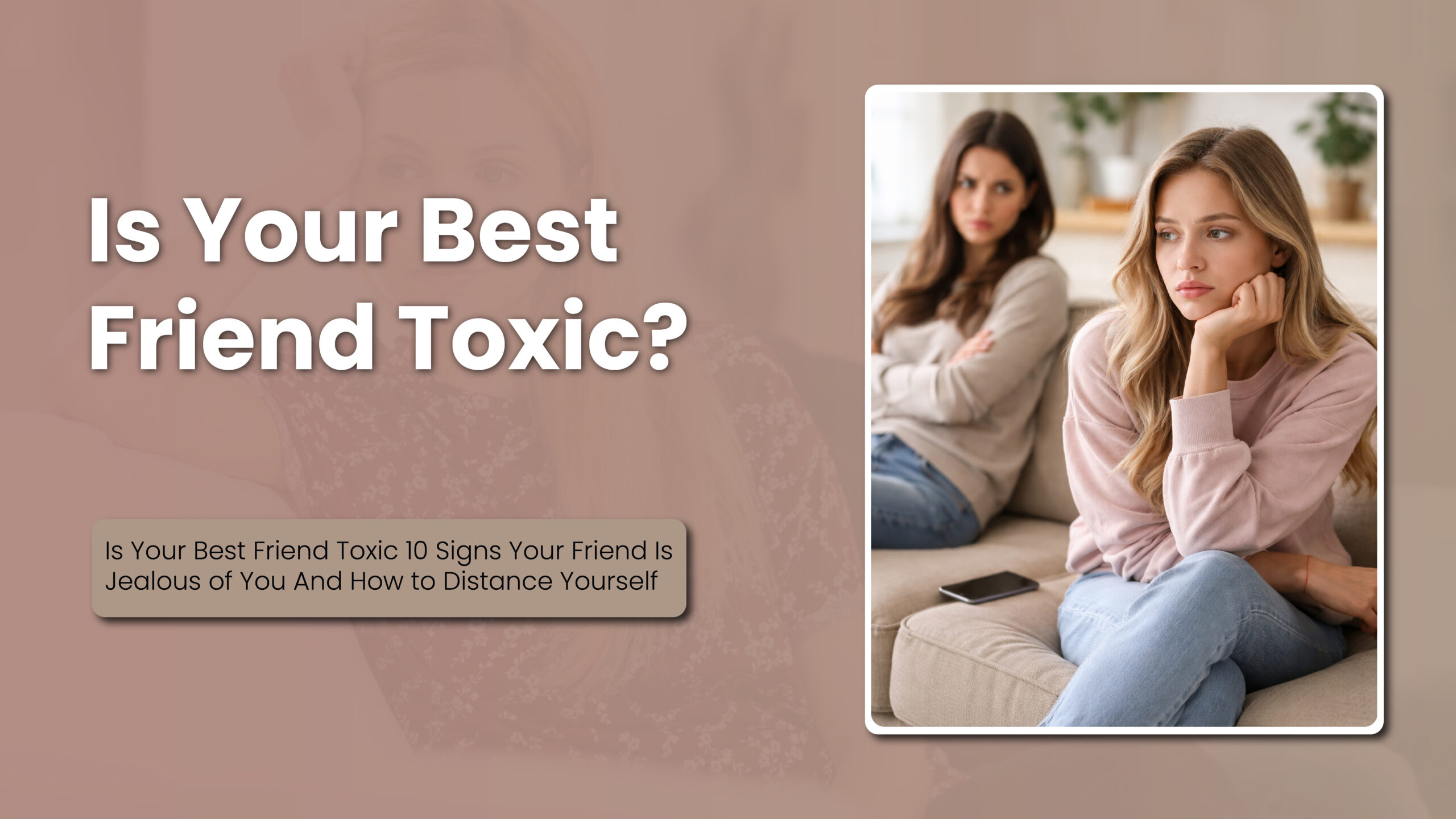
Is Your Best Friend Toxic? 10 Signs Your Friend Is Jealous of You And How to Distance Yourself
We often talk about heartbreaks in romantic relationships, but we rarely talk about the specific pain of a friendship breakup. The truth is that realizing you need to step away from a friend can be just as painful, if not more so, than a breakup with a partner. You might be reading this because you have a gut feeling that something isn’t right. Perhaps you leave coffee dates feeling drained instead of energized. Maybe you hesitate to share good news because you are afraid of their reaction. As the motivational speaker Jim Rohn famously said, “You are the average of the five people you spend the most time with.” If one of those people is bringing negativity into your life, it impacts your entire mindset. In this post, we will look at the clear signs of toxic friendship, specifically focusing on signs your friend is jealous of you, and provide a practical guide on how to distance yourself from a friend to protect your peace.
Understanding the Dynamic: Is It Toxicity or Just a Rough Patch?
Before we dive into the list, it is important to distinguish between a friend going through a hard time and a truly toxic dynamic. A friend who is grieving or stressed might be temporarily distant or irritable. That is normal. However, toxic friendship signs are chronic. They are patterns of behavior that consistently make you feel small, undervalued, or manipulated. Toxicity often stems from deep-seated insecurity. When a friend is unhappy with their own life, they may project that unhappiness onto you. This often manifests as jealousy.
10 Signs Your Friend Is Jealous of You (and Toxic)
If you are wondering if your dynamic is healthy, look out for these ten red flags.
The Backhanded Compliment
One of the most subtle signs your friend is jealous of you is the backhanded compliment. These are insults disguised as praise. They might say things like, “That dress is so brave for you,” or “I wish I could just relax and not work as hard as you do.” They want to appear supportive on the surface, but the underlying message is critical. This leaves you feeling confused and hurt, but if you confront them, they can easily claim they were just being nice.
They Minimize Your Achievements
When you get a promotion, get engaged, or achieve a personal goal, a real friend will celebrate with you. A toxic friend will find a way to make it seem insignificant. They might say, “Well, they were promoting everyone this year,” or “It’s about time that happened.”
Oprah Winfrey once said, “Lots of people want to ride with you in the limo, but what you want is someone who will take the bus with you when the limo breaks down.” A toxic friend is the opposite; they might be there for the bad times, but they cannot handle your success because it highlights their own insecurities.
Everything Is a Competition
Healthy friendship is a partnership. Toxic friendship is a competition. If you mention you have a headache, they have a migraine. If you went on a vacation, they went on a better one. They constantly feel the need to “one-up” you. This constant need to be superior is one of the classic toxic friendship signs.
They Are Absent During Your “Wins”
Pay close attention to who disappears when you are happy. You might notice that this friend is incredibly supportive when you are going through a breakup or a job loss. They love playing the role of the “savior” because it makes them feel superior. However, the moment you are back on your feet and thriving, they pull away or become cold. They prefer you when you are struggling.
They Copy You Excessively
Imitation is said to be the highest form of flattery, but in a toxic dynamic, it can feel like identity theft. If your friend buys the exact same clothes, changes their hair to match yours, or starts adopting your mannerisms immediately after you do, it can be a sign of obsession and jealousy. They want your life, but they don’t necessarily want you to be in it.
They Reveal Your Secrets
Trust is the foundation of any bond. If you find out that your friend has been sharing your personal struggles with others, it is a major betrayal. Often, toxic friends gossip about you to others to lower your social standing or to make themselves look like the “stable” one.
The Relationship Is One-Sided
Do you know everything about their problems, but they know nothing about yours? In a toxic dynamic, you are used as an unpaid therapist. You spend hours listening to their drama, but the moment you try to talk about your feelings, they check their phone, change the subject, or dismiss you.
They “Gaslight” You
Gaslighting is a manipulation tactic where someone makes you question your reality. If you tell them they hurt your feelings, they might say, “You are too sensitive,” or “I never said that, you are imagining things.” This is a defense mechanism to avoid taking responsibility for their actions.
They Are Possessive and Isolating
Jealousy isn’t just about material things; it can be about your time. A toxic friend might get angry if you hang out with other people. They might try to make you feel guilty for having other friends or spending time with your partner. This is an attempt to isolate you so that you rely only on them.
You Feel Relieved When Plans Are Cancelled
This is the ultimate gut check. When you see a text saying they can’t make it to dinner, do you feel disappointed? Or do you feel a massive wave of relief? If your body relaxes when you realize you don’t have to see them, it is a clear sign that the friendship is a source of stress, not joy.
How to Distance Yourself From a Friend
Once you have identified the signs, the next step is taking action. This is the hard part. You might be wondering how to distance yourself from a best friend whom you have known for years. The approach depends on how safe you feel and how deep the friendship is. Here are three strategies on how to distance yourself from a friend, ranging from subtle to direct.
Strategy 1: The “Slow Fade” (Non-Confrontational)
This is the best method if you are wondering e strategies on how to distance yourself from a frie them excessively. It works well for casual friends or if you want to avoid a dramatic blow-up.
- Stop Initiating: Stop being the first one to text or call. Match their energy. If they take three days to reply, you take three days to reply.
- Be “Busy”: You do not need to lie, but you can prioritize other things. Fill your schedule with hobbies, work, and other friends. When they ask to hang out, you can genuinely say, “I’ve got a lot on my plate right now, so I can’t meet up this week.”
- Keep Conversations Surface Level: Stop sharing your deep secrets or big wins with them. Talk about the weather, a TV show, or general news. By removing the emotional intimacy, the friendship naturally cools down.
Strategy 2: The Boundary Setting (Direct but Kind)
If you are dealing with a close friend, the slow fade might be confusing for them. In this case, you need to set clear boundaries. You can say, “I have been feeling really overwhelmed lately and I need to take some time to focus on myself and recharge.” This uses “I” statements, which makes it about your needs rather than their bad behavior. This is a mature way to learn how to distance yourself from a friend without hurting them intentionally. You are not attacking them; you are protecting your energy.
Strategy 3: The Clean Break (For High Toxicity)
If the person is manipulative, abusive, or actively sabotaging your life, you do not owe them a polite exit. You need to learn how to distance yourself from a best friend who has become an enemy. In this scenario, a direct conversation is often necessary to provide closure for yourself. You can say, “I value the history we have, but I don’t feel like this friendship is healthy for me anymore. I think it is best if we take some space.” After this, it is okay to mute or unfollow them on social media to prevent yourself from checking up on them.
Handling the Guilt
Walking away from a friend is incredibly difficult. You will likely feel guilty. You might wonder if you are being too harsh. Remind yourself that you are not doing this to punish them; you are doing it to save yourself. As the poet Hans F. Hansen said, “People inspire you, or they drain you. Pick them wisely.” You have a limited amount of emotional energy every day. If you spend it all defending yourself against jealousy or negativity, you have nothing left for your goals, your family, or your healthy friendships.
Moving Forward
Recognizing toxic friendship signs is a sign of growth. It means you have developed enough self-worth to know that you deserve to be treated with respect. When you learn how to distance yourself from a friend who is bringing you down, you create a vacuum in your life. At first, that space might feel lonely. But eventually, that space will be filled with people who celebrate your wins, support you during your losses, and truly want the best for you. Remember, friendship should be a safe harbor, not a storm. If you are constantly fighting to stay afloat, it is time to swim to shore.


