
Your washing machine works hard every week, yet it is easy to forget that it needs a wash of its own. When clothes come out smelling less than fresh, the machine is often the reason, not your detergent. A quick monthly clean can bring back that fresh laundry smell and help your machine run better for longer.
You do not need fancy products for great results. White vinegar, baking soda, a soft cloth and a little time are enough.
To clean a washing machine, wipe the rubber seal and detergent drawer, then run an empty hot water cycle with two cups of white vinegar, followed by a second empty hot water cycle with half a cup of baking soda. Finish by wiping the drum, cleaning the filter, and leaving the door open to dry completely.
Why Does Your Washing Machine Smell Bad?
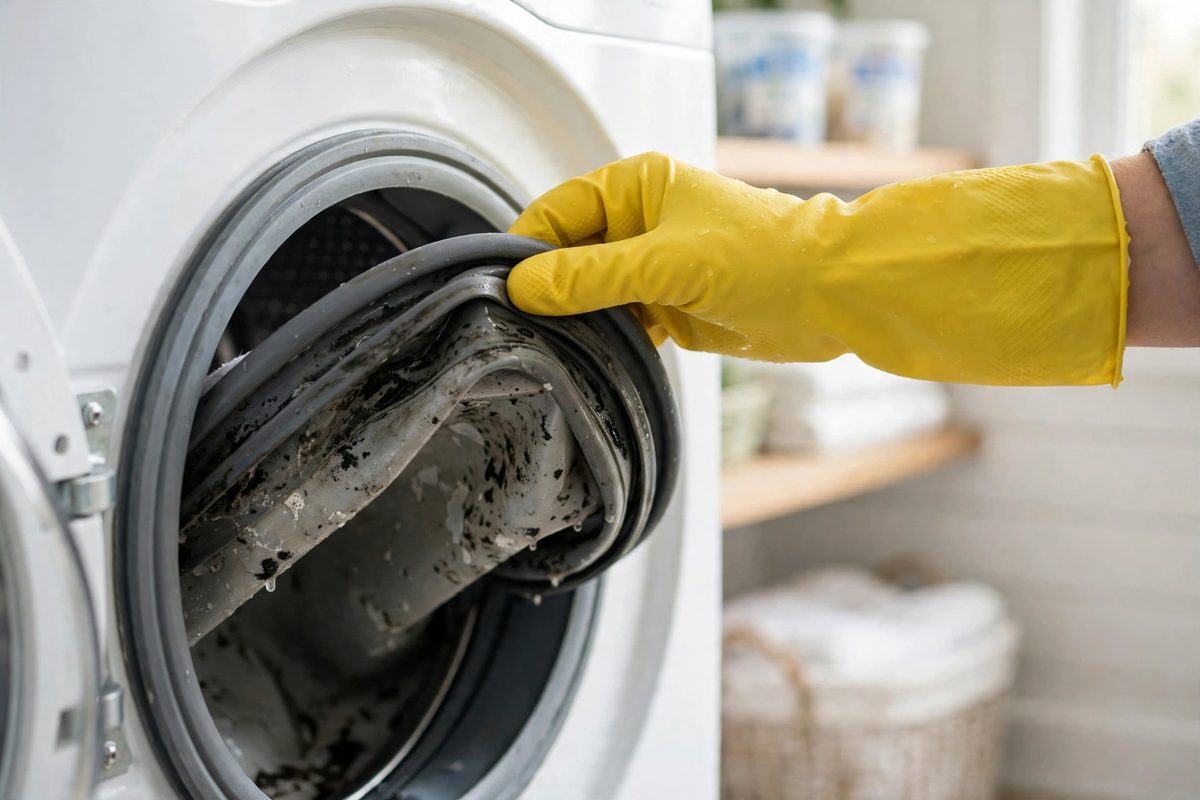
Your washing machine smells bad because detergent residue, fabric softener, lint and moisture collect in warm hidden places and allow mould and mildew to grow. Every wash leaves a little soap behind, and that film builds up over time. Warm water and a closed door create the perfect damp home for odour.
The rubber seal is a main culprit in a front loader, because water and lint settle into its folds. The drawer, filter and drum also trap lint and hair that can turn stale.
Hard water can make it worse, because mineral deposits give residue more surface to cling to. The same patient approach that helps you learn how to clean grout also helps here, so focus on damp corners, rinse well, and let surfaces dry fully.
What Do You Need to Clean a Washing Machine?
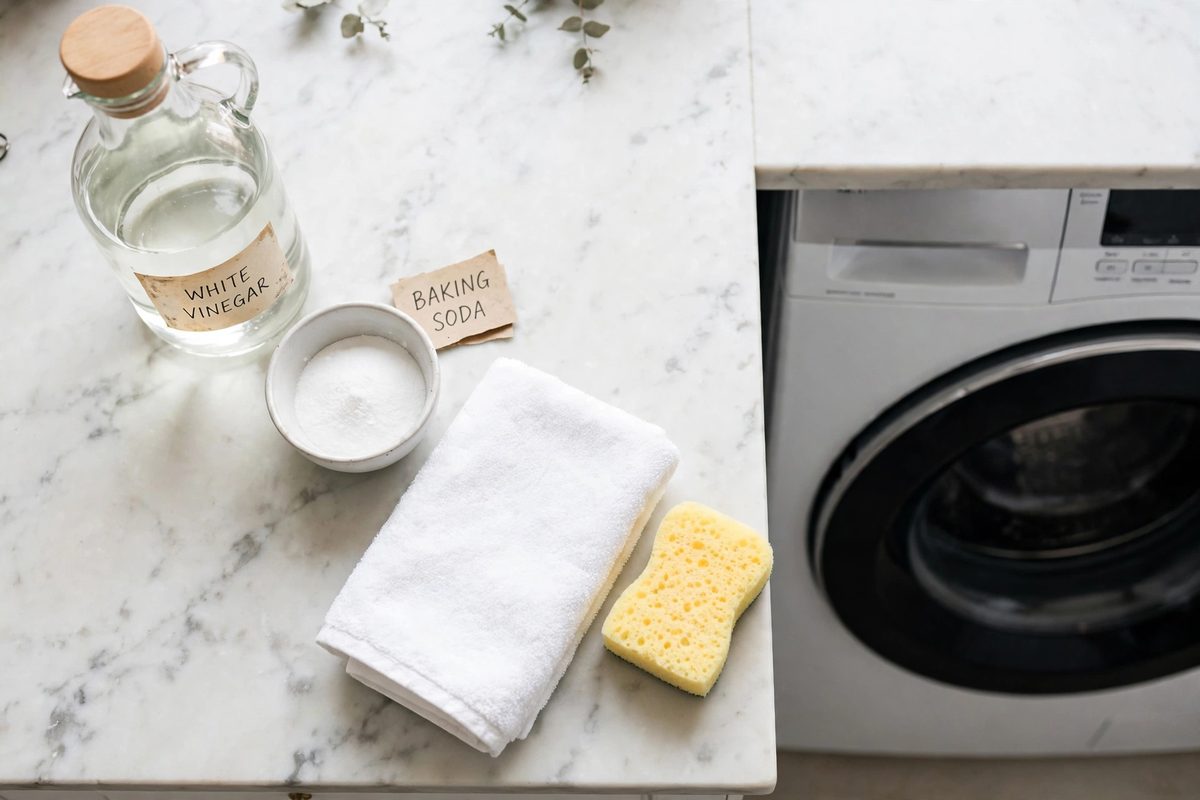
You need white vinegar, baking soda, a soft cloth or sponge, an old toothbrush, mild dish soap and a towel. These simple supplies handle most buildup without harsh chemicals. You probably have most of them in your kitchen already.
- White vinegar: two cups to loosen residue and freshen the drum.
- Baking soda: half a cup to deodorise the drum.
- Soft cloths: for wiping the seal, drum and lid without scratching.
- Old toothbrush: for the drawer, seal folds and small corners.
- Mild dish soap: for washing the drawer and filter.
- Clean towel: for drying the seal, drawer and drum.
White vinegar is also useful for mineral buildup around taps, and you can use a similar gentle approach when you learn how to remove hard water stains from faucets and showerheads. Avoid harsh scouring pads, since they can damage rubber seals and plastic parts.
How Do You Clean a Front Loader Washing Machine?
You clean a front loader washing machine by wiping the seal and drawer first, then running two empty hot cycles, one with vinegar and one with baking soda, and finishing with the drum and filter. Work through the steps in order, so loose grime is removed before the cycles do their work.
- Wipe the rubber door seal. Pull back the folds and wipe inside each one with a cloth dipped in equal parts white vinegar and warm water.
- Clean the detergent drawer. Pull it out, rinse it under warm water, scrub it with dish soap and a toothbrush, then dry it and wipe the empty slot.
- Run a vinegar cycle. Pour two cups of white vinegar into the drum and run the hottest and longest cycle with the machine empty.
- Run a baking soda cycle. Sprinkle half a cup of baking soda into the drum and run a second empty hot cycle to lift buildup and freshen the drum.
- Wipe the drum and the door. Wipe the drum, door glass and seal edge with a clean soft cloth, then leave the door open until everything feels dry.
- Clean the filter. Place a towel under the filter cover, unscrew the filter, remove lint, rinse it with warm water and soap, then put it back firmly.
How Do You Clean a Top Loader Washing Machine?
You clean a top loader washing machine by filling it with hot water and vinegar, letting it soak, wiping the drum and agitator, and then running a baking soda cycle. The soak time does most of the work for you.
- Fill the drum with hot water and vinegar. Set the largest load size and hottest water, start an empty cycle, add two cups of white vinegar, and let it agitate for a minute.
- Let the mixture soak. Pause the cycle and let the hot vinegar water sit for about one hour to loosen residue from the drum and agitator.
- Wipe the agitator and the drum. Wipe the agitator, drum walls and rim with a soft cloth, and use a toothbrush for the dispenser and small grooves.
- Run a baking soda cycle. Fill the drum again with hot water, add half a cup of baking soda, and run a full hot cycle with the machine empty.
- Wipe the rim, lid and dispenser. Wipe the rim, the underside of the lid and the dispenser, rinse the lint filter if your model has one, and leave the lid open to dry.
How Often Should You Clean Your Washing Machine?
You should clean your washing machine once a month if you use it several times a week, and every two months at the least if you use it less often. Monthly cleaning stops residue from building up to the point where it causes a smell.
Watch for signs that it needs attention sooner. A musty smell, dark marks on the seal, or clothes that smell stale straight from the wash are all clear signals.
How Do You Keep a Washing Machine Fresh Between Cleans?
You keep a washing machine fresh between cleans by leaving the door open after each wash, using the right amount of detergent, and wiping the seal and drawer often. These small habits stop moisture and soap from settling in the first place.
- Leave the door or lid open after every wash, so air can dry the drum fully.
- Use the right amount of detergent, since excess soap leaves a film that feeds odour.
- Remove laundry promptly, because wet clothes left in the drum can transfer a stale smell.
- Wipe the seal and drawer once a week with a dry cloth to stop residue settling into folds.
- Run a hot wash now and then with towels or bedding to flush the drum and pipes.
Fresh clothes also stay fresher when stains are treated promptly, so it helps to know how to remove makeup stains from clothes before they set into fabric and add odour to the next load.
Frequently Asked Questions About Cleaning a Washing Machine
Can I Use Vinegar and Baking Soda Together in One Cycle?
No, use vinegar and baking soda in separate cycles, not mixed together in one cycle. Vinegar is acidic and baking soda is alkaline, so they neutralise each other, and each works best on its own.
Will Vinegar Damage My Washing Machine?
White vinegar is safe for most machines in an occasional cleaning cycle, and it is gentler than harsh chemical cleaners. Use two cups in an empty hot cycle once a month, and never mix vinegar with bleach.
Why Does My Washing Machine Still Smell After Cleaning?
Residue may be hiding in the seal folds, drawer, filter or drain hose. Check each place again, scrub it with a toothbrush, repeat the vinegar cycle if the smell is strong, and leave the door open to dry.
Can I Use Bleach to Clean My Washing Machine?
Use bleach only if your manual allows it, and use it sparingly as a last resort. Never mix bleach with vinegar or other cleaners, since that can create dangerous fumes.
Conclusion
A clean washing machine is the quiet secret behind fresh laundry, and it takes less effort than most people expect. With white vinegar, baking soda and a little wiping, you can remove residue, freshen the drum and stop smells before they start.
Start with your next empty cycle, and make the monthly clean a small habit in your home care routine. Your clothes will smell fresher, and your machine will rinse better.
Key takeaways:
- Clean once a month with two empty hot cycles, vinegar first, then baking soda.
- Wipe the seal, drawer and drum each time, and leave the door open to dry.
- Clean the filter regularly, since trapped lint often causes stale smells.
- Use the right amount of detergent and remove laundry promptly.
- Repeat the vinegar cycle if a smell lingers, and check hidden spots again.