
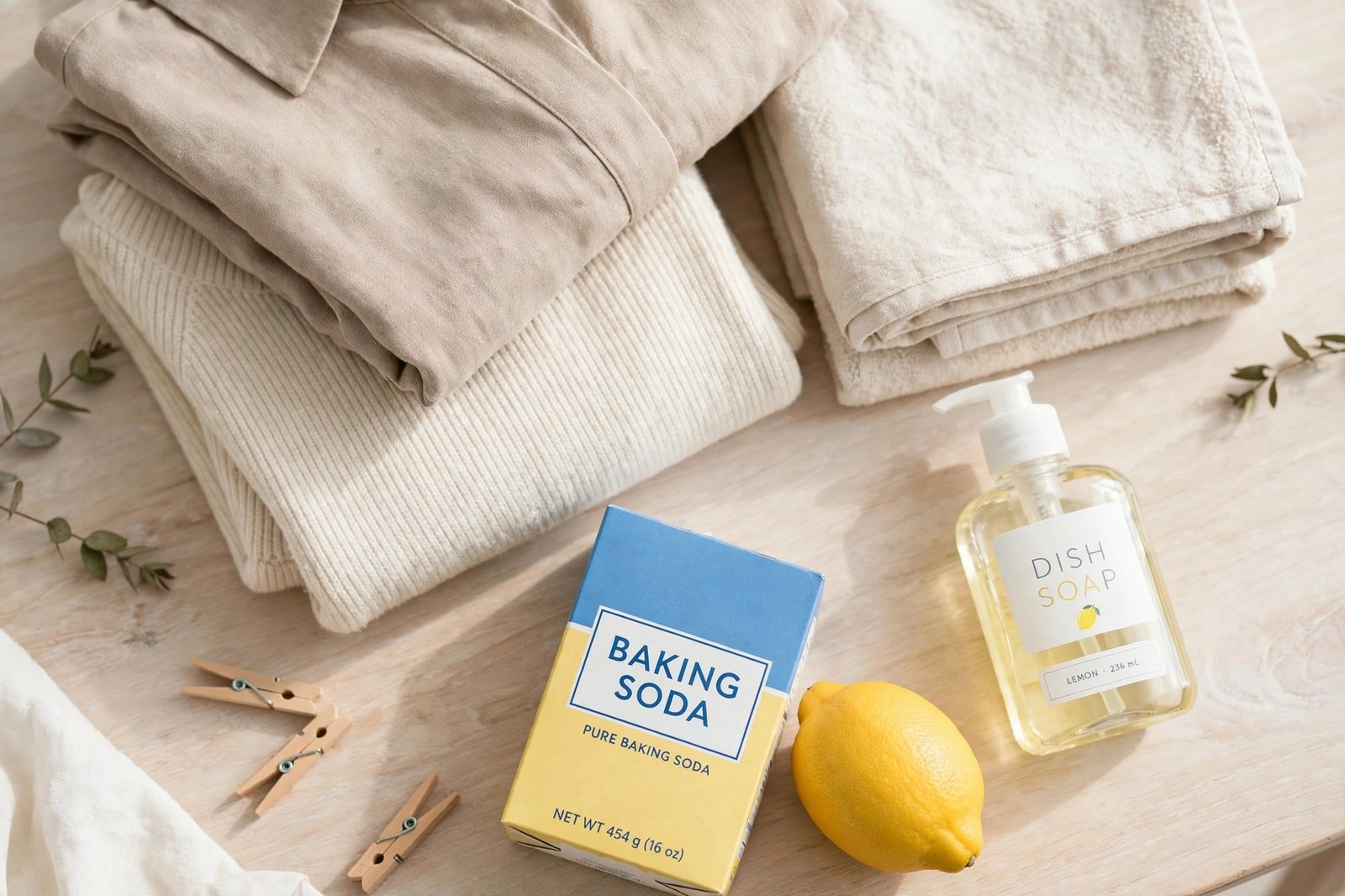
A splash of cooking oil, a drip of salad dressing, or a smear of butter can ruin a favorite shirt in seconds. Oil stains look small at first, then spread into a dark patch that seems to laugh at your washing machine. The good news is that most oil stains come out completely when you treat them the right way, and you probably already own everything you need.
The trick is speed plus the right product. Oil repels water, so a normal wash cycle alone rarely lifts it. You need something that breaks oil down or soaks it up before the wash. This guide walks you through seven methods that actually work, from the classic dish soap fix to a gentle soak for delicate fabrics.
To remove oil stains from clothes, blot the stain, cover it with baking soda or cornstarch for 30 minutes, then rub in a few drops of dish soap and rinse with the hottest water the care label allows. Repeat if a shadow remains, and never use the dryer until the stain is gone, because heat sets oil permanently.
What Makes Oil Stains So Hard to Remove?
Oil and water do not mix, and that simple fact is why oil stains fight back. Water based stains dissolve and rinse away, but oil clings to fabric fibers and pushes water aside. A quick rinse under the tap does almost nothing, and a regular wash may only spread the oil into a wider, fainter patch.
Heat makes the problem worse. Once an oil stain goes through a hot dryer, the oil bonds deeper into the fibers and becomes far harder to lift. That is why the golden rule of oil stain removal is simple: treat first, dry later. If you are not sure the stain is gone, air dry the garment and check it in good light before it ever sees the dryer.
What Should You Do First When Oil Hits Your Clothes?

Act fast, but stay calm. The first few minutes decide whether the stain becomes a quick fix or a long project. Follow these four steps before you reach for any cleaner.
- Blot the stain gently with a clean cloth or paper towel. Press down and lift, and never rub, because rubbing pushes oil deeper into the fibers.
- Scrape off any thick residue with a spoon or a dull knife. Work from the outside edge toward the center so the stain does not spread.
- Cover the stain generously with an absorbent powder such as baking soda, cornstarch, or baby powder. Let it sit for at least 30 minutes so it can pull oil out of the fabric.
- Check the care label. Delicate fabrics and dry clean only garments need a gentler approach, which we cover below.
Which 7 Methods Remove Oil Stains Best?
Every method below works on fresh stains, and most also work on stains that have already been washed once. Start with method 1, the most reliable all rounder, and move down the list only if a shadow remains. Always test a new product on a hidden seam first when you are treating a colored or delicate garment.
Method 1: Dish Soap

Dish soap is made to cut grease on plates, and it does the same job on fabric. After you have blotted and powdered the stain, apply a few drops of clear dish soap directly onto it. Rub the soap in gently with your fingers or a soft toothbrush, then let it sit for 10 to 15 minutes. Rinse with the hottest water the care label allows, then wash as usual. This method alone removes most fresh cooking oil, butter, and salad dressing stains.
Method 2: Baking Soda Paste
Baking soda works twice: first as a dry powder that absorbs oil, then as a paste that lifts what is left. Mix three parts baking soda with one part water to form a thick paste. Spread it over the stain and leave it for 30 minutes, or overnight for a stubborn mark. Brush off the dried paste, then wash the garment in the warmest water the label allows. Baking soda is safe for most fabrics and also helps with odors.
Method 3: Cornstarch or Baby Powder
Cornstarch and baby powder are the quiet heroes of oil stain removal. Sprinkle a thick layer over a fresh stain and leave it for at least 30 minutes, or several hours for a heavy spill. The powder draws oil out of the fibers as it sits. Brush it off, then follow with dish soap and a normal wash. This is the best first step for silk, wool, and other fabrics you do not want to soak.
Method 4: White Vinegar Soak
White vinegar helps break down light oil stains and works well as a pre wash soak. Mix one part white vinegar with two parts cool water, then soak the stained area for 30 minutes. Rinse, apply a drop of dish soap, and wash as usual. Avoid vinegar on silk and acetate, and never mix vinegar with bleach in the same wash.
Method 5: White Chalk
Plain white chalk absorbs oil in the same way powder does, and it is perfect for small spots on work shirts and blouses. Rub the chalk firmly over the stain until it is well coated, then let it sit for 10 minutes. Brush off the chalk dust and wash normally. Keep a stick of chalk in your laundry cupboard and you will never be caught out by a lunch break spill again.
Method 6: Commercial Stain Remover
A good laundry stain remover spray or stick is worth keeping on hand for stains you discover late. Spray or rub it into the stain, wait the time stated on the bottle, usually 5 to 10 minutes, then wash in the warmest water the label allows. Enzyme based stain removers are especially effective on food oil because they break down the fats that hold the stain in place.
Method 7: Oxygen Based Soak
For white clothes and colorfast fabrics, an oxygen based soak can finish what other methods started. Dissolve oxygen bleach powder in warm water following the packet directions, then soak the garment for 1 to 6 hours. Rinse and wash as usual. This method is safe for colors when the product says color safe, and it brightens whites at the same time. Never use chlorine bleach on an oil stain, because it can set the mark and damage the fabric.
How Do You Remove Oil Stains from Delicate Fabrics?

Silk, wool, cashmere, and dry clean only garments need a light touch. Start with cornstarch or baby powder and leave it for several hours, then brush it off gently. If a mark remains, dab a tiny amount of dish soap diluted in cool water onto the stain with a clean cloth, working from the outside in. Rinse by dabbing with a damp cloth, never by soaking the whole garment. For valuable or sentimental pieces, take the garment to a dry cleaner and point out the stain before they begin, because a professional solvent treatment is safer than a home experiment.
What If the Stain Survived the Wash?
Do not panic, and above all do not put the garment in the dryer. Check the fabric in daylight after it air dries, because a damp stain can hide. If you can still see a shadow, repeat the dish soap treatment and wash again. For stains that have already been through the dryer, soak the garment in warm water with dish soap for an hour before washing, and repeat the cycle two or three times if needed. Most set in stains fade with patience, though a stain that has been dried many times may only lighten rather than vanish completely. If your washer itself needs attention before you tackle laundry day, read our guide on how to clean a washing machine so your machine is not working against you.
Key Takeaways
- Blot oil stains right away, never rub them, and cover them with an absorbent powder first.
- Dish soap is the most reliable single treatment for fresh oil stains on everyday fabrics.
- Baking soda, cornstarch, and white chalk all absorb oil before washing and suit delicate fabrics.
- Never put a stained garment in the dryer until the stain is completely gone.
- Repeat the treatment rather than reaching for harsher chemicals, because patience beats force with oil.
Frequently Asked Questions
Can you remove an oil stain after it has been dried?
Yes, often you can, but it takes more work. Soak the garment in warm water with dish soap for an hour, then apply dish soap directly to the stain and wash in the hottest water the label allows. Repeat the process two or three times. A stain that has been dried many times may only fade, not disappear completely.
Does dish soap really remove oil from clothes?
Yes, dish soap is one of the most effective home treatments for oil stains. It is designed to break down grease, so it cuts through cooking oil, butter, and salad dressing on fabric. Use a clear, dye free dish soap, rub it in gently, let it sit for 10 to 15 minutes, then rinse and wash as usual.
How long should baking soda sit on an oil stain?
Leave dry baking soda on a fresh stain for at least 30 minutes, or several hours for a heavy spill. As a paste, 30 minutes is usually enough, though an overnight paste works better on stubborn marks. Brush off the powder completely before washing so it does not leave a residue.
Will vinegar damage colored clothes?
White vinegar is generally safe for most colored clothes when diluted, but always test it on a hidden seam first. Use one part vinegar to two parts cool water and soak for no more than 30 minutes. Avoid vinegar on silk and acetate, and keep it away from bleach.
Conclusion
Oil stains feel like a disaster in the moment, but they are one of the most fixable laundry problems you will face. Blot first, absorb the oil with powder, treat with dish soap, and wash in the warmest water the care label allows. Keep the dryer out of the picture until the stain is gone, and repeat the treatment if a shadow lingers. With these seven methods in your back pocket, a splash of oil is a small detour, not the end of a favorite garment. And if the stain came from a kitchen mishap, our guide on how to clean an air fryer will help you keep the source of the mess spotless too. A clean laundry area helps as well, so see how to remove hard water stains to keep your taps and showerheads looking as fresh as your clothes.


