
The Killing Stalking Manhwa: Story Overview Without Spoilers
If you’ve been exploring the world of Korean webcomics, you’ve likely encountered discussions about Killing Stalking. This psychological thriller manhwa has generated significant attention and sparked countless conversations among readers worldwide. In this comprehensive guide, we’ll explore what makes this series so talked about while keeping the experience spoiler-free for those interested in reading it.
What is Killing Stalking?
Killing Stalking is a South Korean manhwa (digital comic) created by Koogi that was serialized from 2016 to 2019. The series falls into the psychological horror and thriller genres, presenting a dark and disturbing narrative that explores complex psychological themes. Unlike typical romance or action manhwa, Killing Stalking ventures into mature territory that examines the darker aspects of human psychology and behavior.
The manhwa consists of four seasons with a total of 67 chapters. It gained international recognition through various online platforms, attracting readers who appreciate psychological narratives that challenge conventional storytelling. The series is definitely not for everyone, as it contains mature themes and disturbing content that requires reader discretion.
Killing Stalking Summary: The Basic Premise
Without diving into spoilers, Killing Stalking centers around two main characters: Yoon Bum and Oh Sangwoo. Yoon Bum is a young man with a troubled past who develops an unhealthy obsession with his former classmate, Oh Sangwoo. What begins as stalking behavior takes a dramatic turn when Yoon Bum breaks into Sangwoo’s home, only to discover that Sangwoo harbors dark secrets of his own.
The story unfolds as a psychological cat-and-mouse game between these two deeply troubled individuals. The narrative explores themes of obsession, trauma, mental illness, and the complex dynamics that develop between the characters. The manhwa presents a disturbing portrait of dysfunctional relationships and psychological manipulation.
It’s important to note that Killing Stalking is not a romance story, despite some misconceptions. The creator has explicitly stated that the relationship depicted should not be romanticized. Instead, the series serves as a psychological exploration of damaged individuals and the toxic dynamics that can emerge from trauma and mental illness.
The Killing Stalking Cover Art and Visual Style
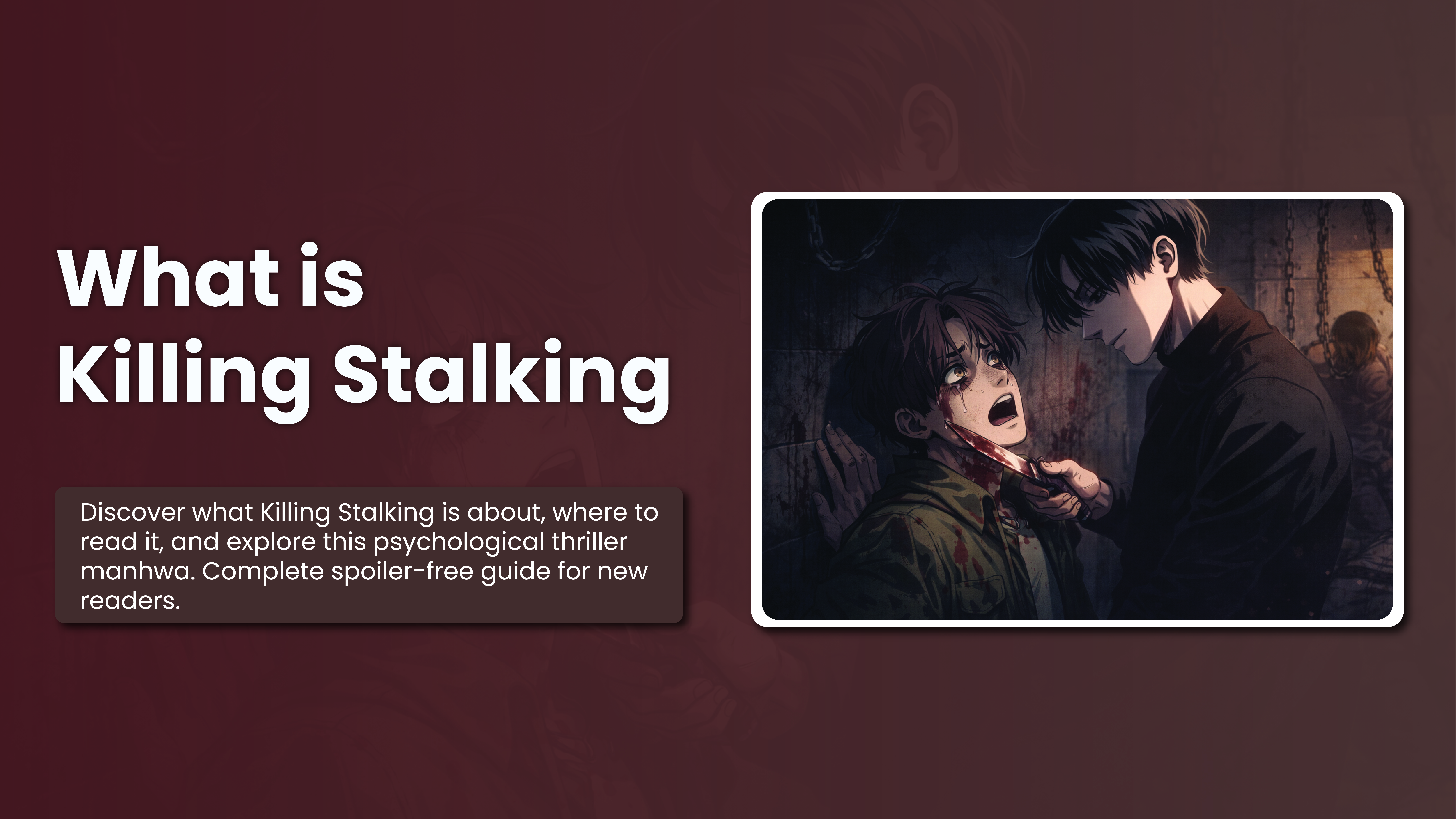
One aspect that draws readers to the series is its distinctive visual presentation. The Killing Stalking cover art for various chapters features striking imagery that reflects the dark tone of the story. Koogi’s art style effectively conveys the psychological tension and horror elements throughout the narrative.
The artwork evolves throughout the series, with detailed character expressions that convey complex emotions and psychological states. The visual storytelling complements the written narrative, creating an immersive experience that heightens the tension and unease that permeates the story. The use of color, shading, and panel composition all contribute to the oppressive atmosphere that defines Killing Stalking. The art doesn’t shy away from depicting disturbing scenes, which contributes to the manhwa’s reputation as a challenging and mature work.
Understanding the Genre: Stalking a Killer Theme
The concept of stalking a killer represents a reversal of typical thriller narratives. Instead of following a detective or victim, Killing Stalking places readers in the perspective of someone who stalks another person, only to discover that the target of their obsession is far more dangerous than anticipated.
This unique premise creates a complex narrative dynamic where traditional roles of predator and prey become blurred. The story examines what happens when two people with severe psychological issues become entangled in each other’s lives. Neither character fits neatly into the category of hero or villain, which adds layers of complexity to the narrative. The manhwa doesn’t glorify or justify the actions of its characters. Instead, it presents them as deeply flawed individuals whose past traumas and mental health issues drive their disturbing behavior. This approach creates a narrative that’s as uncomfortable as it is compelling.
Killing Stalking Where to Find: Reading Options
For those interested in reading Killing Stalking, there are legitimate platforms where you can access the manhwa. The series was officially available on Lezhin Comics, a Korean digital comics platform that offers both Korean and English translations.
Supporting official releases ensures that creators like Koogi receive proper compensation for their work. While unofficial sources may exist, using legitimate platforms helps support the manhwa industry and enables creators to continue producing content. Some readers may find physical copies or compiled volumes available through various retailers, though availability can vary by region. Checking official distributors and licensed platforms is always the best approach for accessing the series legally.
The Psychological Depth of the Narrative
What sets Killing Stalking apart from typical thriller stories is its commitment to exploring psychological complexity. The manhwa delves into topics like childhood trauma, PTSD, obsessive behavior, and the long-term effects of abuse. These elements are woven throughout the narrative, providing context for character actions without excusing them.
The story raises questions about the nature of victimhood and perpetration, showing how these roles can be fluid and complex. Characters are presented with psychological depth that makes them feel disturbingly human despite their actions. This realism is part of what makes the manhwa so unsettling for many readers. Koogi demonstrates a nuanced understanding of psychological disorders and trauma responses, though readers should remember that this is a work of fiction and not a clinical examination. The manhwa uses these elements to build its narrative rather than to educate about mental health.
Content Warnings and Mature Themes
Before diving into Killing Stalking, potential readers should be aware of the mature content present throughout the series. The manhwa contains graphic violence, depictions of abuse, sexual content, and disturbing psychological scenarios. It’s rated for mature audiences and includes content that many readers may find deeply uncomfortable or triggering.
The series doesn’t use these elements for shock value alone but incorporates them as integral parts of the story’s exploration of trauma and dysfunction. However, this doesn’t make the content any less intense or potentially disturbing. Readers should honestly assess their comfort levels with dark psychological content before starting the series. The manhwa has sparked discussions about the responsibility of creators when depicting sensitive topics and the importance of distinguishing between portrayal and endorsement. Killing Stalking presents disturbing content without glorifying it, but it remains challenging material that isn’t suitable for all audiences.
How Does Killing Stalking End?
Without revealing specific spoilers, the ending of Killing Stalking has been a topic of much discussion among readers. The series concludes in a way that stays true to its dark psychological roots, offering resolution to the character arcs while maintaining the unsettling tone that defines the manhwa.
Some readers found the conclusion satisfying as a natural endpoint for the narrative, while others had mixed feelings about how certain elements were resolved. The ending sparked considerable debate in online communities, with varied interpretations of the final events and their significance.
What can be said without spoiling is that the conclusion addresses the major narrative threads established throughout the series and provides a definitive ending rather than leaving things open-ended. Whether readers find it satisfying often depends on their expectations and interpretation of the story’s themes.
Killing Stalking Anime Series: Will It Happen?
One frequent question among fans is whether Killing Stalking will receive an anime adaptation. As of now, there has been no official announcement regarding a Killing Stalking anime series. The manhwa’s extremely mature content and disturbing themes would present significant challenges for animation adaptation.
While anime adaptations of dark psychological series do exist, Killing Stalking’s particular content might prove too controversial for mainstream animation studios. The explicit nature of various scenes and the overall dark tone would require careful handling to adapt appropriately.
Despite fan interest in seeing an animated version, the likelihood of an anime adaptation remains uncertain. The series may be better suited to its original manhwa format, where readers can pace themselves through the challenging content.
The Cultural Impact and Community Reception
Since its release, Killing Stalking has developed a substantial international following. The series has inspired countless discussions, fan theories, and analyses exploring its themes and characters. Online communities dedicated to the manhwa have formed across various platforms, where readers share their interpretations and reactions. The series has also sparked important conversations about media literacy, the difference between depicting problematic content and endorsing it, and the responsibility of both creators and consumers when engaging with dark narratives. These discussions highlight how challenging works can prompt deeper thinking about storytelling and ethics.
Final Thoughts
Killing Stalking represents a significant work within the psychological thriller genre of manhwa. Its unflinching exploration of dark psychological themes, combined with compelling artwork and complex characterization, has earned it both acclaim and controversy. The series isn’t for everyone, but for readers interested in challenging psychological narratives, it offers a unique and unsettling experience. Before reading, potential audiences should carefully consider the content warnings and assess whether this type of dark psychological content aligns with their preferences and comfort levels. For those who choose to read it, Killing Stalking provides a disturbing but thought-provoking journey into the darkest aspects of human psychology.

