

Table of Contents
Introduction
Finding the right acne skincare routine solution can feel overwhelming, especially when your skin reacts to almost everything. Breakouts, excess oil, and irritation can make it difficult to maintain clear and healthy skin.
However, the truth is simple—acne-prone skin doesn’t need complicated routines or dozens of products. In fact, experts consistently emphasize that a simple and consistent routine works better than an overloaded one .
In 2026, skincare is all about balance. The goal is not just to treat acne but also to protect your skin barrier, reduce inflammation, and prevent future breakouts. This guide will walk you through a complete routine, step by step, so you can build a system that actually works.
What Causes Acne-Prone Skin
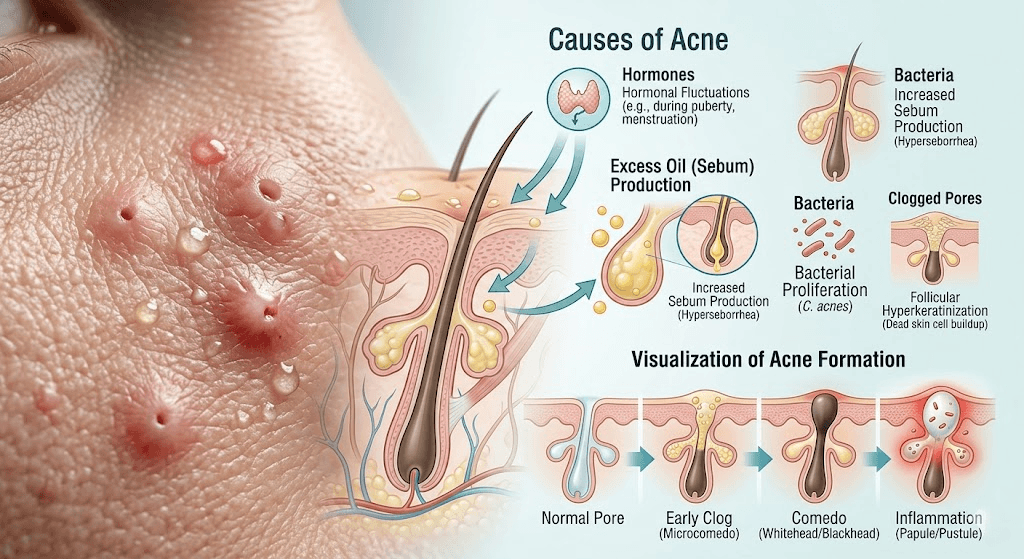
Before building a acne skincare routine, it’s important to understand what causes breakouts. Acne typically occurs when pores become clogged with oil, dead skin cells, and bacteria.
Several factors contribute to this:
- Excess oil production
- Hormonal changes
- Stress
- Poor skincare habits
- Comedogenic (pore-clogging) products
Acne-prone skin is not “dirty skin.” Over-cleansing or harsh treatments can actually make it worse by damaging the skin barrier .
Why a Simple Routine Works Best
One of the biggest misconceptions is that more products mean better results. In reality, a minimal acne skincare routine approach is far more effective.
Dermatologists recommend sticking to a few essential steps:
- Cleanse
- Treat
- Moisturize
- Protect
Using too many active ingredients at once can irritate the skin and worsen breakouts instead of improving them .
Morning Skincare Routine
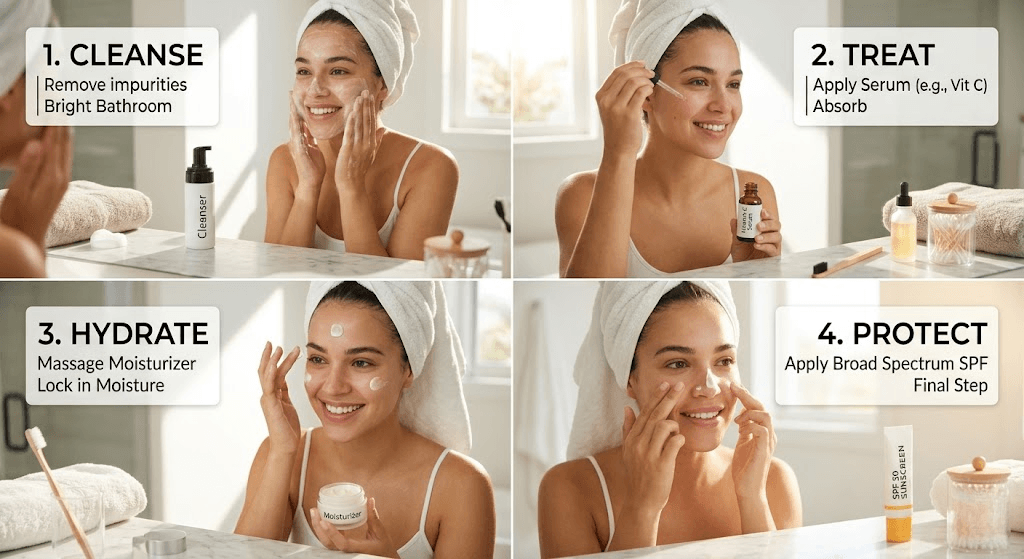
A proper morning acne skincare routine helps protect your skin throughout the day while controlling oil and preventing breakouts.
Step 1: Gentle Cleanser
Start with a mild, pH-balanced cleanser to remove excess oil and impurities. Avoid harsh foaming cleansers that strip natural oils.
Step 2: Treatment (Optional)
Use lightweight treatments like:
- Salicylic acid (unclogs pores)
- Niacinamide (controls oil and redness)
Step 3: Moisturizer
Even oily skin needs hydration. Use a lightweight, non-comedogenic moisturizer to maintain balance.
Step 4: Sunscreen (Essential)
Daily sunscreen is non-negotiable. Acne treatments can make your skin more sensitive to sunlight, and UV exposure can worsen acne marks
Night Skincare Routine
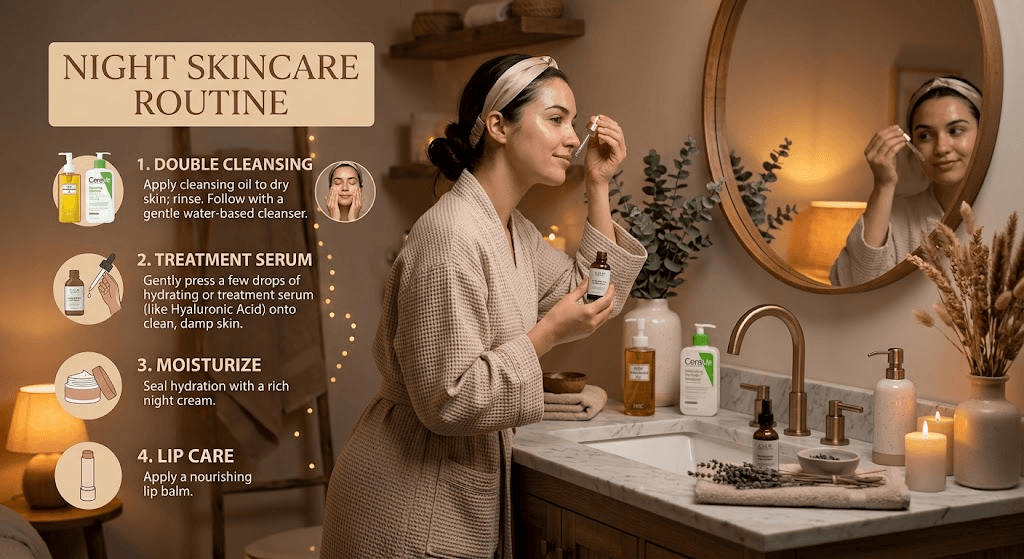
Your nighttime acne skincare routine focuses on repair and treatment.
Step 1: Cleanse (Double Cleanse if Needed)
If you wear sunscreen or makeup, double cleansing helps remove buildup effectively.
Step 2: Active Treatment
This is the best time to use stronger ingredients like:
- Retinoids (boost cell turnover)
- Benzoyl peroxide (kills acne bacteria)
Step 3: Moisturizer
Use a slightly richer moisturizer at night to support skin repair and reduce irritation.
Step 4: Spot Treatment
Apply targeted treatment only on active pimples to avoid unnecessary dryness.
Weekly Add-Ons for Better Results
To enhance your acne skincare routine, include weekly treatments:
- Exfoliation (1–2 times/week): Use chemical exfoliants like AHAs or BHAs
- Clay masks: Help absorb excess oil
- Hydrating masks: Restore moisture balance
Avoid over-exfoliating, as it can damage your skin and trigger more breakouts.
Key Ingredients to Look For
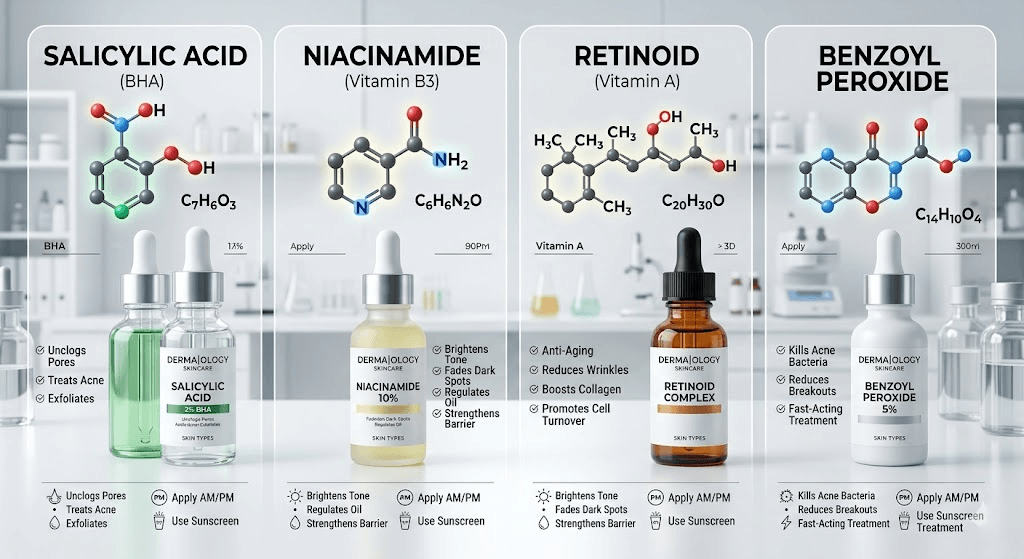
Choosing the right ingredients is essential for an effective acne skincare routine
Best Ingredients
- Salicylic acid (clears pores)
- Benzoyl peroxide (kills bacteria)
- Niacinamide (reduces oil and redness)
- Retinoids (boost skin renewal)
- Hyaluronic acid (hydrates skin)
These ingredients are widely recommended by dermatologists for managing acne effectively
Products to Avoid
Some products can worsen acne and should be avoided in your acne skincare routine:
- Heavy oils like coconut oil
- Alcohol-based toners
- Physical scrubs
- Fragrance-heavy products
These can clog pores or irritate the skin, leading to more breakouts .
Common Mistakes That Worsen Acne
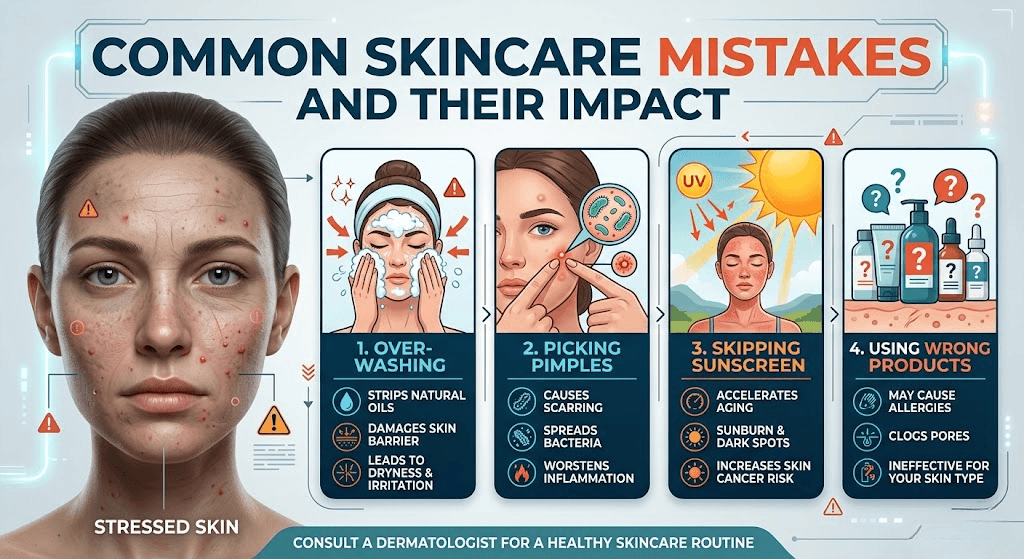
Even a good acne skincare routine can fail if you make these mistakes:
- Overwashing your face
- Using too many products
- Skipping moisturizer
- Not wearing sunscreen
- Picking or touching your skin
Consistency and patience are key to seeing results.
Lifestyle Tips for Clear Skin
Your acne skincare routine should be supported by healthy habits:
- Drink enough water
- Eat a balanced diet
- Manage stress
- Avoid touching your face
- Change pillowcases regularly
Lifestyle plays a major role in skin health and acne control.
When to See a Dermatologist

If your acne skincare routine isn’t improving your skin after a few months, it may be time to consult a professional.
A dermatologist can:
- Prescribe stronger treatments
- Identify underlying causes
- Customize a routine for your skin type
Early intervention can prevent long-term scarring and damage.
Conclusion
A successful acne skincare routine is not about using expensive products or following complicated trends. It’s about consistency, simplicity, and choosing the right ingredients for your skin.
By following a balanced routine—cleansing, treating, moisturizing, and protecting—you can reduce breakouts and achieve healthier skin over time.
Remember, clear skin doesn’t happen overnight, but with patience and the right routine, long-term results are absolutely possible.
FAQs
1. What is the best skincare routine for acne-prone skin?
A simple routine with cleanser, treatment, moisturizer, and sunscreen works best.
2. How long does it take to see results?
Most people see improvement within 4–8 weeks.
3. Can oily skin skip moisturizer?
No, skipping moisturizer can increase oil production.
4. Is sunscreen necessary for acne-prone skin?
Yes, it prevents dark spots and protects sensitive skin.
5. Can I use multiple acne treatments together?
It’s better to use one or two actives to avoid irritation.


