
Table of Contents:
Introduction:
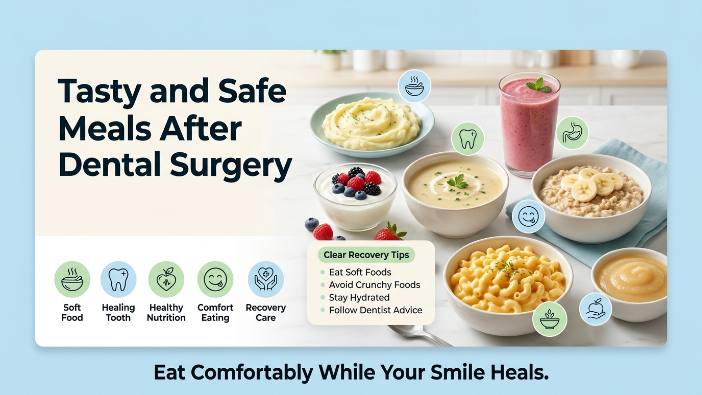
Recovering from dental surgery can be uncomfortable, especially when eating becomes painful or difficult. Choosing the right tasty and safe meals after dental surgery is very important because the right diet helps reduce discomfort and supports faster healing. Procedures like tooth extraction, wisdom tooth removal, dental implants, or gum surgery often make your mouth sensitive and swollen, so soft and gentle foods are the best choice during this time.
Soft, nutritious, and easy-to-eat meals not only protect the healing area but also provide the energy your body needs to recover. In this blog, you will learn about the best food options that are both safe and delicious for a smooth recovery journey.
Why Diet Matters After Dental Surgery :
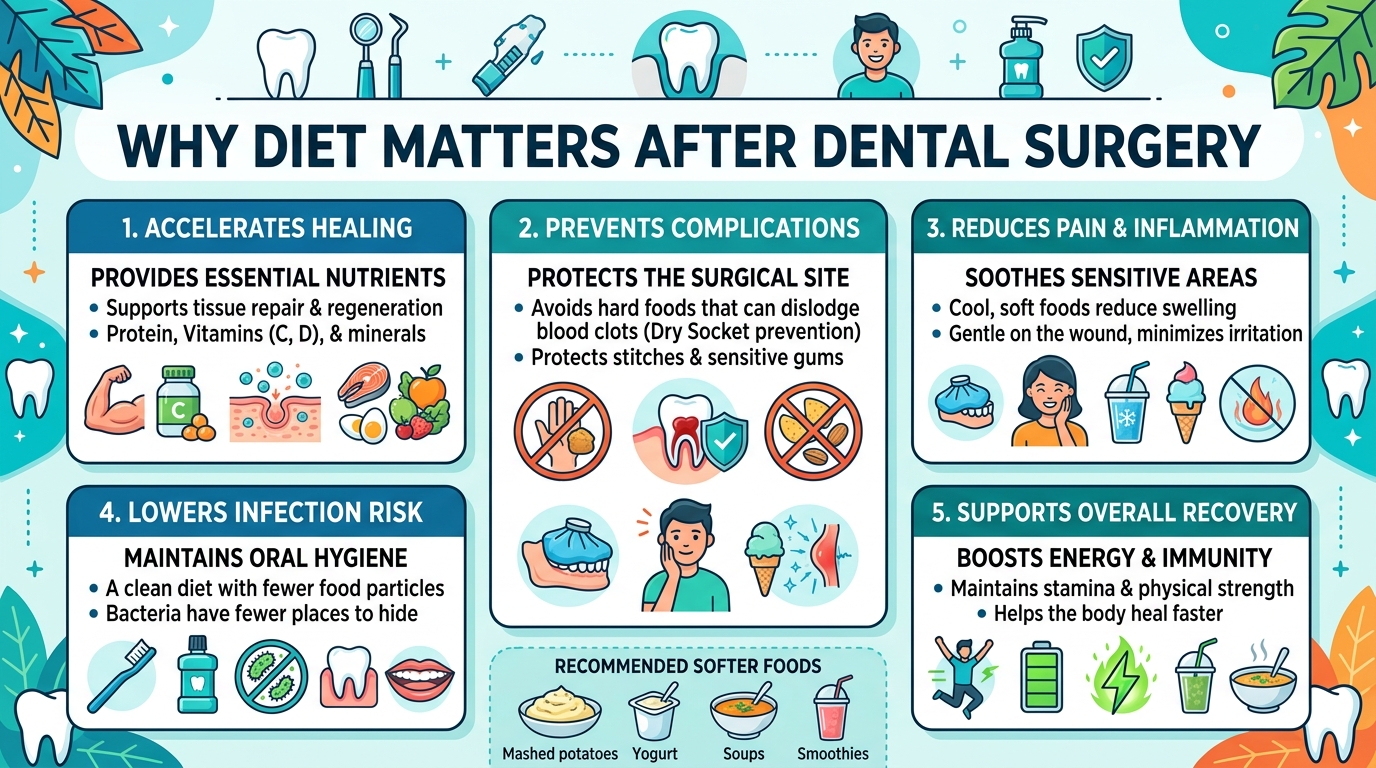
After oral surgery, your mouth needs time to heal properly. Eating the wrong foods can:
- Irritate the surgical area
- Cause bleeding or discomfort
- Delay healing
- Increase risk of infection
On the other hand, the right foods can:
- Speed up tissue repair
- Reduce inflammation
- Keep you nourished while chewing is limited
- Help maintain energy levels
Best Soft Foods to Eat After Dental Surgery:
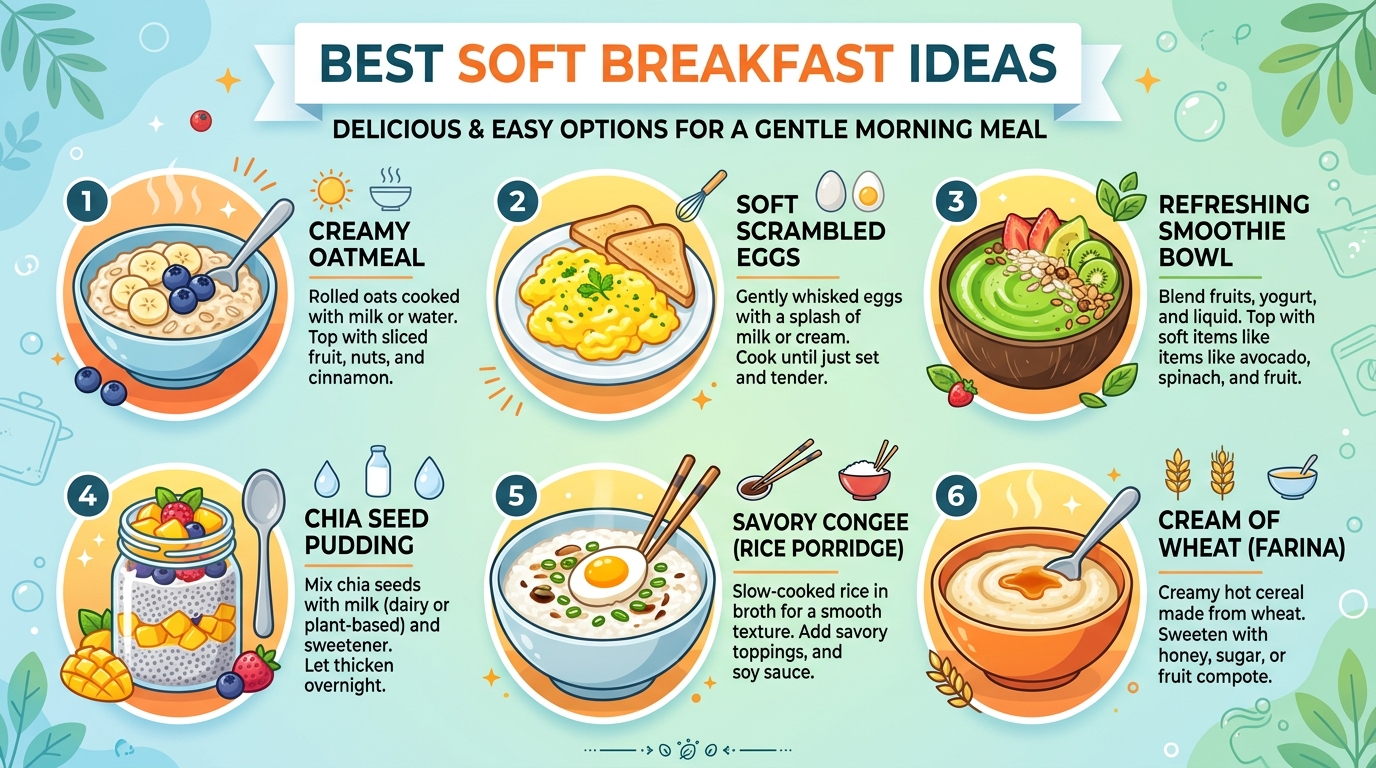
Mashed Potatoes:
Mashed potatoes are smooth, filling, and easy to swallow. You can add a little butter or yogurt for extra flavor and calories.
Yogurt:
Yogurt is rich in protein and probiotics, which help digestion and healing. Choose plain or low-sugar yogurt to avoid irritation.
Applesauce:
Applesauce is soft, naturally sweet, and gentle on sensitive gums. It also provides vitamins without needing chewing.
Scrambled Eggs:
Soft scrambled eggs are an excellent source of protein and can be eaten easily without putting pressure on the surgical area.
Smooth Soups:
Blended soups like pumpkin, tomato, or chicken soup are nutritious and soothing. Make sure they are warm, not hot.
Nutrient-Rich Drinks for Recovery:
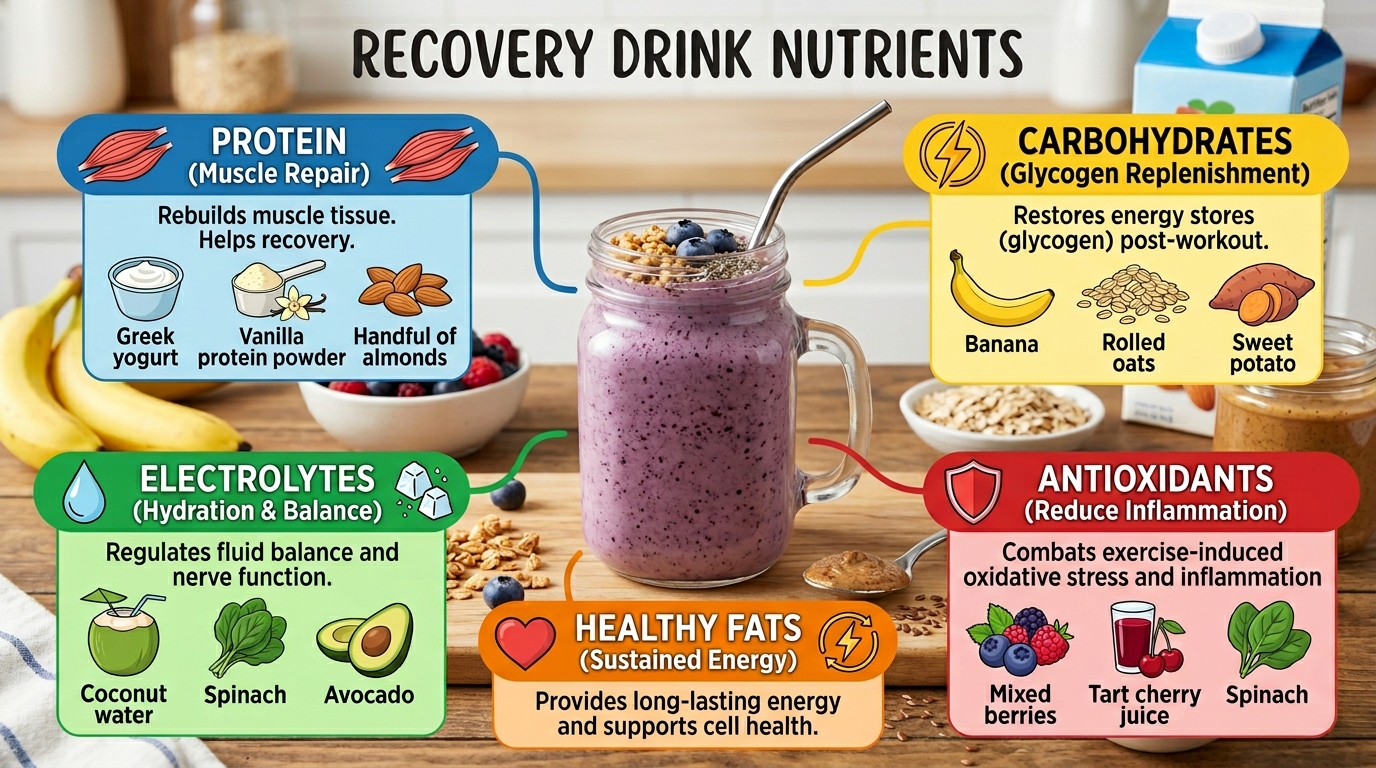
Smoothies:
Smoothies are one of the best recovery foods because they are easy to consume and highly nutritious. Use ingredients like bananas, berries, yogurt, and milk.
Milkshakes:
Milkshakes provide calories and energy when solid food intake is limited. Avoid using a straw, as suction can affect healing.
Fresh Juices
Fresh fruit juices like orange or apple juice help boost vitamin intake. Avoid acidic juices if your mouth is sensitive.
Foods You Should Avoid
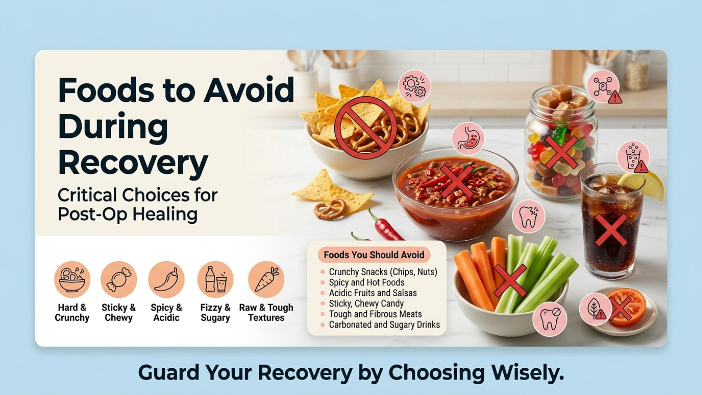
After dental surgery, certain foods can slow down healing and cause pain or irritation. Hard and crunchy foods like chips, nuts, popcorn, and crackers should be avoided because they can damage the surgical area or get stuck in the wound. Sticky foods such as chewing gum and caramel may also create discomfort and affect recovery.
Spicy and acidic foods can irritate sensitive gums and increase pain. Very hot drinks or meals may lead to swelling and discomfort, so it is better to eat foods that are cool or slightly warm. You should also avoid using straws because the suction can disturb the healing area and may cause complications like dry socket after tooth extraction.
Choosing soft and gentle foods during recovery helps protect your mouth and supports faster healing.
Eating Tips After Dental Surgery
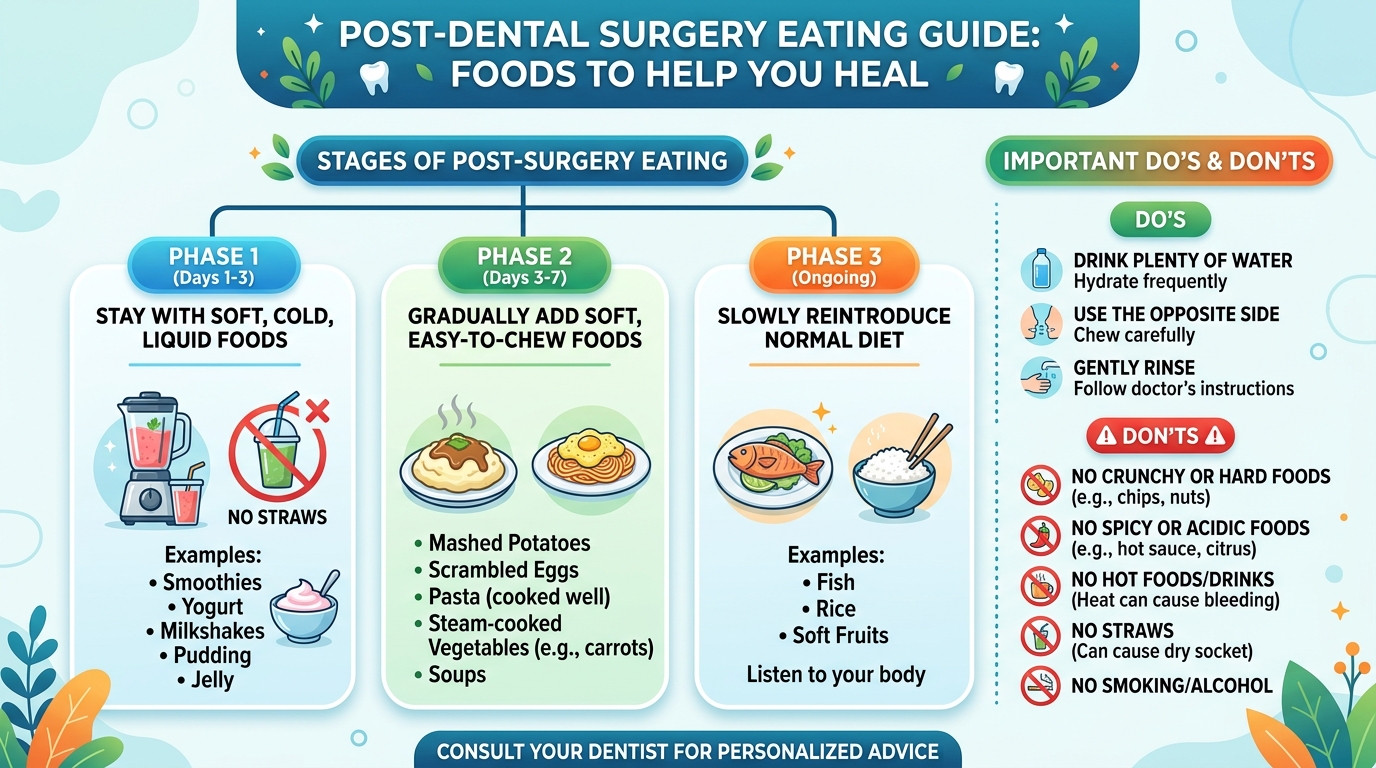
Following proper eating habits after dental surgery is important for a smooth and comfortable recovery. During the first few days, try to eat soft foods that require little or no chewing. Take small bites and eat slowly to avoid putting pressure on the surgical area.
It is also recommended to chew on the opposite side of your mouth if possible. Drink plenty of water to stay hydrated, but avoid using straws because the suction can disturb the healing process and increase the risk of complications. Foods and drinks should be cool or slightly warm, as very hot items may cause irritation and swelling.
Maintaining good oral hygiene is equally important. Rinse your mouth gently if advised by your dentist and avoid touching the surgical area while eating. By following these simple eating tips, you can reduce discomfort and help your mouth heal faster after dental surgery.
Sample Meal Plan (First 2 Days)
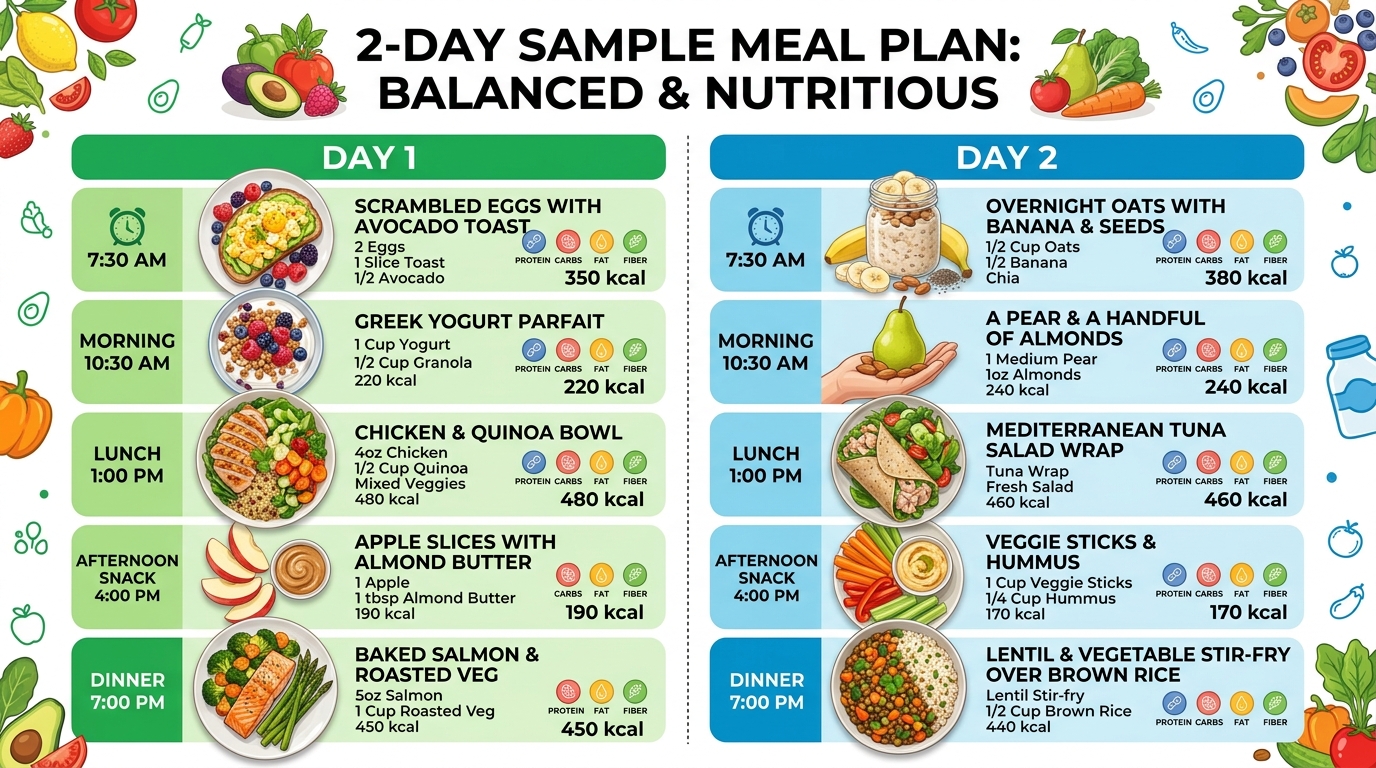
During the first two days after dental surgery, it is important to eat soft, nutritious, and easy-to-swallow foods that do not irritate the healing area. A balanced meal plan can help maintain energy levels while supporting faster recovery.
Day 1
Breakfast: Banana smoothie with yogurt and milk
Lunch: Warm blended vegetable soup with mashed potatoes
Dinner: Soft scrambled eggs with applesauce
Snacks: Pudding, yogurt, or a protein shake
Day 2
Breakfast: Oatmeal with mashed banana
Lunch: Creamy chicken soup or soft pasta
Dinner: Mashed sweet potatoes with soft steamed vegetables
Snacks: Smoothies, cottage cheese, or soft fruit puree
This simple meal plan provides important nutrients while keeping your mouth comfortable during the healing process. Always avoid hard, spicy, or crunchy foods until your dentist says it is safe to return to a normal diet.
Conclusion
Recovering from oral surgery becomes much easier when you choose the right foods. Eating tasty and safe meals after dental surgery helps reduce discomfort, protects the healing area, and provides the nutrients your body needs for faster recovery. Soft foods like mashed potatoes, yogurt, smoothies, soups, and scrambled eggs are excellent choices during the healing process.
By avoiding hard, spicy, and crunchy foods while following proper eating habits, you can support a smooth and comfortable recovery. Always follow your dentist’s instructions and slowly return to your normal diet as your mouth heals.


