

Table of Contents:
- Introduction
- Understanding What Happens During a Cavity Filling
- Average Time Needed to Fill a Cavity
- Step-by-Step Timeline of the Cavity Filling Procedure
- Factors That Affect How Long a Filling Takes
- Does Filling a Cavity Hurt During Treatment?
- How Long Does Numbing Last After a Filling?
- Recovery Timeline After Getting a Cavity Filled
- When a Cavity Requires More Than a Simple Filling
- Tips to Make Your Cavity Filling Appointment Easier
- Conclusion
Introduction:
Many people feel nervous when they hear they need a cavity filled by a dentist. One of the most common questions patients ask involves how long the treatment will actually take. The good news is that modern cavity filling procedures are usually fast, safe, and relatively comfortable for most patients. Small cavities may only require twenty to thirty minutes, while deeper cavities can take closer to one hour depending on the condition of the tooth. Understanding the complete treatment timeline can help reduce anxiety and prepare you for your dental appointment properly.
This guide explains how long it takes to fill a cavity, what happens during the procedure, factors that affect treatment time, and how recovery works afterward. You will also learn about pain levels, numbing duration, and when a cavity may require more advanced dental treatment. Readers on Freaky Thread often search for clear and practical health information, especially regarding common dental procedures and recovery expectations.
Understanding What Happens During a Cavity Filling:
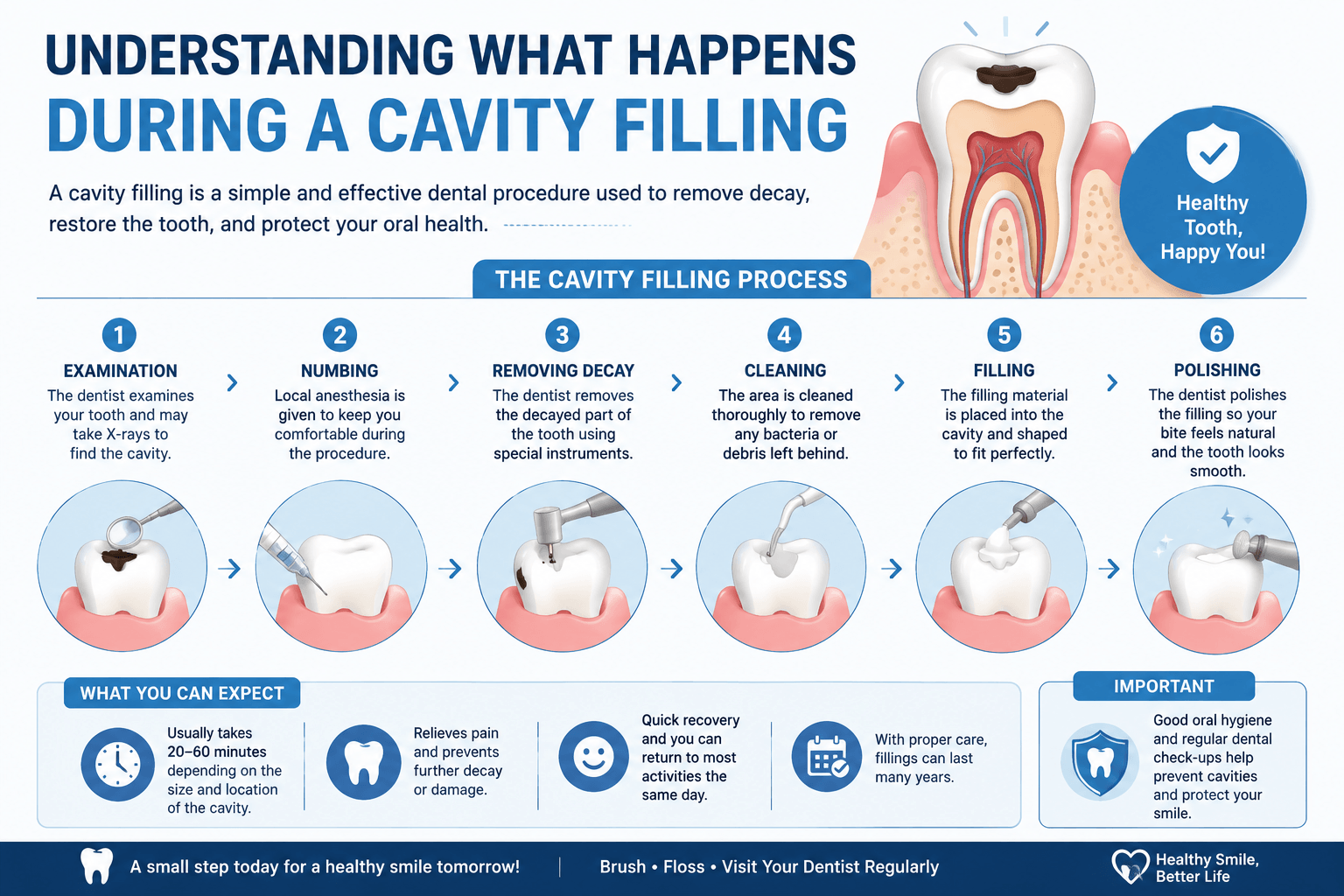
Many people feel nervous before visiting the dentist for a cavity filling procedure. One of the most common questions patients ask involves treatment time and recovery expectations. Understanding the complete process can reduce anxiety and help patients prepare for their dental appointment properly.
A cavity develops when tooth decay damages the outer enamel layer of the tooth gradually. Bacteria, sugar, and poor oral hygiene often contribute to the formation of dental cavities over time. If left untreated, the decay can spread deeper into the tooth and create serious complications.
Dentists use dental fillings to remove decay and restore the tooth’s normal structure safely. The treatment helps prevent additional damage while protecting the tooth from future bacterial infection. Most modern cavity filling procedures remain quick, safe, and relatively painless for patients.
Readers on Freaky Thread often search for practical dental information because many people feel uncertain before treatment. Learning how long it takes to fill a cavity can help patients feel calmer before visiting the dentist.
Average Time Needed to Fill a Cavity:
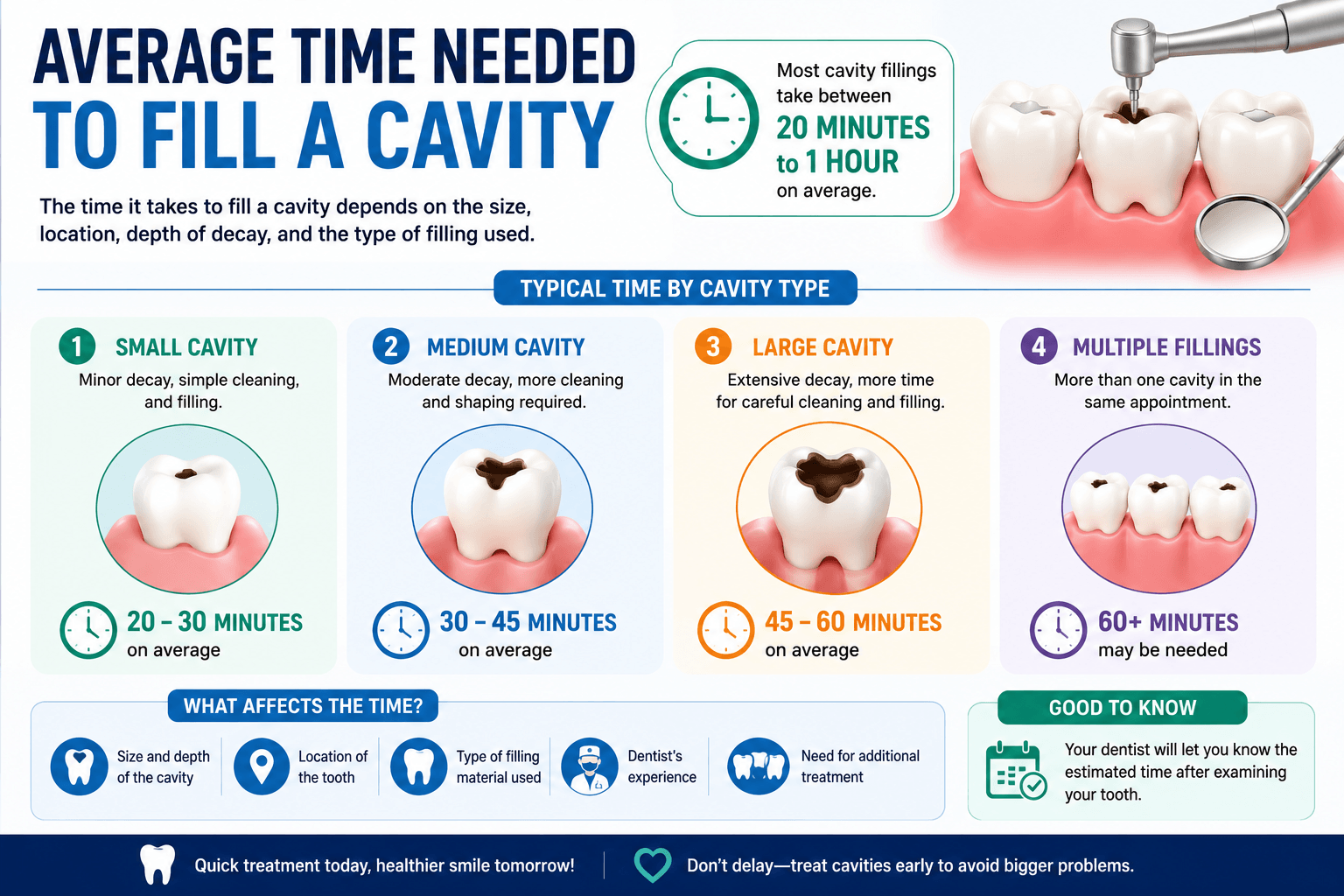
The average cavity filling procedure usually takes between twenty minutes and one hour to complete. The exact treatment duration depends on the cavity size, tooth location, and filling material selected by the dentist. Small cavities often require less treatment time because the damaged area remains limited and easier to restore.
Simple cavities located on front teeth can sometimes be treated within twenty or thirty minutes comfortably. These fillings often involve minimal drilling and require less preparation before placing the filling material. Patients usually leave the clinic shortly after the procedure finishes successfully.
Larger cavities or cavities affecting molars often require additional cleaning and preparation before restoration begins. Back teeth remain harder to reach because dentists need careful positioning during the procedure. These situations may increase the overall treatment timeline to approximately one hour or slightly longer.
If patients require multiple fillings during the same appointment, treatment time increases accordingly for each tooth involved. Dentists sometimes recommend separate appointments when extensive dental work becomes necessary for patient comfort and precision.
Step-by-Step Timeline of the Cavity Filling Procedure:
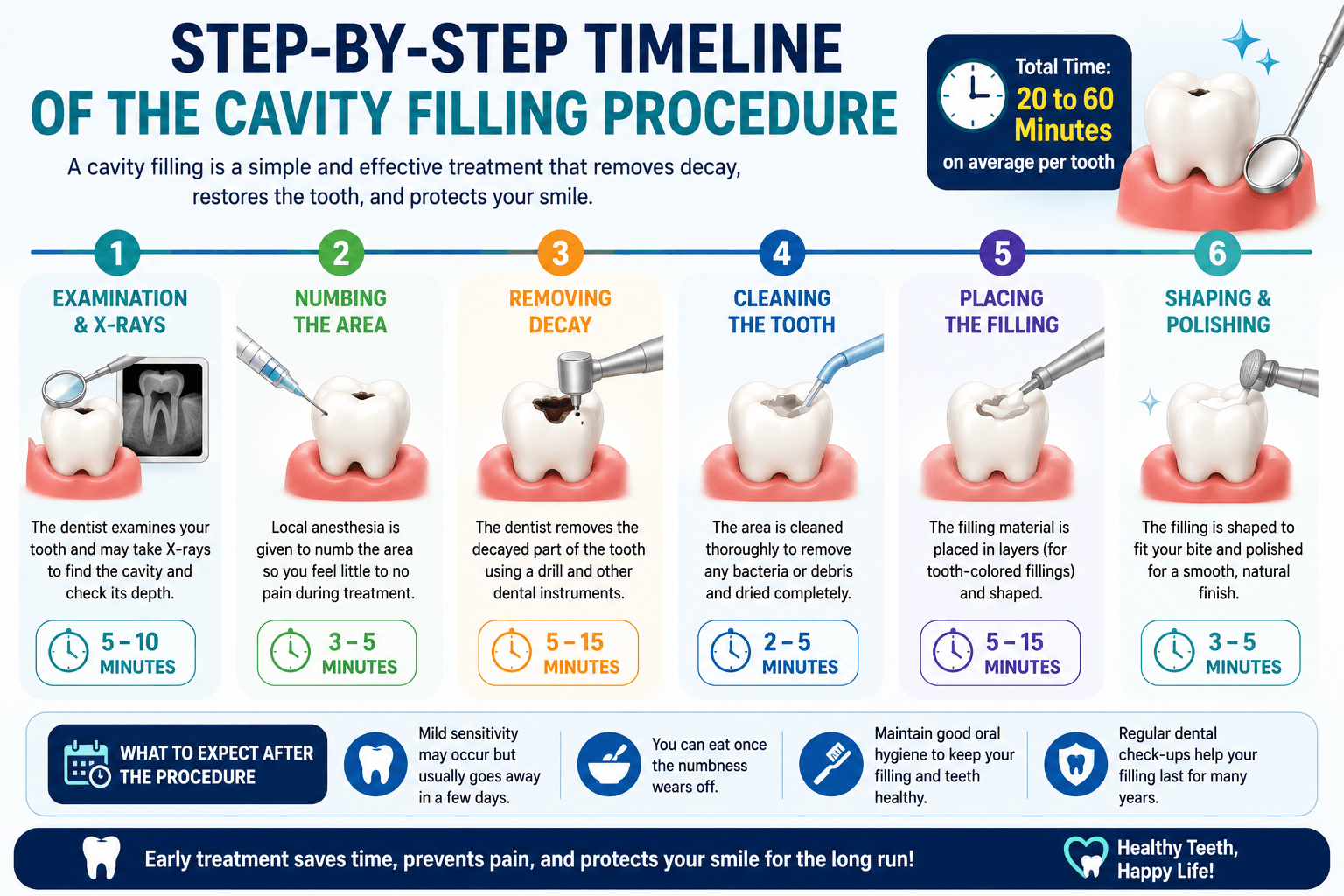
The cavity filling process follows several important stages that ensure the tooth receives proper treatment and restoration. Each stage contributes to the overall timeline and affects the total duration of the appointment significantly.
The dentist first examines the tooth carefully using dental tools and X-rays to assess decay severity. This evaluation helps determine how deeply the cavity has spread inside the affected tooth structure. Accurate examination remains important because hidden decay can affect treatment planning significantly.
Local anesthesia usually comes next if the cavity requires drilling near sensitive tooth areas or nerves. The numbing injection generally takes several minutes to begin working effectively inside the treatment area. Patients may feel slight pressure during injection, but serious pain remains uncommon during this stage.
After numbing becomes effective, the dentist removes decayed tooth material using specialized dental instruments carefully. This stage often consumes most of the cavity filling procedure time because precision remains extremely important. Dentists must remove damaged tissue completely while preserving healthy tooth structure whenever possible.
Once cleaning finishes successfully, the dentist prepares and places the filling material inside the cleaned cavity space. Composite fillings usually require layering and curing with a special blue light during placement. Finally, the dentist smooths and polishes the filling to ensure comfortable chewing and proper tooth alignment.
Factors That Affect How Long a Filling Takes:
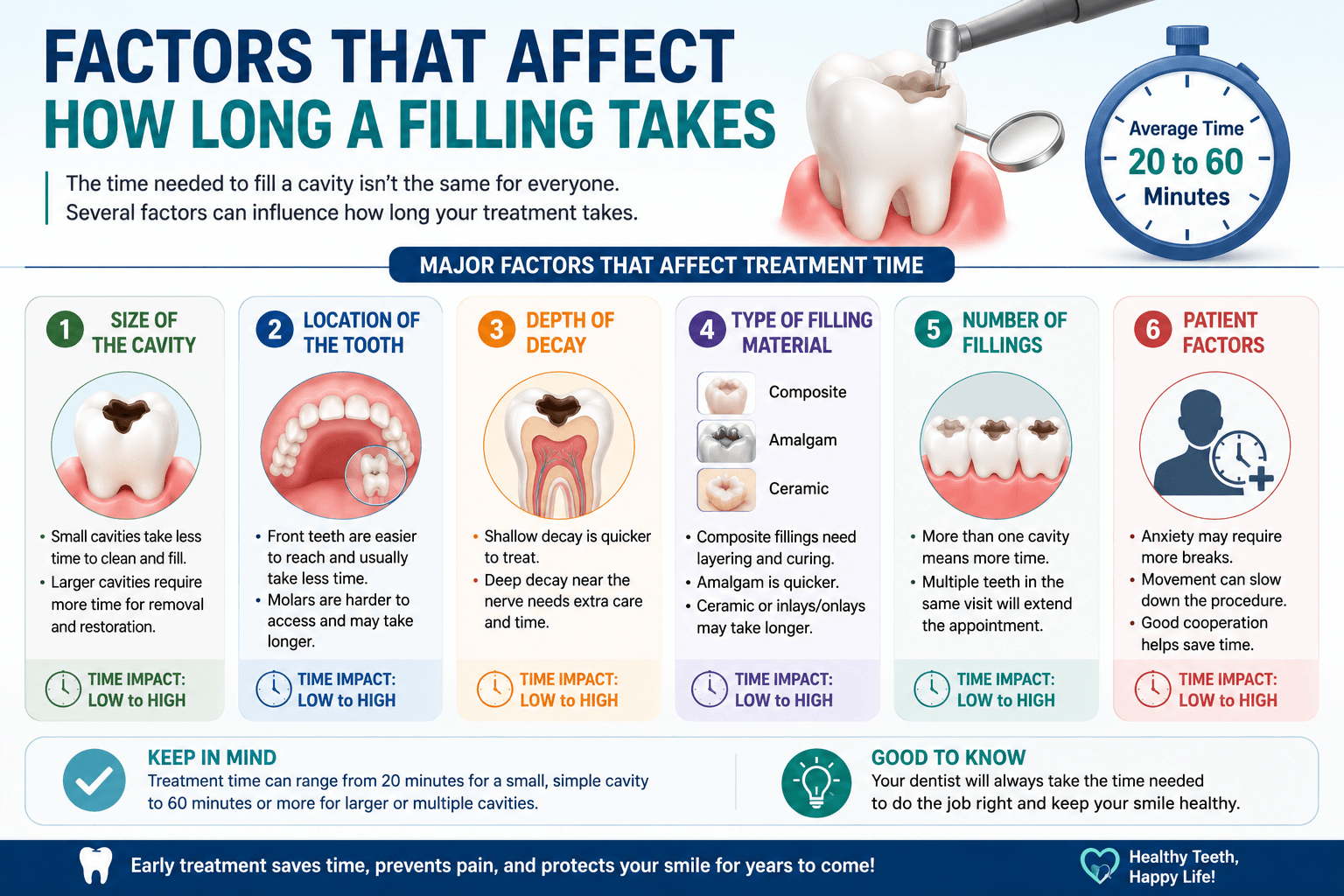
Several important factors influence how long it takes to fill a cavity during a dental appointment. Every patient experiences slightly different treatment timelines depending on their individual dental condition and procedure complexity.
The cavity size remains one of the most significant factors affecting total treatment duration directly. Small cavities require less drilling, cleaning, and filling material compared to larger or deeper areas of decay. Deep cavities often require more caution because the decay approaches sensitive nerve tissues closely.
The tooth location also changes treatment complexity and procedure duration for many dental patients significantly. Front teeth usually remain easier to access and restore because visibility and positioning become simpler. Molars often require additional time because dentists must work carefully inside difficult-to-reach areas.
Filling material type can also influence how long the dentist spends completing the restoration procedure successfully. Composite resin fillings usually require more time because dentists place and cure them in separate layers. Silver amalgam fillings sometimes take less placement time but remain less common today compared to tooth-colored materials.
Patient cooperation also affects the speed and comfort of dental cavity treatment appointments considerably. Remaining calm and still during treatment allows dentists to complete procedures more efficiently and accurately. Nervous patients may require additional breaks or explanations during longer appointments.
Does Filling a Cavity Hurt During Treatment?
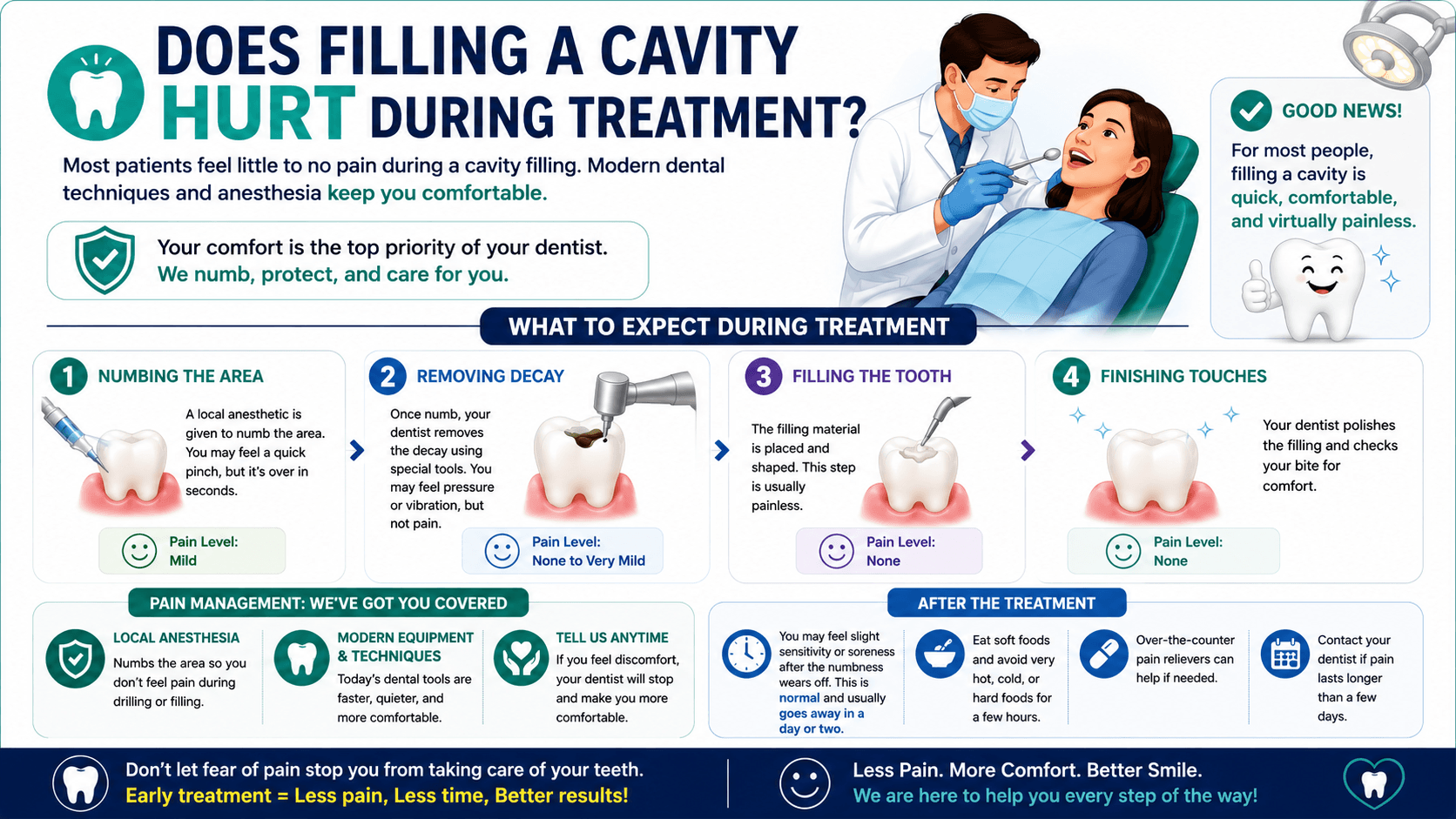
Many patients worry more about pain than the actual treatment timeline before scheduling a dental appointment. Modern dental technology and local anesthesia make cavity filling procedures far more comfortable than many people expect.
Most patients feel little or no pain once the local anesthesia becomes fully effective around the affected tooth. Dentists carefully numb the treatment area before beginning any drilling or cleaning procedures inside the cavity. Patients may notice vibrations, pressure, or sounds, but sharp pain remains uncommon during treatment.
Very small cavities sometimes require minimal drilling and may not need strong numbing medication at all. In these situations, treatment can feel slightly uncomfortable but usually remains manageable for most individuals comfortably. Dentists often discuss pain management options with patients before starting the procedure.
Patients with dental anxiety can discuss sedation options or calming techniques with their dentist beforehand safely. Many clinics now provide supportive environments designed specifically for nervous or anxious dental patients. Open communication helps reduce stress and improves the overall treatment experience significantly.
After treatment, mild tooth sensitivity or soreness may occur temporarily as the numbness gradually disappears completely. These symptoms usually improve within several hours or days depending on the filling depth and tooth sensitivity.
How Long Does Numbing Last After a Filling?
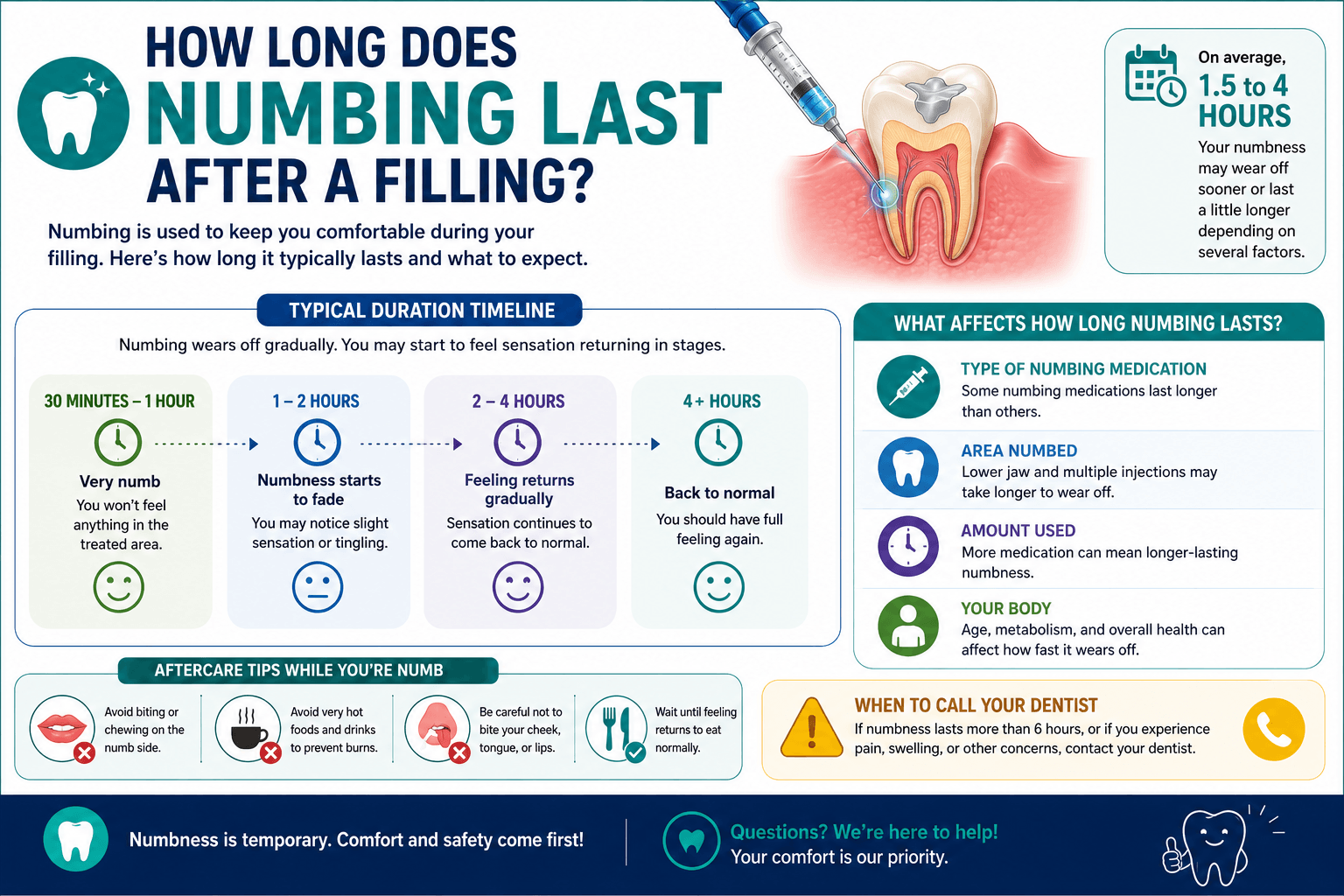
The numb feeling after a cavity filling often lasts longer than the actual treatment procedure itself. Most local anesthesia medications remain effective for approximately two to four hours after the dental appointment finishes completely.
Patients commonly experience numbness in the lips, cheeks, gums, or tongue surrounding the treated tooth area temporarily. The exact duration depends on the anesthesia type, dosage, and the patient’s individual body response. Some individuals regain normal feeling faster while others require slightly more recovery time.
Dentists usually recommend avoiding chewing until numbness disappears completely from the treatment area safely. Eating too early increases the risk of accidentally biting the tongue, lips, or cheeks painfully. Drinking extremely hot beverages can also become risky while numbness remains active.
Children particularly require supervision after dental fillings because they may accidentally bite numb tissues repeatedly. Parents should encourage soft foods and careful eating until normal feeling returns completely after treatment.
Temporary numbness remains completely normal after most cavity filling procedures and should not create unnecessary concern. However, patients should contact their dentist if numbness continues unusually long beyond several hours afterward.
Recovery Timeline After Getting a Cavity Filled:
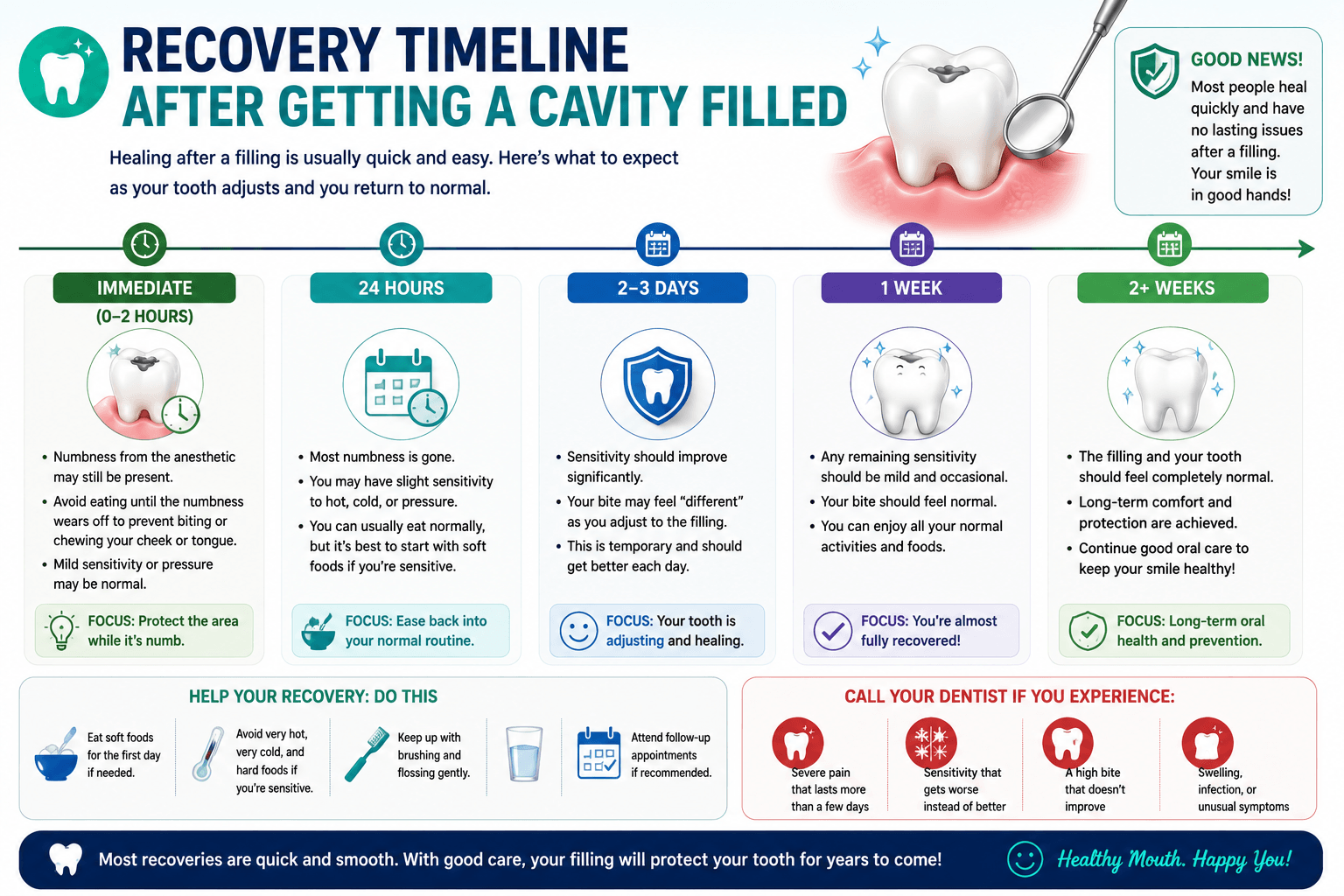
Recovery after a dental filling usually remains quick and uncomplicated for most healthy dental patients. Many individuals return to normal daily activities immediately after leaving the dental clinic successfully.
Composite fillings often harden instantly under curing lights, allowing patients to eat relatively soon afterward comfortably. Dentists may still recommend waiting until numbness disappears before chewing solid foods safely. Soft foods remain the safest option during the first few hours after treatment.
Some patients experience temporary tooth sensitivity when consuming cold, hot, or sweet foods during early recovery periods. This sensitivity often improves naturally within several days as the tooth adjusts to the new filling material. Deep fillings may produce longer sensitivity because the nerve experiences greater irritation during treatment.
Patients should maintain proper oral hygiene after treatment to protect the filling and surrounding teeth effectively. Gentle brushing and flossing help prevent additional cavities and maintain long-term dental health successfully. Regular dental checkups also help dentists monitor filling condition and detect future problems early.
Most dental fillings last many years when patients practice good oral hygiene and avoid damaging habits consistently. Avoiding excessive sugar, smoking, and teeth grinding can improve filling durability significantly over time.
When a Cavity Requires More Than a Simple Filling:
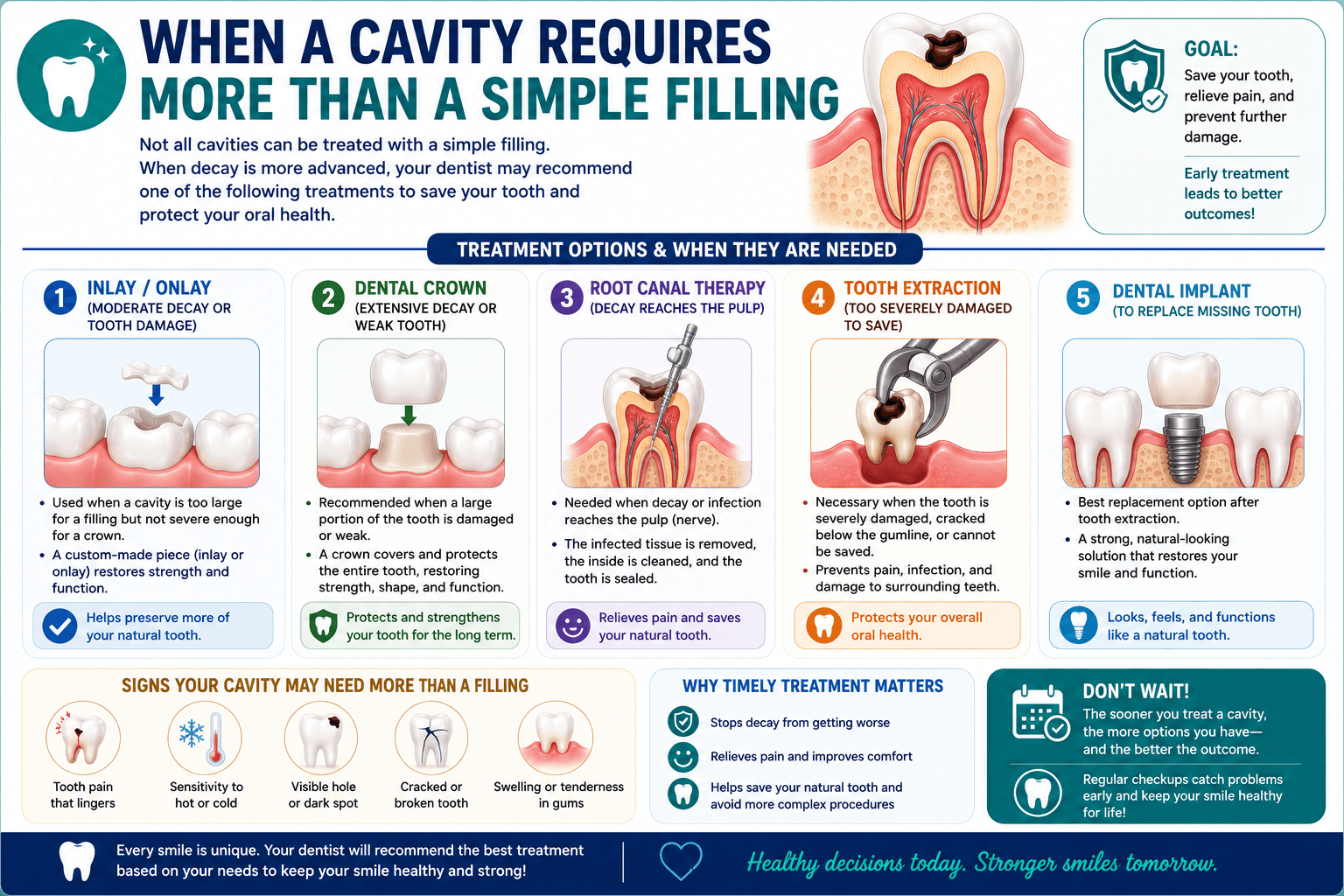
Not every cavity can be treated quickly using a standard filling procedure inside the dental office. Some severe cases require additional treatment because decay spreads deeply into sensitive tooth structures.
Deep cavities approaching the tooth nerve may require protective liners or more advanced restorative procedures eventually. Dentists sometimes place temporary fillings first before completing permanent treatment during a later appointment safely. These situations naturally increase the total treatment timeline for patients significantly.
If tooth decay reaches the pulp or nerve, root canal treatment may become necessary instead of a simple filling. Root canals require more extensive cleaning and restoration compared to ordinary cavity filling procedures. These treatments usually involve multiple stages and longer appointment durations overall.
Extremely damaged teeth may eventually require crowns, inlays, or extraction when restoration becomes difficult or impossible. Early treatment remains the best way to avoid these serious complications and expensive dental procedures later.
Ignoring cavities for long periods often increases treatment complexity, cost, pain risk, and total recovery time substantially. Regular dental examinations help detect small cavities before they develop into larger dental emergencies requiring complicated procedures.
Tips to Make Your Cavity Filling Appointment Easier:
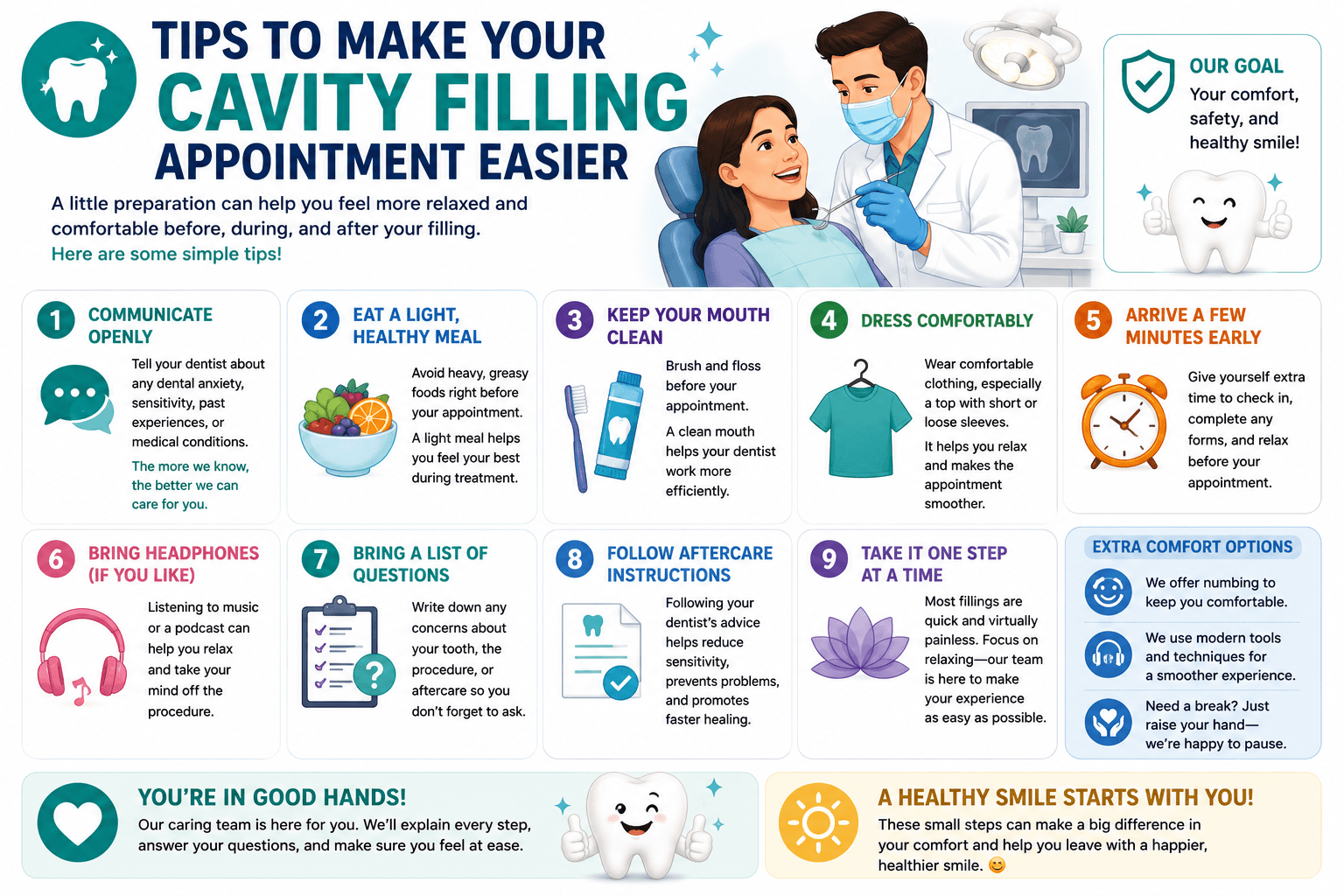
Preparing properly before a dental appointment can improve comfort and reduce unnecessary stress during treatment significantly. Simple preparation steps often help patients feel more relaxed and confident before arriving at the clinic.
Patients should brush and floss carefully before visiting the dentist for cavity treatment appointments regularly. Clean teeth improve examination visibility and support better dental hygiene throughout the treatment procedure. Eating a light meal beforehand also helps patients remain comfortable during longer appointments.
Discussing fears or concerns openly with the dentist allows better communication and emotional support during treatment sessions. Many dental professionals understand patient anxiety and provide calming reassurance throughout the procedure patiently. Asking questions beforehand can also reduce uncertainty and emotional tension significantly.
Listening to calming music or practicing deep breathing techniques may help nervous patients remain relaxed naturally. Comfortable clothing and punctual arrival can also improve the overall dental experience positively for patients.
Regular dental visits remain one of the best ways to prevent severe cavities and complicated dental procedures later. Early detection allows faster, easier, and less expensive treatment compared to advanced tooth decay situations.
Conclusion:
Understanding how long it takes to fill a cavity helps patients prepare mentally and physically before treatment begins. Most cavity filling procedures remain relatively quick, safe, and highly effective for restoring damaged teeth successfully.
Small cavities often require less than thirty minutes, while larger cavities may take approximately one hour comfortably. Factors like cavity size, tooth location, filling material, and patient cooperation influence the complete treatment timeline significantly.
Modern dental technology continues improving patient comfort, treatment speed, and recovery experiences during cavity restoration procedures. Most patients experience minimal discomfort and return to normal activities shortly after their appointment finishes completely.
Readers visiting Freaky Thread often appreciate practical health information that explains procedures clearly and realistically. Learning about cavity filling timelines can reduce fear while encouraging better oral health decisions long term.
Seeking early dental treatment remains extremely important because untreated cavities become more serious over time naturally. Regular checkups, proper brushing, and healthy eating habits remain essential for protecting long-term dental health successfully


