
Table of Content:
- Introduction
- What Is Dry Eye Syndrome?
- How Contact Lenses and Dry Eyes Interact
- Key Features to Look for in Contact Lenses for Dry Eyes
- Best Daily Contact Lenses for Dry Eyes
- Silicone Hydrogel Lenses for Dry Eyes
- Hybrid and Scleral Lenses for Severe Dry Eyes/a>
- Top Contact Lens Brands for Dry Eyes
- Practical Tips for Wearing Contacts for Dry Eyes
- When to See Your Eye Doctor
- Conclusion
Introduction:
If you wear contacts and deal with dryness, you are not alone. A large number of contact lens wearers report experiencing dryness at some point during their wear time. The burning, itching, and blurry vision can make contact lens wear feel completely impossible. Many people believe they simply cannot wear contact lenses for dry eyes at all. That belief is outdated and not fully supported by modern eye care science today.
Many people with mild to moderate dry eyes can successfully wear contact lenses with the right approach. Specially designed lenses can help keep your eyes comfortable from morning to night. This guide covers everything you need to know about the best contact lenses for dry eyes.
What Is Dry Eye Syndrome?
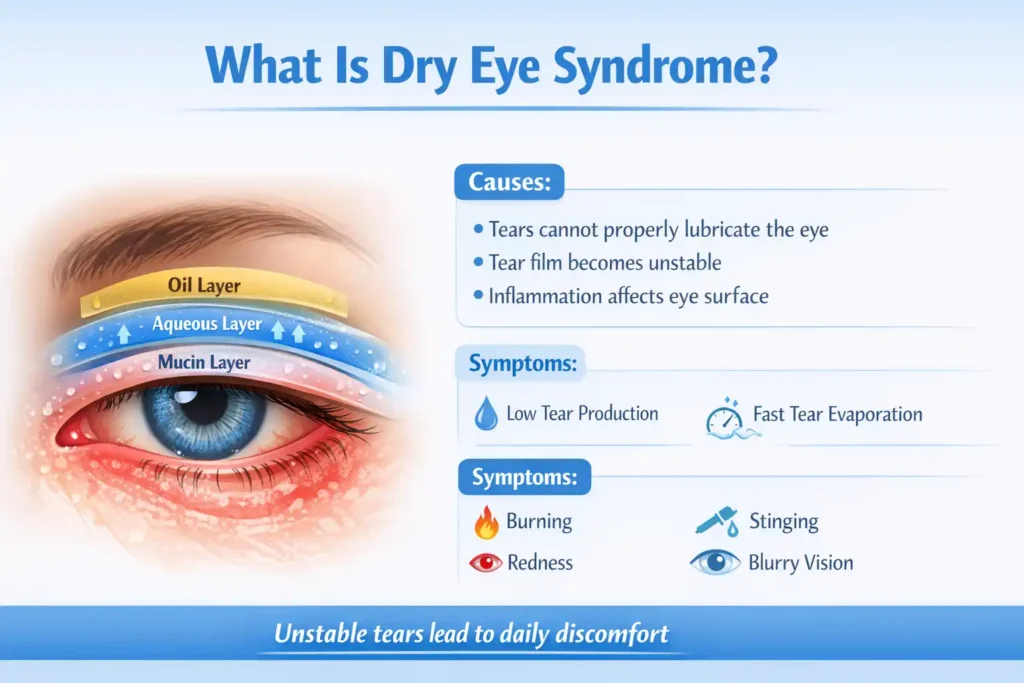
Dry eye syndrome is a condition where your tears cannot properly lubricate your eyes each day. It is a chronic condition involving the tear film that is caused by increased tear evaporation or a tear deficit. Many people assume dry eye is only about low tear production, but that is not always the case.
Dry eye also involves inflammation that disrupts the entire surface of your eye. Common symptoms include discomfort, burning, stinging, redness, and episodes of blurry vision throughout the day. For contact lens wearers, these symptoms often become far more noticeable as the hours pass by. Understanding dry eye is the very first step toward finding a real and lasting solution.
How Contact Lenses and Dry Eyes Interact?
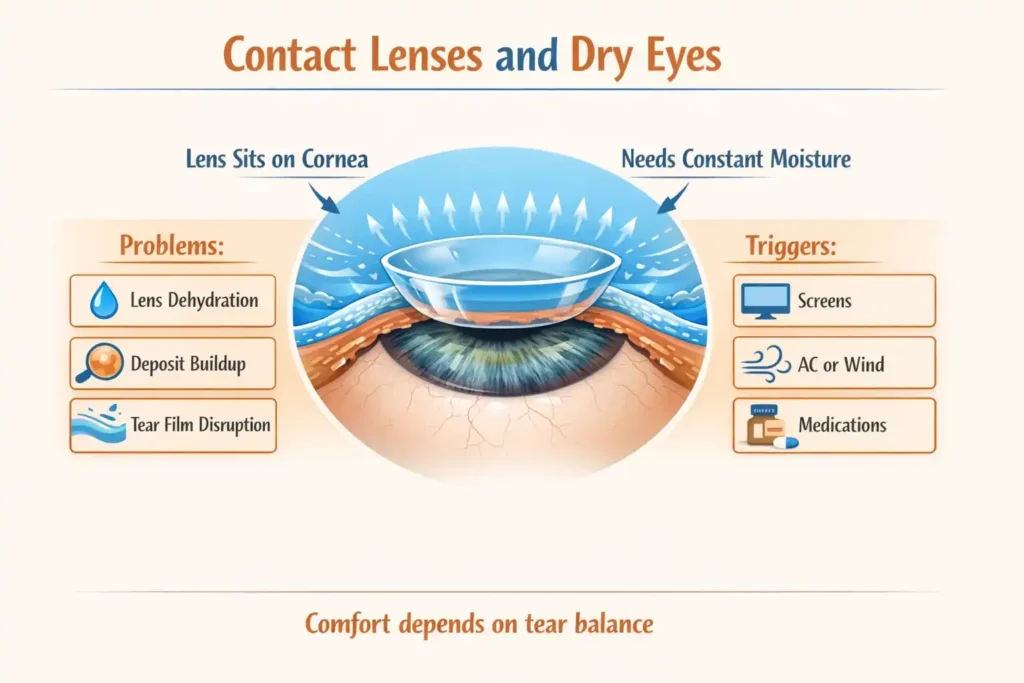
Contact lenses sit directly on your cornea, which needs constant moisture to stay healthy and comfortable. Many contact lens wearers report experiencing symptoms of dryness at some point during their wearing schedule. Some lens materials can lose moisture and may disrupt the natural tear film rather than working alongside it throughout the day. Protein and debris can also build up on lenses over time, making daily irritation even worse.
Dry eye symptoms are also affected by environmental conditions, medications, and extended computer or screen work. Air conditioning, wind, and long hours of screen time all make dryness much harder to manage. Contact lenses and dry eyes do not have to be a frustrating or painful combination. With the right lens material, proper fitting, and daily care habits, many people can wear contacts comfortably.
Key Features to Look for in Contact Lenses for Dry Eyes:
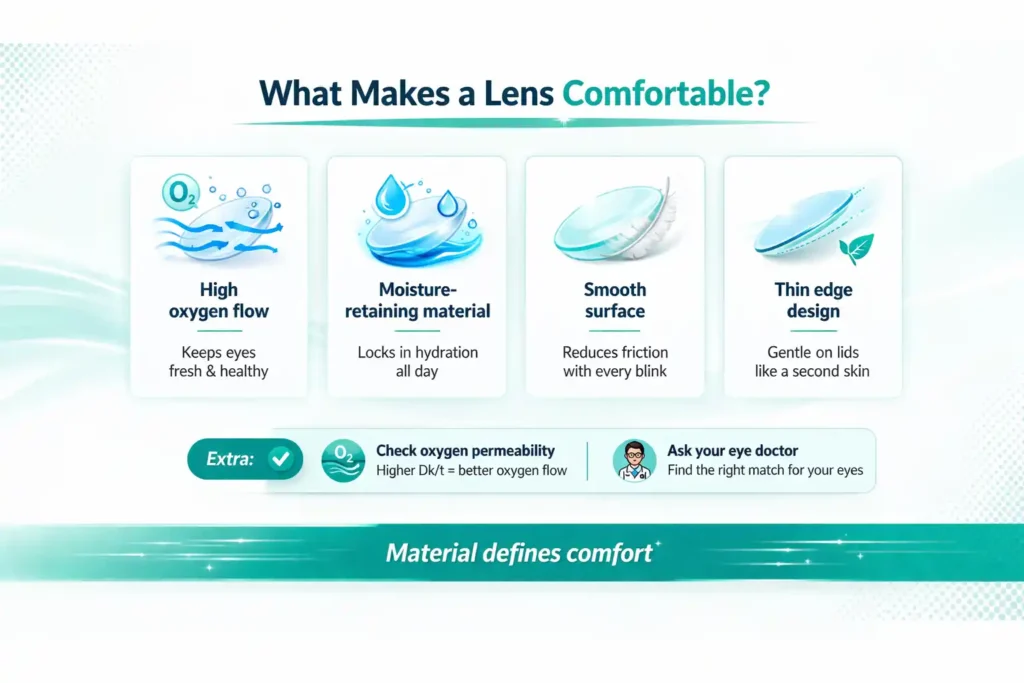
Not all contact lenses are created equal, especially for people who experience regular dryness. The material of your lens plays a major role in how comfortable it feels throughout the day. Silicone hydrogel contact lenses are advanced soft lenses that allow significantly more oxygen to pass through to the cornea. More oxygen supports eye health and can reduce irritation over the course of the day. Reduced oxygen supply to the cornea can result in symptoms such as dryness, redness, blurred vision, and discomfort. However, comfort also depends on surface properties and individual tear film quality.
You should also look for lenses with moisture-retaining technology built directly into the lens material itself. Smooth edges and a thin design help reduce friction against your eyelid during every single blink. Always ask your eye doctor about oxygen permeability ratings when choosing the best contact lenses for dry eyes.
Best Daily Contact Lenses for Dry Eyes:
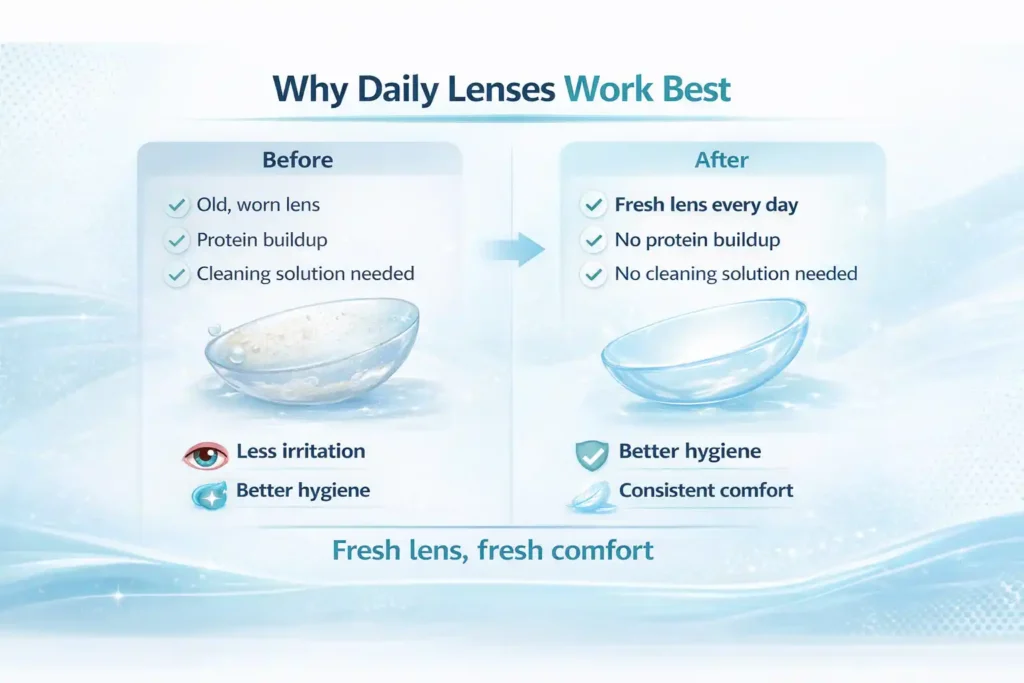
Daily disposable lenses are widely considered one of the best options for dry eyes by eye care professionals. You start every single morning with a fresh, clean, and sterile pair of lenses on your eyes. There is no buildup of proteins, allergens, or debris carried over from the previous day of wear. This clean-start approach removes many common irritants that worsen dry eye symptoms significantly over time.
Many optometrists recommend daily disposables as their preferred starting point for new and existing contact lens wearers. Daily lenses also eliminate the need for cleaning solutions that can sometimes trigger unwanted sensitivity reactions. The popularity of daily disposable lenses has grown significantly over the years among eye care professionals worldwide. For mild to moderate dry eye sufferers, daily lenses are often the very first recommendation made.
Silicone Hydrogel Lenses for Dry Eyes:
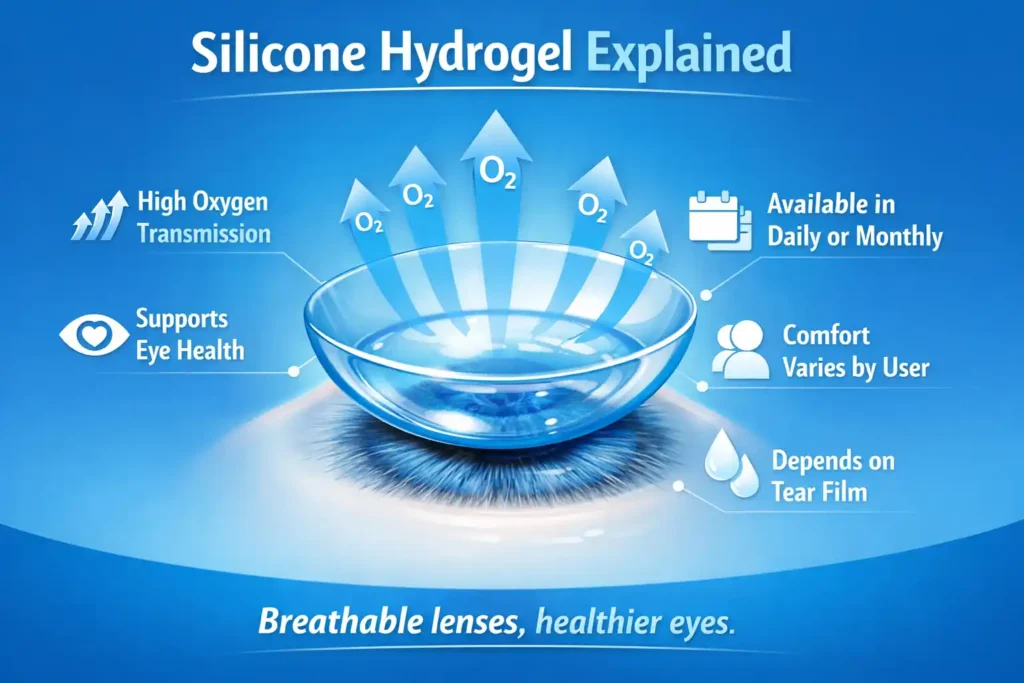
Silicone hydrogel lenses are a popular and well-supported choice for managing dry eye symptoms. These lenses are generally doctor-recommended and account for a large portion of new lens prescriptions written today. They allow high oxygen flow and can support overall eye health. However, comfort can vary depending on the specific lens design and individual tear film. Wearers of silicone hydrogel lenses often report higher comfort levels both during the day and by the end of the day, though this is not universal for every user.
They are available in both daily and monthly replacement schedules to suit a wide range of lifestyles. People with sensitive or dry eyes may benefit from these lenses, especially when paired with the right replacement schedule and care routine. Many eye care professionals recommend silicone hydrogel as a strong starting point when evaluating lens options.
Hybrid and Scleral Lenses for Severe Dry Eyes:
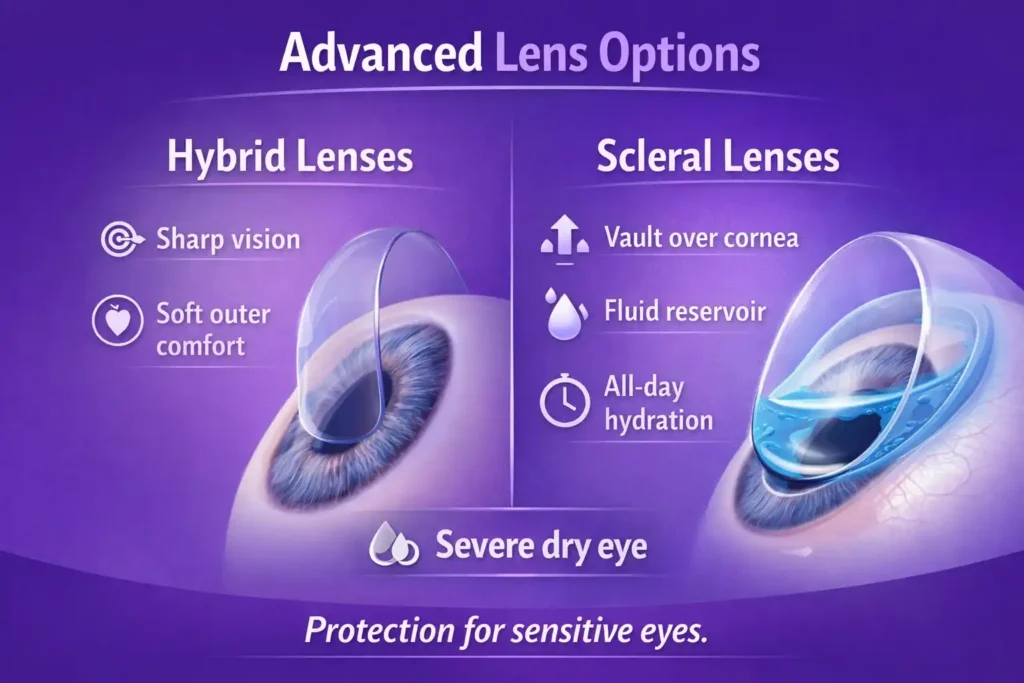
Hybrid lenses combine a rigid gas-permeable center with a comfortable soft outer skirt design for better vision. Their structure can improve stability and comfort while supporting clearer vision. They are ideal for people who need sharper vision correction but also struggle with daily dryness. Scleral lenses are a more advanced option designed specifically for people with severe dry eye conditions.
These lenses are used increasingly for conditions like severe dry eye and complicated or post-surgical corneas. These large-diameter lenses vault completely over the cornea and create a small saline reservoir underneath the lens. Your cornea stays bathed in that fluid throughout the day, providing consistent hydration. Scleral lenses are among the best contacts for dry eyes when symptoms are truly severe and persistent.
Top Contact Lens Brands for Dry Eyes:
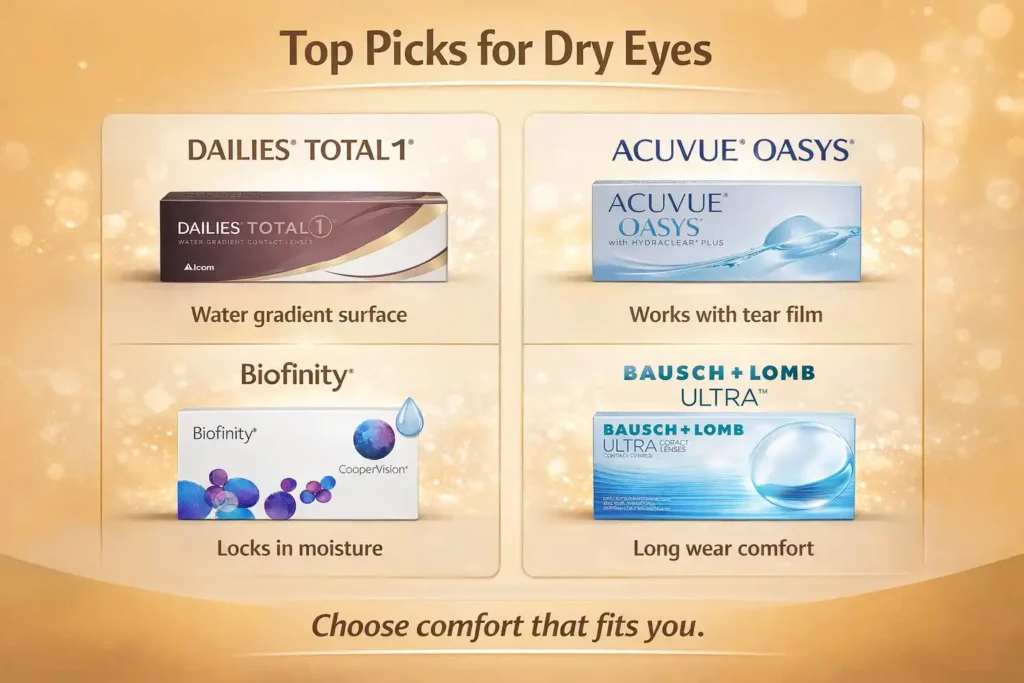
Choosing the right brand is just as important as choosing the right lens type for your needs. Here are some of the most recommended brands when asking what are the best contacts for dry eyes.
Alcon DAILIES Total1 uses a water gradient design that delivers nearly 100% water content at the lens surface. These lenses feel almost invisible on your eyes and are widely recommended for all-day comfort.
ACUVUE OASYS with HydraLuxe is designed to work alongside your natural tear film. It provides consistent moisture and is a strong choice for people who use digital screens heavily. Many wearers report a noticeable reduction in dryness after switching.
Biofinity by CooperVision uses Aquaform Technology to help retain moisture throughout the day. It is a monthly replacement lens that offers excellent oxygen permeability and long-lasting comfort.
Bausch and Lomb Ultra is designed with MoistureSeal Technology to support extended wear comfort. These lenses are particularly popular among people who work long hours or regularly use digital screens.
Practical Tips for Wearing Contacts for Dry Eyes:
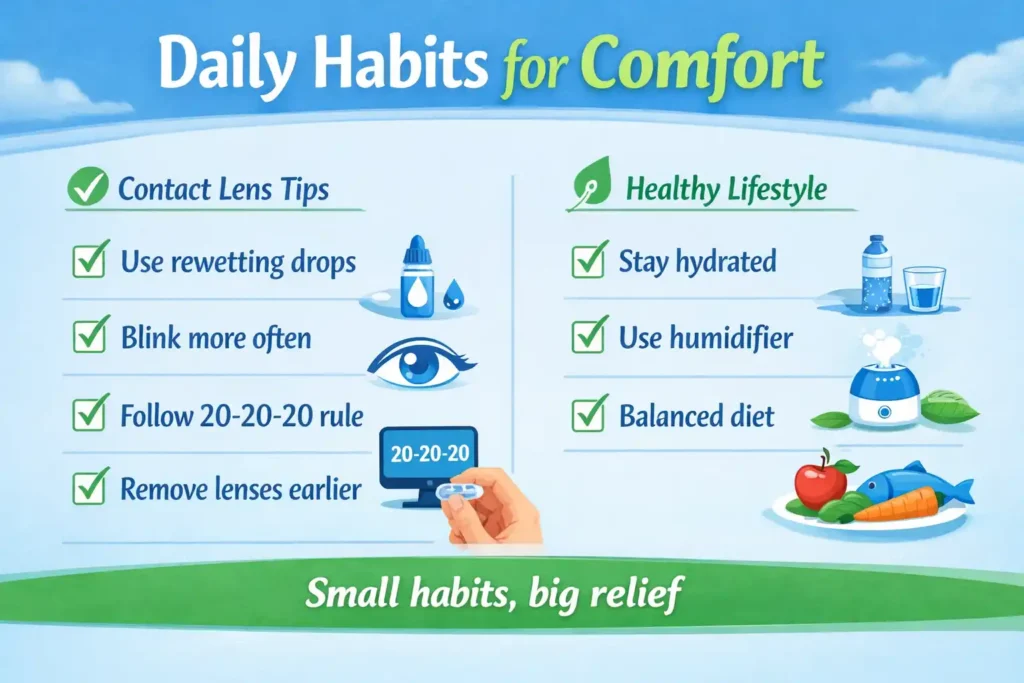
Managing contacts for dry eyes goes beyond just picking the right lens brand or material. Small daily habits can make a noticeable and meaningful difference in how your eyes feel throughout the day. Use preservative-free rewetting drops before and during wear, not just when irritation begins. Make a conscious effort to blink fully and regularly, especially during long and demanding screen sessions.
Practice the 20-20-20 rule: every 20 minutes, look 20 feet away for at least 20 seconds. Remove your lenses an hour or two earlier in the evening to give your eyes proper rest. Some evidence suggests omega-3 fatty acids may support eye health, though results can vary between individuals. Drinking enough water daily and using a humidifier at home can also reduce tear evaporation. If your current lens solution causes sensitivity, try switching to a preservative-free alternative.
When to See Your Eye Doctor?
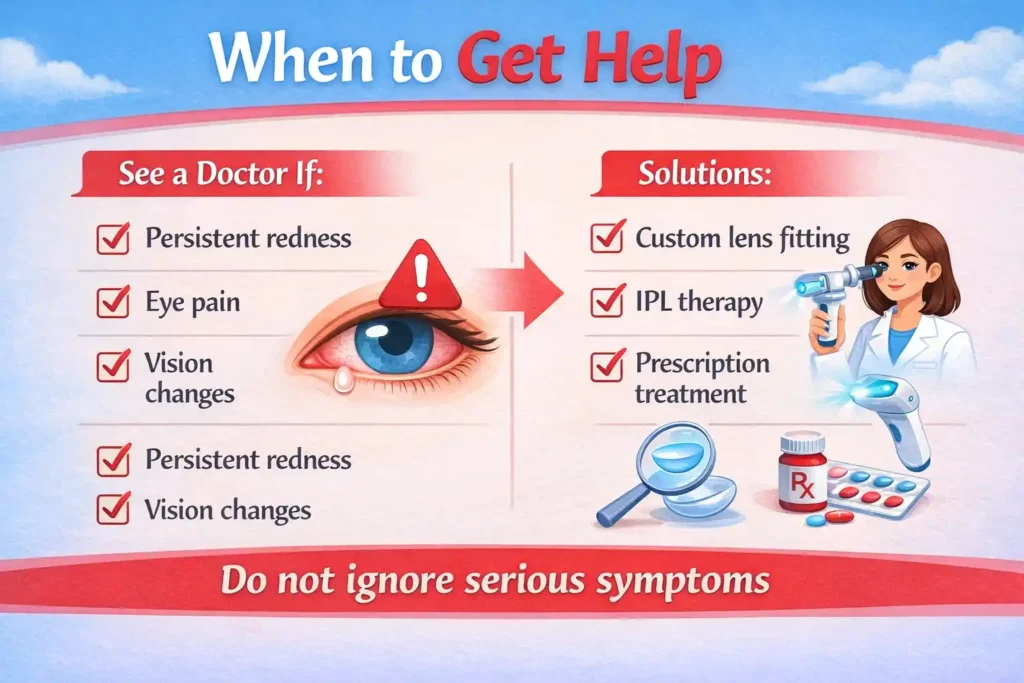
If dry eye symptoms do not improve with better lenses and improved daily habits, you should see a doctor. Persistent redness, pain, or vision changes are signs that something more serious may need to be addressed. A professional fitting ensures your lenses match your exact eye shape and individual tear film quality. Your optometrist can help you find the right contact lenses for dry eyes based on your specific needs. They may also recommend advanced in-office treatments to address the root cause of your dryness.
OptiLIGHT therapy uses intense pulsed light to help reduce inflammation linked to dry eye disease. Meibomian gland expression helps restore the essential oily layer of your tear film. Prescription options like Restasis or Xiidra can help reduce chronic inflammation on the eye surface. These treatments work best alongside the right contact lenses for dry eyes.
Conclusion:
Living with dry eyes does not always mean giving up contact lenses completely. Modern lens technology has made it easier than ever to find improved comfort and clear vision. Whether you choose daily lenses, silicone hydrogel, hybrid, or scleral lenses depends on your specific needs. Combine the right contact lenses for dry eyes with good habits and consistent eye care for the best results. The best contact lenses for dry eyes are available and can be matched to your condition with proper guidance.
Talk to your eye doctor and ask about dry-eye-friendly contact lens fitting options. A proper fitting and personalized care plan can significantly improve your overall wearing experience.
Click here to read more articles about health!


