
Table of Contents:
Introduction:
Food in Colombia, South America, offers an exciting mix of flavors and traditions. Colombian cuisine reflects the country’s diverse landscapes, cultures, and regional cooking styles. From mountain cities to tropical coastlines, every area offers something different. The country’s geography also creates an impressive variety of ingredients and local specialties. Colombia’s food culture combines Indigenous, African, and European influences in many traditional recipes. These influences have shaped dishes enjoyed by families, travelers, and communities nationwide.
If you enjoy discovering local cuisine, Colombia deserves your attention. You can find hearty meals, comforting soups, flavorful snacks, and tropical fruits. Many Colombian dishes also combine simple ingredients with satisfying textures and bold flavors. At Freaky Thread, we love exploring interesting food traditions from around the world. This guide highlights twenty Colombian foods worth trying during your culinary journey.
What Is Colombian Food Like?

Colombian food is highly regional because geography strongly influences local ingredients. The Andes, Caribbean coast, Pacific coast, plains, and Amazon create different culinary traditions. Common ingredients include corn, rice, potatoes, beans, plantains, meat, seafood, and fresh fruits. These ingredients appear in countless combinations across Colombian kitchens and restaurants. Rice often accompanies proteins, vegetables, beans, plantains, or traditional sauces. Potatoes and corn also play important roles in many regional recipes.
Colombian cuisine also reflects the country’s rich cultural history. Indigenous traditions contributed important ingredients, cooking techniques, and agricultural knowledge. African and European influences also helped shape many regional recipes. This cultural combination makes Colombian food especially varied and interesting for travelers. You may notice completely different meals when traveling between Colombian regions. That regional variety makes exploring food part of the travel experience.
Many traditional meals are filling because they combine several substantial ingredients. A typical plate might include rice, beans, meat, plantains, and vegetables. However, Colombian cuisine is not limited to heavy meals and savory dishes. Fresh tropical fruits, juices, desserts, soups, and snacks are equally important. Therefore, exploring Colombia through food can reveal its culture beautifully.
You may also like:
Traditional Colombian Foods You Should Try:

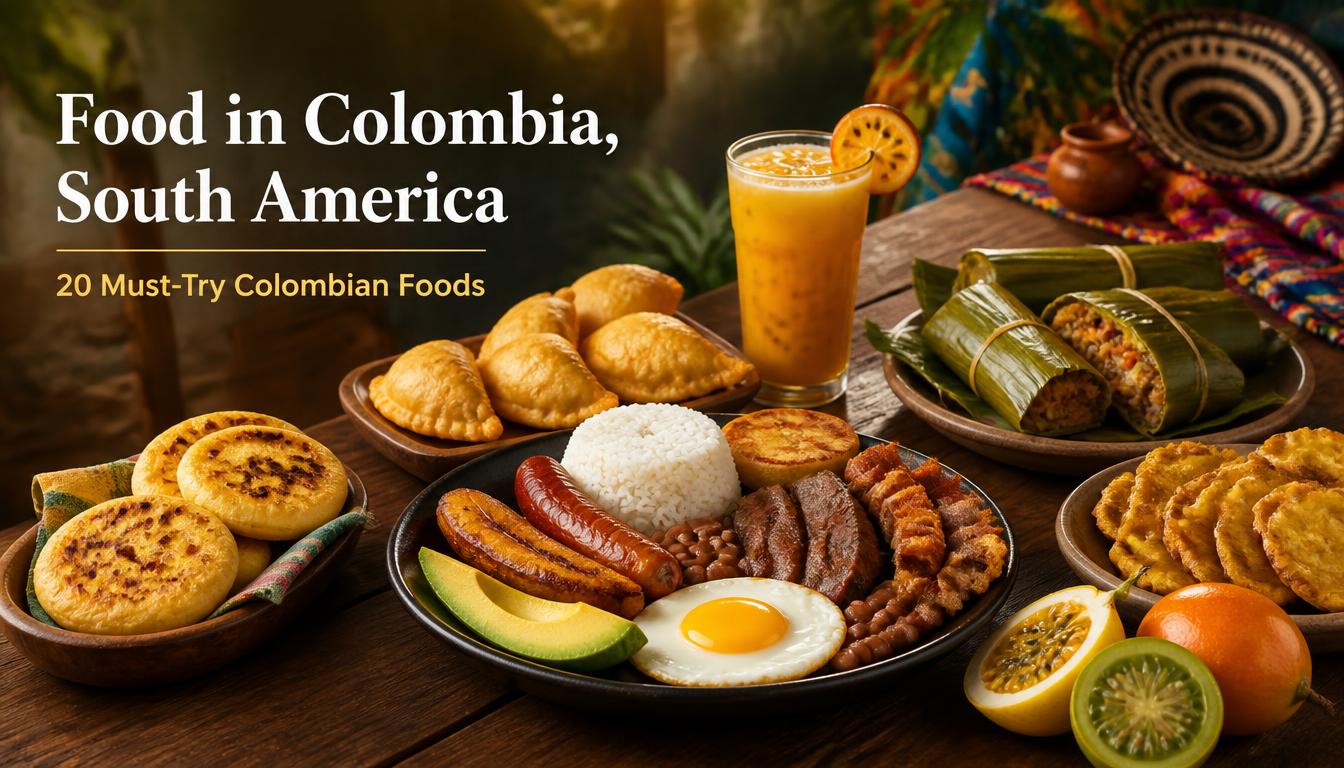
Bandeja paisa is one of Colombia’s most recognizable traditional dishes. It originated in Antioquia and is known for its generous combination of ingredients. A typical serving includes beans, rice, ground meat, chicharrón, plantain, and avocado. It can also include an egg, arepa, chorizo, and hogao sauce. The dish reflects the hearty food traditions associated with the Paisa region.
Ajiaco is another famous Colombian dish, especially around Bogotá. This comforting soup traditionally combines chicken, potatoes, corn, and guascas. It is commonly served with capers, cream, avocado, and other accompaniments. The combination creates a rich meal that works especially well during cooler weather.
Arepas are among the most recognizable foods associated with Colombia. These corn-based foods can vary considerably depending on their region. Some are thin and simple, while others contain cheese or different fillings. Arepas can accompany breakfast, lunch, dinner, or snacks throughout the day. Their versatility makes them an important part of Colombian food culture.
Sancocho is a traditional soup with many regional variations across Colombia. Depending on location, cooks may prepare it with meat, chicken, fish, or seafood. Common ingredients can include plantains, potatoes, cassava, corn, herbs, and other vegetables. Sancocho is often associated with gatherings, family meals, and relaxed outdoor occasions.
Tamales are another traditional food with numerous Colombian regional variations. Colombian tamales can contain ingredients such as chicken, pork, rice, vegetables, or corn. They are wrapped in plantain leaves before being steamed until completely cooked. Different regions use distinctive ingredients and preparation methods for their tamales.
Lechona is particularly associated with Colombia’s Tolima region. This festive dish traditionally combines pork with seasoned rice, peas, and other ingredients. The preparation creates a rich meal often enjoyed during celebrations and special gatherings. Its distinctive preparation has made lechona famous throughout Colombia and beyond.
Patacones are made from green plantains that are flattened and fried. They become crisp outside while remaining satisfying and substantial inside. Patacones commonly accompany seafood, meats, rice dishes, and coastal Colombian meals. They are especially popular along Colombia’s Caribbean and Pacific coastal regions.
Empanadas are another popular choice when exploring Colombian food. Colombian versions commonly use corn-based dough with savory fillings inside. Fillings may include meat, potatoes, chicken, cheese, or combinations of different ingredients. They are widely enjoyed as snacks, making them easy foods for travelers to try.
You may also like:
Colombian Street Foods and Snacks:

Colombian street food provides another excellent way to experience local flavors. Many popular snacks are inexpensive, convenient, and commonly enjoyed throughout different regions. Arepa de huevo is particularly associated with Colombia’s Caribbean coast. This fried corn cake contains an egg inside and develops a crispy exterior. Some versions may also include meat, creating an even more filling snack.
Carimañolas are another Caribbean favorite worth adding to your food list. These cassava fritters are commonly filled with cheese, meat, or other savory ingredients. Their crispy exterior contrasts nicely with the soft cassava-based filling. They are often enjoyed as breakfast foods, snacks, or casual street meals.
Buñuelos are fried Colombian cheese breads with a light and distinctive texture. They are especially popular around holidays but can appear throughout the year. Pan de bono is another cheese bread made with cassava starch and cheese. Both snacks demonstrate how simple ingredients can create memorable Colombian flavors.
Chicharrón is another familiar ingredient found across many Colombian dishes. It consists of seasoned pork that develops a crispy exterior during cooking. You can find it alongside beans, rice, plantains, arepas, and other traditional foods. It also appears as part of the famous bandeja paisa.
Street food also provides opportunities to discover regional specialties beyond famous national dishes. Coastal areas offer seafood, fried fish, coconut rice, and plantain-based foods. Inland regions provide different soups, meats, breads, and corn-based preparations. Therefore, trying local snacks can make your Colombian food experience more varied.
You may also like:
Colombian Fruits, Desserts, and Sweet Treats:

Colombia’s tropical environment provides an impressive selection of fruits. Lulo is a popular fruit with a distinctive tangy flavor and refreshing character. It is commonly used in juices, smoothies, desserts, and other beverages. Maracuyá, commonly known as passion fruit, offers a bright and tangy taste. Guanábana has creamy flesh and a distinctive flavor often used in drinks.
Granadilla is another fruit worth trying during your Colombian food adventure. Its sweet pulp and crunchy seeds create an interesting eating experience. Corozo is another tropical fruit associated with Colombia’s diverse regional food traditions. These fruits demonstrate how biodiversity contributes to Colombian culinary culture.
Colombian desserts also offer plenty of variety for travelers with sweet preferences. Arequipe is a popular caramel-like milk preparation enjoyed across Colombia. It can appear as a filling, topping, spread, or standalone sweet treat. Cocadas combine coconut with sweet ingredients and are especially associated with coastal regions.
Tres leches is another dessert commonly found throughout Colombia and Latin America. It features a soft cake soaked with a mixture of three milks. The result is rich, moist, creamy, and particularly satisfying after savory meals. Traditional sweets can also include guava-based treats, coconut desserts, and panela preparations.
Trying local fruits can also be an easy way to explore Colombian flavors. Markets often provide opportunities to see unfamiliar fruits alongside familiar favorites. Fresh juices are especially popular because tropical fruits provide naturally vibrant flavors. For adventurous food lovers, Colombia’s fruit selection can become a major highlight.
You may also like:
Colombian Drinks and Regional Specialties:

Colombian coffee deserves attention when discussing food in Colombia South America. Colombia is internationally recognized for its coffee production and strong coffee traditions. Coffee-growing regions are concentrated mainly within the country’s mountainous areas. Visiting these regions can provide insight into how Colombian coffee reaches consumers worldwide.
Aguapanela is another traditional Colombian drink made from panela and water. It can be served hot or cold depending on the occasion. Lemon or lime may also be added for extra freshness and flavor. Fruit juices are equally popular, particularly those made with lulo or maracuyá. These drinks provide refreshing options alongside heavier traditional meals.
Regional differences become especially noticeable when traveling across Colombia. Andean cuisine often features potatoes, corn, beans, meats, and hearty preparations. Caribbean cooking commonly includes seafood, plantains, coconut, cassava, and rice. Pacific cuisine places strong emphasis on seafood, fish, coconut, and regional ingredients.
The Llanos region is known for beef-centered culinary traditions and open-fire cooking. Tolima and Huila are strongly associated with dishes such as lechona and regional tamales. Santander has its own distinctive dishes, including regional meat preparations and soups. These differences show why Colombian cuisine cannot be represented by one single meal.
You may also like:
Tips for Exploring Food in Colombia:

Exploring Colombian cuisine becomes easier when you remain open to regional specialties. Instead of ordering familiar foods everywhere, ask locals about popular regional dishes. Restaurants serving traditional cuisine can provide more authentic opportunities for culinary discovery. Local markets can also introduce you to unfamiliar fruits, snacks, and ingredients.
Trying street food can be another enjoyable part of your experience. Choose busy food stalls where locals regularly purchase freshly prepared items. Pay attention to cleanliness and food handling when choosing unfamiliar street foods. Freshly prepared meals are generally a better choice during your travels.
Do not expect every Colombian dish to taste exactly alike. Recipes can change considerably between families, cities, and different Colombian regions. Even popular dishes may contain different ingredients depending upon local traditions. This variety is one reason Colombian cuisine remains interesting for returning travelers.
Consider creating a simple food checklist before visiting different Colombian destinations. You could include traditional meals, street snacks, tropical fruits, desserts, and beverages. Then try several regional specialties instead of focusing on famous dishes alone. This approach can help you discover foods that receive less international attention.
You may also like:
Conclusion:
Food in Colombia, South America, offers far more than a collection of famous dishes. It provides an opportunity to understand Colombia through ingredients, traditions, regions, and family recipes. From bandeja paisa and ajiaco to arepas and sancocho, choices remain incredibly diverse. Street foods also provide convenient ways to discover everyday Colombian flavors.
Tropical fruits add another exciting dimension to the country’s culinary identity. Lulo, maracuyá, guanábana, and granadilla offer flavors many international travelers rarely encounter. Colombian coffee also provides an important connection between agriculture, culture, and regional traditions. Meanwhile, desserts and traditional drinks create enjoyable ways to finish Colombian meals.
The best approach involves exploring different regions with curiosity and an open mind. Every destination can introduce new ingredients, preparation methods, and traditional recipes. Whether you visit Colombia for its landscapes, culture, or food, eating locally adds meaning. For more food, travel, lifestyle, and culture guides, visit Freaky Thread regularly. Colombia’s culinary diversity makes every meal another opportunity to discover something memorable.


