
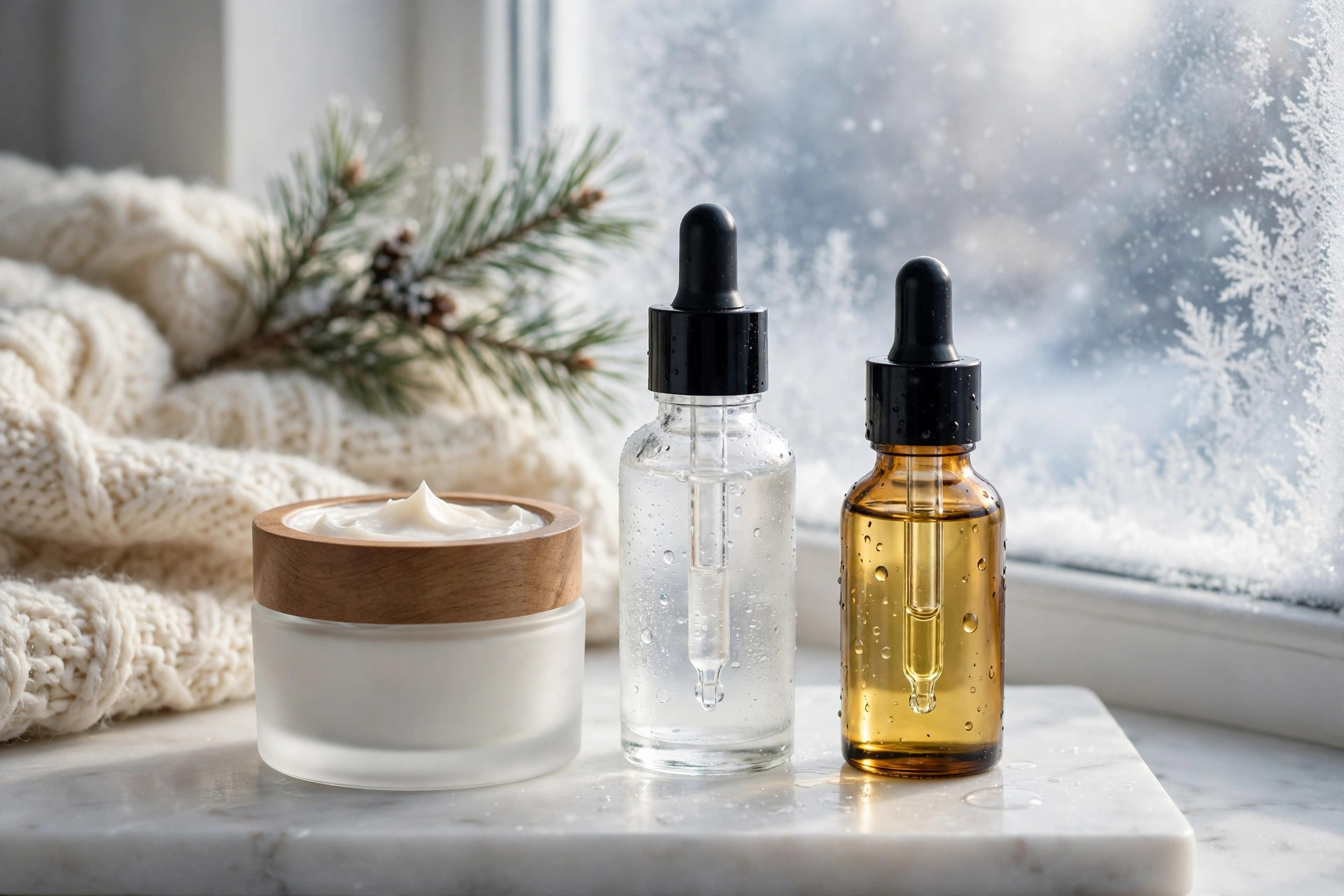
Cold air outside, dry heat inside, and suddenly your skin feels tight, flaky, and itchy by midday. If that sounds familiar, your summer routine is not failing you. Winter simply asks more of your skin, and a few small changes can make a real difference. You do not need a shelf full of new products or a complicated ten step ritual. You need the right products, in the right order, used consistently morning and night.
A winter skincare routine for dry skin works best when you cleanse gently, layer hydration, and seal it in with a rich moisturizer. Use a creamy cleanser, a hydrating serum, and a ceramide cream morning and night, and finish mornings with sunscreen. Skip harsh scrubs and hot water, which strip the oils your skin needs in cold weather.
Why Does Winter Make Dry Skin Worse?
Winter makes dry skin worse because cold outdoor air holds very little moisture, and heated indoor air pulls even more water from your skin. Every time you move between a heated room and the cold street, your skin loses water faster than usual. Hot showers feel wonderful in January, but they wash away the natural oils that keep your skin barrier strong. The result is the familiar winter pattern: tight cheeks after washing, flaky patches around the nose, and itchy shins under thick tights.
Your skin barrier is a wall of skin cells held together by lipids, and winter weakens that wall. When the barrier is damaged, water escapes and irritants get in more easily. That is why skin that felt fine in September can sting, redden, and peel by December. The fix is not to scrub the flakes away. The fix is to protect the barrier, add water back, and lock it in.
What Should a Winter Skincare Routine Include?
A good winter skincare routine for dry skin includes five kinds of products: a gentle cleanser, a hydrating serum, a rich moisturizer, a broad spectrum sunscreen for mornings, and an optional facial oil or balm for extra dry nights. Each one has a job, and none of them needs to be expensive. Look for ceramides, hyaluronic acid, glycerin, and squalane on the label. These ingredients either attract water into the skin or stop it escaping, which is exactly what winter skin needs.
Ceramides
Ceramides are lipids that occur naturally in your skin barrier, and they act like mortar between the bricks of your skin cells. A moisturizer rich in ceramides helps repair a barrier that cold weather has weakened. If your skin stings when you apply products, a ceramide cream is often the gentlest place to start.
Hyaluronic Acid
Hyaluronic acid is a humectant, which means it pulls water into the top layers of your skin. It works best on damp skin, so apply it right after cleansing while your face is still slightly wet. Used alone in dry winter air, it can leave skin feeling tight, so always follow it with a cream that seals the moisture in.
Squalane and Facial Oils
Squalane is a light oil that mimics the oils your skin makes naturally, and it sinks in without feeling greasy. A few drops pressed over your moisturizer on very cold nights add an extra layer of protection. Facial oils are not a replacement for moisturizer. They work best as a final seal over a good cream.

Your Morning Winter Skincare Routine
Your morning winter skincare routine should protect your skin for the day ahead, and it takes about five minutes. Keep the water lukewarm, work in thin layers, and let each layer settle for a few seconds before the next one. Here is the order that works.
- Rinse with lukewarm water or wash with a creamy, low foam cleanser. Skip the squeaky clean feeling. If your skin feels tight after washing, your cleanser is too harsh for winter.
- If your skin turns red in cold wind, mist lightly with hypochlorous acid spray and let it dry. It calms redness without drying your skin further.
- While your skin is still slightly damp, smooth on a hyaluronic acid serum. Two or three drops are enough for your whole face.
- Apply a rich moisturizer with ceramides. Use a little more than you would in summer, and press it in gently instead of rubbing.
- Dab a small amount of eye cream around the eyes if that area feels dry. This step is optional, but winter wind is hardest on thin skin.
- Finish with a broad spectrum sunscreen of SPF 30 or higher, even on cloudy days. Winter sun and snow glare still damage skin, and sunscreen also adds a light protective layer.
- Wait a few minutes before makeup so the layers can settle. Moisturized skin holds foundation far better than dry, flaky skin.

Your Evening Winter Skincare Routine
Your evening winter skincare routine is when repair happens, so this is the time to be generous with moisture. Night is also when you can use richer textures that would feel too heavy under makeup. Give yourself ten unhurried minutes and treat it as a small ritual at the end of the day.
- Remove makeup and sunscreen with a gentle cleansing balm or micellar water, then follow with your creamy cleanser. This double cleanse keeps pores clear without stripping your skin.
- On damp skin, apply the same hyaluronic acid serum you use in the morning. Hydration layers work just as well at night.
- Smooth on a thicker night cream or a sleeping mask. Night creams are usually richer than day creams, and your skin can drink them in while you sleep.
- If your skin still feels tight, press two or three drops of squalane or facial oil over the cream. This seals everything underneath and stops water loss overnight.
- Finish with a thick lip balm, since lips have no oil glands and crack fast in winter air. A plain petrolatum balm works better than a scented one.
- Once or twice a week, swap the serum step for a gentle exfoliant if your skin tolerates it. Use a mild lactic acid product, never a harsh scrub, and skip it entirely if your skin is raw or stinging.

AM vs PM: How Do the Two Routines Differ?
Morning and evening routines share the same building blocks, but their goals are different. Mornings are about protection, evenings are about repair. This table shows the difference at a glance.
| Step | Morning Routine | Evening Routine |
|---|---|---|
| Cleanser | Lukewarm rinse or creamy cleanser | Double cleanse to remove makeup and sunscreen |
| Treatment | Hyaluronic acid serum on damp skin | Hyaluronic acid serum, plus gentle exfoliant once or twice a week |
| Moisturizer | Rich ceramide cream | Thicker night cream or sleeping mask |
| Extra seal | None needed | Facial oil pressed over cream on very dry nights |
| Final step | Broad spectrum sunscreen SPF 30 or higher | Thick lip balm |
What Mistakes Make Winter Dry Skin Worse?
Even a good routine can fail if a few daily habits work against it. These are the mistakes that make winter dry skin worse, and each one is easy to fix.
- Taking long hot showers. Hot water strips the oils from your skin faster than anything else in winter. Keep showers warm and short, and moisturize within a few minutes of towelling off.
- Using a foaming cleanser meant for oily skin. Foaming washes often contain strong surfactants that leave dry skin squeaky and tight. Switch to a creamy or milky cleanser until spring.
- Exfoliating every day. Scrubbing flakes away feels satisfying, but it damages the barrier and creates more flakes. Exfoliate gently, once or twice a week at most.
- Skipping moisturizer because your skin feels oily by midday. That midday shine is often dehydration, not oiliness. A rich cream in the morning usually fixes it within a week.
- Forgetting sunscreen in winter. Snow reflects sunlight, and UV rays pass through clouds. Sunscreen is a year round step, not a summer one.
- Licking chapped lips. Saliva evaporates fast and leaves lips drier than before. Keep a plain balm in every coat pocket instead.
How Do You Pick the Right Winter Moisturizer?
You pick the right winter moisturizer by choosing a cream, not a lotion, and checking the label for ceramides, glycerin, and squalane. Creams contain more oil than lotions, so they form a stronger seal against cold air. A good winter cream feels rich when you apply it, but it should sink in within a few minutes and leave your skin soft, not greasy. If your skin still feels tight an hour after applying, the cream is too light for your winter needs.
Fragrance free formulas are the safest choice when skin is already irritated, since added fragrance can sting on raw patches. You do not need the most expensive jar on the shelf. Many affordable drugstore creams contain the same ceramides and humectants as luxury ones, and the best moisturizer is the one you will actually use twice a day. Winter dryness does not stop at your face either. If your hair looks dull in cold weather too, a simple hair glossing treatment can bring back shine while your skin routine does its work.
Frequently Asked Questions
How long does it take for a winter skincare routine to work?
Most people feel relief from tightness within a few days, and visible flakes usually improve within one to two weeks of consistent use. Barrier repair is slower, so give a new routine at least three to four weeks before judging it. If redness, stinging, or flaking gets worse instead of better, stop the newest product and return to the gentlest steps.
Should you exfoliate dry skin in winter?
Yes, but gently and rarely. A mild chemical exfoliant once or twice a week removes dead skin so moisturizer can sink in, but harsh scrubs and daily acids damage the barrier and make dryness worse. Skip exfoliation entirely on days when your skin feels raw, and always moisturize well afterwards.
Can you use the same moisturizer all year?
You can, but most people with dry skin need a richer cream in winter than in summer. Humidity drops sharply in cold months, so a light summer lotion often cannot keep up. Keep your summer moisturizer for mild days and switch to a thicker cream when the temperature drops and indoor heating starts.
Is hyaluronic acid enough on its own in winter?
No, hyaluronic acid alone is not enough in winter. It pulls water into the skin, but in dry air that water can evaporate again unless you seal it in with a cream or oil. Always layer a moisturizer over hyaluronic acid, and apply the serum to damp skin for the best result.
Key Takeaways
- Cleanse gently with lukewarm water and a creamy cleanser, never a harsh foaming wash.
- Layer hydration in thin steps: serum on damp skin, then a rich ceramide cream.
- Protect in the morning with sunscreen, and repair at night with a thicker cream or facial oil.
- Avoid hot showers, daily scrubs, and skipping moisturizer, since all three damage the skin barrier.
- Give a new routine three to four weeks before judging it, and choose fragrance free formulas if your skin stings.
Conclusion
Building a winter skincare routine for dry skin is simpler than it looks. Gentle cleansing, layered hydration, and a rich moisturizer morning and night will carry most skin through the coldest months. Pay attention to what your skin tells you, adjust the richness of your cream as the weather changes, and be patient while your barrier recovers. Once your skin is moisturized, fragrance lasts longer too, so apply your cream first and then layer perfume over it for a scent that stays with you all day. Soft, comfortable winter skin is not about buying more products. It is about using the right ones, in the right order, every single day.


