Introduction
:
Modal fabric has become increasingly popular in the fashion industry due to its softness, breathability, and eco-friendly appeal. But many people still ask an important question: Is modal fabric safe or toxic?
In this guide, we’ll break down everything you need to know about modal fabric, including how it’s made, its safety for skin, and its environmental impact.
What Is Modal Fabric? :
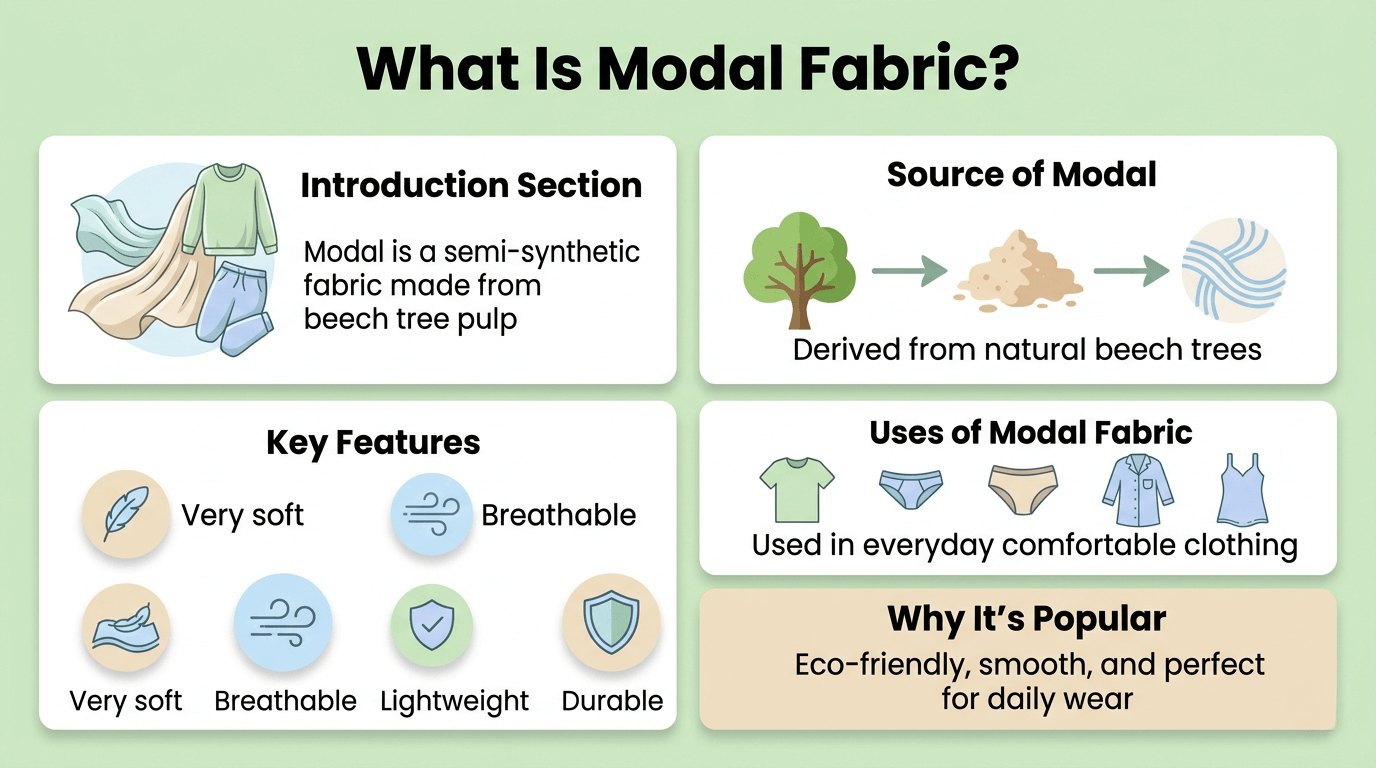
Modal is a semi-synthetic fabric made from the pulp of beech trees. It belongs to the rayon family and is known for its silky texture and durability.
Key Features:
- Extremely soft and smooth
- Lightweight and breathable
- Moisture-wicking
- Resistant to shrinkage
How Is Modal Fabric Made? :
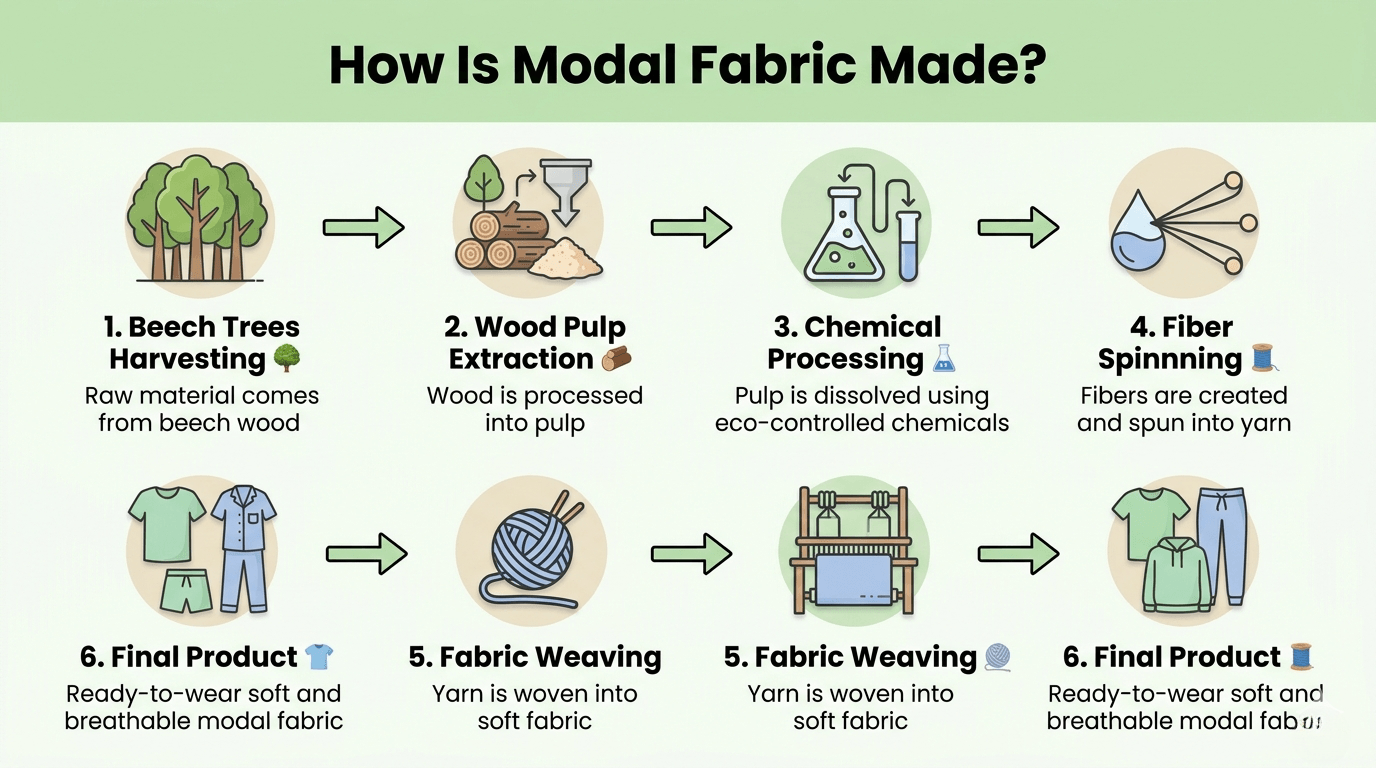
Modal fabric is produced through a multi-step process:
- Beech trees are harvested
- Wood pulp is extracted
- The pulp is treated with chemicals to form fibers
- Fibers are spun into yarn
- Yarn is woven into fabric
Although chemicals are used during production, they are typically removed during processing.
Is Modal Fabric Toxic? :
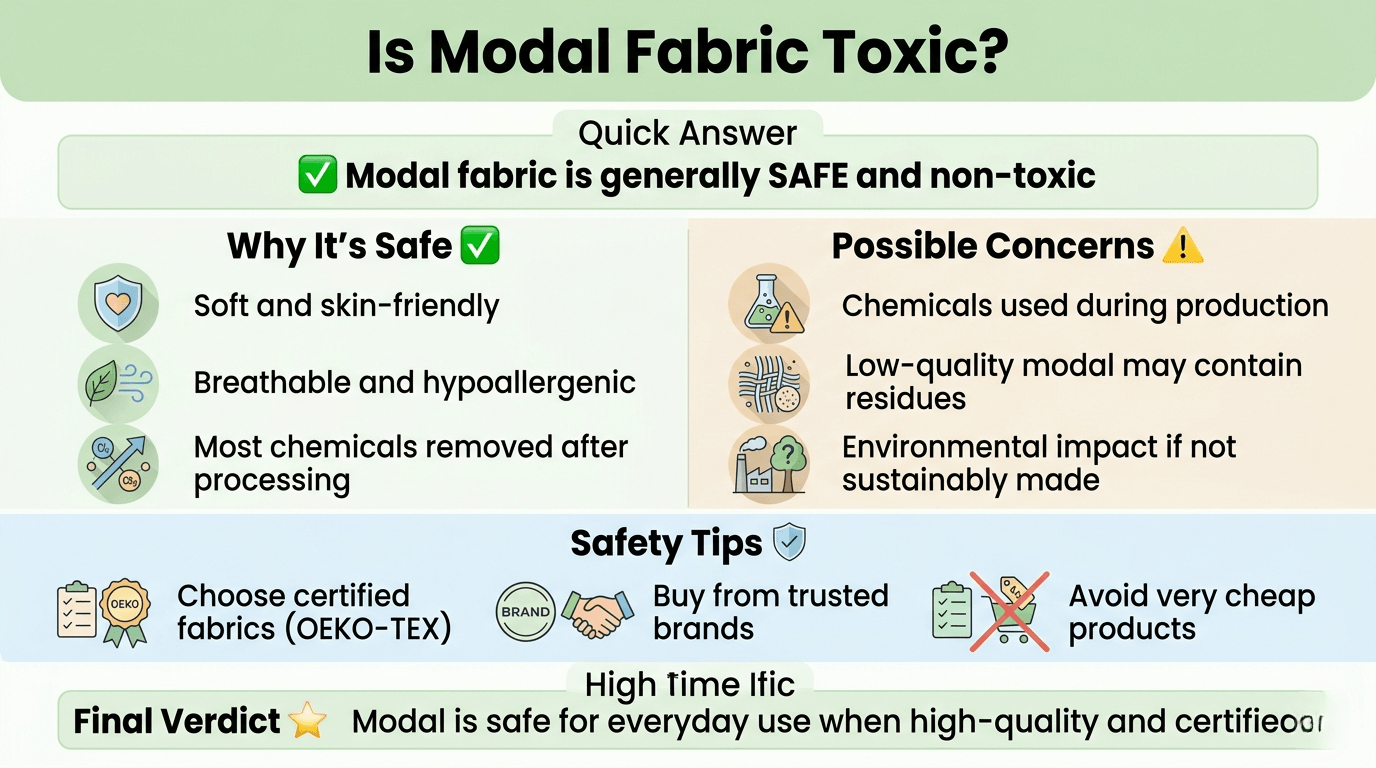
Short answer: No, modal fabric is generally not toxic.
Why It’s Considered Safe:
- Most chemicals are washed out before the final product
- It is gentle and safe for everyday use
- Often certified by safety standards like OEKO-TEX
Possible Concerns:
- Chemical use during manufacturing
- Low-quality products may contain residues
- Environmental impact if not responsibly produced
Is Modal Fabric Safe for Skin?:
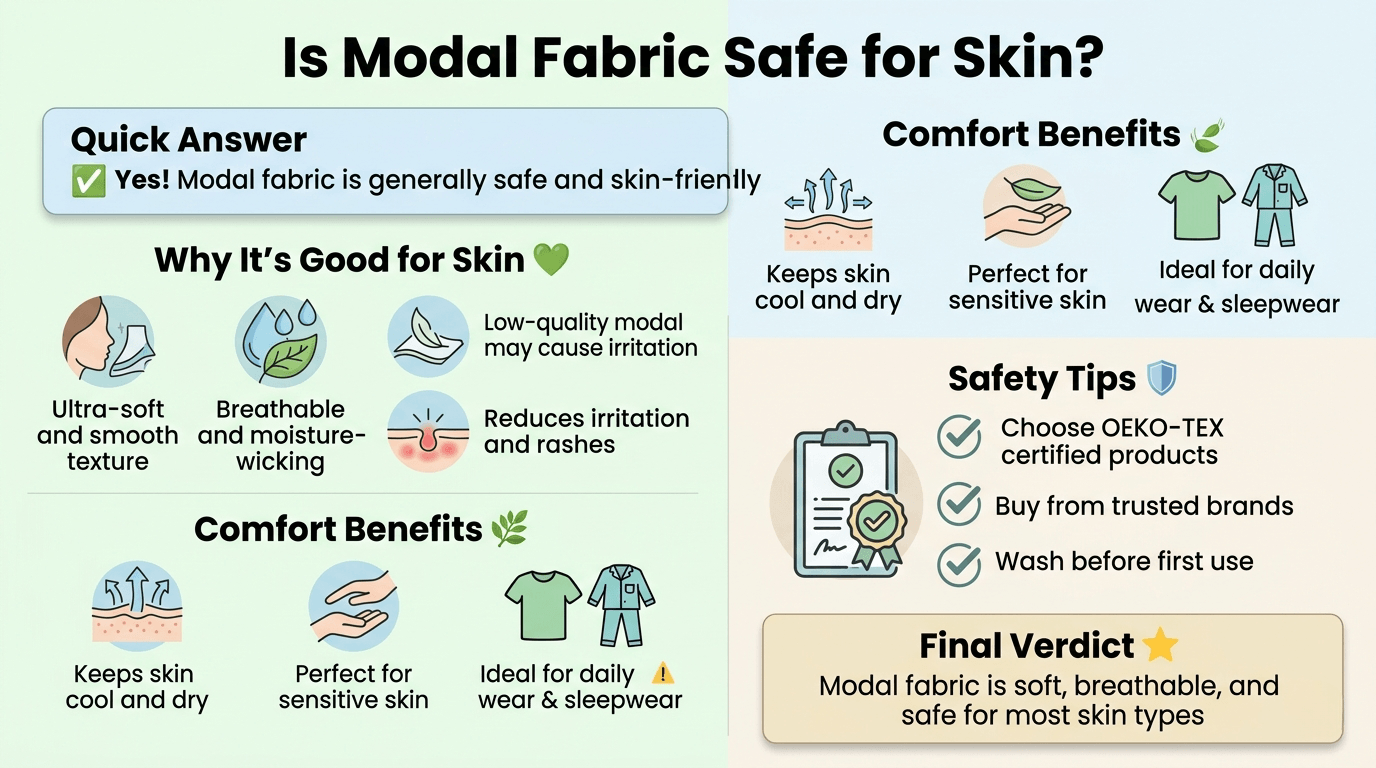
Yes, modal fabric is widely considered skin-friendly.
Benefits for Skin:
- Hypoallergenic properties
- Soft texture reduces irritation
- Breathable, keeping skin cool and dry
This makes it a popular choice for underwear, sleepwear, and activewear.
Is Modal Fabric Eco-Friendly?:
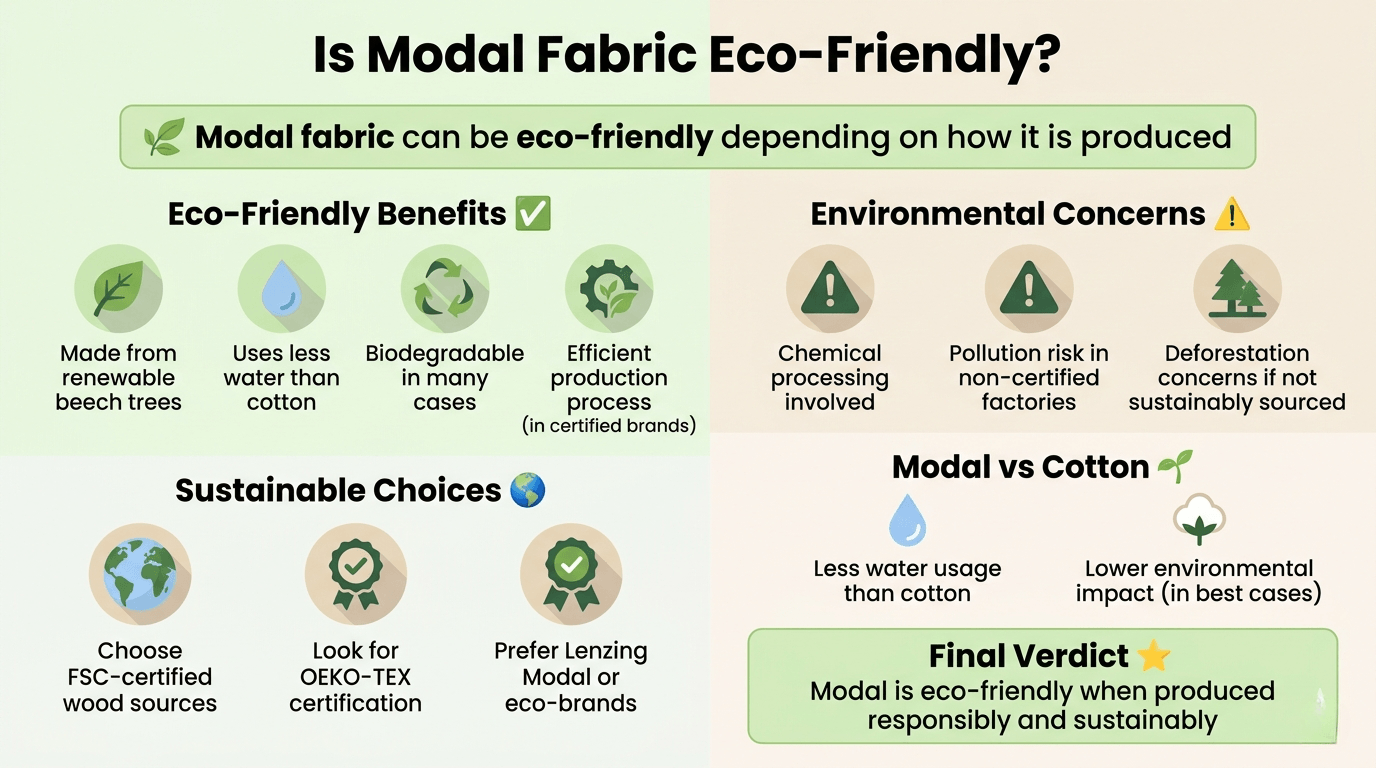
Modal can be eco-friendly, but it depends on how it is produced.
Eco Benefits:
- Made from renewable beech trees
- Uses less water than cotton
- Biodegradable in many cases
Environmental Concerns:
- Chemical processing involved
- Potential pollution in non-certified factories
Choosing certified modal (like Lenzing Modal) ensures better sustainability.
Tips to Choose Safe Modal Fabric:
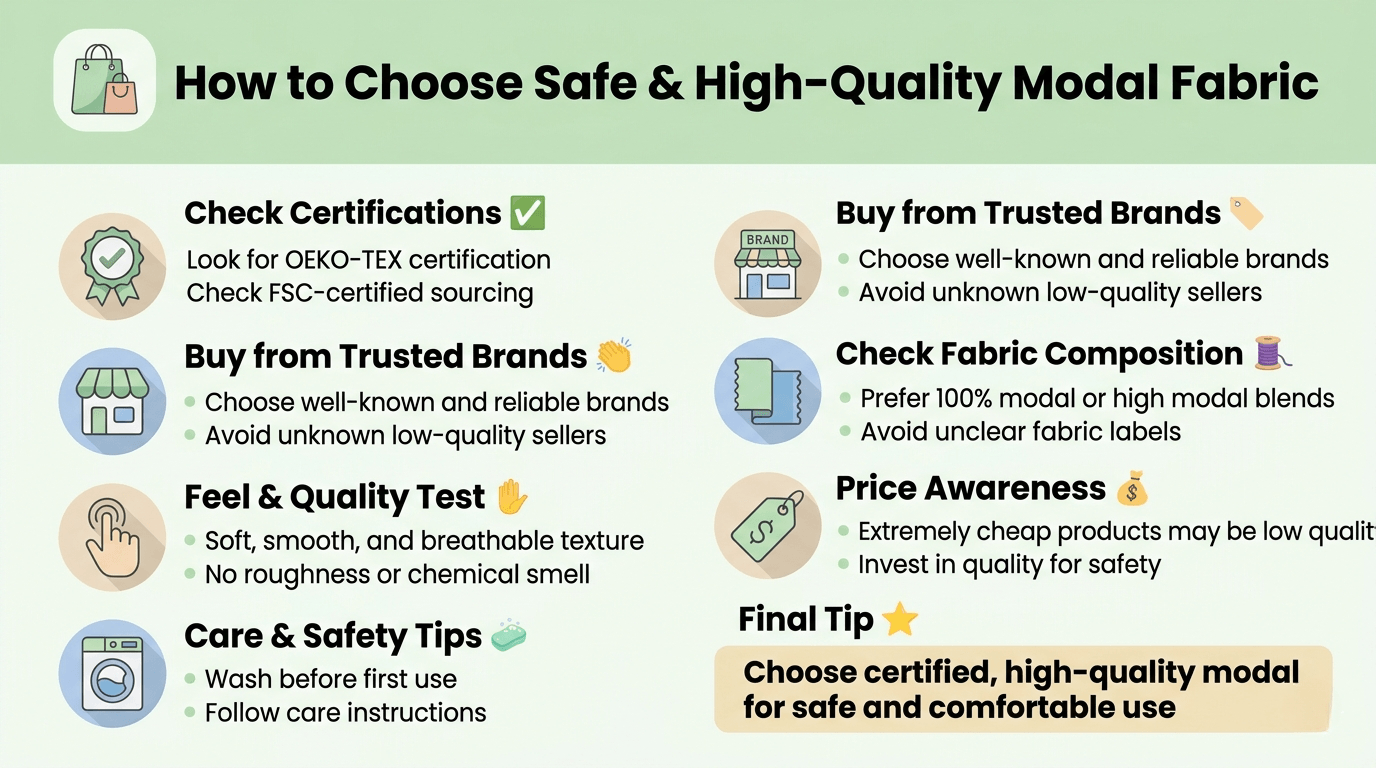
- Look for certifications (OEKO-TEX, FSC)
- Buy from trusted brands
- Check fabric composition (prefer high modal content)
- Avoid very cheap, low-quality products
Conclusion:
Modal fabric is generally considered safe, non-toxic, and comfortable for everyday use, making it a popular choice in modern clothing. Its soft texture, breathability, and skin-friendly nature make it ideal for people with sensitive skin, as well as for items like underwear and sleepwear.
However, it’s important to understand that modal is not completely risk-free. The use of chemicals during its production and potential environmental impact means that quality and sourcing matter a lot. Low-quality modal fabrics may contain residues or may not follow sustainable practices.
To ensure safety and sustainability, always choose certified and high-quality modal products, such as those with OEKO-TEX or FSC certifications. These options are produced with better environmental standards and stricter safety controls.