
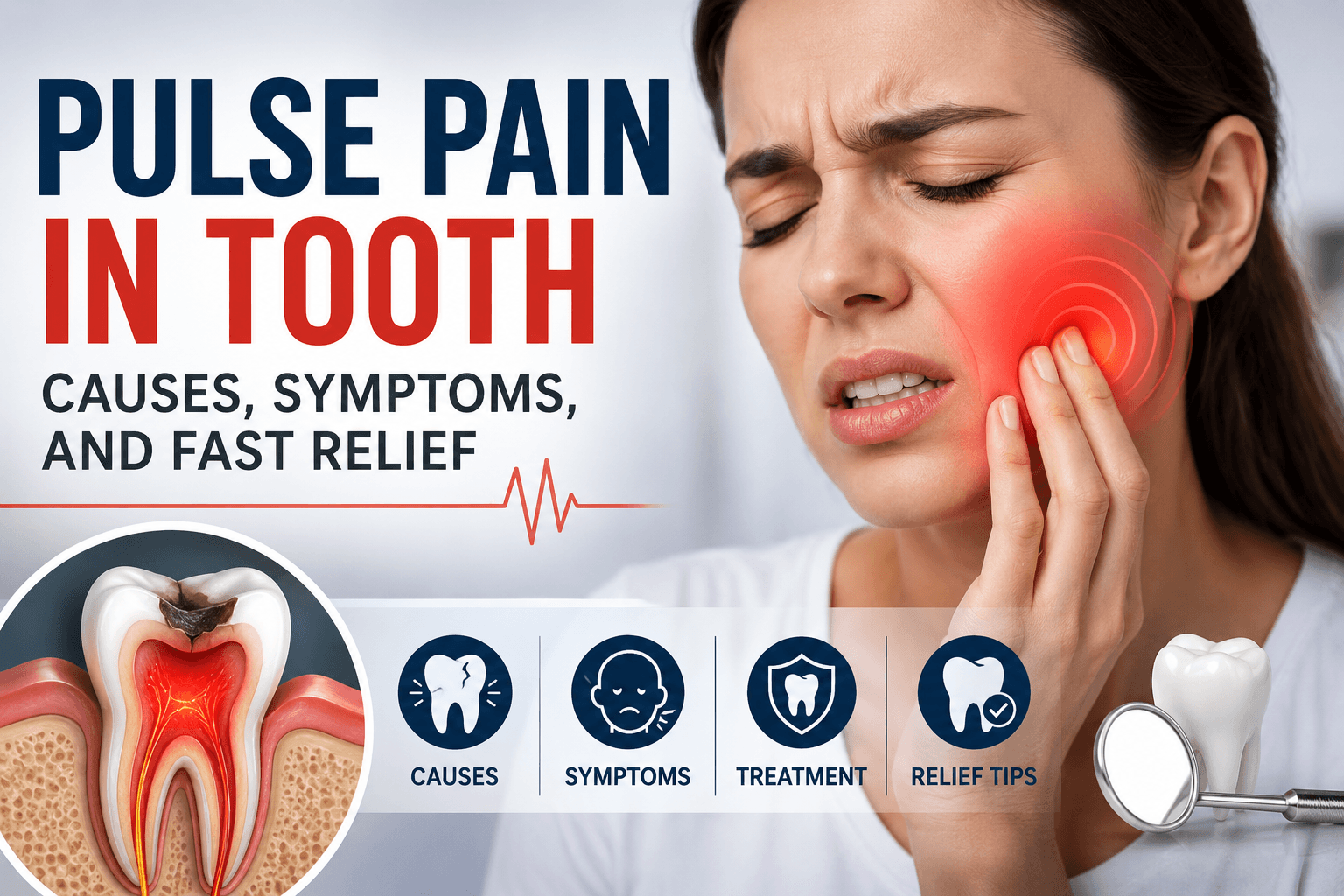
Introduction:
A sudden pulse pain in tooth areas can quickly disrupt your daily routine. The pain often feels sharp, throbbing, or constant throughout the day. Many people ignore the problem initially, hoping the discomfort will disappear naturally. Unfortunately, untreated tooth pain often becomes more severe with time.
In many situations, pulse pain in tooth nerves signals inflammation or infection inside the tooth. The discomfort may worsen during eating, drinking, or sleeping at night. Some people also notice swelling, headaches, or pressure around the jawline. Understanding the causes early can help you avoid serious dental complications later.
This guide from Freaky Thread explains common causes, symptoms, and fast relief methods for pulse pain in tooth areas.
What Does Pulse Pain in Tooth Mean?
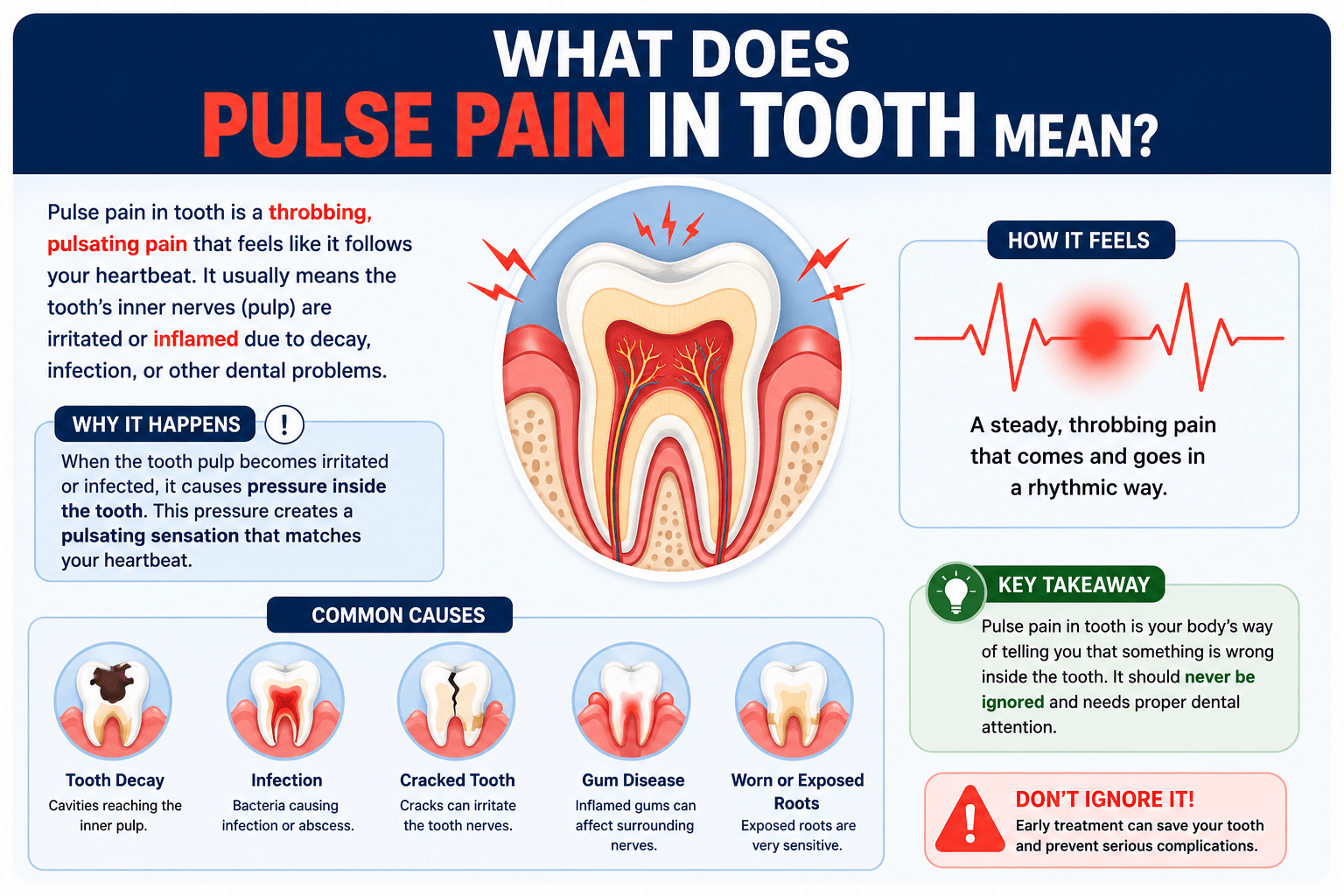
Pulse pain in tooth nerves usually describes a throbbing sensation that follows your heartbeat rhythm. This pain often develops when the tooth nerve becomes irritated or inflamed internally. The discomfort may remain mild initially but can intensify rapidly without proper treatment.
The inner section of every tooth contains sensitive nerves and blood vessels called pulp. When bacteria reach this area through decay or damage, pressure builds inside the tooth structure. That pressure creates the pulsating feeling many people describe during dental infections.
Some individuals experience temporary pain after eating extremely cold or hot foods regularly. Others notice constant throbbing pain that interferes with sleep, concentration, and normal eating habits. Persistent symptoms should never be ignored because they may indicate serious oral health problems.
Common Causes of Pulse Pain in Tooth
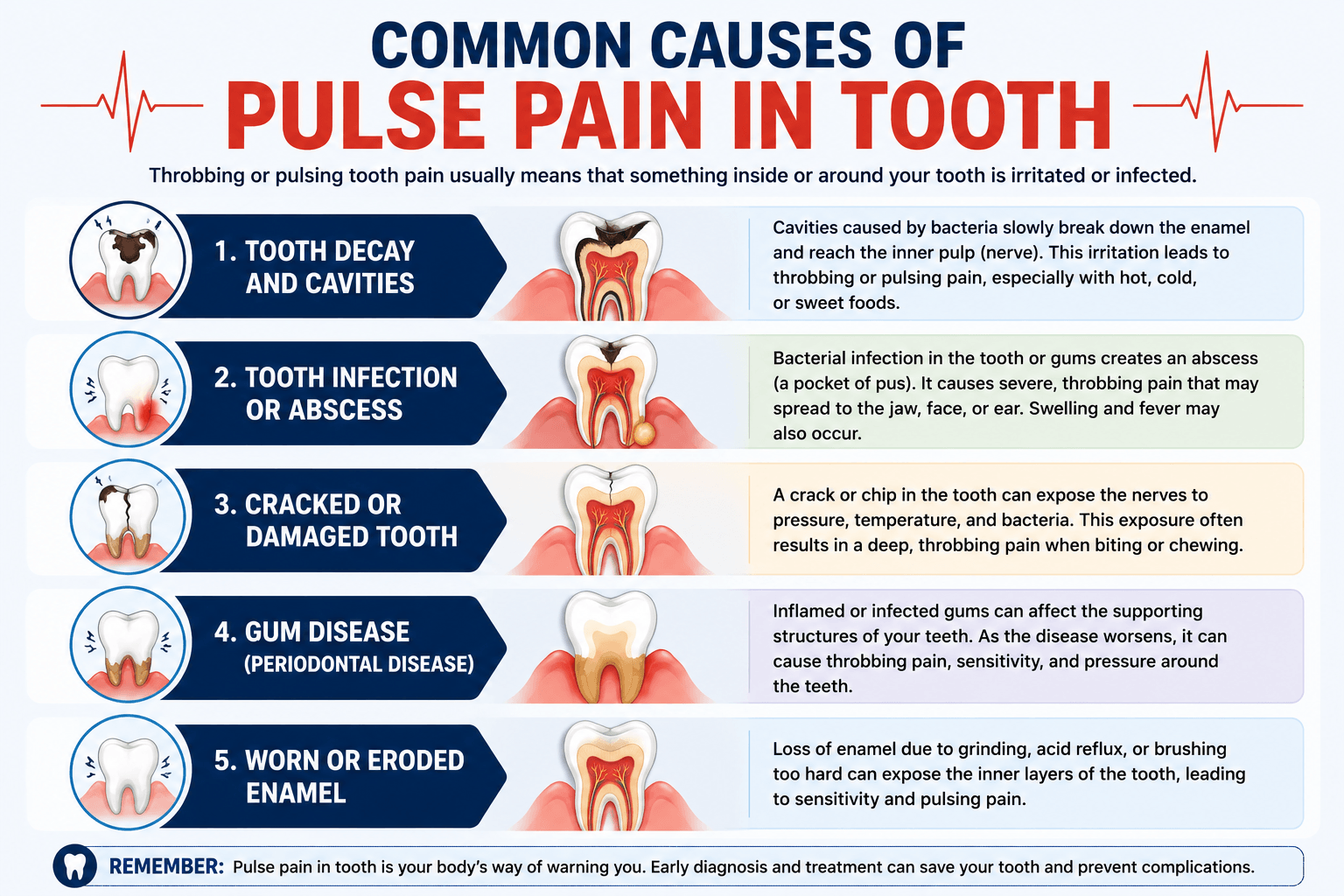
Several dental problems can trigger pulse pain in tooth areas. Identifying the root cause helps dentists recommend proper treatment quickly and effectively.
Tooth Decay and Cavities
Cavities remain one of the most common reasons behind throbbing dental pain worldwide. Bacteria slowly damage the enamel layer before reaching deeper tooth structures and sensitive nerves. Once decay reaches the pulp, severe pulsating pain often develops unexpectedly.
Sugary foods, poor oral hygiene, and inconsistent brushing habits increase cavity risks significantly. Early dental treatment usually prevents pain from becoming severe or spreading further.
Tooth Infection or Abscess
A dental abscess develops when bacteria create a pocket of infection inside the tooth or gums. This condition commonly produces intense pulse pain in tooth nerves and surrounding tissues.
Symptoms often include swelling, fever, foul taste, and severe sensitivity during chewing. Infections sometimes spread beyond the tooth and affect nearby areas of the face. Immediate dental care becomes essential because untreated infections may create dangerous health complications.
Cracked or Damaged Tooth
A cracked tooth may expose sensitive inner nerves to pressure, temperature, and bacteria daily. Many people develop throbbing pain while biting or chewing harder foods regularly.
Small cracks are difficult to notice without professional dental examination and imaging techniques. Even minor fractures can eventually lead to infection and nerve irritation over time.
Gum Disease
Inflamed gums sometimes create pressure around tooth roots and surrounding tissues gradually. Advanced gum disease may also expose sensitive root surfaces and increase pain sensitivity.
Bleeding gums, persistent bad breath, and gum recession often accompany periodontal disease symptoms. Professional cleaning and improved oral hygiene usually help reduce discomfort effectively.
Symptoms That Often Accompany Pulse Pain in Tooth
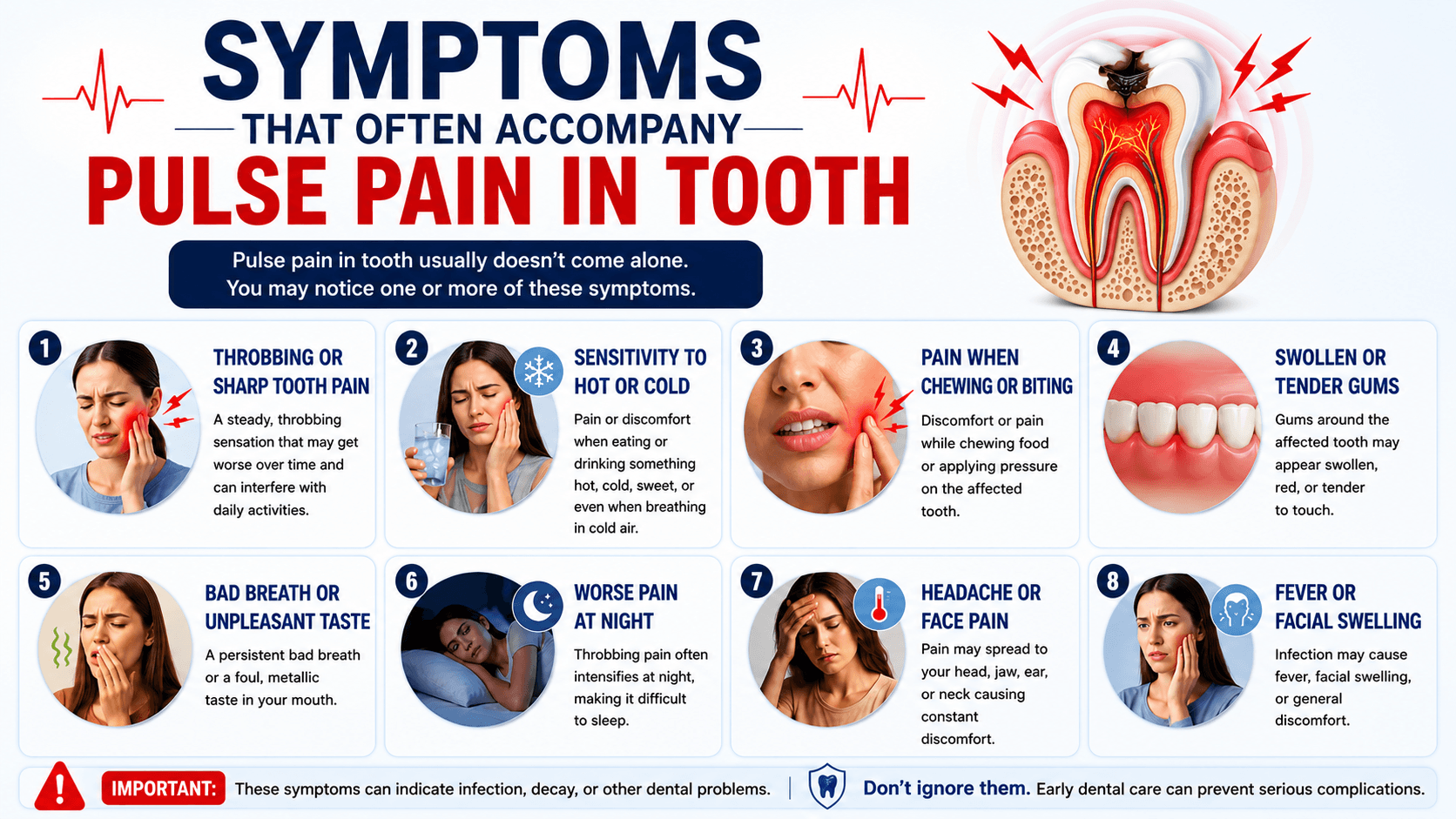
Different dental conditions create different combinations of symptoms alongside throbbing pain sensations. Recognizing warning signs early helps patients seek treatment before conditions worsen further.
Common symptoms include:
- Sharp or throbbing tooth pain
- Sensitivity to hot and cold foods
- Swollen gums around painful areas
- Pain during chewing or biting
- Persistent bad breath
- Fever or facial swelling
- Headaches or jaw discomfort
- Metallic or unpleasant taste in the mouth
Some people experience worsening pain while lying down at night because blood pressure changes slightly during sleep. Increased blood flow around infected areas may intensify the throbbing sensation temporarily.
Fast Relief Methods for Pulse Pain in Tooth
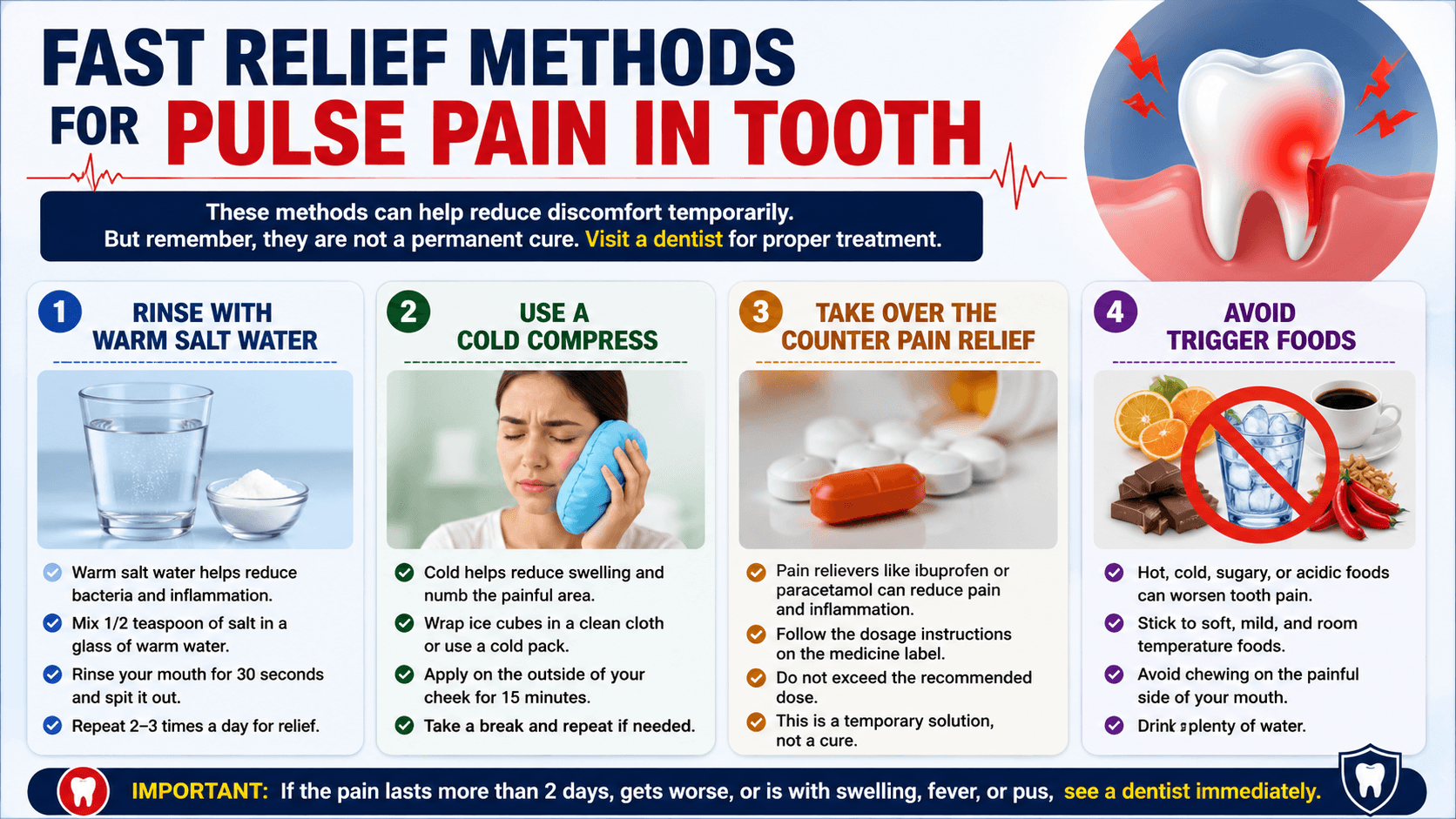
Although professional dental treatment remains the best solution, several temporary relief methods may reduce discomfort at home safely.
Rinse With Warm Salt Water
Warm salt water helps reduce bacteria and inflammation around irritated gum tissues naturally. Rinsing several times daily may temporarily soothe mild pulse pain in tooth areas.
Mix half a teaspoon of salt into warm water before rinsing gently for thirty seconds. Avoid extremely hot water because it may increase sensitivity and irritation further.
Use a Cold Compress
Cold compresses help reduce swelling and numb painful areas around the jaw effectively. Apply the compress externally for fifteen minutes at a time during severe discomfort episodes.
This method works particularly well when swelling accompanies throbbing dental pain symptoms.
Take Over the Counter Pain Relief
Non prescription medications like ibuprofen may help reduce inflammation and temporary pain significantly. Always follow dosage instructions carefully and avoid excessive medication use without professional advice.
Painkillers only manage symptoms temporarily and never eliminate underlying dental infections permanently.
Avoid Trigger Foods
Very cold, hot, sugary, or acidic foods may worsen sensitive tooth nerves dramatically. Soft foods usually create less pressure on painful areas during temporary recovery periods.
Drinking water regularly also helps remove bacteria and food particles from the mouth naturally.
When Should You Visit a Dentist?
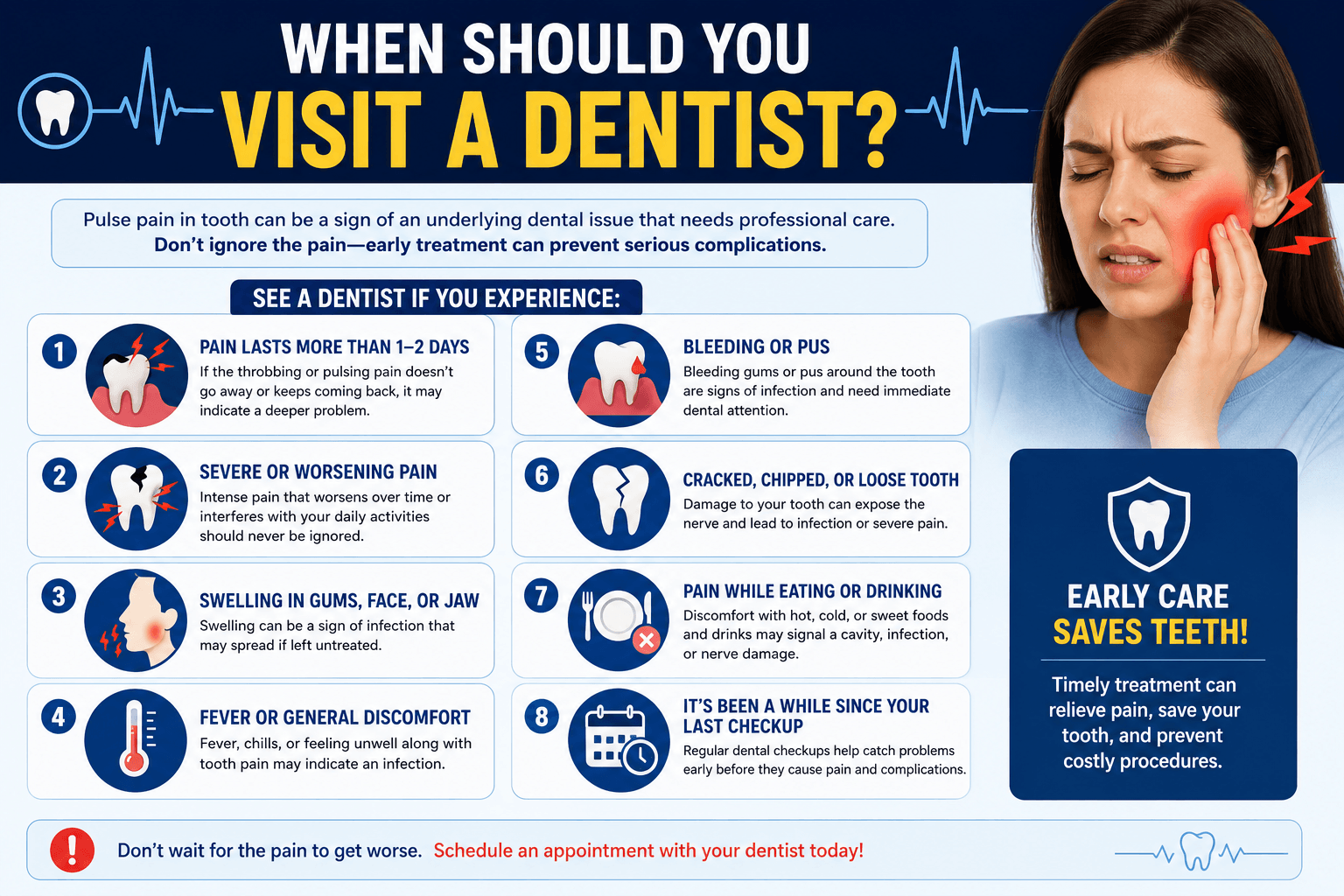
Some cases of pulse pain in tooth nerves require urgent professional treatment immediately. Delaying care may allow infection or nerve damage to become much worse over time.
You should contact a dentist quickly if you notice:
- Severe throbbing pain lasting longer than two days
- Swelling around the face or gums
- Fever alongside dental pain
- Difficulty chewing normally
- Pus or unusual discharge near teeth
- Pain spreading into the jaw or ear
Dentists may recommend fillings, root canal treatment, antibiotics, or tooth extraction depending on the underlying condition severity.
According to dental professionals, early intervention usually prevents expensive procedures and long recovery periods later. Regular checkups also help detect hidden problems before serious pain develops unexpectedly.
How to Prevent Pulse Pain in Tooth Problems
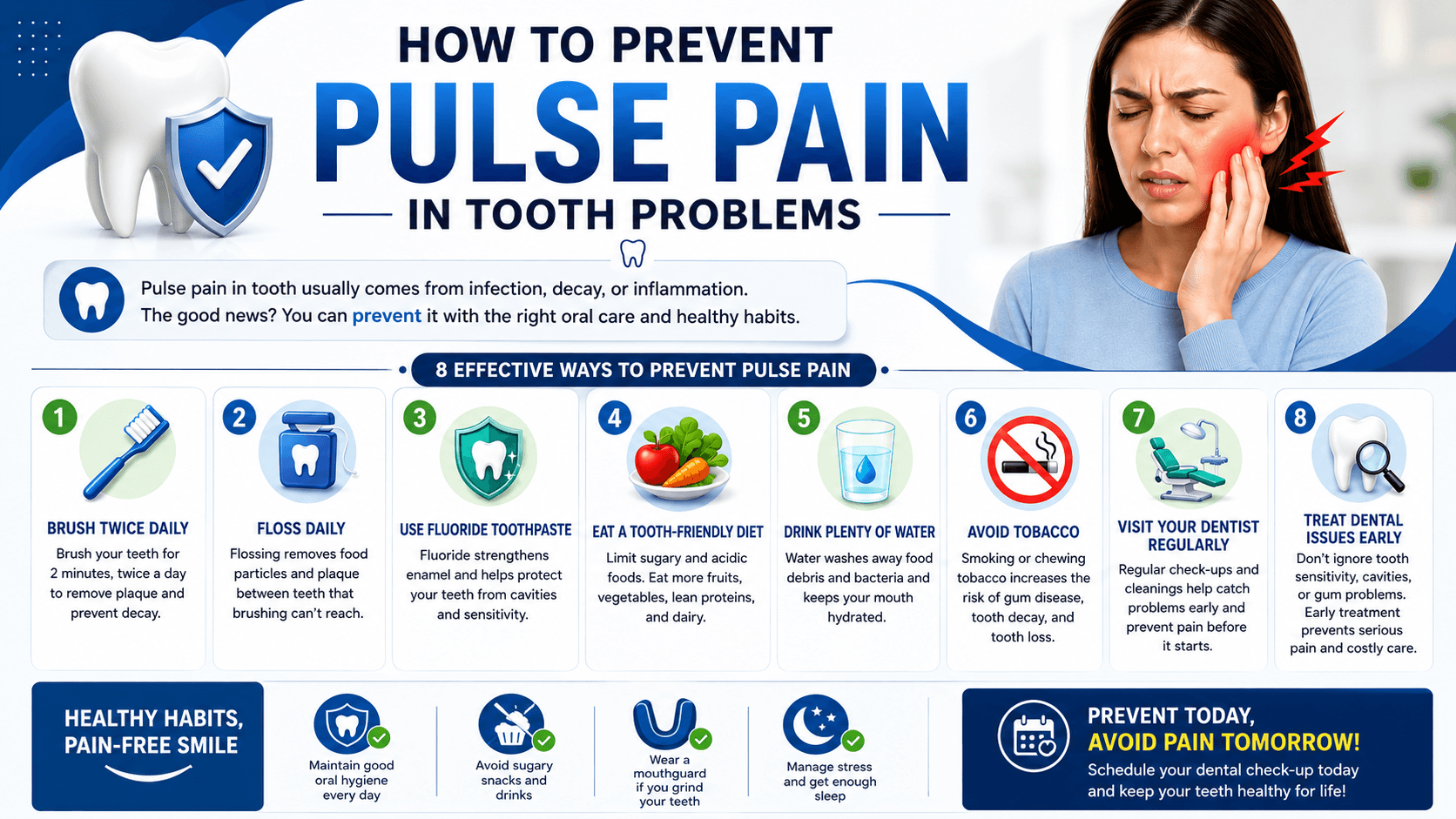
Preventive dental care remains the most effective way to avoid severe tooth pain complications. Simple daily habits significantly reduce risks of decay, infection, and gum disease.
Brush your teeth twice daily using fluoride toothpaste and a soft toothbrush consistently. Floss carefully every day to remove plaque between teeth and along gumlines properly.
Limiting sugary snacks and acidic drinks also protects enamel from gradual erosion and bacterial damage. Regular dental examinations help identify small issues before they become painful emergencies.
At Freaky Thread, readers can explore more health related guides designed to simplify common wellness and lifestyle concerns clearly.
Conclusion
Pulse pain in tooth nerves should never be ignored because it often signals deeper dental problems. Cavities, infections, cracks, and gum disease commonly trigger throbbing pain and sensitivity symptoms.
Temporary home remedies may provide short term comfort, but professional treatment remains essential for lasting relief. Early dental care protects your teeth, prevents complications, and reduces treatment costs significantly.
If you experience persistent pulse pain in tooth areas, scheduling a dental examination quickly remains the safest and smartest decision.


