
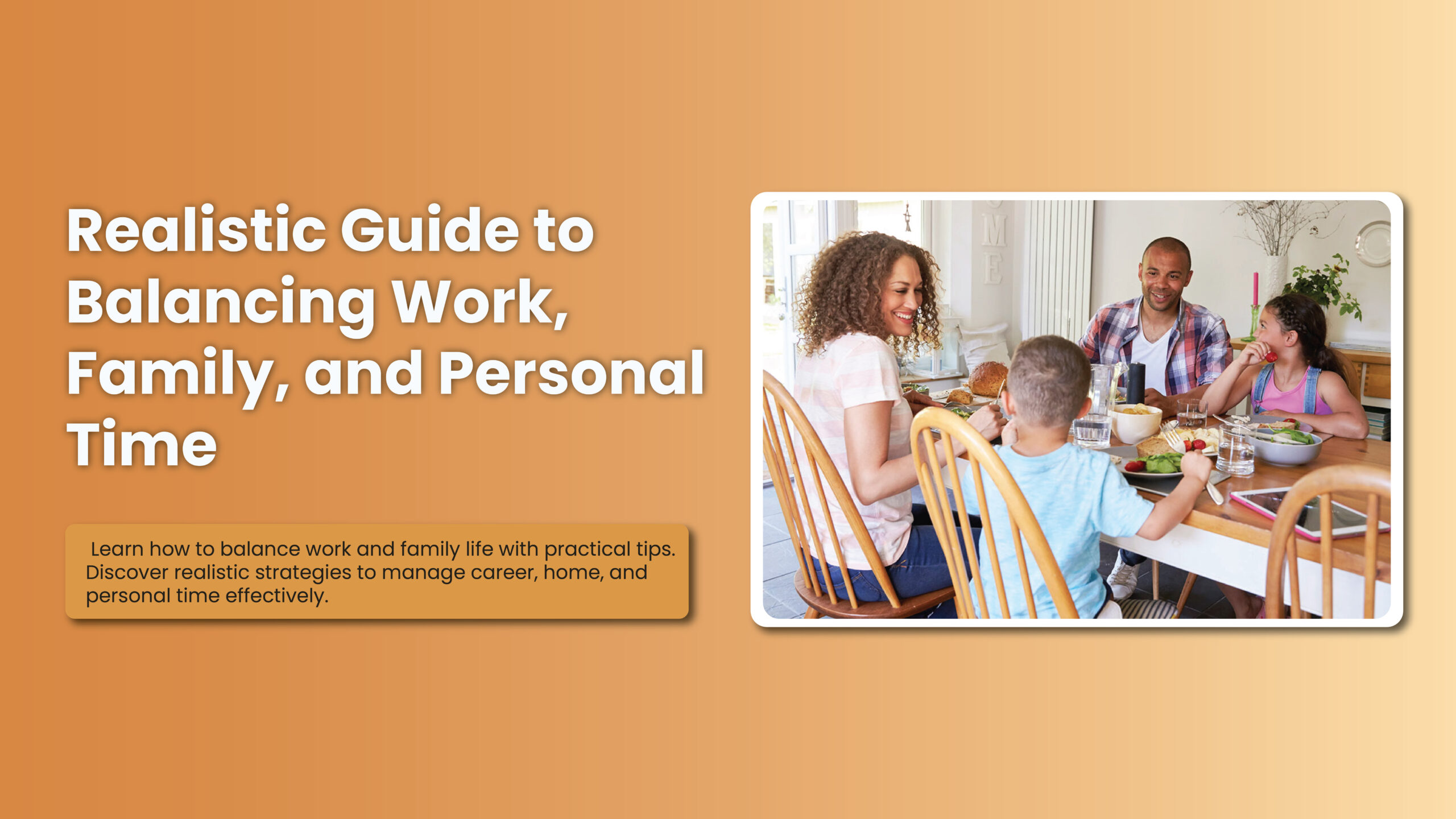
 A Realistic Guide to Balancing Work, Family, and Personal Time
Finding balance in modern life feels like chasing a moving target. Between demanding careers, family responsibilities, and personal needs, most people feel stretched thin. The pressure to excel at everything simultaneously creates stress, guilt, and exhaustion that affects every area of life. The good news is that balance does not require perfection. Learning how to balance work and family involves making intentional choices, setting realistic expectations, and accepting that some days will go better than others. This guide offers practical strategies that work for real people with real responsibilities.
Understanding What Balance Actually Means
Before exploring tips for work life balance, we need to redefine what balance looks like. Many people imagine balance as giving equal time and energy to every area of life simultaneously. This definition sets everyone up for failure. True balance means different things during different seasons of life. A parent with a newborn will have different priorities than someone launching a new business. A person caring for aging parents faces unique challenges compared to someone with grown children. Balance is not a fixed destination but a continuous process of adjustment. Some weeks, work demands more attention. Other weeks, family needs take priority. The key is ensuring that over time, no important area remains consistently neglected.
Why Balance Feels So Difficult
Understanding why balance challenges us helps us address the root causes. Several factors make it increasingly hard to balance work and family life in today’s world. Technology has blurred the lines between work and home. Emails arrive at midnight. Video calls happen from kitchen tables. The office follows us everywhere through smartphones that never truly switch off. Social expectations have also intensified. Parents feel pressure to provide enriching experiences for children while maintaining spotless homes and advancing careers. Workers face expectations of constant availability and continuous productivity improvement. Economic realities add another layer of complexity. Many families require two incomes to meet basic needs, leaving less flexibility for personal time or family activities. Finally, comparison culture amplified by social media makes everyone feel inadequate. We see curated highlights of others seemingly managing everything effortlessly and wonder why we struggle with ordinary demands.
Setting Realistic Expectations
The first step in learning how to balance your life involves adjusting expectations. Perfectionism is the enemy of sustainable balance. Accept that you cannot do everything perfectly all the time. Start by identifying your non negotiables. What matters most to you? What would you regret neglecting at the end of your life? For most people, health, close relationships, and meaningful work top the list. Recognize that other things, while nice, are not essential. Give yourself permission to be good enough rather than perfect. A simple dinner with family creates more connection than an elaborate meal that leaves you exhausted and irritable. Showing up consistently matters more than showing up perfectly. Also accept that some seasons require temporary imbalance. Launching a business, completing a degree, or navigating a family crisis may demand extra focus in one area. This becomes problematic only when temporary imbalance becomes permanent lifestyle.
Practical Tips to Balance Work and Life
Create Clear Boundaries
Boundaries protect your time and energy from being consumed entirely by any single demand. Without boundaries, work expands to fill every available moment, leaving nothing for family or self. Establish specific work hours and communicate them clearly. When possible, avoid checking emails outside these hours. Create physical separation between work and home spaces, even if you work remotely. A dedicated workspace helps your brain distinguish between work mode and home mode. Protect family time with equal intentionality. Block time on your calendar for family activities just as you would for important meetings. These commitments deserve the same respect you give professional obligations.
Master the Art of Prioritization
Not everything on your list deserves equal attention. Learning how to balance work requires ruthless prioritization. Each day, identify the two or three tasks that truly matter and focus your best energy there. Apply the same principle to family and personal time. Rather than trying to do everything, choose activities that create the most meaning and connection. Quality consistently beats quantity in relationships. Use simple frameworks to guide decisions. Ask yourself whether each commitment moves you toward what matters most. Learn to say no to good opportunities that would crowd out great ones.
Batch Similar Tasks Together
Constantly switching between different types of tasks drains mental energy and reduces effectiveness. Batching similar activities together improves efficiency and creates clearer boundaries. Designate specific times for email, meetings, focused work, and administrative tasks. This approach prevents work from fragmenting into countless small interruptions throughout the day. Apply batching to household tasks as well. Running all errands in one trip, preparing meals for multiple days, and handling household administration in designated time blocks frees up more time for meaningful activities.
Leverage Your Support System
Nobody achieves balance alone. How do families balance work and family? They rely on support systems that share responsibilities and provide help when needed. Within your family, distribute tasks according to abilities and availability rather than outdated role expectations. Children can contribute age appropriate help. Partners can divide responsibilities based on strengths and schedules. Beyond immediate family, build networks of support. Trusted neighbors, reliable babysitters, helpful relatives, and understanding friends all contribute to sustainable balance. Do not hesitate to accept help when offered and ask for it when needed.
Protect Your Personal Time
When learning how to balance personal life, many people make themselves the lowest priority. Personal time gets sacrificed first whenever other demands arise. This approach backfires because depleted people have less to give everyone else. Schedule personal time as non negotiable appointments. Whether you need exercise, creative pursuits, social connection, or simple solitude, block time for what restores your energy. Start small if necessary. Even fifteen minutes of protected personal time daily makes a difference. A short walk, a few pages of a book, or a brief meditation session can refresh your capacity to handle everything else.
Embrace Imperfect Solutions
Perfectionism prevents progress. Waiting for ideal solutions means never solving problems at all. Embrace good enough solutions that move you forward. Dinner does not need to be homemade every night. The house does not need to be spotless before guests arrive. Work presentations do not need endless refinement. Children do not need constant entertainment. Identify where your perfectionist tendencies create unnecessary stress. Challenge yourself to experiment with imperfect alternatives and notice that the world continues spinning.
Managing Guilt and Mental Load
Guilt accompanies almost every choice when balancing multiple responsibilities. Working parents feel guilty about time away from children. Parents at home feel guilty about careers set aside. Everyone feels guilty about something. Recognize that guilt often signals conflicting values rather than actual wrongdoing. You value both career success and family presence. Feeling torn between them reflects caring deeply about both, not failing at either. Challenge unhelpful guilt by examining the evidence. Are your children genuinely suffering from your work schedule, or are they developing independence and resilience? Is your career truly stalling, or are you progressing at a sustainable pace? The mental load of managing everything often weighs heavier than the actual tasks. Reduce this burden by externalizing information. Use lists, calendars, and reminders rather than trying to hold everything in your head. Share the mental load with partners rather than assuming sole responsibility for remembering everything.
Building Sustainable Routines
Consistent routines reduce decision fatigue and create predictable structure that supports balance. When basic activities happen automatically, you preserve mental energy for more important decisions. Establish morning routines that prepare you for productive days. Evening routines that help you transition from work to home create valuable separation. Weekend routines that blend rest, connection, and preparation set up successful weeks. Build flexibility into your routines rather than rigid schedules that collapse under pressure. Routines should serve you, not enslave you. When circumstances require adjustment, adapt without guilt.
Regular Reassessment
How do you balance work and family life over the long term? Through regular reassessment and adjustment. What works today may not work next year. Life circumstances change, and balance strategies must evolve accordingly. Schedule periodic reviews of how well your current approach serves your priorities. Monthly check ins with yourself and weekly conversations with family members help identify problems before they become crises. Be willing to experiment with new approaches. If something stops working, try alternatives. Balance requires ongoing attention and adjustment rather than finding one solution and sticking with it forever.
Conclusion
Learning how to balance family life with work demands and personal needs is a lifelong practice rather than a problem to solve once. The goal is not perfect equilibrium but intentional living that honors what matters most to you.Start where you are with small improvements. Implement one or two tips for work life balance before adding more. Celebrate progress rather than demanding perfection. Remember that struggling with balance means you care about multiple important things. That caring is a strength, not a weakness. With realistic expectations, practical strategies, and consistent effort, you can create a life that works for you and everyone who depends on you.
The balance you seek already exists within reach. It simply requires letting go of impossible standards and embracing a sustainable approach that honors your real life, real responsibilities, and real humanity.


