
Table of Contents:
- Introduction
- How a Rice Flour Face Mask Works
- Benefits of Using Rice Flour on Your Skin
- How to Make a Face Mask with Rice Flour
- Frequency of Use: Can I Use a Rice Flour Face Mask Everyday
- Additional Benefits of Rice Flour Masks
- Best Combinations for Different Skin Types
- Why Rice Flour Masks Are Eco-Friendly and Affordable
- Safety Tips and Common Mistakes
- How to Apply a Rice Flour Face Mask Correctly
- Conclusion
Introduction:
Rice flour has been used for centuries in traditional skincare routines and remains highly popular today. Its gentle exfoliating properties and natural ingredients make it a safe choice for most skin types. Unlike chemical-based products, rice flour is non-irritating and widely available, making it an accessible ingredient for home remedies. Many people turn to rice flour face masks to improve skin brightness, smoothness, and overall texture.
In addition to its practical benefits, rice flour offers a cost-effective alternative to expensive skincare products. It has become a staple in modern DIY beauty routines because it is easy to mix with other natural ingredients like honey, yogurt, or aloe vera. On Freaky Thread, we aim to provide reliable advice for using rice flour effectively while maintaining healthy skin. This post covers how to use it safely, how often, and which combinations work best for different skin types.
How a Rice Flour Face Mask Works:

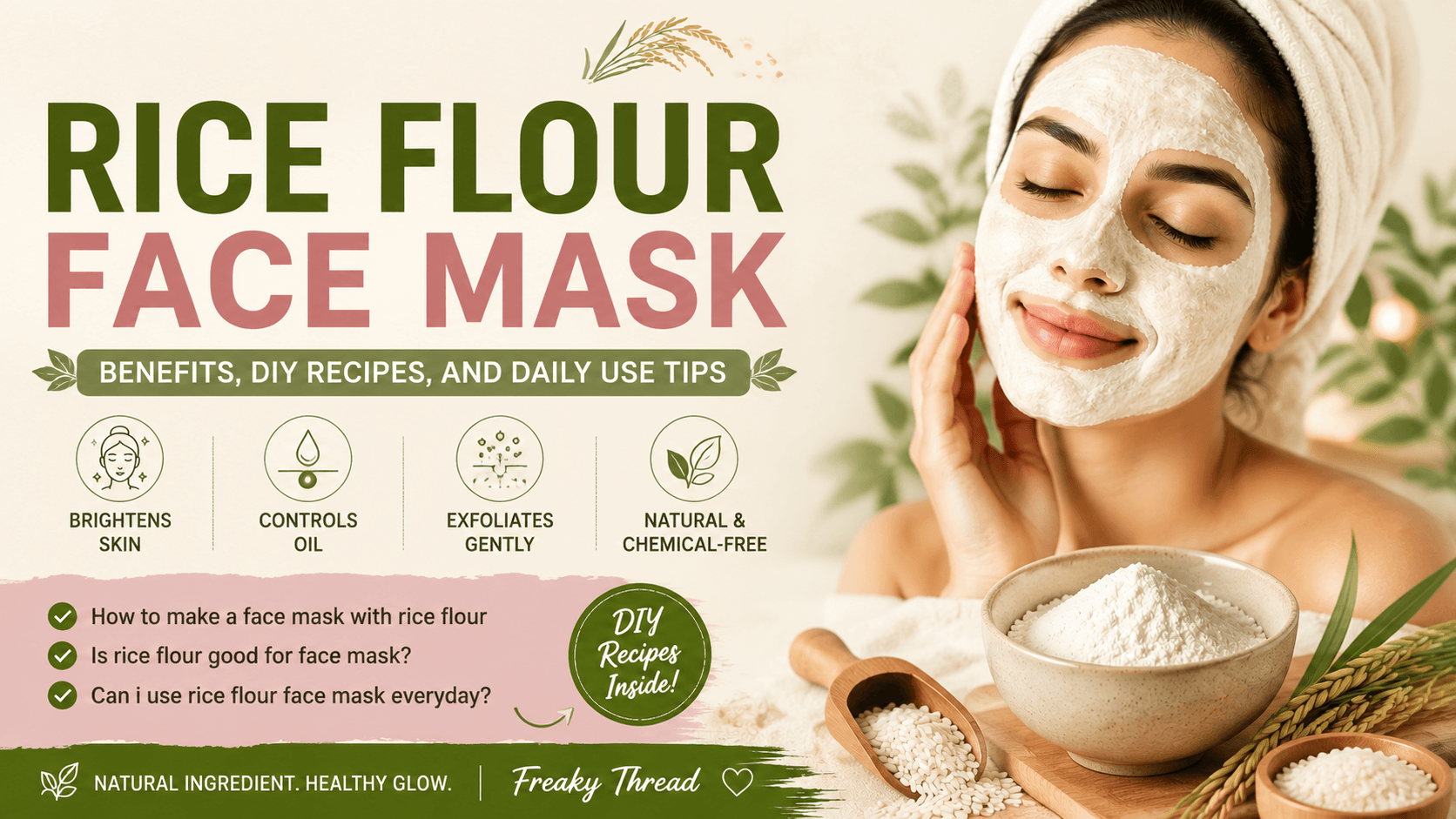
rice flour face mask works primarily through gentle exfoliation. The fine starch particles in rice flour remove dead skin cells without causing irritation, improving texture and promoting a brighter complexion. It also helps absorb excess oil, making the skin look smoother and reducing shine. Regular use can gradually even out skin tone and leave a subtle glow.
Rice flour also contains anti-inflammatory properties, which can calm redness or irritation. Many users notice improvements in minor blemishes and uneven textures over time. For those asking, is rice flour good for face mask, the answer is that it is effective when used consistently and properly. Its natural qualities make it suitable for a wide range of skin types, including sensitive and combination skin.
Benefits of Using Rice Flour on Your Skin:

Using rice flour in skincare can target multiple skin concerns. It is known for improving dullness, minimizing pores, and controlling oiliness. By incorporating rice flour into a face mask, users can benefit from natural brightening effects while gently exfoliating. Its mild texture ensures the skin is not scratched or damaged during application.
Rice flour also works well in combination with other ingredients to enhance skincare benefits. Adding honey provides antibacterial and moisturizing properties, yogurt adds gentle lactic acid for natural exfoliation, and aloe vera soothes inflammation. These combinations increase the mask’s effectiveness, allowing users to tailor their routine according to specific skin needs.
How to Make a Face Mask with Rice Flour:

To make a face mask with rice flour, start by combining two tablespoons of rice flour with one tablespoon of plain yogurt and a teaspoon of honey. Mix until smooth to create a paste without lumps. Adjust the consistency by adding a few drops of water or milk if necessary.
Once ready, apply the mask evenly to a cleansed face, avoiding the eyes and lips. Let it sit for ten to fifteen minutes until it slightly dries, then rinse with lukewarm water. This straightforward DIY method allows anyone to make a rice flour face mask at home without expensive tools or ingredients. Regular use can produce noticeable improvements in skin brightness and smoothness.
Frequency of Use: Can I Use a Rice Flour Face Mask Everyday:

Many people ask, can I use rice flour face mask everyday? While rice flour is gentle, daily use may over-exfoliate and irritate sensitive skin. For most users, applying the mask two to three times a week is enough to see visible improvements without causing dryness or redness.
Consistency is key for best results. Using the mask at this frequency helps maintain smoothness and glow while allowing the skin to recover between applications. After removing the mask, follow up with a gentle moisturizer to keep the skin hydrated and balanced, which further enhances the benefits of regular use.
Additional Benefits of Rice Flour Masks:

Rice flour masks also help improve uneven skin tone and reduce hyperpigmentation. The gentle exfoliation removes dead cells and promotes skin renewal. When paired with ingredients like turmeric or tomato juice, the mask provides additional brightening and antioxidant effects.
These natural combinations boost the mask’s effectiveness without introducing harsh chemicals. Turmeric provides anti-inflammatory benefits, while tomato juice adds vitamins for mild skin-lightening. By using these recipes consistently, users can achieve a brighter, more even complexion over time.
Best Combinations for Different Skin Types:

Rice flour masks can be adapted for oily, dry, or combination skin. For oily skin, adding aloe vera or lemon juice helps absorb excess sebum and reduces shine. Dry skin benefits from yogurt or milk, which provide hydration while still exfoliating the skin.
Combination skin requires balancing these approaches. Rice flour masks can normalize oily zones while nourishing dry areas when combined with appropriate ingredients. Testing combinations for your specific skin type ensures maximum effectiveness and minimizes the risk of irritation
Why Rice Flour Masks Are Eco-Friendly and Affordable:

Rice flour masks are cost-effective and eco-conscious. Unlike many commercial skincare products that contain chemicals and packaging waste, rice flour is natural, biodegradable, and widely accessible. DIY masks reduce environmental impact and allow control over ingredients.
Creating masks at home can also be a relaxing self-care routine. Preparing your rice flour mask and applying it regularly combines wellness with beauty, making the process enjoyable. The affordability and simplicity make rice flour a favorite ingredient in natural skincare routines worldwide.
Safety Tips and Common Mistakes:

When making a rice flour mask, consider your skin type and avoid harsh additives if you have sensitive skin. Oily skin may benefit from lemon or aloe, while dry skin needs yogurt or honey to retain moisture. Always test a small area first to prevent allergic reactions or irritation.
Proper storage of rice flour is also important for hygiene. Keep it in a dry, airtight container to prevent contamination. Avoid overuse, over-scrubbing, or using acidic ingredients excessively. Following these safety guidelines ensures you can enjoy the benefits of rice flour masks safely.
How to Apply a Rice Flour Face Mask Correctly:

Start by cleansing your face thoroughly to remove dirt, oil, and makeup. Apply the mask evenly, avoiding eyes and lips. Let it dry slightly, then rinse with lukewarm water using gentle circular motions to maximize exfoliation.
After rinsing, pat your skin dry with a soft towel and apply a moisturizer to lock in hydration. Regular application following this method enhances the effectiveness of the mask while minimizing irritation. This simple technique allows the mask to improve texture, brighten the skin, and balance oil naturally.
Conclusion:
A rice flour face mask is a versatile and natural solution for achieving smooth, brighter, and healthier skin. Learning how to make a face mask with rice flour is simple, and regular use provides visible improvements over time.
While daily use may not be suitable for everyone, applying the mask two to three times per week produces results without over-exfoliation. Freaky Thread recommends integrating rice flour masks into your skincare routine for consistent, safe, and effective results. Natural DIY masks like these provide an affordable, eco-conscious alternative to commercial skincare products while delivering long-lasting benefits.


