

Table of Content:
- Introduction
- What Exactly Are Chai and Coffee?
- The Caffeine Factor: How Much Energy Do You Get?
- L-Theanine: Chai’s Secret Calm Energy Weapon
- Health Benefits of Chai: Spices That Heal
- Health Benefits of Coffee: A Powerhouse in Its Own Right
- The Downsides: What to Watch Out For
- Flavor and Experience: A Matter of Personal Joy
- Which One Should You Choose
- Conclusion
Introduction:
Every morning, millions of people face the same delicious dilemma. Should they reach for a warm cup of chai or a bold cup of coffee? Both drinks have loyal fans and rich histories across the globe. But beyond personal taste, there are real differences between these two beverages. These differences affect your energy, your health, and even your mood throughout the day. Let us break down what actually matters when choosing between chai and coffee.
What Exactly Are Chai and Coffee?
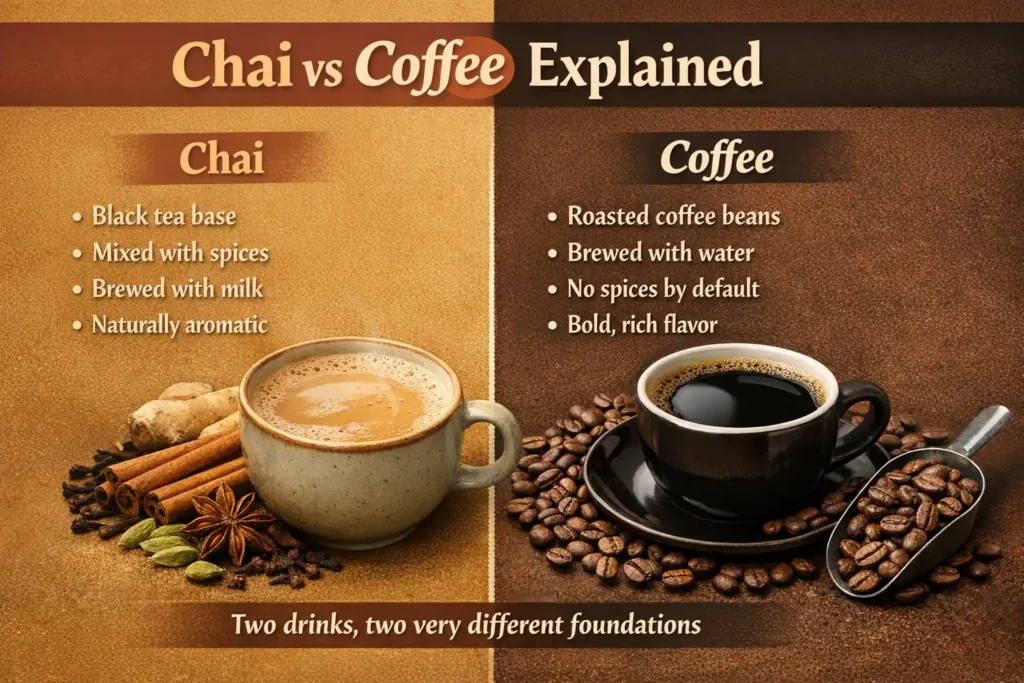
Before comparing them, it helps to understand what each drink really is. Chai originated in India and is a mix of black tea and spices. The most popular spices include cardamom, cinnamon, fennel, black pepper, and cloves. Unlike regular tea brewed with water, chai is traditionally brewed using both warm water and warm milk. It is often sweetened with honey or sugar for a balanced flavor.
Coffee, on the other hand, takes a simpler approach to its ingredients. Coffee has been around for centuries and is one of the most popular beverages in the world. It is made from roasted coffee beans ground and brewed with hot water. While chai relies on a blend of spices for complexity, coffee gets its depth from the roasting process. These two starting points create very different drinking experiences for your body.
The Caffeine Factor: How Much Energy Do You Get?
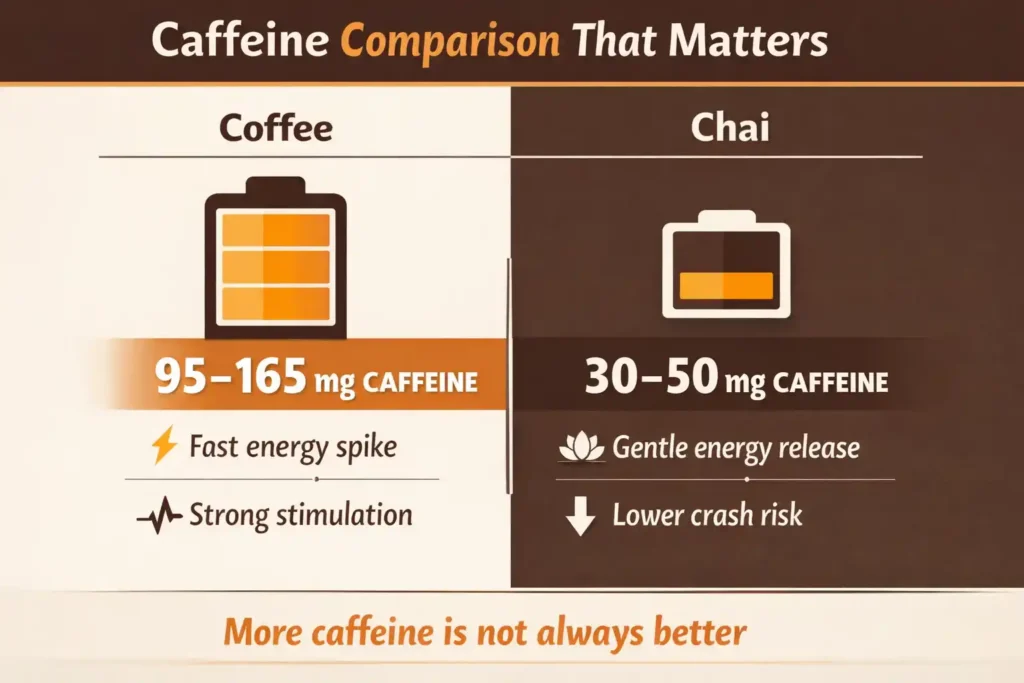
Caffeine is often the biggest reason people choose their morning drink carefully. And here, the numbers tell a clear story. The amount of caffeine in an average 8 ounce cup of brewed coffee usually falls between 95 and 165 milligrams. That is a significant dose of stimulation to start your morning with.
Chai delivers a much lighter caffeine punch compared to coffee overall. On average, a cup of chai tea provides roughly 30 to 50 milligrams of caffeine. That means a cup of chai has roughly one third the caffeine of coffee. For people who feel jittery after coffee, this difference can be significant.
But the real difference is not just how much caffeine you consume. It is also about how your body absorbs and processes that caffeine differently. Coffee usually provides a quick and intense energy boost to the body. Tea caffeine is released more slowly and evenly throughout the day. This is due to tannins that occur naturally in tea leaves.
L-Theanine: Chai's Secret Calm Energy Weapon:
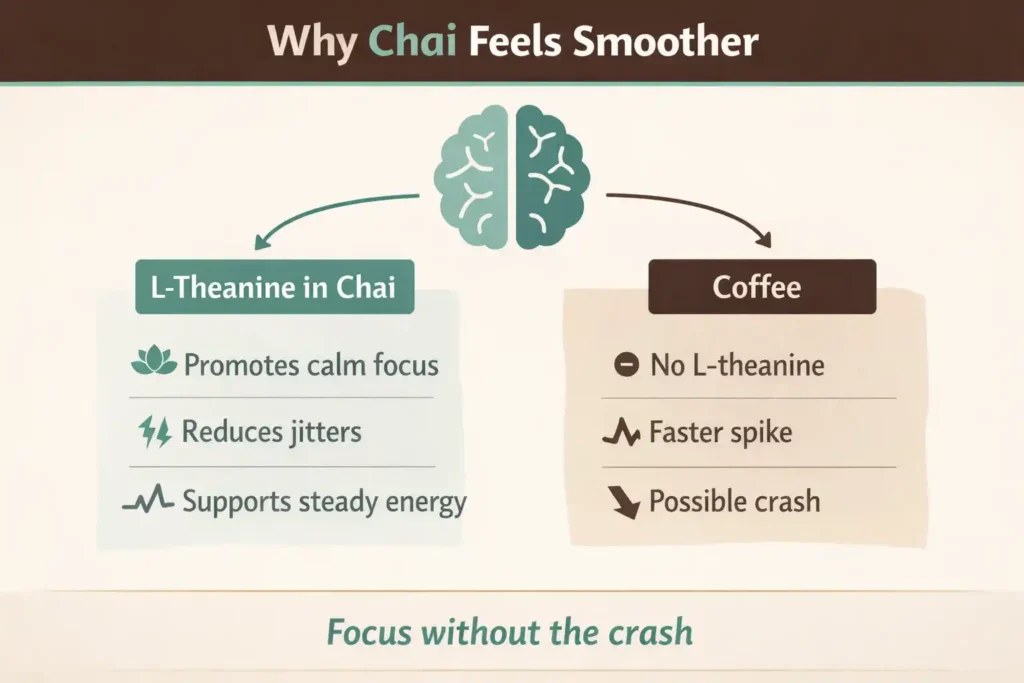
There is one compound that gives chai a unique edge over coffee. That compound is called L-theanine, and it changes everything about the experience. Chai contains L-theanine, which delivers a sense of calm while helping you focus. L-theanine is a beneficial compound found in teas and some mushrooms naturally.
This is why many chai drinkers describe their energy as smooth and steady. Black tea contains L-theanine which balances the impact of caffeine on your body. You can feel alert with less jitteriness compared to coffee throughout the day. Research suggests that combining L-theanine and caffeine may support better brain function. Coffee does not contain L-theanine, which explains the sharper energy spike.
Health Benefits of Chai: Spices That Heal
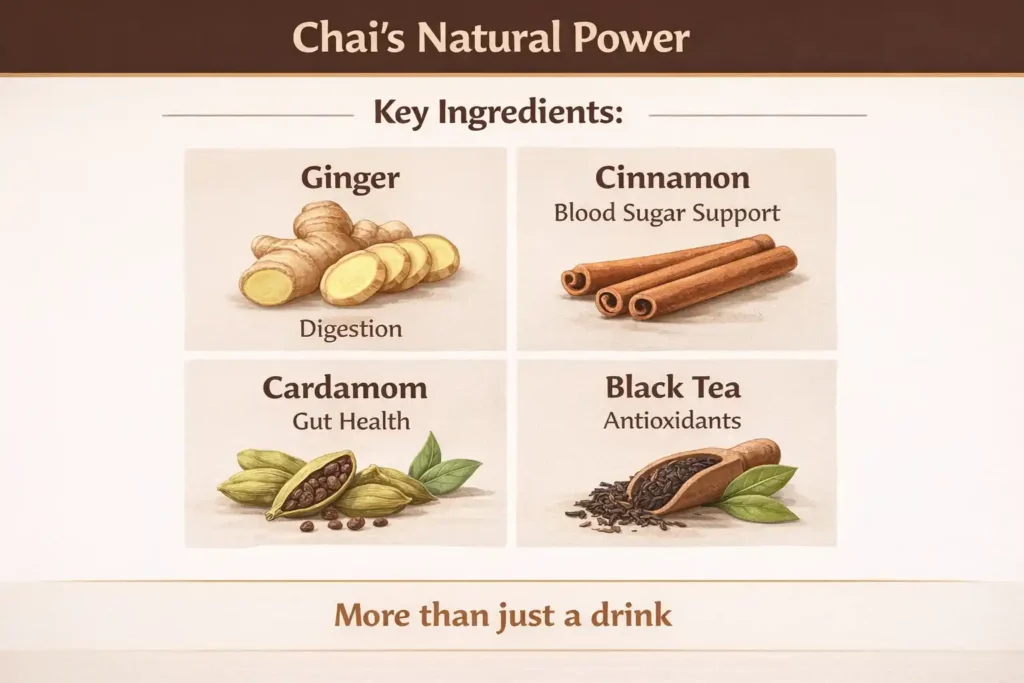
Chai is not just a tasty drink with a gentle caffeine lift. The spices packed into every cup bring real health benefits to the table. Chai tea is a great source of antioxidants such as catechins and theaflavins. These antioxidants fight oxidative stress and may play a role in preventing disease.
Each spice in chai carries its own set of wellness benefits for you. Cinnamon in chai tea may help prevent hypertension, especially in people with diabetes. Ginger found in chai is known for helping with digestion and reducing bloating. Black pepper and cardamom also contribute to better food digestion naturally.
The heart health benefits of chai also deserve your attention and consideration. Antioxidants in black tea may help lower blood pressure and reduce cholesterol levels. Cinnamon can improve insulin sensitivity and lower blood glucose levels over time. This makes chai a smart option for those managing diabetes or blood sugar.
Health Benefits of Coffee: A Powerhouse in Its Own Right

Coffee lovers should not feel left out of the health conversation at all. Coffee is incredibly high in antioxidants compared to many other foods and beverages. Several studies have shown people get more antioxidants from coffee than any other source. That is a remarkable finding for such a common daily beverage.
The research behind coffee and disease prevention is growing stronger every single year. Regular coffee consumption can boost cognitive function and enhance overall mental alertness significantly. Coffee is a rich source of antioxidants which help combat oxidative stress effectively. Studies have also linked coffee to a reduced risk of Alzheimer’s and Parkinson’s disease.
Your heart may also benefit from a moderate daily coffee habit over time. Research suggests that 3 to 5 cups a day may lower cardiovascular disease risk. Coffee has also been found to improve insulin sensitivity in certain individuals. It may reduce the risk of developing type 2 diabetes with regular consumption.
The Downsides: What to Watch Out For
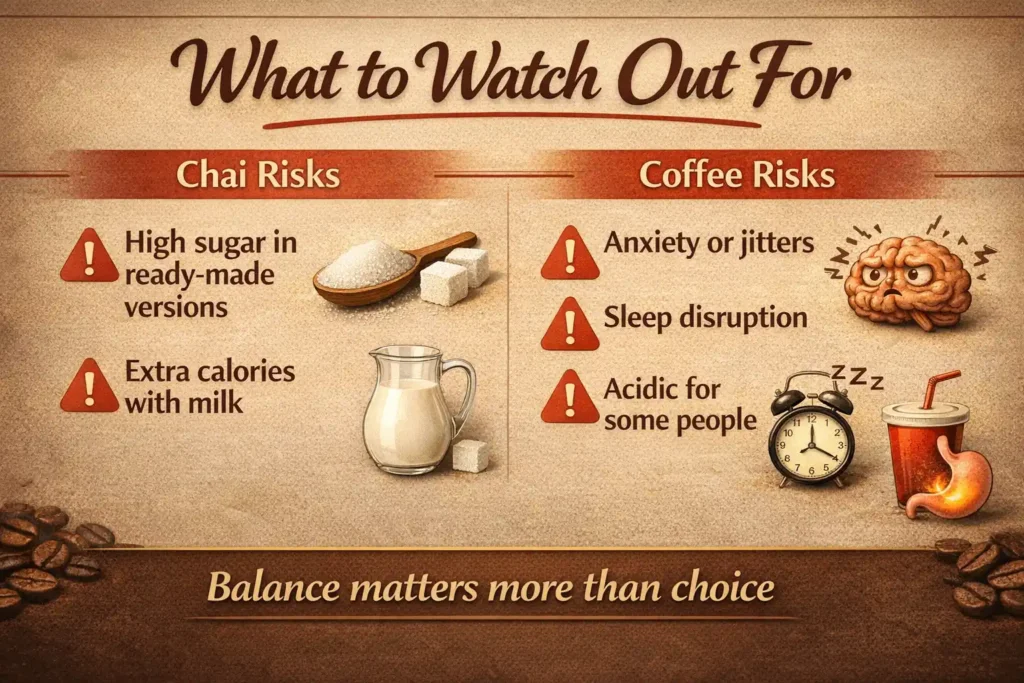
No drink is perfect, and both chai and coffee have their potential drawbacks. Too much caffeine can cause irritability, rapid heartbeat, and high blood pressure in some people. Higher doses of caffeine may also lead to anxiety, restlessness, and difficulty sleeping.
When it comes to sugar, chai can be a hidden calorie trap sometimes. Packaged chai mixes or pre made drinks often include high amounts of added sugar. Some varieties may contain up to 24 grams of sugar per single serving. The problem is not chai itself but the sweetened concentrates most coffee shops use.
Coffee carries its own risks when consumed beyond the recommended daily amount. Three or four cups can easily push you past the recommended 400 milligram caffeine limit. Most health guidelines suggest that three to five cups daily is safe for adults. Staying within these limits helps you enjoy benefits without the negative side effects.
Flavor and Experience: A Matter of Personal Joy

Taste is where things get truly personal between these two beloved beverages. The black tea base in chai gives a robust and slightly astringent taste overall. The blend of spices adds layers of warmth, sweetness, and complexity to every sip. Coffee offers a bold, bitter, and roasty profile that millions of people love.
The ritual of preparing each drink also adds to the overall enjoyment factor. Taking a moment to savor chai’s complex flavors can be a truly calming practice. Coffee preparation has its own satisfying rituals, from grinding beans to brewing perfectly. Both drinks offer much more than just flavor in a cup every single day.
Which One Should You Choose?
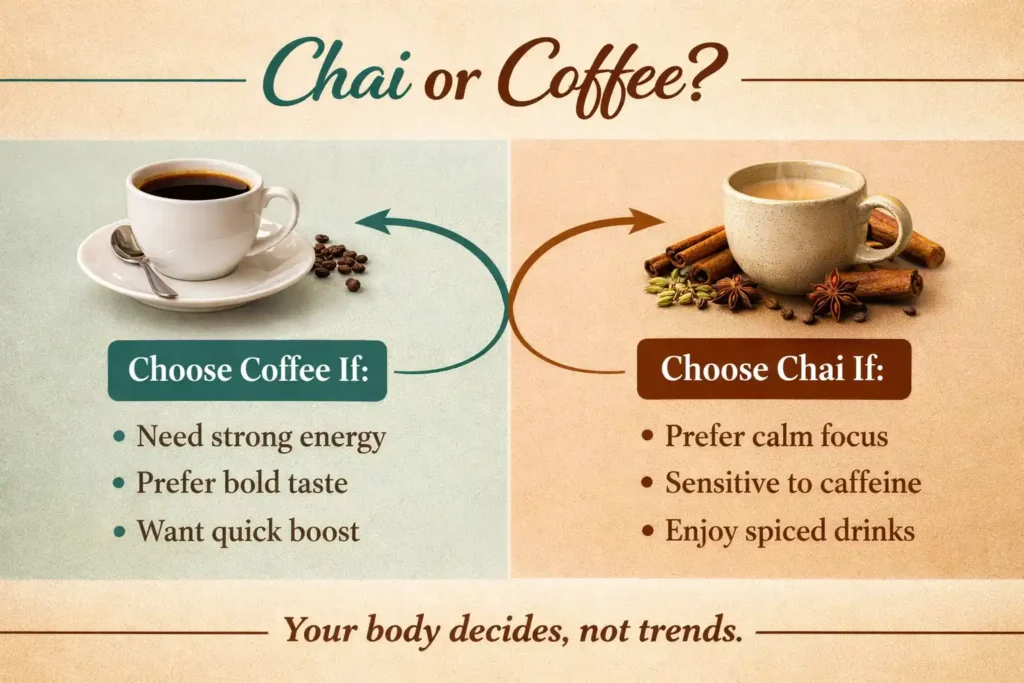
The honest answer is that neither chai nor coffee is universally better overall. Coffee has more total antioxidant content per cup than chai tea does. But chai provides a wider variety of beneficial compounds from multiple different spice sources. Neither is inherently healthier, as it largely depends on how you prepare them.
Your choice should depend on your personal health goals and body response. If you need a strong morning boost, coffee might be your best daily companion. If you want calm, steady energy with digestive benefits, chai could be ideal. Many people even enjoy both drinks at different times throughout their busy day.
The key takeaway is simple and straightforward for every reader here today. Choose the version closest to its natural form for maximum health benefits. Make your chai at home with real spices and minimal sugar for best results. Drink your coffee black or with just a splash of milk to keep it healthy.
Conclusion:
Want more food and wellness content? Check out our Food category now.


