
Table of Contents:
- Introduction
- Moving Away from Traditional Food Groups
- Mastering the Plate Proportions for Daily Meals
- Prioritizing Plant Based Proteins in Your Diet
- Making Water Your Primary Beverage Choice
- Reading Nutrition Labels Beyond Clever Marketing
- Applying Official Recommendations to Budget Friendly Shopping
- Conclusion
Introduction:
Healthy eating advice has changed significantly as nutrition research continues improving our understanding of balanced diets and long-term wellness. The modern canada food health guide focuses less on strict food groups and more on practical eating patterns that support overall health. Rather than counting servings, it encourages people to build balanced meals using nutritious foods from a variety of sources. At Freaky Thread, we believe understanding these updated recommendations helps families make informed food choices without unnecessary confusion.
Many people still remember older food pyramids and serving charts that emphasized specific daily portions of milk, meat, and grains. Canada’s current guidance instead promotes flexible meal planning that fits different cultures, lifestyles, and personal preferences. This approach makes healthy eating more realistic while encouraging sustainable habits instead of restrictive diets.
The updated guide also recognizes that nutrition involves more than food choices alone. Cooking at home, eating mindfully, and sharing meals with others all contribute to healthier lifestyles. Learning how these recommendations work in everyday
Moving Away from Traditional Food Groups:

One of the biggest changes in the canada food health guide involves moving away from the older food group model. Previous versions divided foods into categories such as milk products, meat, vegetables, grains, and fruit with recommended serving amounts. The updated guide now emphasizes overall dietary patterns instead of fixed serving targets.
Many people initially find this change confusing because older nutrition advice remained consistent for several decades. Families often built meals around traditional food groups and may wonder why categories have changed. Current nutrition research supports focusing on balanced eating habits rather than meeting exact serving numbers from specific groups.
The updated approach encourages flexibility while recognizing different cultural foods and personal dietary preferences. Instead of labeling foods as required daily servings, the guide recommends choosing nutritious options more often. This allows individuals to create healthier meals that fit their unique lifestyles and nutritional needs.
You may also like:
Mastering the Plate Proportions for Daily Meals:

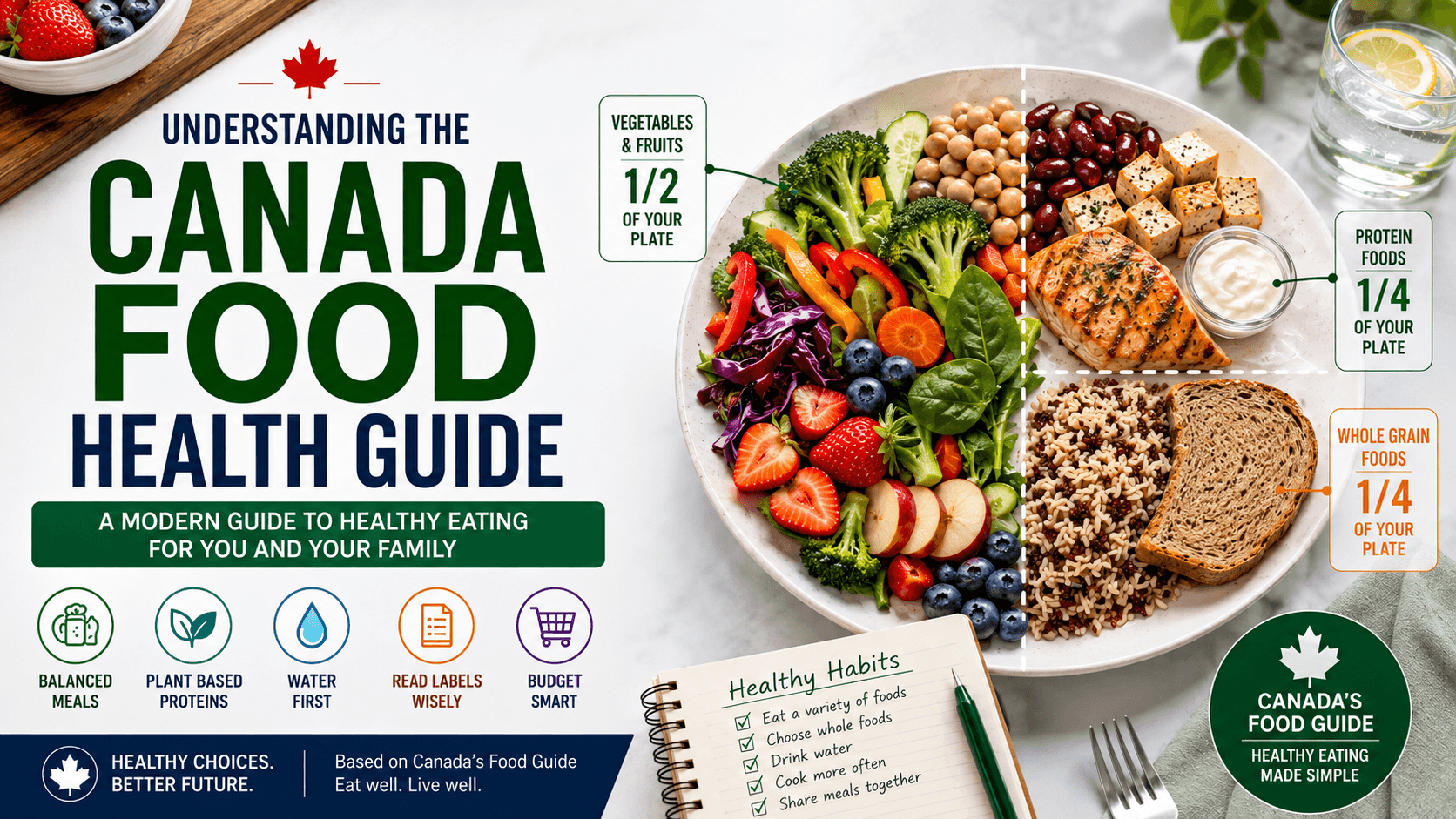
The modern canada food health guide introduces a simple visual plate model that replaces complicated serving calculations. Half of the plate should consist of vegetables and fruits, while one quarter contains protein foods. The remaining quarter should include whole grain foods that provide lasting energy throughout the day.
Many people struggle to estimate portion sizes because traditional serving measurements can feel complicated during busy routines. The plate model removes much of this uncertainty by providing an easy visual guide for breakfast, lunch, and dinner. This practical method simplifies healthy meal planning without requiring special measuring tools.
Balanced meals also become easier to prepare because the plate model works with many different cuisines and ingredients. Families can adapt traditional recipes while maintaining recommended food proportions using available ingredients. This flexibility encourages long-term healthy eating instead of temporary dietary changes.
Prioritizing Plant Based Proteins in Your Diet:

Another important recommendation within the canada food health guide involves choosing plant-based protein foods more frequently. Beans, lentils, chickpeas, tofu, nuts, seeds, and soy products provide valuable nutrients alongside dietary fiber. These foods can support healthy eating patterns while contributing to environmental sustainability.
Some people worry that plant proteins cannot provide enough energy or nutrition for active lifestyles. In reality, many plant-based foods supply protein together with vitamins, minerals, and beneficial fiber when included in balanced diets. Animal-based proteins can still be enjoyed, but increasing plant options creates greater dietary variety.
Adding plant proteins does not require dramatic lifestyle changes or completely replacing familiar meals. Lentils can enrich soups, beans fit naturally into salads, and tofu absorbs the flavors of many recipes. Small, gradual changes often feel more manageable while helping families build healthier eating habits over time.
You may also like:
Making Water Your Primary Beverage Choice:

The modern canada food health guide recommends water as the primary beverage for daily hydration. Water supports normal body functions without adding free sugars, artificial sweeteners, or unnecessary calories to the diet. Choosing water regularly also helps reduce dependence on sugary drinks and flavored beverages.
Many people find plain water repetitive during busy workdays or long commutes. Adding natural flavor with slices of lemon, cucumber, mint, or fresh berries creates refreshing variety without introducing large amounts of added sugar. Keeping a reusable water bottle nearby also makes healthy hydration more convenient throughout the day.
Commercial drinks often appear healthy because of attractive packaging and wellness-focused marketing messages. However, many flavored beverages, sports drinks, and sweetened teas contain significant amounts of added sugar or sodium. Reading ingredient lists helps consumers make informed beverage choices that better support long-term health.
You may also like:
Reading Nutrition Labels Beyond Clever Marketing:

Nutrition labels provide valuable information that extends beyond promotional statements displayed on product packaging. Front-of-package claims such as “natural,” “low fat,” or “high protein” do not always reflect the complete nutritional value of a product. Consumers should examine the full Nutrition Facts table before making purchasing decisions.
Checking serving sizes remains important because nutrient values apply only to the stated portion. A package may appear low in sugar or sodium until consumers realize it contains several servings. Understanding serving information helps individuals compare products more accurately while avoiding misleading impressions.
Ingredient lists also reveal valuable details about food quality and composition. Ingredients appear in descending order by weight, allowing shoppers to identify products containing large amounts of added sugars or sodium. Combining label reading with balanced meal planning supports healthier grocery shopping decisions.
You may also like:
Applying Official Recommendations to Budget Friendly Shopping:

Many families believe following the canada food health guide requires expensive specialty foods or premium grocery brands. In reality, healthy eating can remain affordable through careful planning, seasonal shopping, and thoughtful meal preparation. Frozen vegetables, dried beans, oats, and whole grains often provide excellent nutritional value at reasonable prices.
Planning weekly meals before shopping reduces unnecessary spending while preventing food waste at home. Purchasing only required ingredients helps households avoid impulse buying and forgotten perishables. Preparing meals in larger batches also saves both time and money during busy weeks.
Healthy eating focuses on consistent choices rather than expensive superfoods or luxury ingredients. Simple foods prepared with balanced portions often provide outstanding nutrition while fitting most household budgets. Smart shopping habits make it easier to follow national dietary recommendations without creating unnecessary financial pressure.
You may also like:
Conclusion:
The canada food health guide offers a practical framework for building healthier eating habits through balanced food choices and mindful daily routines. Its emphasis on plate proportions, plant-based proteins, water, and nutrition awareness makes healthy eating more flexible than previous food group models. These recommendations encourage sustainable lifestyle changes instead of restrictive dieting practices.
Improving nutrition does not require perfection because meaningful progress develops through consistent daily decisions. Small adjustments, including choosing more vegetables, drinking water, and reading food labels, can create lasting health benefits over time. At Freaky Thread, we encourage readers to use the canada food health guide as a practical resource for creating balanced meals that support long-term wellness for individuals and families.


