
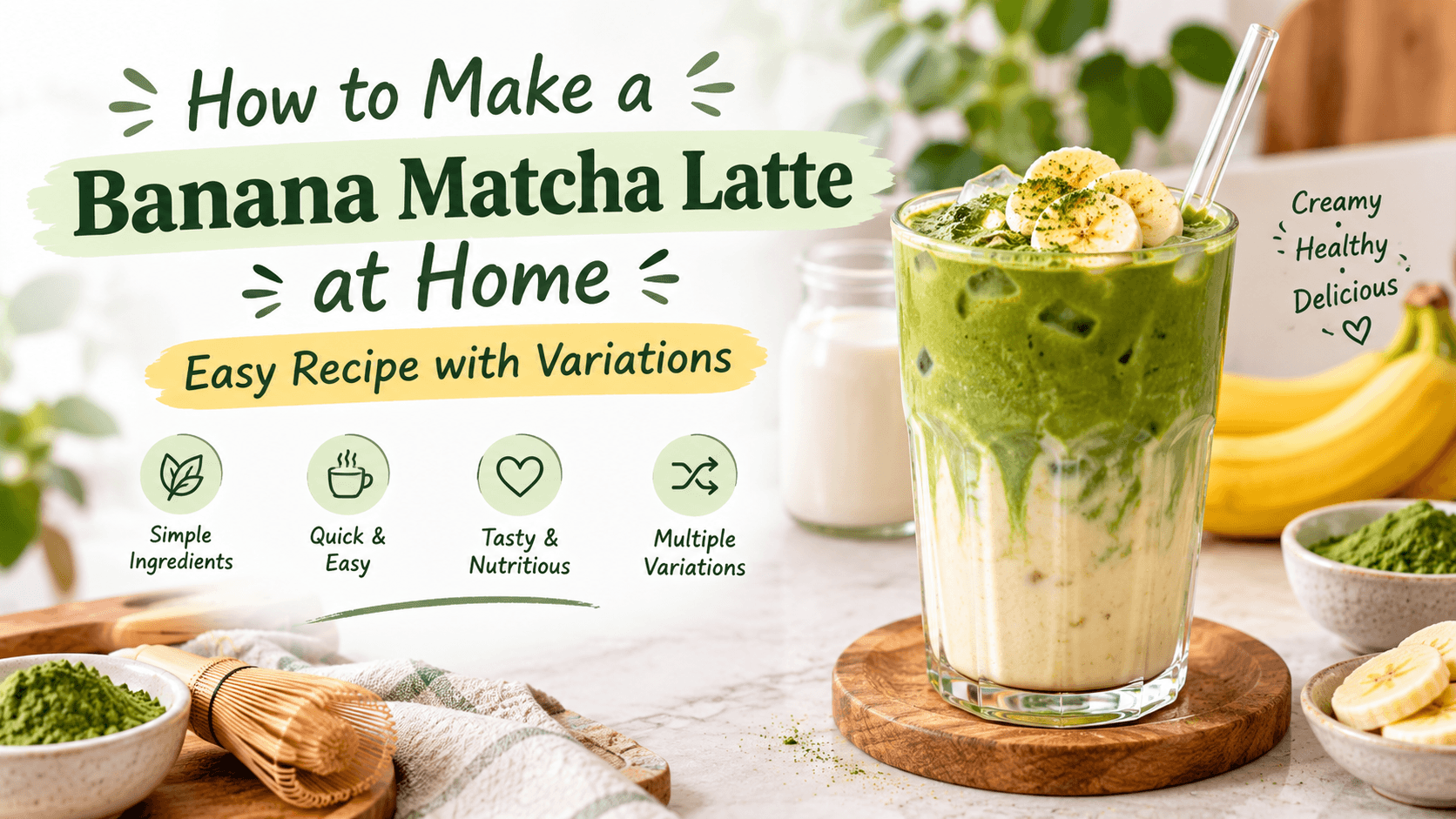
If you have been scrolling through drink videos lately, you have probably seen the gorgeous green layers of a banana matcha latte taking over your feed. This banana matcha latte recipe is having a real moment, and honestly it deserves it. It combines the earthy calm of matcha with the natural sweetness of ripe banana, all blended into one creamy glass that looks as good as it tastes.
The best part is that you do not need any barista skills or fancy equipment to make it. With a ripe banana, a spoonful of matcha, and your milk of choice, you can build a café worthy drink in your own kitchen in about five minutes. This guide walks you through everything: the simple ingredients, the layering trick that gives you those beautiful green and cream stripes, the best matcha to use, and a few fun variations once you have the basics down.
What Is a Banana Matcha Latte?
A banana matcha latte is a chilled or warm drink made by blending ripe banana with milk and pouring whisked matcha green tea over the top, which creates a creamy, naturally sweet latte with distinct green and cream layers. The banana replaces most or all of the added sugar, and the matcha adds gentle caffeine plus antioxidants. A basic version takes about five minutes and needs only four core ingredients: banana, matcha powder, milk, and water.
The Ingredients You Need for a Banana Matcha Latte
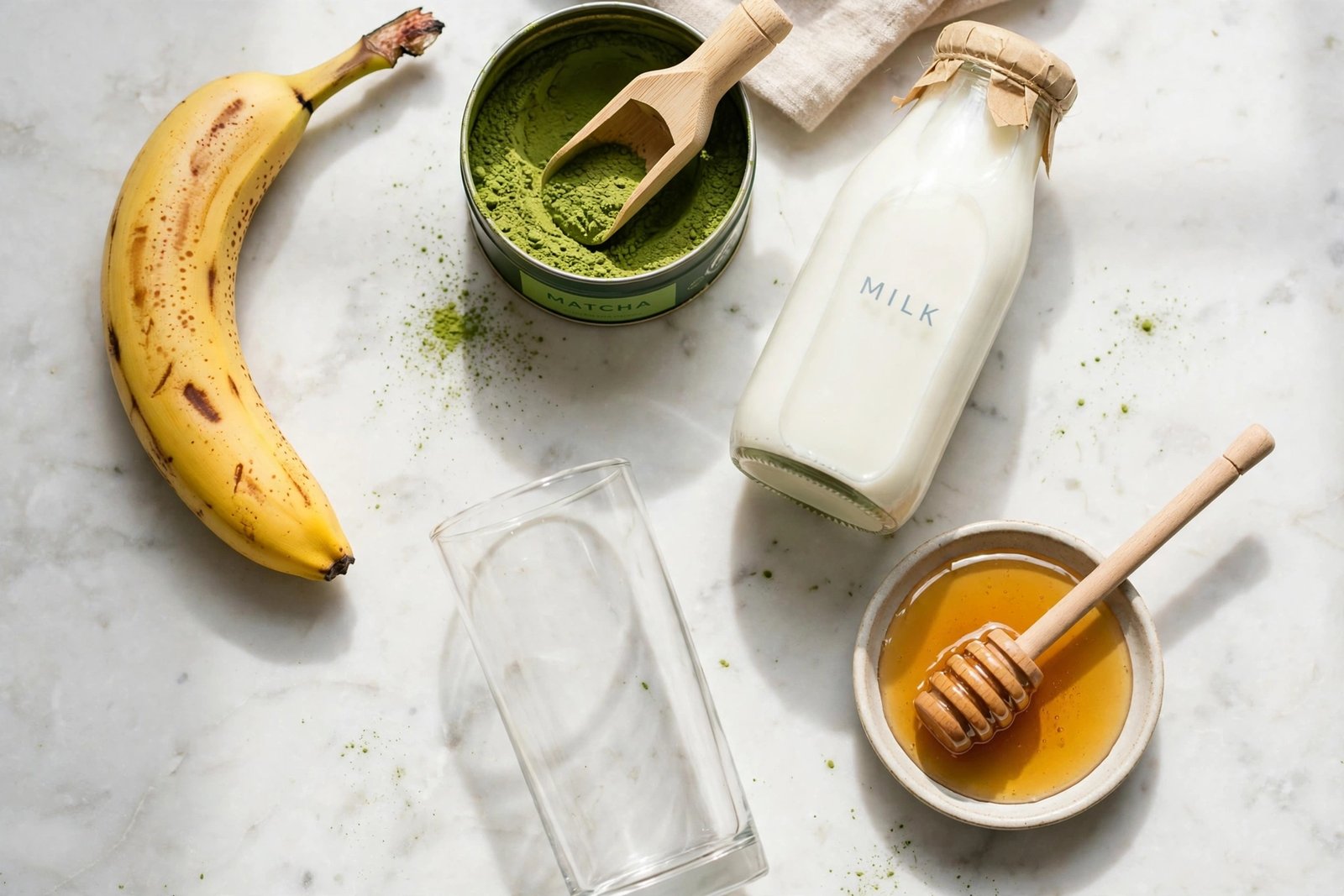
One of the reasons this banana matcha latte recipe is so popular is that the shopping list is short. You probably have most of it already. Here is what you need for one generous serving.
- One ripe banana. Ripe means yellow with a few brown spots. That is when bananas are sweetest, which means you can skip added sugar entirely.
- One teaspoon of matcha powder. Either ceremonial or culinary grade works. We will talk more about the difference in a moment.
- Three quarters of a cup of milk. Dairy milk makes it rich, but oat milk is the closest plant based match for creaminess. Almond and soy work too.
- Two tablespoons of warm water. This is for whisking the matcha smooth before you combine everything. Warm, not boiling, since boiling water makes matcha taste bitter.
- A handful of ice, if you are making the iced version. This is the classic café style and the prettiest for layering.
- Optional sweetener. A teaspoon of honey, maple syrup, or homemade simple syrup if your banana is not quite ripe enough.
How to Make a Banana Matcha Latte, Step by Step
Now for the fun part. The whole process takes about five minutes, and the layering trick at the end is what makes it look like it came from a coffee shop.
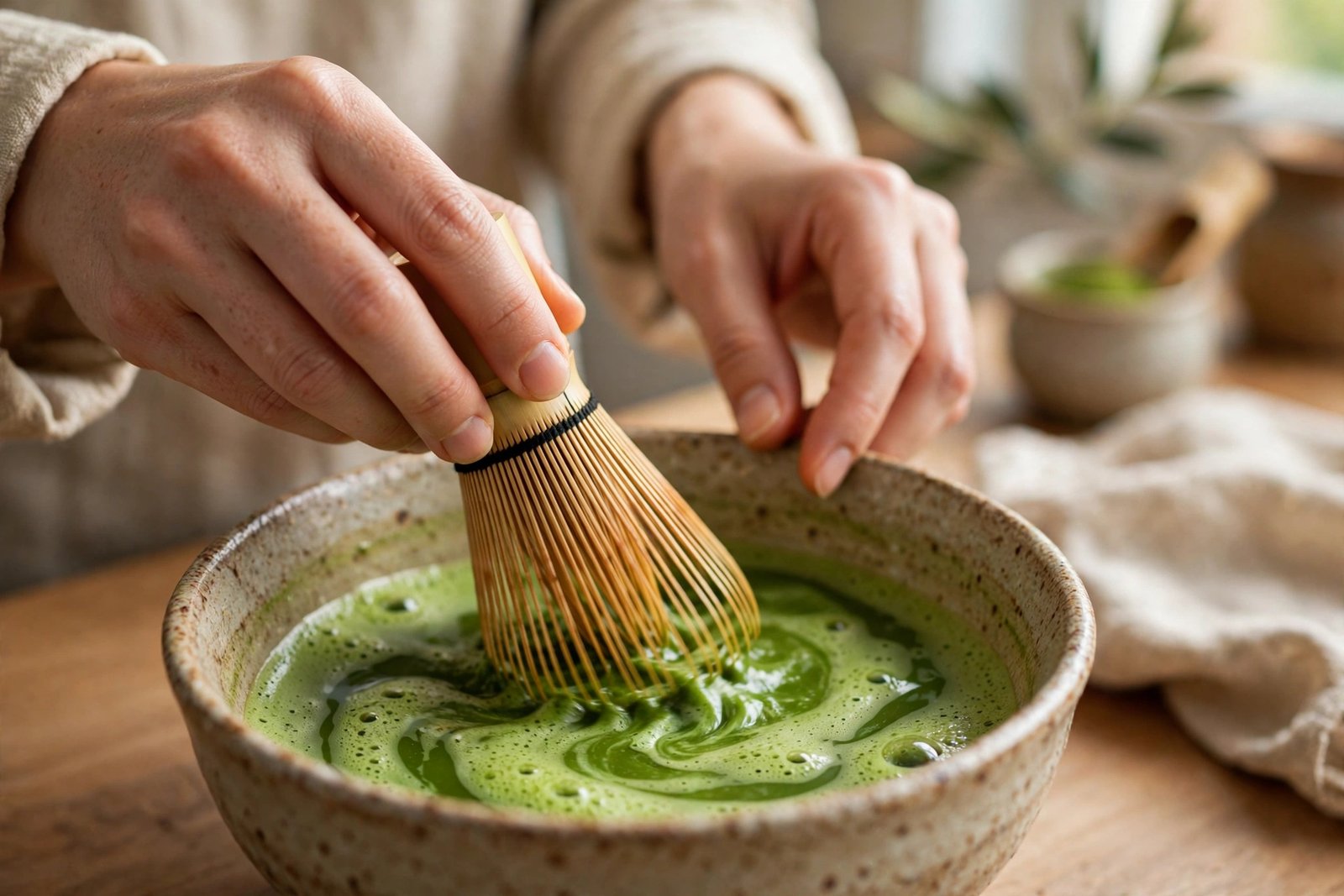
- Whisk the matcha first. Sift one teaspoon of matcha powder into a small bowl or mug to break up any clumps. Add two tablespoons of warm water and whisk in a quick zigzag motion until the mixture is smooth and lightly frothy. A bamboo whisk is traditional, but a small regular whisk or a handheld milk frother works just as well.
- Blend the banana milk. Add the ripe banana and three quarters of a cup of milk to a blender. If you are using sweetener, add it now. Blend on high until completely smooth and creamy, with no banana chunks left. For an extra thick texture like a milkshake, toss a few ice cubes into the blender too.
- Fill your glass. Fill a tall glass about two thirds full with ice cubes, then pour in the banana milk. Leave about two inches of space at the top for the matcha layer.
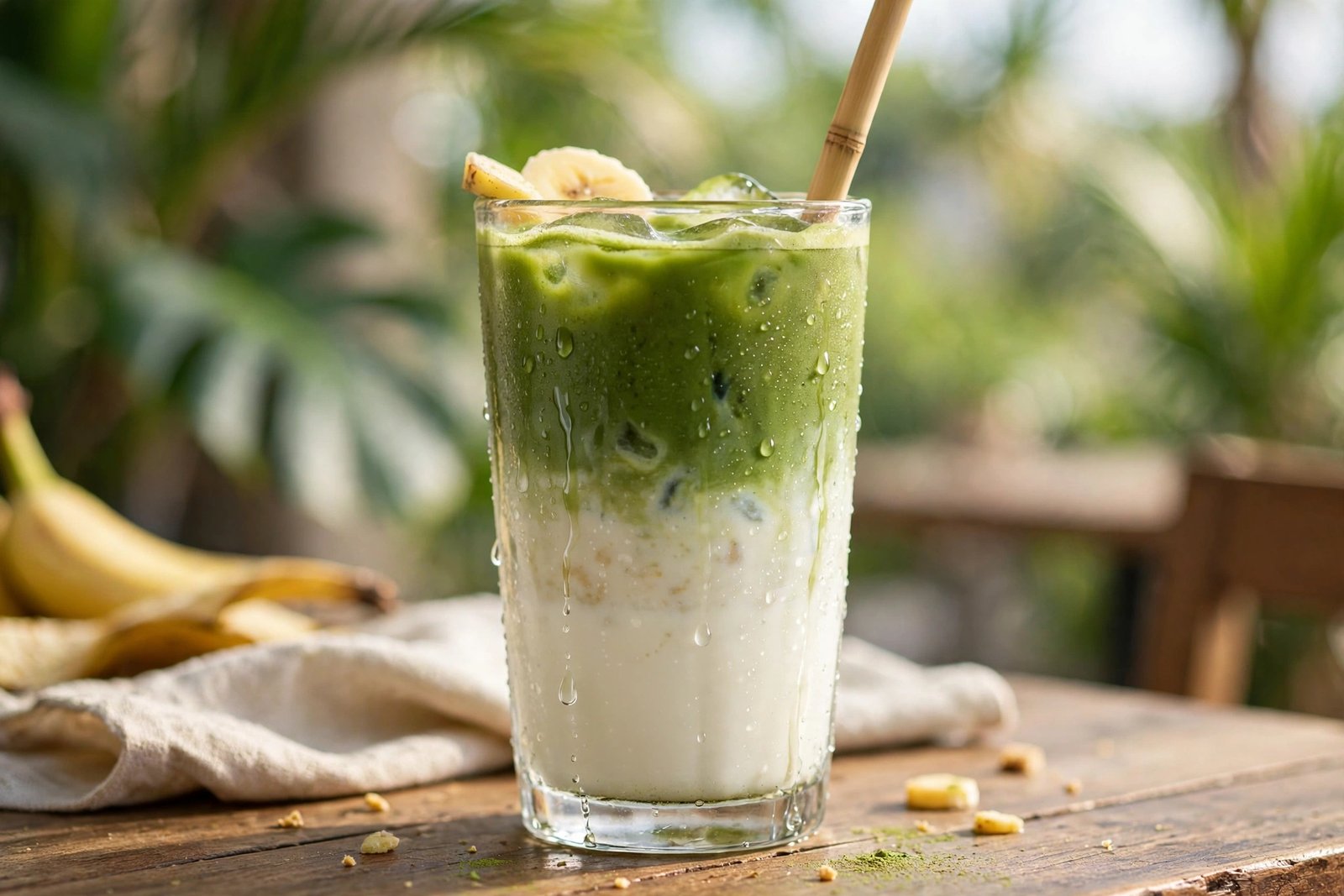
- Pour the matcha slowly. This is the step that creates the signature layers. Hold a spoon just above the banana milk and pour the whisked matcha gently over the back of the spoon. The matcha floats on top of the denser banana milk, giving you that beautiful green over cream effect.
- Finish and serve. Dust the top with a tiny pinch of matcha powder or add a banana slice on the rim if you are feeling fancy. Give it a good stir before drinking so every sip is balanced, or leave it layered for a few photos first.
What Kind of Matcha Should You Use?
Matcha comes in two main grades, and the difference matters for drinks. Ceremonial grade matcha is made from the youngest tea leaves, has a brighter green color, and tastes smoother and sweeter with almost no bitterness. Culinary grade matcha is made from slightly older leaves, has a stronger and more bitter flavor, and costs much less.
For a banana matcha latte, either one works because the banana covers a lot of the bitterness. If you already own culinary grade matcha, use it proudly. But if you are buying matcha specifically for lattes and sweet drinks, ceremonial grade gives you the smoothest flavor and the most vivid color. If you love plain iced matcha too, our classic iced matcha at home guide shows a five minute version with no banana at all.
Fun Variations to Try Next
Once you have the basic banana matcha latte recipe down, it is easy to play around. Each of these tweaks keeps the same method and just swaps one element.
- Banana bread matcha latte. Add a pinch of cinnamon and a drop of vanilla extract to the banana milk. It tastes remarkably like banana bread in a glass, which pairs perfectly with an actual slice of high protein banana bread on the side.
- Strawberry banana matcha latte. Blend a small handful of strawberries with the banana and milk. The pink layer under the green matcha looks stunning and tastes like a fruity milkshake.
- Protein banana matcha latte. Add a scoop of vanilla protein powder to the blender. It turns your latte into a post workout drink with real staying power.
- Coconut banana matcha latte. Swap the milk for coconut milk and add a pinch of salt. The coconut makes it taste tropical, like a green tea piña colada without the pineapple.
Pro Tips for the Perfect Banana Matcha Latte
The recipe is forgiving, but a few small details separate a good banana matcha latte from a great one. First, never use boiling water on your matcha. Water that is too hot scorches the delicate tea leaves and turns the whole drink bitter. Warm water around the temperature of a comfortable bath is perfect.
Second, sift the matcha before whisking. Matcha powder clumps easily, and no amount of stirring fully fixes a clumpy start. A quick pass through a small fine mesh strainer takes ten seconds and guarantees a silky drink.
Third, ripeness is everything. A greenish banana will make a starchy, bland latte no matter what you do, while an overripe banana with plenty of brown spots gives you maximum sweetness and the creamiest texture. When in doubt, go riper. And if you want more fruity drink inspiration, our chia seed drink guide covers another easy homemade refresher with real health perks.
Frequently Asked Questions
Does a banana matcha latte contain caffeine?
Yes, it does. Matcha contains caffeine, roughly 30 to 70 milligrams per teaspoon depending on the grade and how much powder you use. That is less than a typical cup of coffee, and matcha also contains L theanine, an amino acid that promotes calm focus. The result is a gentler lift without the jitters many people get from coffee.
Can I make a banana matcha latte without a blender?
You can, with one compromise. Mash the banana very thoroughly with a fork until it is almost a puree, then whisk it into the milk by hand. The texture will be a little less silky than the blended version, but the flavor is still delicious. For the smoothest result, a blender is worth the extra minute of cleanup.
Is a banana matcha latte healthy?
It can be a genuinely nutritious drink. Bananas provide potassium, vitamin B6, and fiber. Matcha is rich in antioxidants, particularly catechins like EGCG. Using milk adds calcium and protein, and since the banana provides natural sweetness, you can skip refined sugar completely. It is not a low calorie drink, but as homemade treats go, it is a solid choice.
How long does a banana matcha latte stay fresh?
It is best enjoyed immediately. Once blended, banana starts to brown and separate within an hour or two, and the beautiful layers will merge. If you need to prep ahead, you can blend the banana milk and refrigerate it for up to 24 hours, then whisk the matcha and layer it fresh when you are ready to drink.
Conclusion
The banana matcha latte is one of those rare trends that is worth the hype. It is quick, it is customizable, and it turns four humble ingredients into something that looks straight out of a café. Start with the classic recipe above, get your layering technique down, and then experiment with the variations until you find your signature version. Your kitchen just became your favorite coffee shop.


