

If your sleep has been a mess lately and everyone in your group chat keeps raving about magnesium glycinate, you are probably wondering what it actually is and whether it really works. This beginner friendly guide breaks it all down in plain language, from what it is to how it may help you sleep, the typical dosage, how it compares to other forms of magnesium, and the side effects to watch for. No jargon and no overblown promises, just the facts you need.
So, What Is Magnesium Glycinate in a Nutshell?
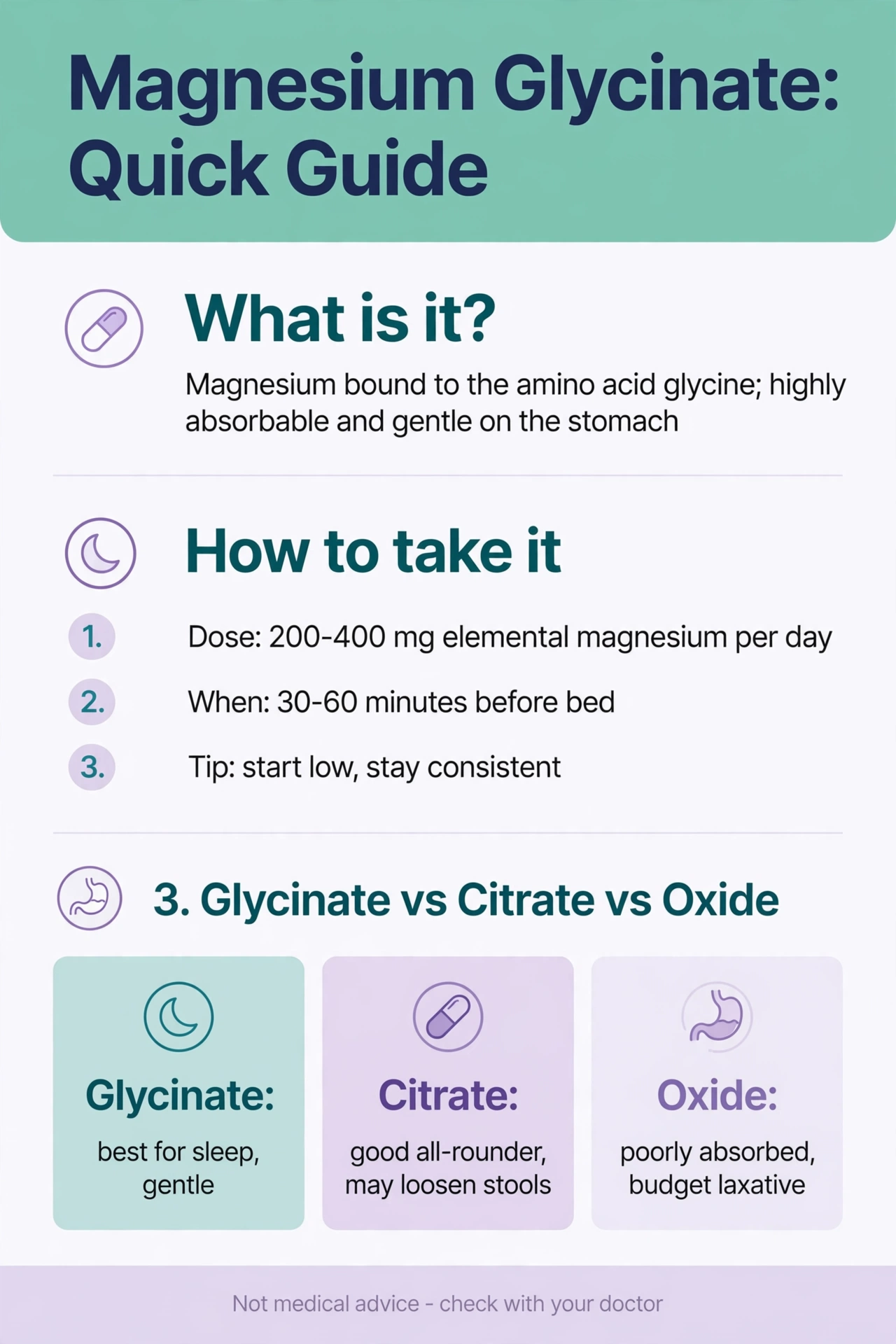
Magnesium glycinate is a supplement that combines magnesium with glycine, a calming amino acid. This chelated form is highly absorbable and gentle on the stomach, making it popular for sleep and relaxation. Typical supplemental doses are 200 to 400 mg of elemental magnesium per day, often taken 30 to 60 minutes before bed.
What Is Magnesium Glycinate, Exactly?

Magnesium glycinate is a chelated form of magnesium, meaning the mineral is chemically bound to glycine, an amino acid your body already uses. You may also see it sold as magnesium bisglycinate, which is the same thing, with two glycine molecules attached to each magnesium atom.
This pairing is what makes it special. Magnesium is an essential mineral involved in over 300 enzymatic reactions in your body, including the ones that regulate sleep, muscle function, and stress response. Glycine itself has calming properties and acts as an inhibitory neurotransmitter in the brain. Put them together, and you get a form of magnesium that is easy for your body to absorb, gentle on digestion, and calming by design.
- Highly bioavailable: your body absorbs it well compared to cheaper forms like magnesium oxide.
- Gentle on digestion: unlike magnesium citrate or oxide, it rarely causes a laxative effect at normal doses.
- Calming by design: the glycine component supports relaxation, which is why this form is the go to for sleep and stress.
One label tip: look for fully reacted or chelated magnesium glycinate. Some cheaper products are buffered, meaning the glycinate is mixed with magnesium oxide, and you get far less of the gentle, well absorbed form than the label implies.
How Does Magnesium Glycinate Help You Sleep?

Magnesium glycinate supports sleep through a few connected pathways. First, magnesium helps regulate GABA, a neurotransmitter that quiets brain activity and tells your nervous system it is time to wind down. It also supports healthy melatonin regulation, relaxes tense muscles, and can ease the anxious, wired feeling that keeps you tossing and turning.
Does the science back it up? Studies suggest that magnesium supplementation can improve sleep quality, lengthen sleep duration, and reduce sleep latency, the time it takes to fall asleep. That said, most sleep research has tested magnesium in general rather than the glycinate form specifically, so the honest phrasing is this: the evidence for magnesium and sleep is promising, and glycinate is the form most people reach for because it is the easiest to absorb and tolerate. It is not a sedative and will not knock you out, so think of it as helping your body get into sleep mode, not forcing the issue.
What Is the Right Magnesium Glycinate Dosage?

There is no single official dose, but typical supplemental doses of magnesium glycinate are 200 to 400 mg of elemental magnesium per day. For sleep, most people take their dose 30 to 60 minutes before bedtime.
Here is the important nuance: elemental magnesium is not the same as the weight of the capsule. Magnesium glycinate is only about 10 to 14% elemental magnesium by weight. So if a label says a serving contains 2,000 mg of magnesium glycinate, that may deliver only around 200 to 280 mg of actual magnesium. Always read the elemental magnesium per serving line on the supplement facts panel, because that is the number that matters.
A few practical dosage pointers:
- Start low. If you are new to magnesium supplements, begin around 200 mg of elemental magnesium and see how you feel before increasing.
- More is not better. Megadosing will not make you sleepier. It mostly raises your risk of digestive upset.
- Consider your diet. The adult recommended dietary intake of magnesium is roughly 310 to 420 mg per day, and it varies by age and sex. Food sources like spinach, nuts, seeds, and whole grains count toward that total.
- Split doses if needed. Some people split their daily dose between morning and evening to improve absorption and minimize any digestive discomfort.
How Should You Take Magnesium Glycinate? 6 Simple Steps
- Read the label carefully. Confirm how much elemental magnesium is in each capsule or scoop, and ignore the big number on the front of the bottle.
- Start with a lower dose. Begin with around 200 mg of elemental magnesium, especially if you have never taken magnesium before.
- Time it for bedtime. For sleep support, take it 30 to 60 minutes before bed as part of your wind down routine.
- Food is optional. Magnesium glycinate can be taken with or without food, and a light snack helps if your stomach is sensitive.
- Stay consistent. Give it at least a couple of weeks of nightly use before judging the results, and do not double up if you miss a night.
- Check with your doctor first if you are pregnant, nursing, managing a health condition, or taking prescription medication.
Magnesium Glycinate vs Citrate vs Oxide: Which Form Is Right for You?
Walk into any supplement aisle and you will face a wall of magnesium types. The form matters a lot, because some are absorbed far better than others, and they behave very differently in your gut. Here is how the three most common forms compare.
Magnesium Glycinate
- Absorption: high.
- Elemental magnesium: about 10 to 14%.
- Best for: sleep, relaxation, and daily use.
- Digestive tolerance: excellent, with minimal laxative effect.
- Typical daily dose: 200 to 400 mg of elemental magnesium.
Magnesium Citrate
- Absorption: high.
- Elemental magnesium: about 16%.
- Best for: constipation and general use.
- Digestive tolerance: good, though it can cause loose stools at higher doses of 300 mg or more.
- Typical daily dose: 200 to 400 mg of elemental magnesium.
Magnesium Oxide
- Absorption: low, about 4% in human studies.
- Elemental magnesium: about 60%.
- Best for: occasional constipation, as a budget option.
- Digestive tolerance: poor, with a strong laxative effect.
- Typical daily dose: varies, and it is often used in lower amounts.
The takeaway: if your goal is sleep and calm, magnesium glycinate is usually the best pick because it is well absorbed and gentle. If you also want digestive regularity, citrate is a solid all rounder, though it can loosen stools at higher doses. Magnesium oxide is cheap and dense in magnesium, but with only about 4% absorption, it is a poor choice for raising your magnesium levels, and it mostly works as a laxative.
Are There Any Side Effects of Magnesium Glycinate?
Magnesium glycinate is one of the best tolerated forms of magnesium, and most people take normal doses without any issues. Still, it is a supplement, not candy, so here is what to know.
- Digestive upset. At high doses, it can cause diarrhea, nausea, or abdominal cramping, though this is far less common with glycinate than with citrate or oxide.
- Drowsiness. The calming effect that helps at bedtime means it is not the best pick for first thing in the morning.
- Too much magnesium. Excessive intake can lower blood pressure or cause an irregular heartbeat. This is rare with supplements alone, but it is the reason not to megadose.
Who Should Avoid Magnesium Glycinate (or Check With a Doctor First)?
Magnesium is cleared by the kidneys, so people with kidney problems should only take magnesium supplements under medical supervision. You should also talk to a doctor or pharmacist before starting if any of the following apply to you.
- You take blood pressure medication, diuretics, or muscle relaxants, since magnesium can interact with these.
- You take certain antibiotics, such as tetracyclines or fluoroquinolones, since magnesium can reduce how well they are absorbed, so timing and spacing matter.
- You take bisphosphonates for bone health, since magnesium can interfere with their absorption.
- You are pregnant or breastfeeding, so get professional guidance before adding any supplement.
- You are giving it to a child, since dosage for children should be determined by a healthcare professional.
Keep all supplements out of reach of children. When in doubt, a quick chat with your pharmacist is worth more than hours of forum scrolling.
Key Takeaways
- Magnesium glycinate is magnesium bound to the calming amino acid glycine, and it is highly absorbable and easy on the stomach.
- Typical doses are 200 to 400 mg of elemental magnesium per day, often taken 30 to 60 minutes before bed for sleep.
- Studies suggest magnesium may improve sleep quality, duration, and how fast you fall asleep, and glycinate is the form most people choose for this purpose.
- Compared to citrate and oxide, glycinate is the best pick for sleep and daily use. Citrate suits constipation. Oxide absorbs poorly, at about 4%.
- It is generally well tolerated, but check with your doctor first if you have kidney issues, are pregnant or nursing, or take blood pressure meds or antibiotics.
Frequently Asked Questions
What does magnesium glycinate do?
Magnesium glycinate provides your body with well absorbed magnesium plus glycine, an amino acid with calming properties. People take it mainly for sleep support, relaxation, muscle tension, and correcting low magnesium levels. It is also considered the gentlest magnesium form for daily, long term use.
How long does magnesium glycinate take to work for sleep?
There is no firm clinical timeline, so be wary of anyone promising results in a specific number of nights. Most people take it 30 to 60 minutes before bed, and many report noticing a difference within a few days to a couple of weeks of consistent nightly use. If nothing changes after a few weeks, talk to your doctor, since poor sleep has many causes.
Can I take magnesium glycinate every night?
It is commonly used nightly, and its gentle profile makes it suitable for regular use. That said, stick to the dose on the label, typically 200 to 400 mg of elemental magnesium, and check in with your doctor about long term use, especially if you take other medications.
Is magnesium glycinate better than melatonin for sleep?
They work differently, so better depends on your problem. Melatonin is a hormone signal that tells your body it is nighttime. Magnesium glycinate supports relaxation, muscle ease, and GABA activity, and it helps your body wind down rather than commanding sleep. Some people use both, but talk to a doctor before stacking sleep supplements.
Can I get enough magnesium from food alone?
It is possible. Spinach, almonds, pumpkin seeds, black beans, and whole grains are all good sources. But many people fall short of the recommended 310 to 420 mg daily intake because of modern eating habits, which is why supplements like magnesium glycinate are so popular. Food first is always a solid strategy, and supplements fill the gap.
The Bottom Line
Magnesium glycinate is a gentle, well absorbed form of magnesium that many people find helpful for winding down at night. Start with a modest dose, take it consistently before bed, and give it a couple of weeks to show what it can do. If sleep troubles persist, treat the supplement as one piece of a bigger picture that includes your habits, your routine, and a conversation with your doctor.
A Quick Disclaimer
This article is for informational purposes only and is not medical advice. Supplements affect everyone differently, and this guide cannot account for your health history or medications. Talk to your doctor or pharmacist before starting magnesium glycinate, especially if you are pregnant, nursing, managing kidney or heart conditions, or taking blood pressure medication or antibiotics.


