

Table of Contents:
- Introduction
- The Rising Need for Daily Emotional Support
- What Exactly Are Guided Journals for Mental Health?
- Key Features to Look for in a Wellness Notebook
- Building a Consistent Weekly Reflection Habit
- Combining Professional Therapy with Daily Writing
- Taking the First Step Toward Emotional Healing
- Conclusion
Introduction:
Modern life often brings constant responsibilities, emotional stress, and information overload that can feel difficult to manage. Many people search for simple daily habits that encourage self-reflection and emotional awareness without requiring complicated routines. Guided journals for mental health have become a popular wellness tool because they provide structured prompts that make reflective writing easier and more approachable. At Freaky Thread, we believe small, consistent habits can support emotional well-being while encouraging greater self-understanding over time.
Unlike blank notebooks, guided journals provide carefully designed questions that encourage thoughtful reflection about emotions, experiences, and personal goals. These prompts reduce the pressure of deciding what to write while helping individuals explore their thoughts more effectively. Regular journaling may also improve emotional awareness and support healthier coping strategies when combined with other wellness practices.
Although journaling is not a replacement for professional mental health care, many people find it helpful alongside healthy daily routines. A consistent writing habit encourages mindfulness while helping individuals recognize emotional patterns and personal growth. Learning how to use guided journals effectively allows beginners to build confidence from the very first page.
The Rising Need for Daily Emotional Support:
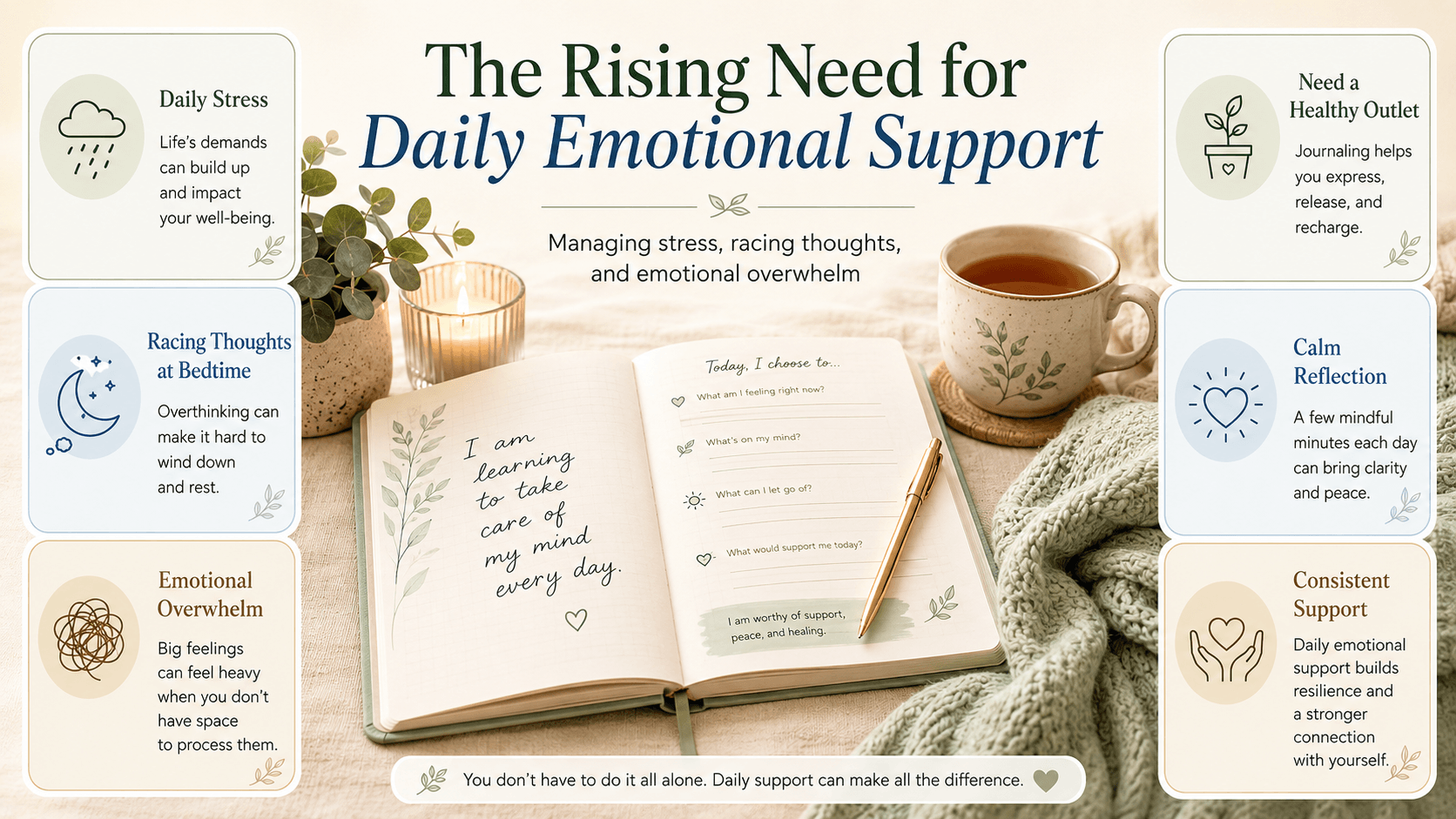
Daily responsibilities, work demands, family obligations, and constant digital distractions can leave many people feeling emotionally exhausted. Stress often builds gradually until it becomes difficult to process thoughts in a healthy and organized way. Creating space for regular self-reflection helps individuals better understand their emotional experiences before they become overwhelming.
Many people also struggle with racing thoughts that become especially noticeable during quiet evening hours. Worries about work, relationships, finances, or future responsibilities may interrupt relaxation and affect sleep quality. Writing thoughts on paper allows individuals to organize concerns while creating a greater sense of mental clarity before bedtime.
Developing a daily reflection habit encourages people to pause and acknowledge their emotional experiences without immediate judgment. Even a few minutes of thoughtful writing can support greater self-awareness and healthier emotional processing over time. Consistent journaling becomes a valuable personal practice that complements other positive lifestyle habits.
You may also like:
What Exactly Are Guided Journals for Mental Health?
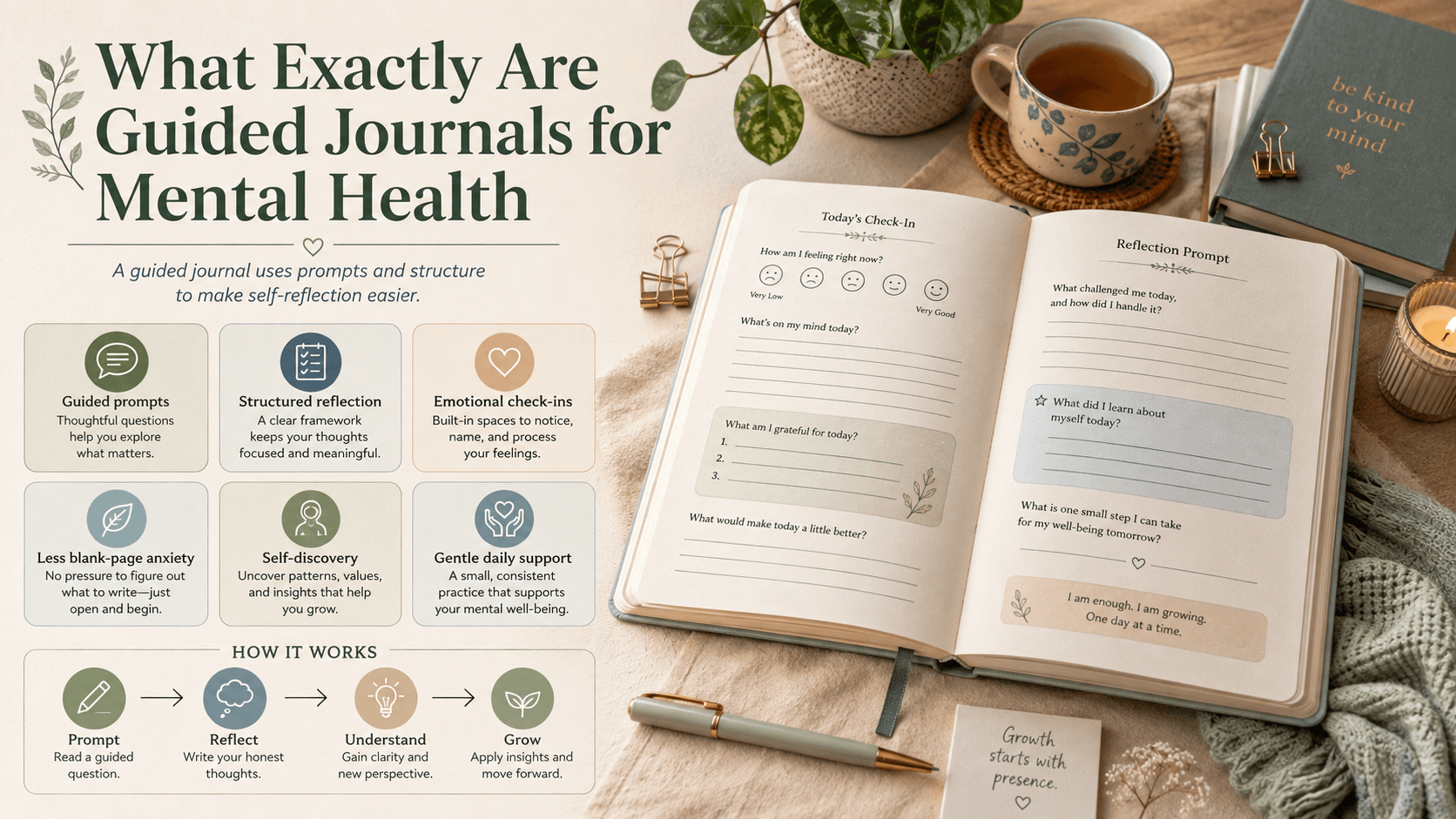
Understanding guided journals for mental health begins with recognizing that they provide structured prompts instead of completely blank pages. Each prompt encourages users to reflect on emotions, gratitude, challenges, personal values, or future goals through simple writing exercises. This guided approach reduces uncertainty while making journaling more accessible for beginners.
Many people experience writer’s block when facing an empty notebook because they feel unsure where to begin. Guided prompts remove this pressure by offering clear questions that naturally encourage thoughtful responses. As confidence grows, users often discover new insights about their emotional habits and personal experiences.
These journals vary widely in style, purpose, and level of structure depending on individual preferences. Some emphasize gratitude, while others focus on mindfulness, stress management, emotional awareness, or personal growth. Selecting a journal that aligns with personal goals helps create a more meaningful and enjoyable writing experience.
You may also like:
Key Features to Look for in a Wellness Notebook:
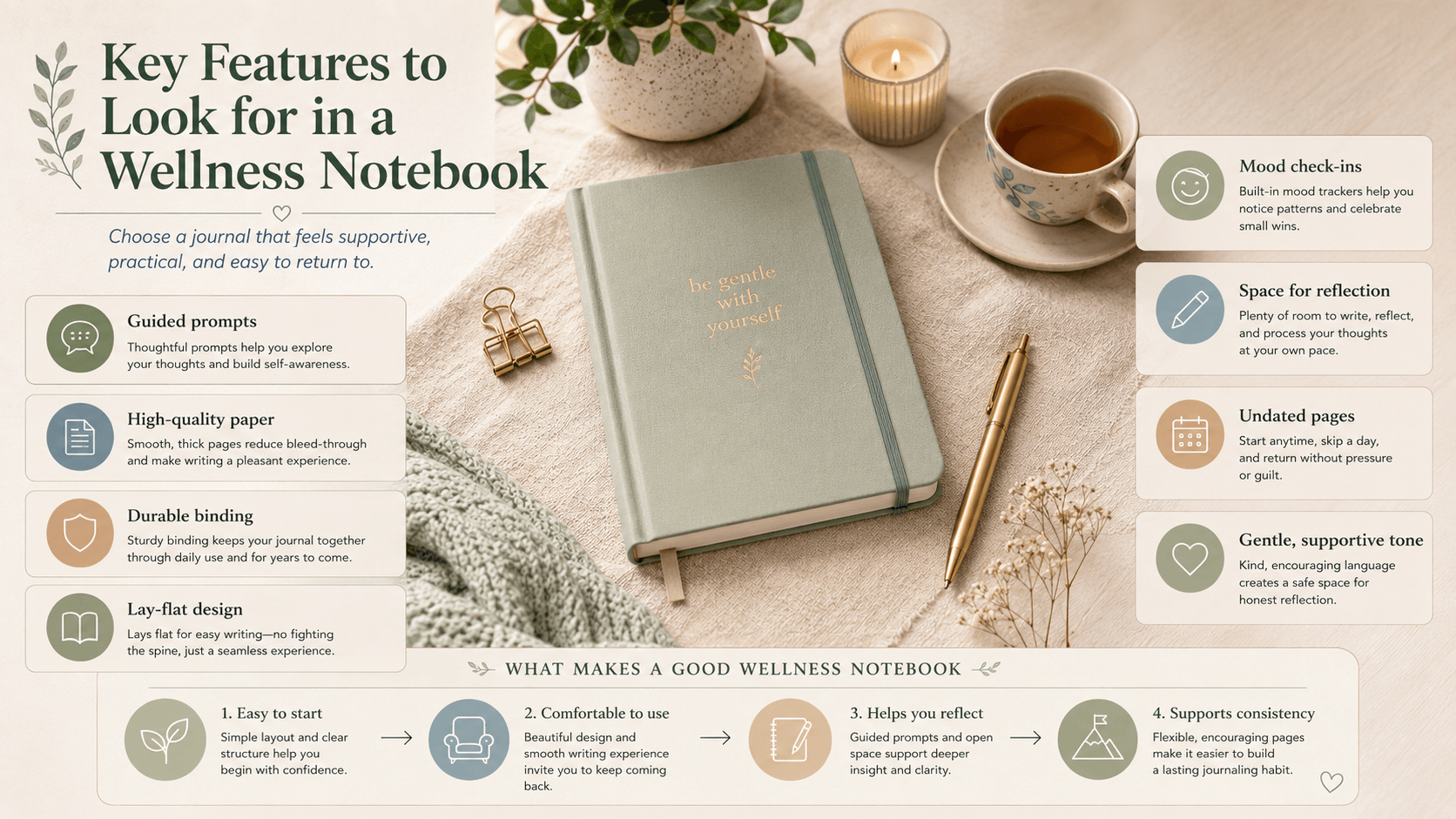
Choosing the right wellness notebook makes it easier to maintain a consistent journaling habit over the long term. High-quality guided journals for mental health usually contain thoughtful prompts that encourage meaningful reflection without becoming repetitive or overly complicated. Clear organization also helps users progress naturally through their personal wellness journey.
Many beginners become discouraged after purchasing journals filled with generic prompts that quickly lose their usefulness. A well-designed journal should include varied questions that encourage deeper reflection while remaining easy to understand. Balanced prompts help maintain motivation by introducing fresh perspectives throughout the writing experience.
Physical quality also contributes to a more satisfying journaling routine. Thick paper reduces ink bleed while durable binding allows the notebook to withstand regular daily use. Comfortable layouts, readable fonts, and sufficient writing space create an enjoyable experience that encourages long-term consistency.
Building a Consistent Weekly Reflection Habit:
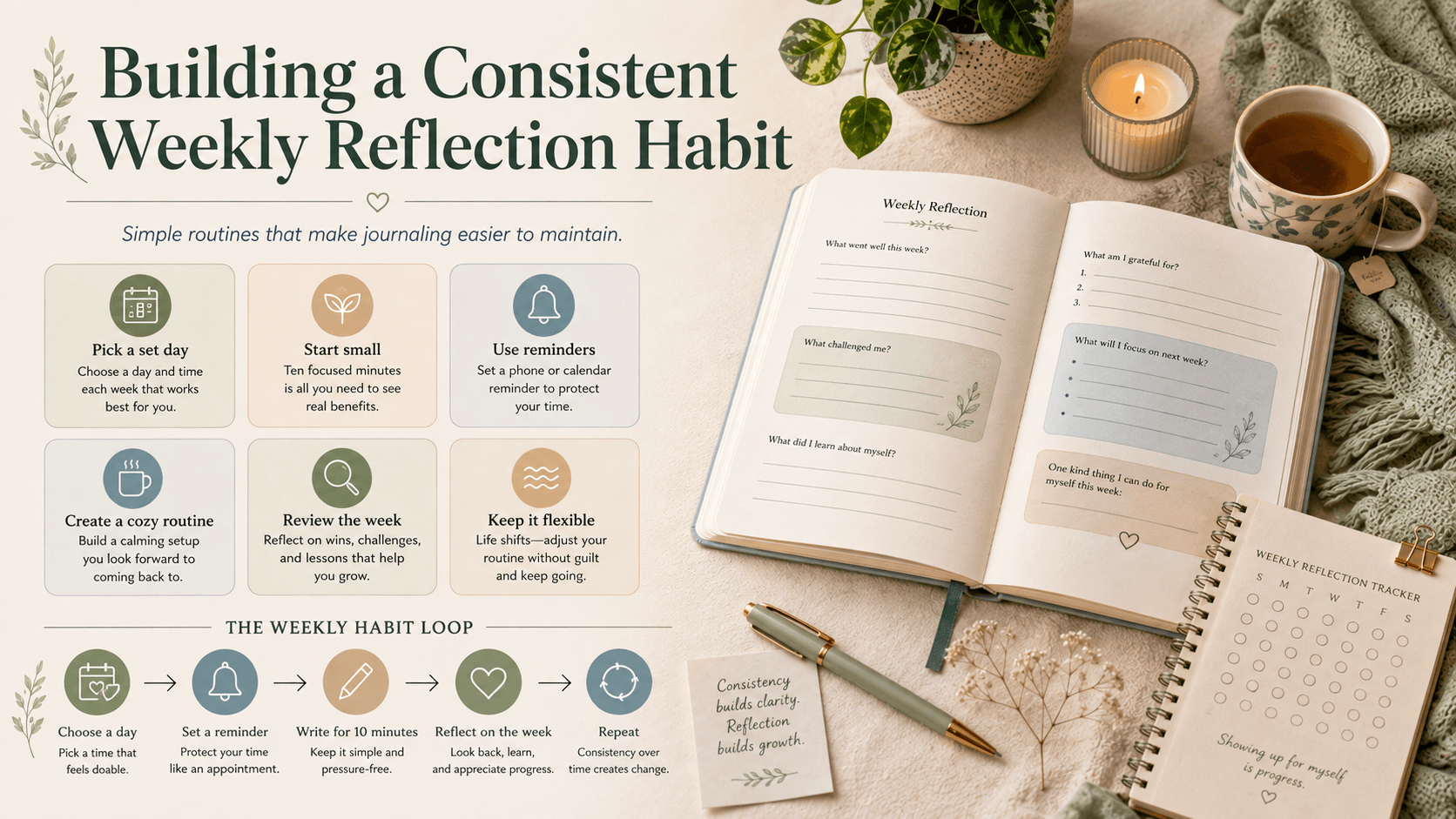
Creating a journaling routine becomes easier when writing feels manageable instead of overwhelming or time consuming. Setting aside ten to fifteen minutes several times each week often works better than aiming for lengthy daily sessions. Small, consistent efforts usually build stronger habits than occasional bursts of motivation.
Many people stop journaling because busy schedules make the practice easy to forget after a few days. Pairing journaling with an existing habit, such as drinking morning coffee or preparing for bed, creates a reliable reminder. Keeping the journal in a visible location also increases the likelihood of maintaining the routine.
Consistency matters more than perfection because every writing session contributes to greater emotional awareness over time. Missing a day should not become a reason to abandon the habit completely. Returning to the journal whenever possible helps create lasting progress without unnecessary pressure.
You may also like:
Combining Professional Therapy with Daily Writing:
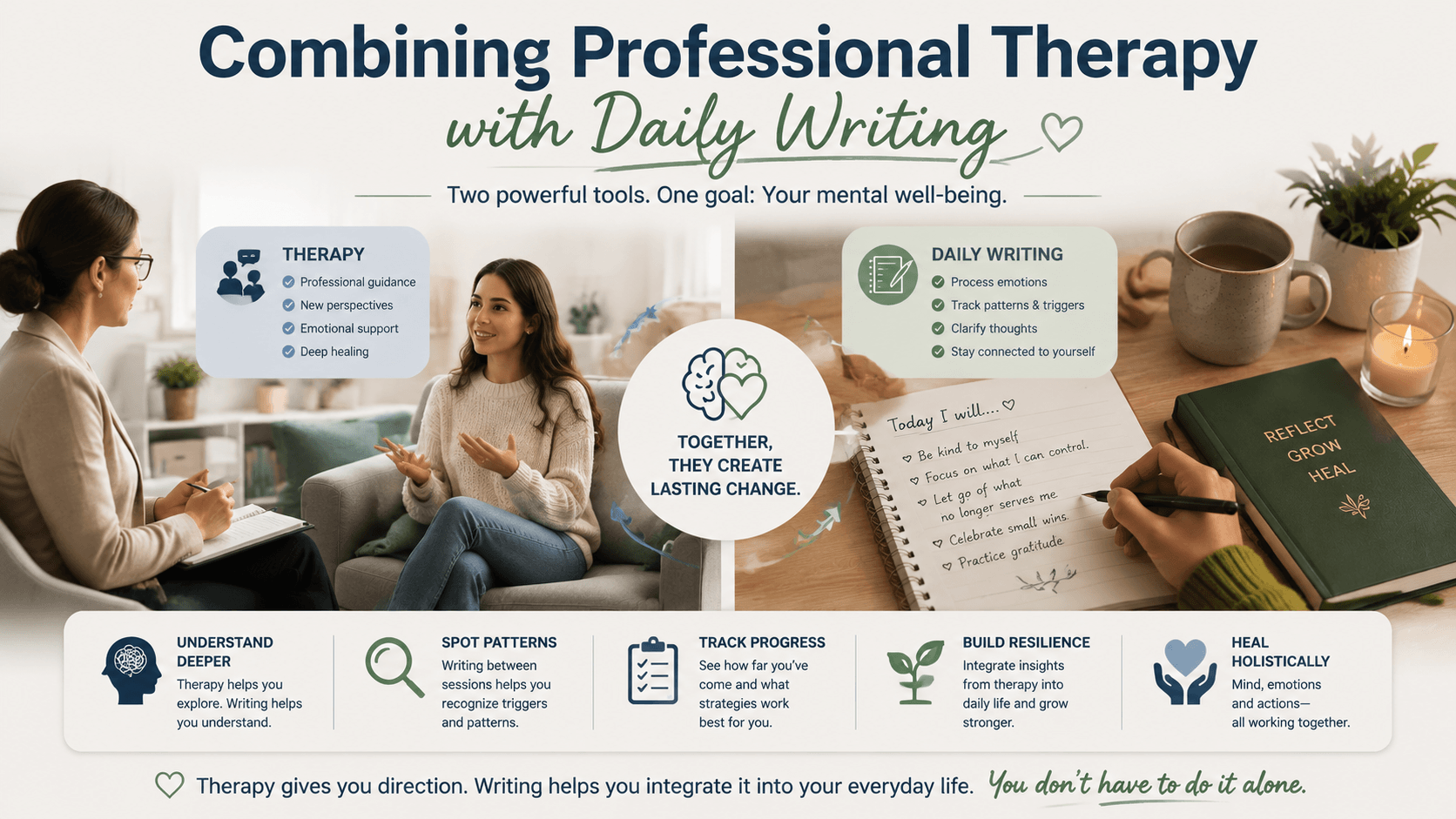
Many individuals find that journaling complements professional therapy by helping them organize thoughts between appointments. Writing regularly allows people to identify recurring emotions, personal challenges, and situations that influence their mental well-being. These observations can make therapy conversations more focused and productive.
Remembering important emotional experiences during therapy sessions can sometimes feel surprisingly difficult. Recording thoughts soon after meaningful events creates a personal record that supports more accurate discussions later. Journaling may also help individuals recognize emotional triggers and patterns that might otherwise go unnoticed.
Although guided journals for mental health can support emotional self-reflection, they should never replace qualified professional care when it is needed. Mental health professionals provide assessment, guidance, and treatment that journaling alone cannot offer. Using both approaches together may create a more complete and balanced wellness strategy.
Taking the First Step Toward Emotional Healing:
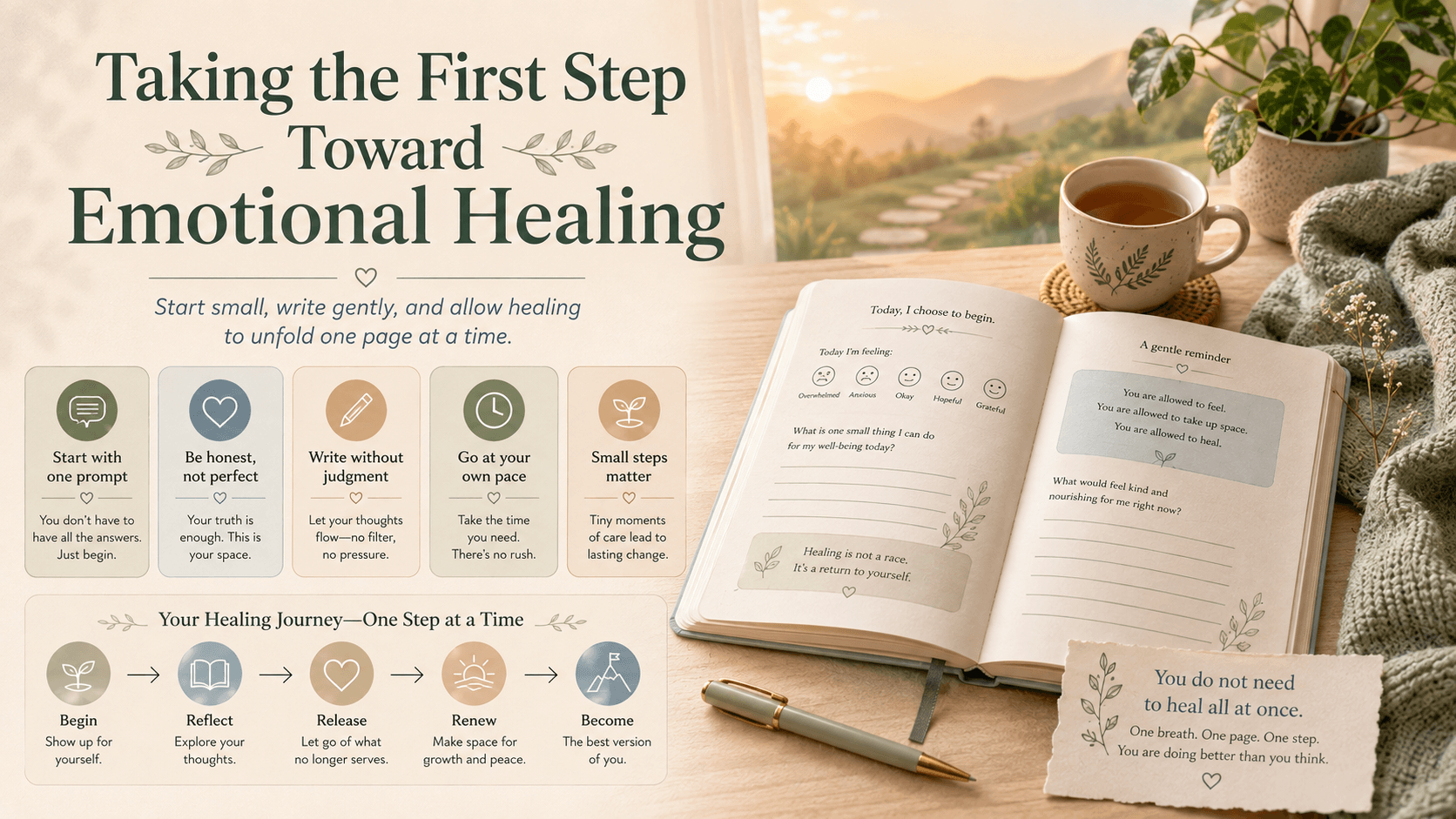
Beginning a journaling practice can feel intimidating because honest self-reflection sometimes brings difficult emotions to the surface. Many people worry about writing the perfect response instead of simply expressing genuine thoughts and feelings. Remembering that the journal is a private space often makes the process feel more comfortable.
Emotional growth rarely happens overnight because meaningful personal change develops through regular practice and patience. Some writing sessions may feel deeply insightful, while others simply provide an opportunity to slow down and reflect. Every entry contributes to a greater understanding of personal experiences and emotional well-being.
The most important step involves starting with realistic expectations and allowing progress to happen naturally over time. There is no perfect way to use a guided journal because every individual follows a unique journey. Consistent reflection builds confidence while encouraging healthier emotional habits that can support long-term personal growth.
You may also like:
Conclusion:
Guided journals for mental health offer a practical way to develop greater emotional awareness through structured and meaningful self-reflection. They help reduce the pressure of blank pages while encouraging consistent writing habits that support mindfulness and personal growth. Although journaling cannot replace professional mental health care, it can become a valuable part of a balanced wellness routine.
Choosing a quality journal, maintaining a realistic schedule, and writing with honesty create the foundation for lasting progress. Small moments of reflection often lead to meaningful insights that strengthen emotional resilience over time. At Freaky Thread, we encourage readers to explore guided journaling as one simple step toward building healthier daily habits and a more mindful approach to emotional well-being.


