

Table of Contents:
- Introduction
- What Is Microblading?
- What Is Microshading?
- Microblading vs Microshading: Main Differences
- Which Technique Looks More Natural?
- Which Technique Is Better for Your Skin Type?
- Pain Level and Healing Process
- How Long Do Results Last?
- Cost Comparison Between Both Treatments
- Can You Combine Microblading and Microshading?
- Conclusion
Introduction
Perfectly shaped eyebrows can completely change the appearance of your face. Many people now choose semi permanent eyebrow treatments to achieve fuller and more defined brows without applying makeup daily. Two of the most popular options today are microblading and microshading eyebrows.
Although these treatments may appear similar at first, they create very different results. Understanding the difference between both procedures helps you choose the best option for your skin type, lifestyle, and beauty preferences. Many beginners often search for answers about microblading vs microshading before booking their first appointment.
In this detailed guide by Freaky Thread, you will learn what each treatment involves, how they differ, which skin types they suit best, and which eyebrow technique may work better for your personal goals.
What Is Microblading?
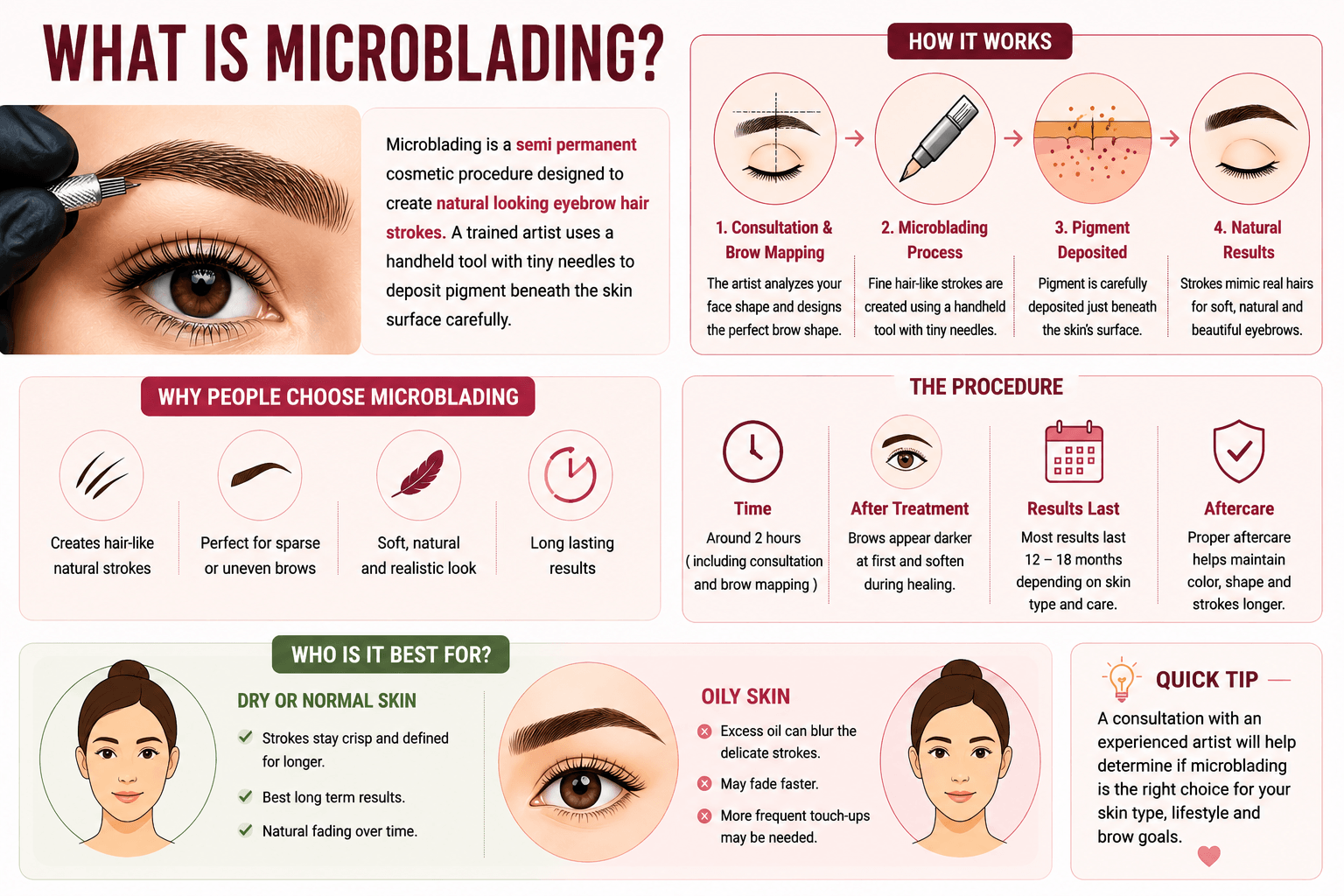
Microblading is a semi permanent cosmetic procedure designed to create natural looking eyebrow hair strokes. A trained artist uses a handheld tool with tiny needles to deposit pigment beneath the skin surface carefully.
The strokes mimic the appearance of real eyebrow hairs very closely. This technique works especially well for people with sparse eyebrows or uneven brow shapes. Many clients prefer microblading because the results look soft and realistic rather than heavily filled.
The procedure usually takes around two hours, including consultation and brow mapping. After treatment, the eyebrows appear darker initially but gradually soften during the healing process. Most results last between twelve and eighteen months, depending on skin type and aftercare routine.
People with dry or normal skin usually achieve the best long term results from microblading. Oily skin types may experience faster fading because excess oil can blur the delicate strokes over time.
What Is Microshading?
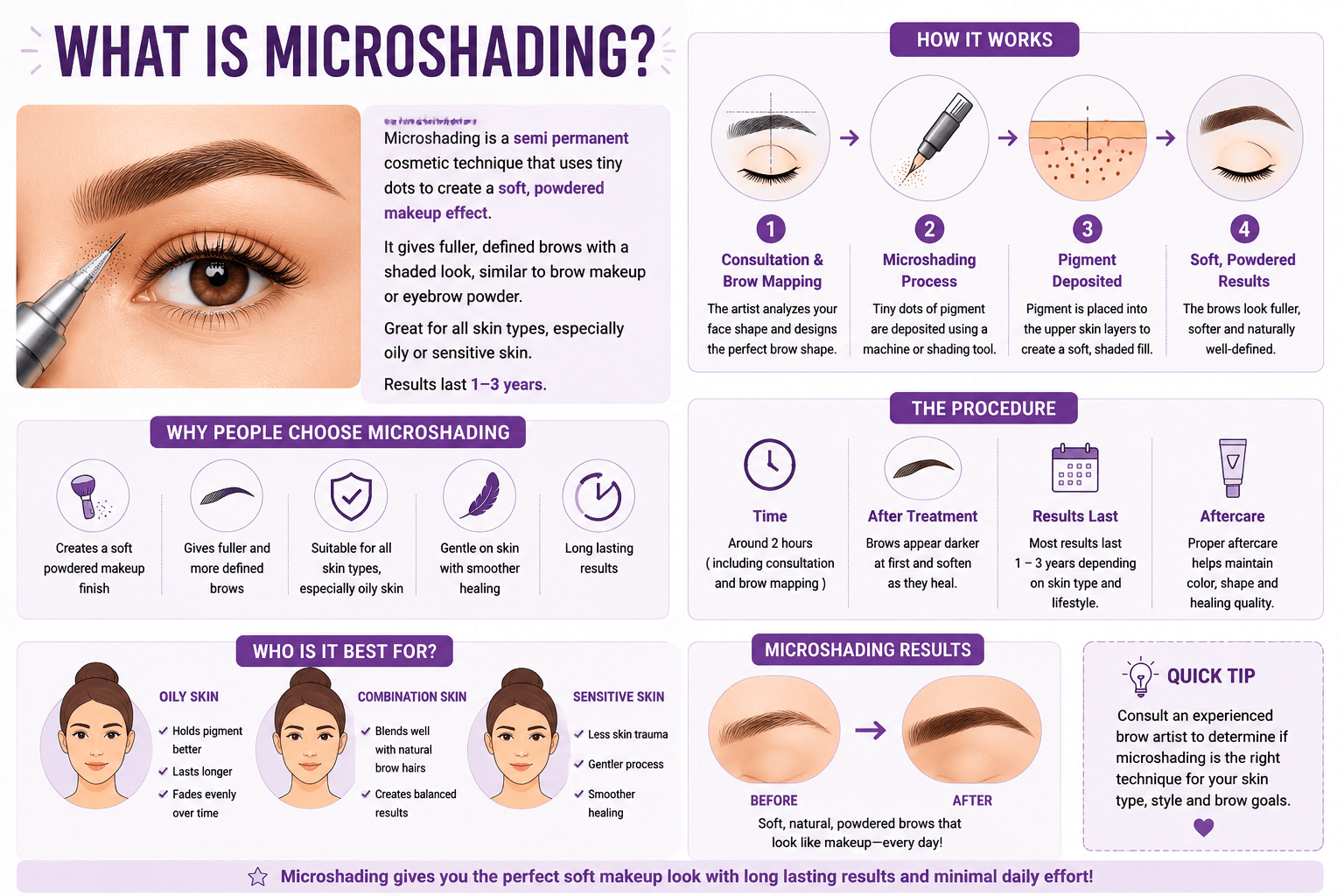
Microshading is another semi permanent eyebrow treatment that creates a soft powdered makeup effect instead of individual hair strokes. Instead of drawing fine lines, the artist applies tiny dots of pigment using a machine or manual shading tool.
This process creates brows that resemble softly filled makeup or eyebrow powder. The final appearance usually looks fuller and more defined than traditional microblading results.
Many beauty professionals recommend microshading for people with oily or sensitive skin. The shading technique often heals more evenly and lasts longer on these skin types. People who regularly fill their brows with makeup may also prefer this treatment because the finished look appears more polished.
Microshading generally causes less skin trauma during treatment. Because of this, many clients report a smoother healing process with less visible scabbing afterward. The results often last between one and three years with proper maintenance and touch ups.
When discussing microblading vs microshading, the biggest visual difference involves the final eyebrow appearance. Microblading focuses on realistic hair strokes, while microshading creates a softer powdered finish.
Microblading vs Microshading: Main Differences
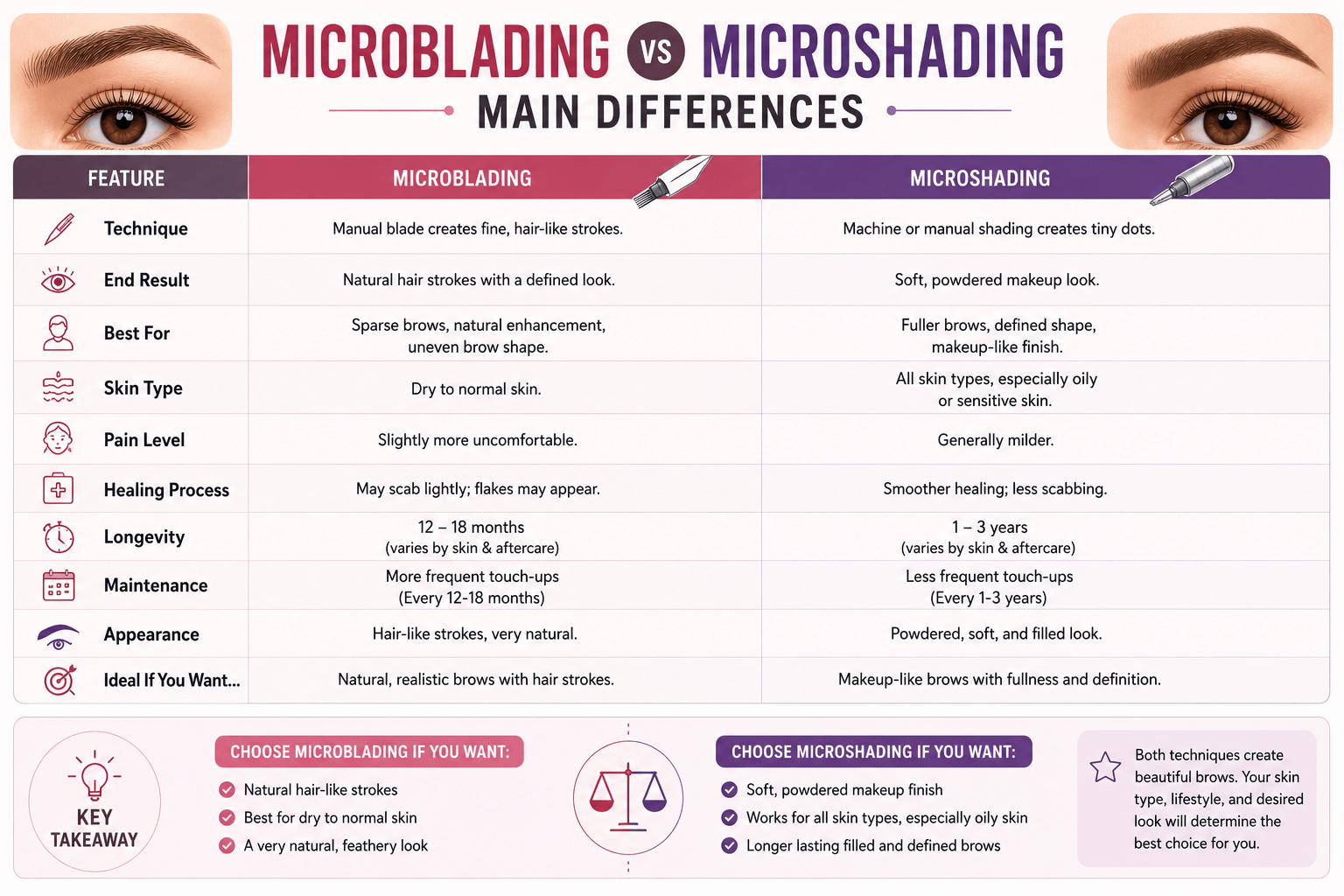
Understanding what is the difference between microblading and microshading becomes easier when comparing their key features side by side. Both techniques improve eyebrow appearance, but the methods and final results vary significantly.
Technique Used
Microblading uses a handheld blade tool to create thin hair like strokes manually. Microshading uses tiny pigment dots to create shading throughout the brows.
Final Appearance
Microblading creates natural and feathered eyebrows that resemble real brow hairs closely. Microshading creates fuller and more makeup inspired brows with a powder finish.
Best Skin Types
Microblading performs best on dry and normal skin because the strokes remain sharper longer. Microshading usually works better for oily and combination skin types because the pigment holds more evenly.
Pain and Healing
Microblading may feel slightly more uncomfortable because the blade cuts shallow strokes into the skin. Microshading generally feels gentler because the process uses lighter shading motions.
Longevity
Microshading often lasts longer than microblading, especially for clients with oily skin. Microblading may require more frequent touch ups to maintain crisp hair strokes.
These differences explain why many clients spend considerable time researching microblading and microshading eyebrows before making a final decision.
Which Technique Looks More Natural?
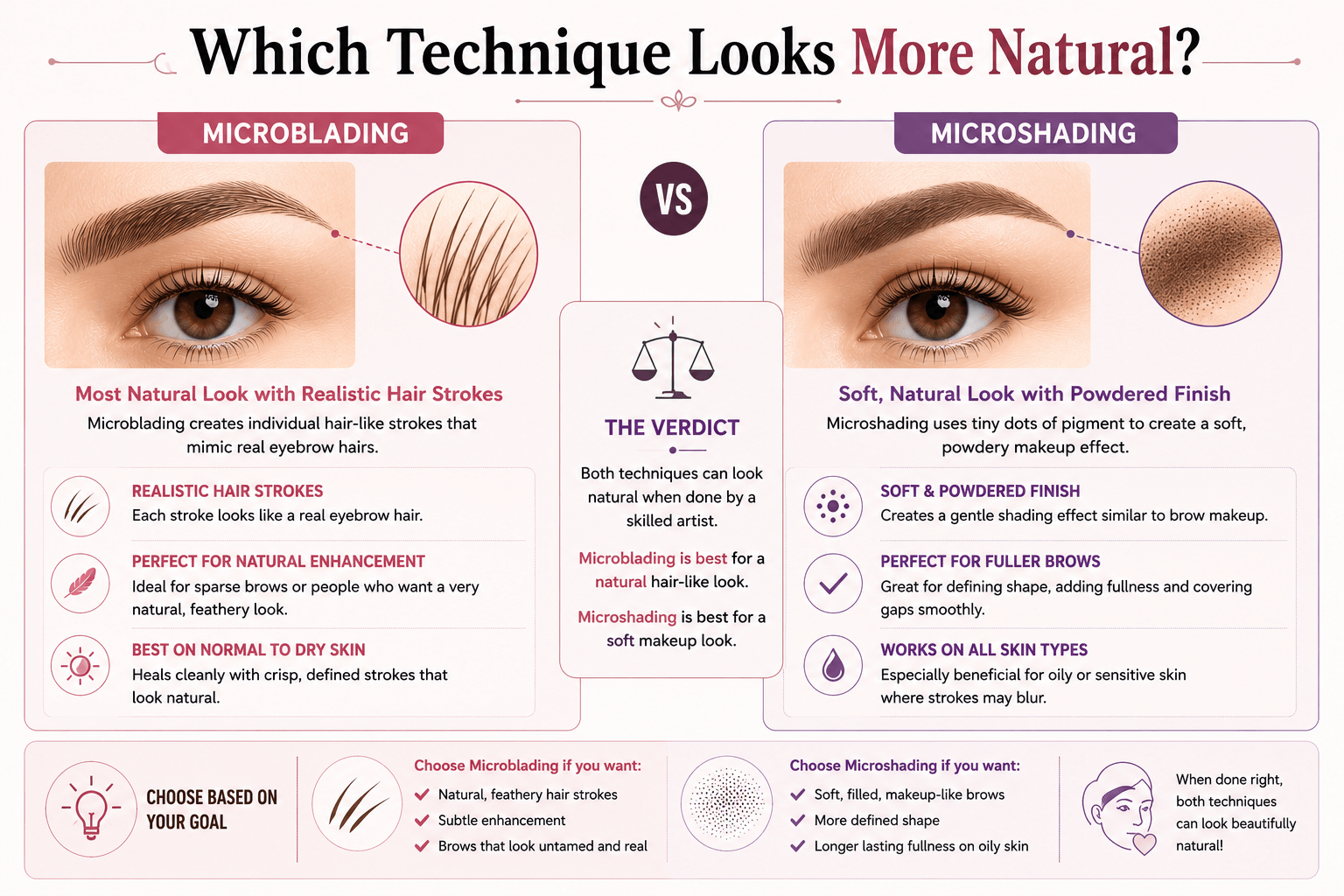
Many people choose eyebrow enhancement treatments because they want natural looking results without applying makeup daily. In most cases, microblading creates the most realistic appearance because the individual strokes closely resemble actual eyebrow hairs.
People with naturally thin or patchy brows often prefer microblading because the technique blends seamlessly with existing hairs. The brows usually appear soft, textured, and lightweight after healing properly.
Microshading creates a different style entirely. Instead of mimicking hairs, it delivers a soft cosmetic finish similar to eyebrow powder or pencil makeup. Some people prefer this fuller appearance because it creates more definition and boldness.
The better option depends completely on your beauty preferences. If you want subtle and realistic brows, microblading may suit you better. If you prefer polished makeup inspired eyebrows, microshading may produce more satisfying results.
Which Technique Is Better for Your Skin Type?
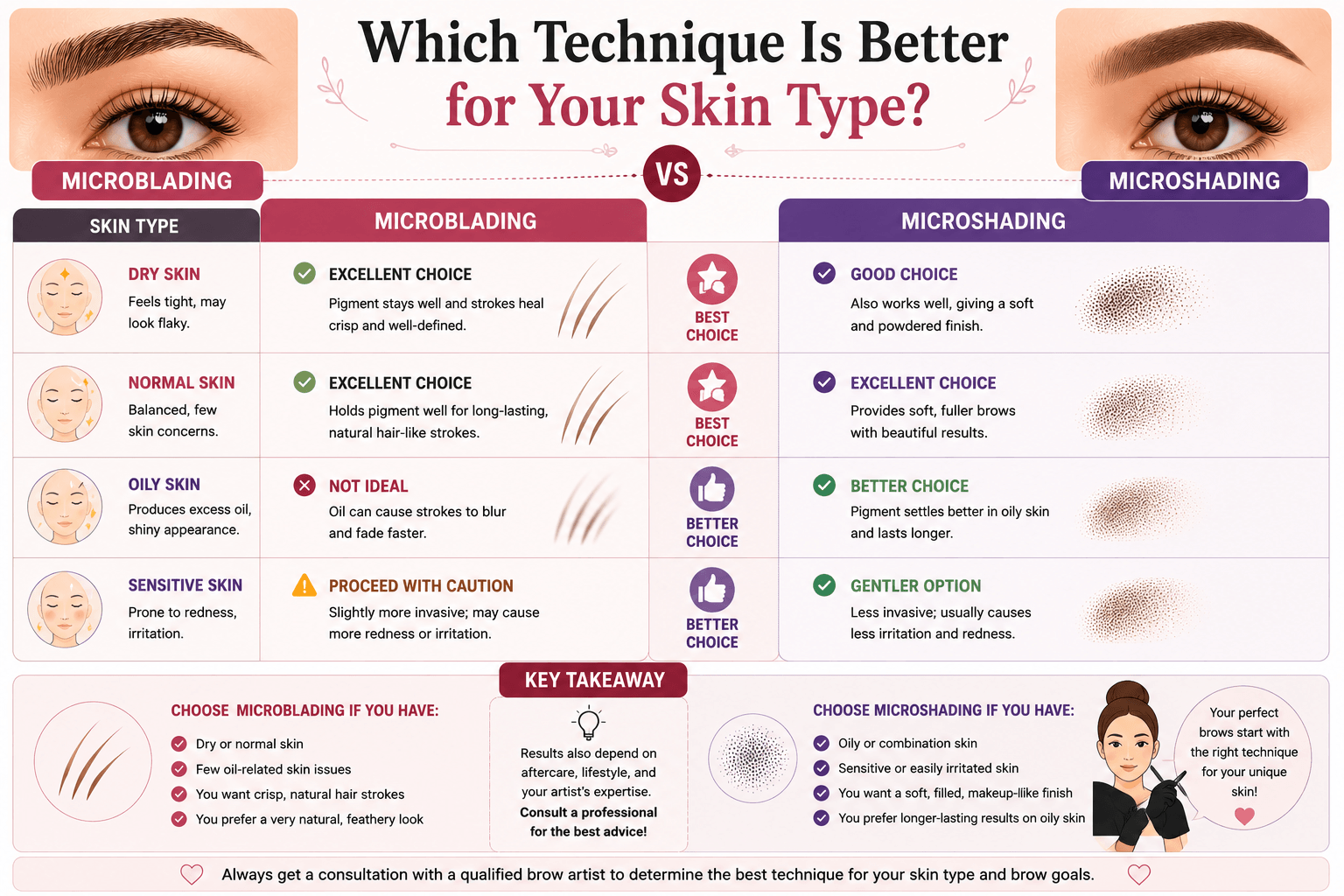
Skin type plays an important role when deciding between microblading vs microshading. Choosing the wrong technique for your skin may reduce pigment retention and affect healing quality.
Best Option for Dry Skin
People with dry skin usually achieve excellent results with microblading. The strokes remain crisp and defined because the skin produces less oil throughout the day. This helps preserve the delicate hair stroke appearance much longer.
Best Option for Oily Skin
Microshading often performs better on oily skin because the pigment distributes more evenly across the brow area. Excess oil can cause microblading strokes to blur over time, reducing definition significantly.
Sensitive Skin Considerations
Clients with sensitive skin sometimes prefer microshading because the procedure generally creates less irritation during healing. However, every person reacts differently, so consulting an experienced technician remains extremely important.
Professional brow artists usually examine your skin carefully before recommending the most suitable technique for your needs.
Pain Level and Healing Process
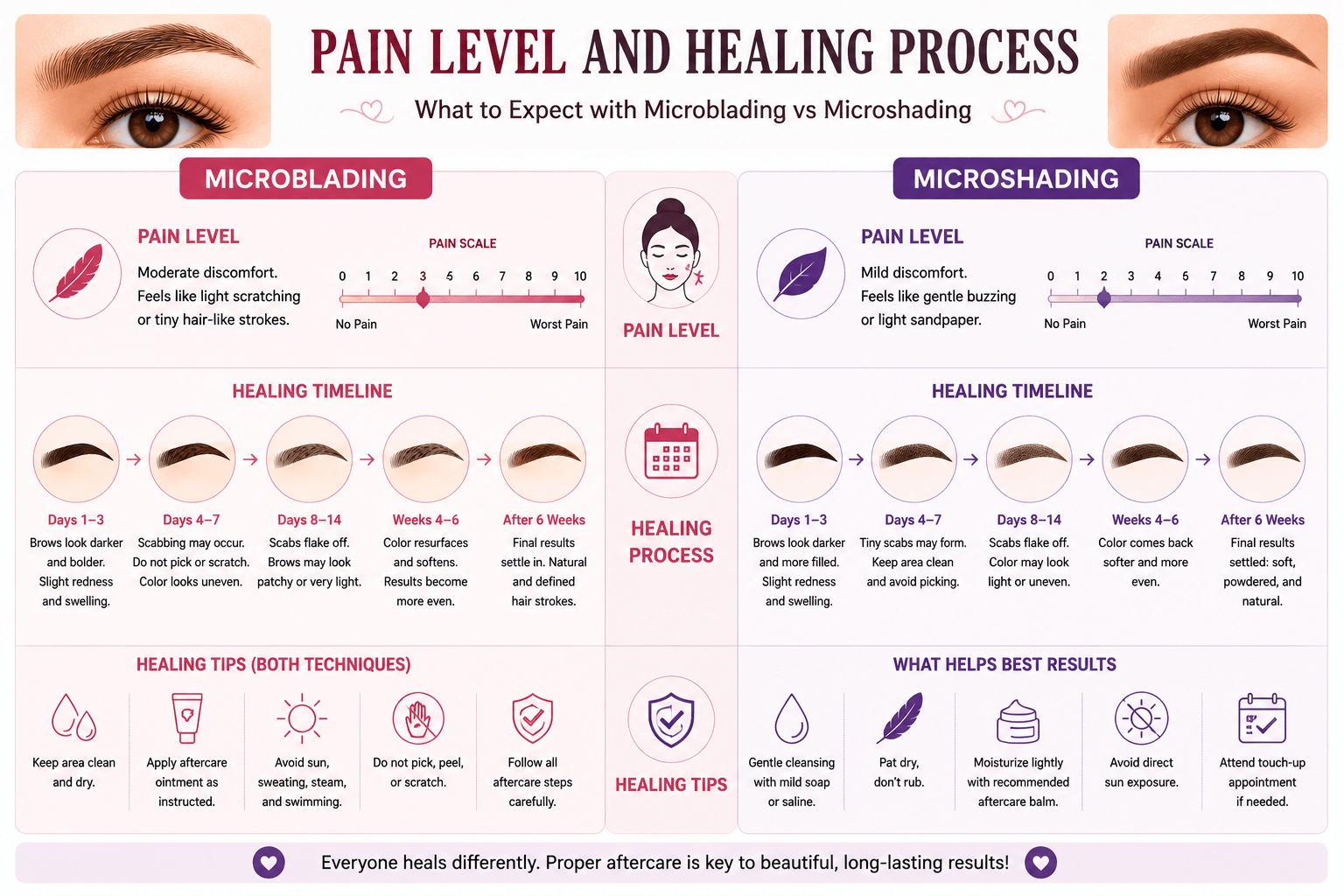
Many first time clients worry about discomfort before scheduling eyebrow procedures. Fortunately, both treatments involve topical numbing creams that reduce pain considerably during the appointment.
Microblading may feel slightly sharper because the artist creates fine cuts within the skin. Microshading usually feels more like light scratching or vibration across the brow area.
Healing typically takes around two weeks for both procedures. During this period, the brows may appear darker, slightly flaky, or mildly itchy. Picking at scabs or scratching healing skin can damage the final results significantly.
Aftercare plays a major role in pigment retention and long term appearance. Most artists recommend avoiding excessive sweating, swimming, direct sunlight, and heavy skincare products during healing.
Proper healing helps both microblading and microshading eyebrows maintain their appearance longer while reducing the risk of uneven fading.
How Long Do Results Last?
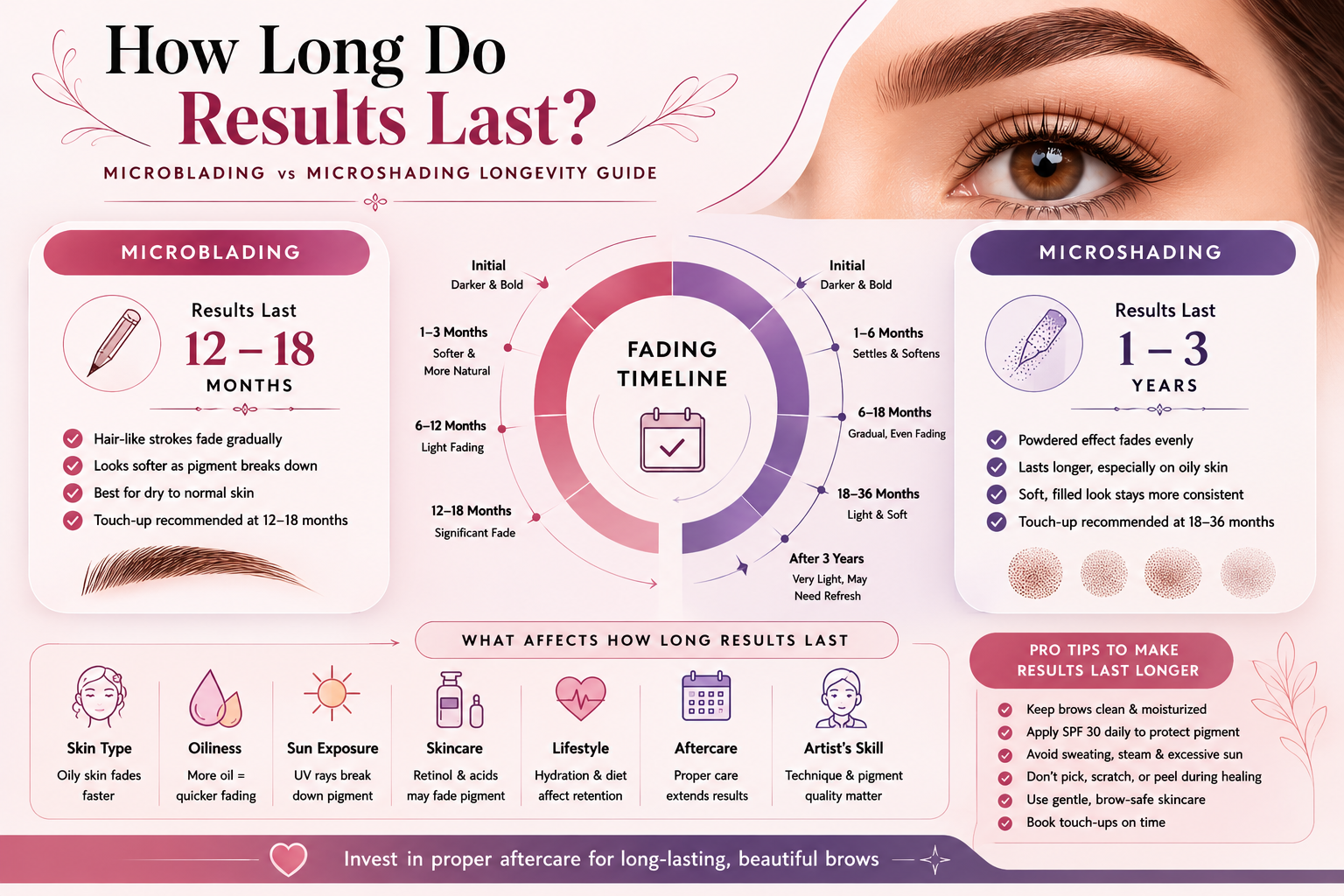
Longevity remains another important factor when comparing microblading vs microshading. Several factors affect how long the pigment remains visible, including skin type, sun exposure, skincare routine, and lifestyle habits.
Microblading results usually last between twelve and eighteen months before requiring touch ups. Oily skin may experience faster fading because oil gradually softens the crisp hair strokes.
Microshading often lasts longer, ranging between one and three years in many cases. The powder effect tends to fade more evenly over time compared with individual hair strokes.
Regular touch ups help maintain brow color, shape, and definition. Most technicians recommend yearly maintenance appointments for both procedures.
Using sunscreen around the eyebrow area also helps preserve pigment and prevent premature fading caused by ultraviolet exposure.
Cost Comparison Between Both Treatments
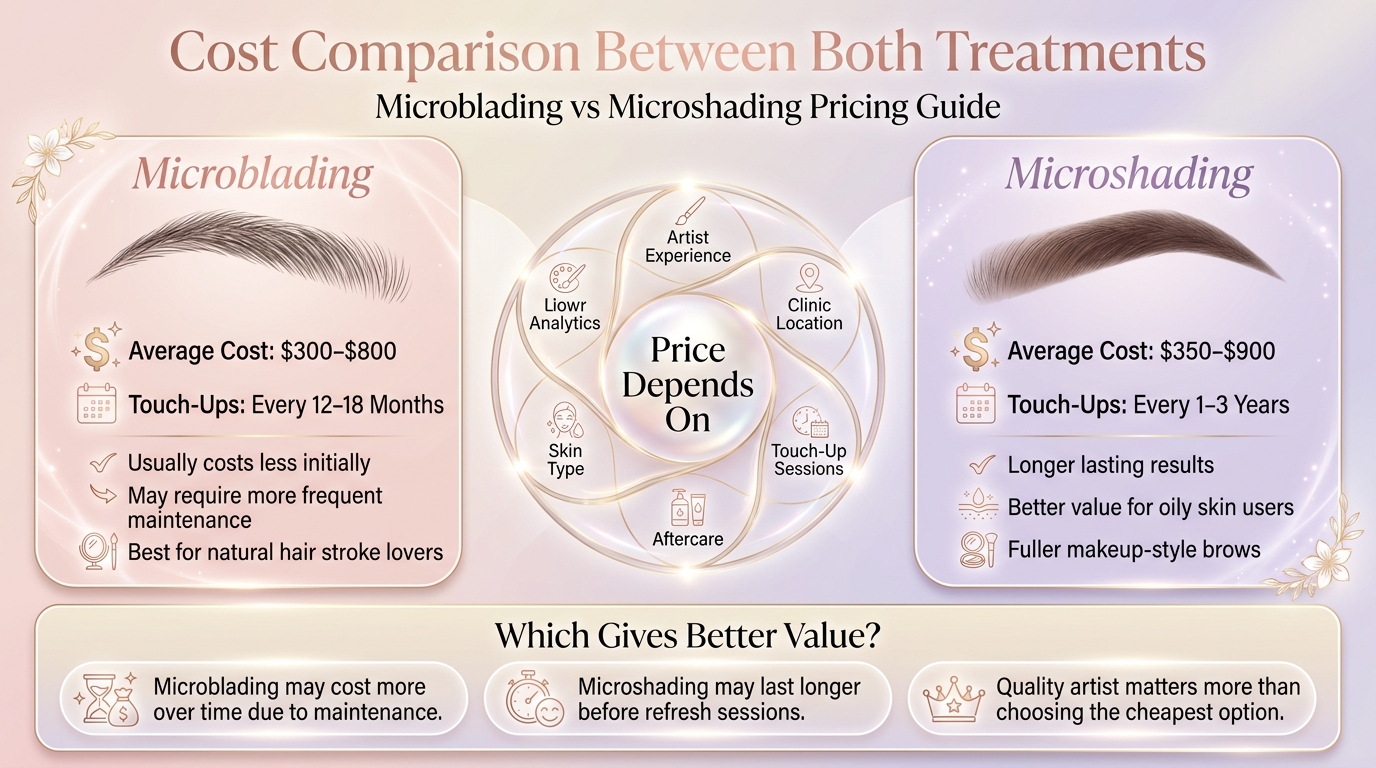
Pricing varies depending on artist experience, clinic reputation, and geographic location. In most cases, both treatments cost similar amounts initially.
Microblading sessions often range between $300 and $800 depending on expertise and region. Microshading prices generally fall within the same range. Combination brows that blend both techniques may cost slightly more because they require additional detail and time.
Although lower prices may seem attractive, choosing an experienced professional remains extremely important. Poorly performed eyebrow tattoos can lead to uneven results, scarring, or color changes later.
Reading reviews, checking healed results, and verifying hygiene standards helps reduce risks significantly before booking any appointment.
Can You Combine Microblading and Microshading?
Yes, many artists now offer combination brows that blend both eyebrow techniques together. This approach combines realistic hair strokes with soft shading underneath for added depth and fullness.
Combination brows work especially well for clients who want natural texture with additional definition. The final appearance often looks balanced, polished, and multidimensional.
Many people researching microblading and microshading eyebrows eventually choose combination brows because they provide benefits from both procedures simultaneously.
An experienced artist can customize the balance between strokes and shading based on your face shape and personal style preferences.
Conclusion
There is no universal answer when discussing microblading vs microshading because every person has different goals and skin characteristics. The best technique depends entirely on the appearance you want and how your skin reacts to pigment.
Microblading usually works best for people seeking natural and hair like eyebrow definition. Microshading often suits people who prefer fuller and makeup inspired brows that last longer on oily skin.
Consulting a qualified eyebrow specialist helps determine which option matches your features and expectations most accurately. Looking at healed portfolio examples also provides a clearer understanding of realistic results.
At Freaky Thread, we always recommend choosing quality, safety, and professional experience over low pricing alone. Beautiful eyebrows should enhance your confidence naturally while complementing your facial features perfectly.


