Table of Contents:
Introduction:
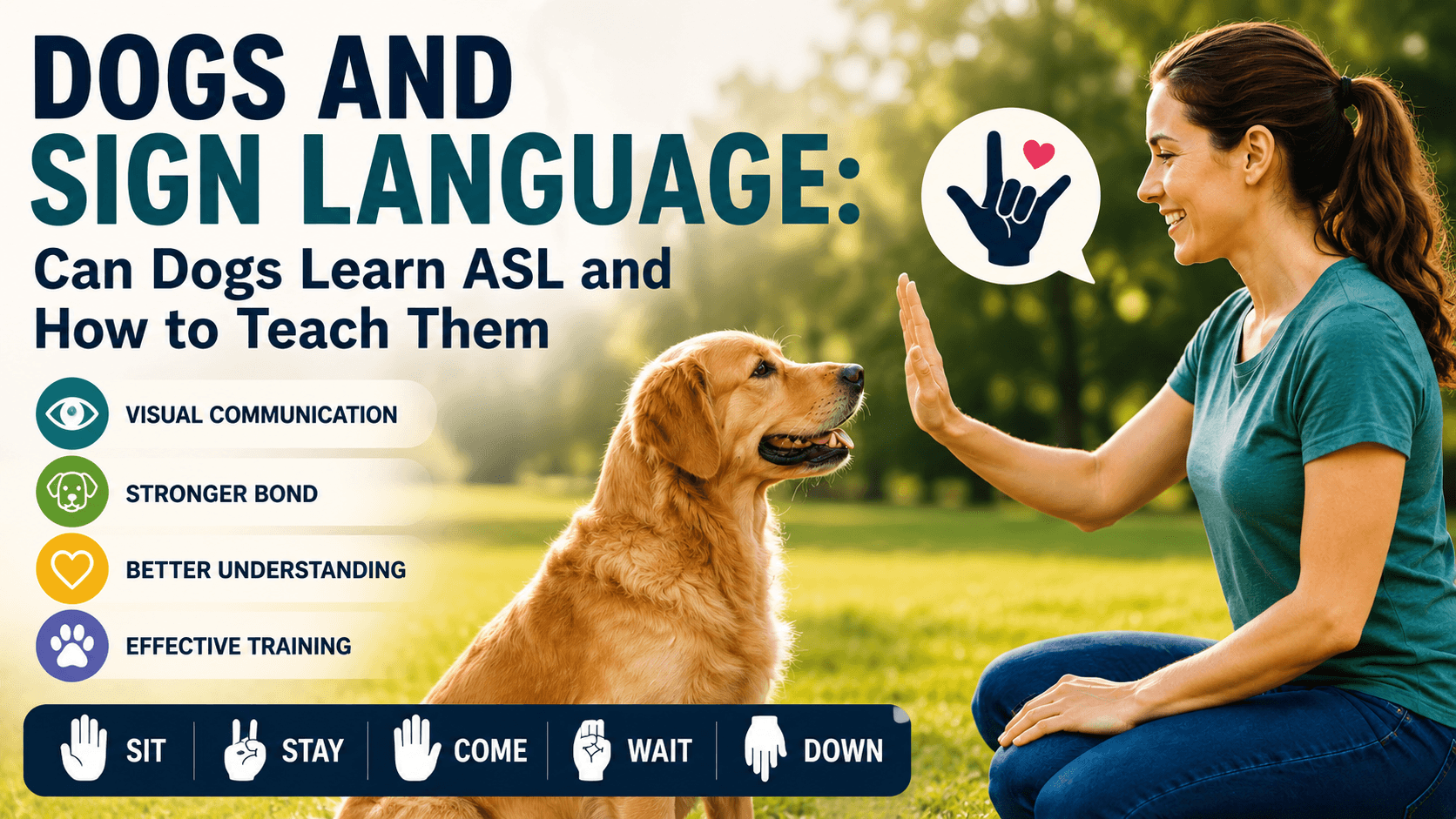
Dogs communicate differently from humans. They do not use spoken words to express emotions, needs, or intentions. Instead, they rely heavily on body language, facial expressions, movement, and visual signals. This natural ability to understand physical cues has led many dog owners to explore dogs and sign language as an effective communication method.
Many people wonder whether dogs can understand hand signals in the same way humans understand language. Others ask whether American Sign Language, commonly known as ASL, can help improve training and strengthen the bond between pets and their owners. The answer may surprise you. Dogs are often better at reading visual information than many people realize.
Whether you have a deaf dog, a senior dog with hearing loss, or simply want to improve communication, learning about dogs and sign language can open new possibilities. This guide explains how visual communication works, how dogs respond to signs, and how you can begin teaching your dog today.
What Is Dog Sign Language?
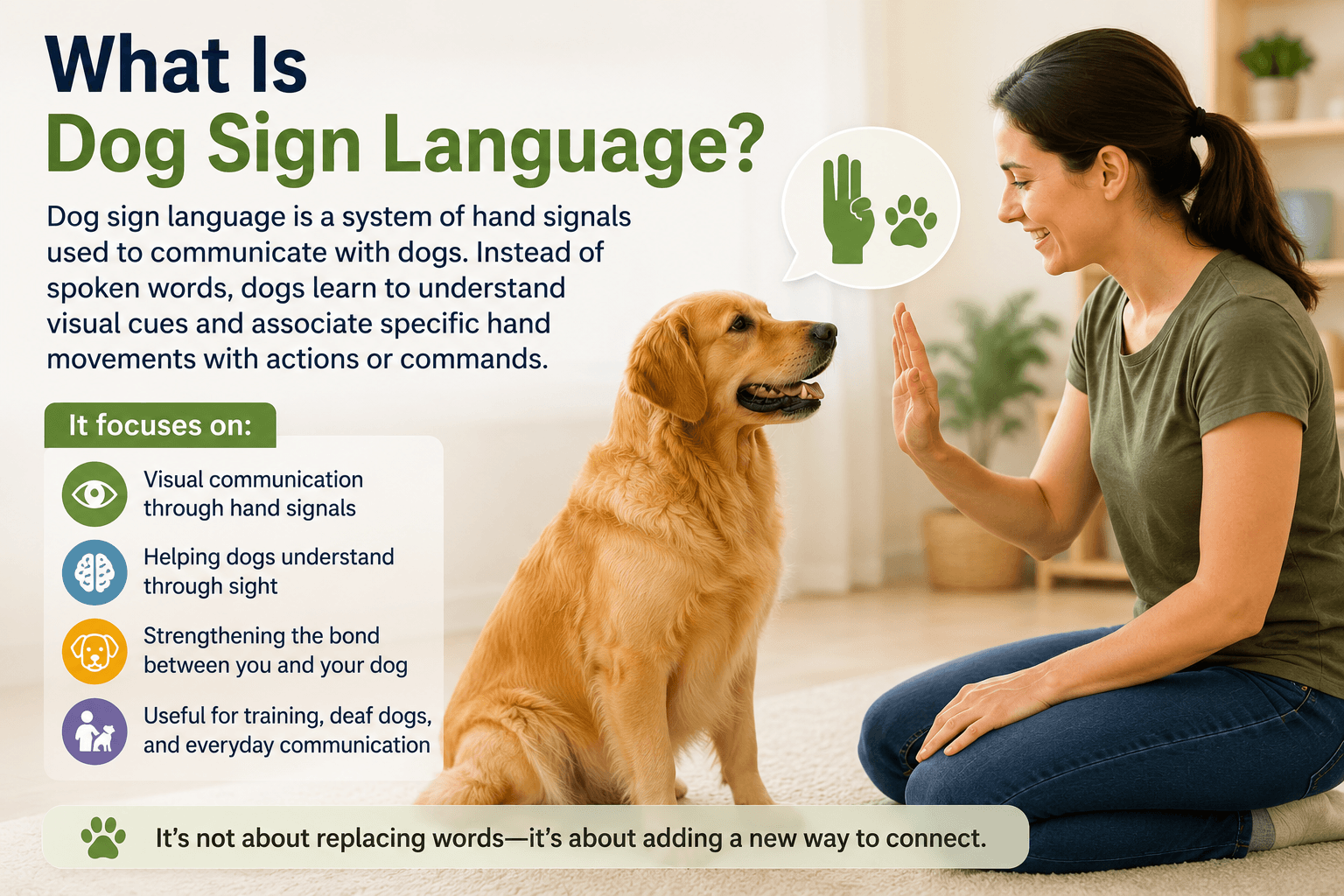
Dog sign language refers to the use of visual hand signals and body movements to communicate with dogs. These signals can be simple training gestures or adapted signs from American Sign Language. While dogs do not understand grammar or vocabulary in the same way humans do, they can learn to associate specific movements with actions and rewards.
Many professional trainers already use visual cues during obedience training. A raised palm may mean stay, while a hand moving toward the ground may signal down. Dogs learn these patterns through repetition and positive reinforcement.
The concept works because dogs naturally observe human movement. Long before a dog understands a spoken command, it often responds to posture, direction, and facial expressions. This ability makes visual communication an effective training method for dogs of all ages.
Can Dogs Learn Sign Language?
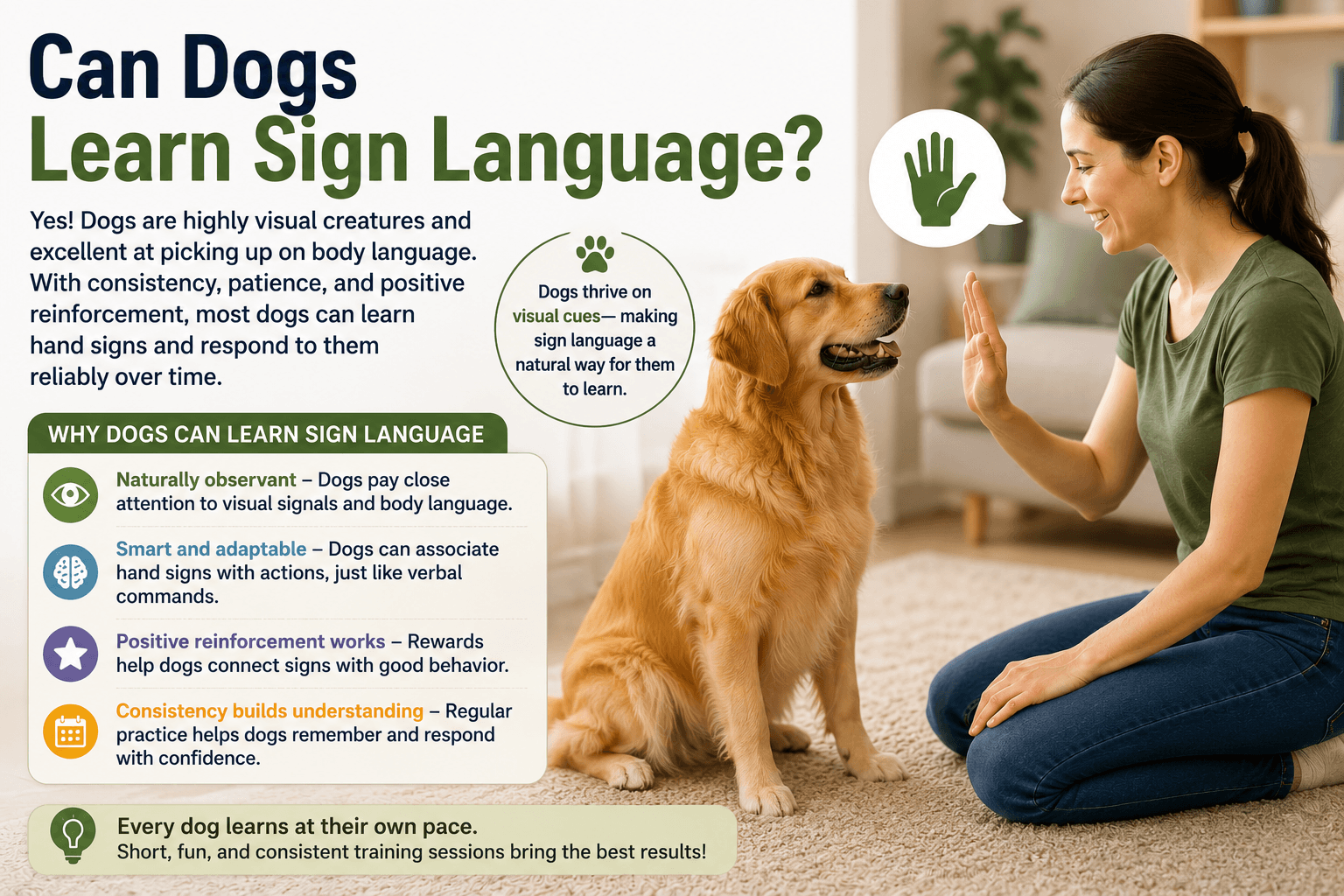
One of the most common questions owners ask is: can dogs learn sign language? The simple answer is yes. Dogs can learn visual signals and consistently respond to them when properly trained.
Research and practical experience have shown that dogs learn through association. When a specific hand signal consistently leads to a reward, praise, or activity, the dog begins connecting that signal with the expected behavior. Over time, the response becomes automatic.
Deaf dogs provide some of the strongest evidence supporting sign language training. Since these dogs cannot rely on verbal commands, they learn entirely through visual communication. Many deaf dogs successfully master commands such as sit, stay, come, and wait using only hand signals.
Even dogs with normal hearing can benefit from visual training. Many trainers find that dogs respond more quickly to consistent hand signals than spoken commands alone. Visual cues remain the same every time, while voice tone and pronunciation may vary.
Do Dogs Understand Sign Language?
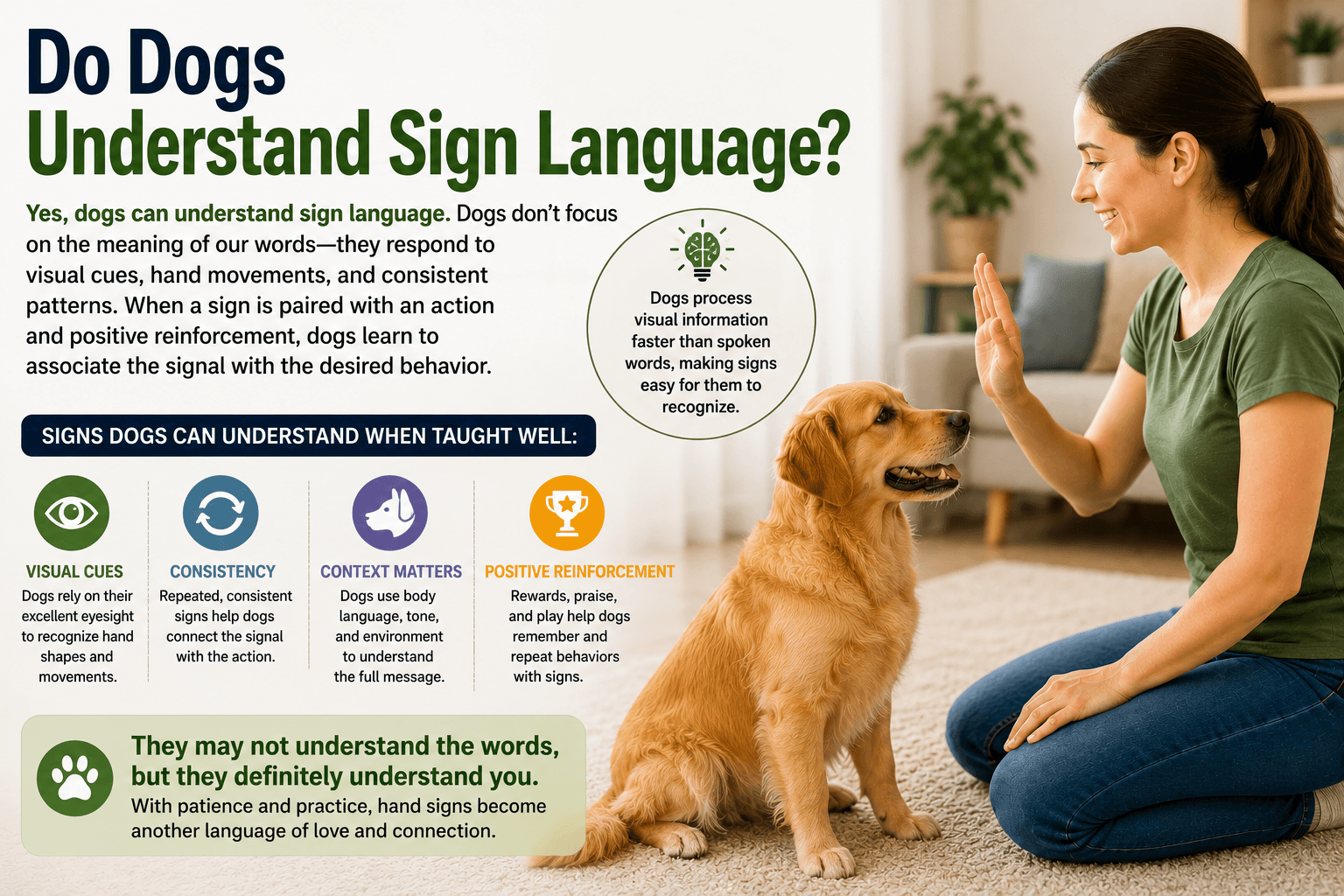
Another common question is: do dogs understand sign language? Dogs do not understand sign language exactly as humans do. They are not processing words, grammar, or sentence structure. Instead, they recognize patterns and associations connected to specific movements.
For example, a dog does not understand the human concept of the word “sit.” The dog learns that when a certain sound or gesture appears, sitting produces a positive outcome. The same principle applies to visual signs.
Dogs excel at reading body language. In fact, they often pay closer attention to physical movements than verbal instructions. This ability explains why many dogs react to a person preparing for a walk before hearing any spoken words.
When visual signals remain clear and consistent, dogs quickly learn what those signals mean. This process creates effective communication that can work throughout the dog’s life.
Dogs and Sign Language: Why Visual Communication Works So Well:
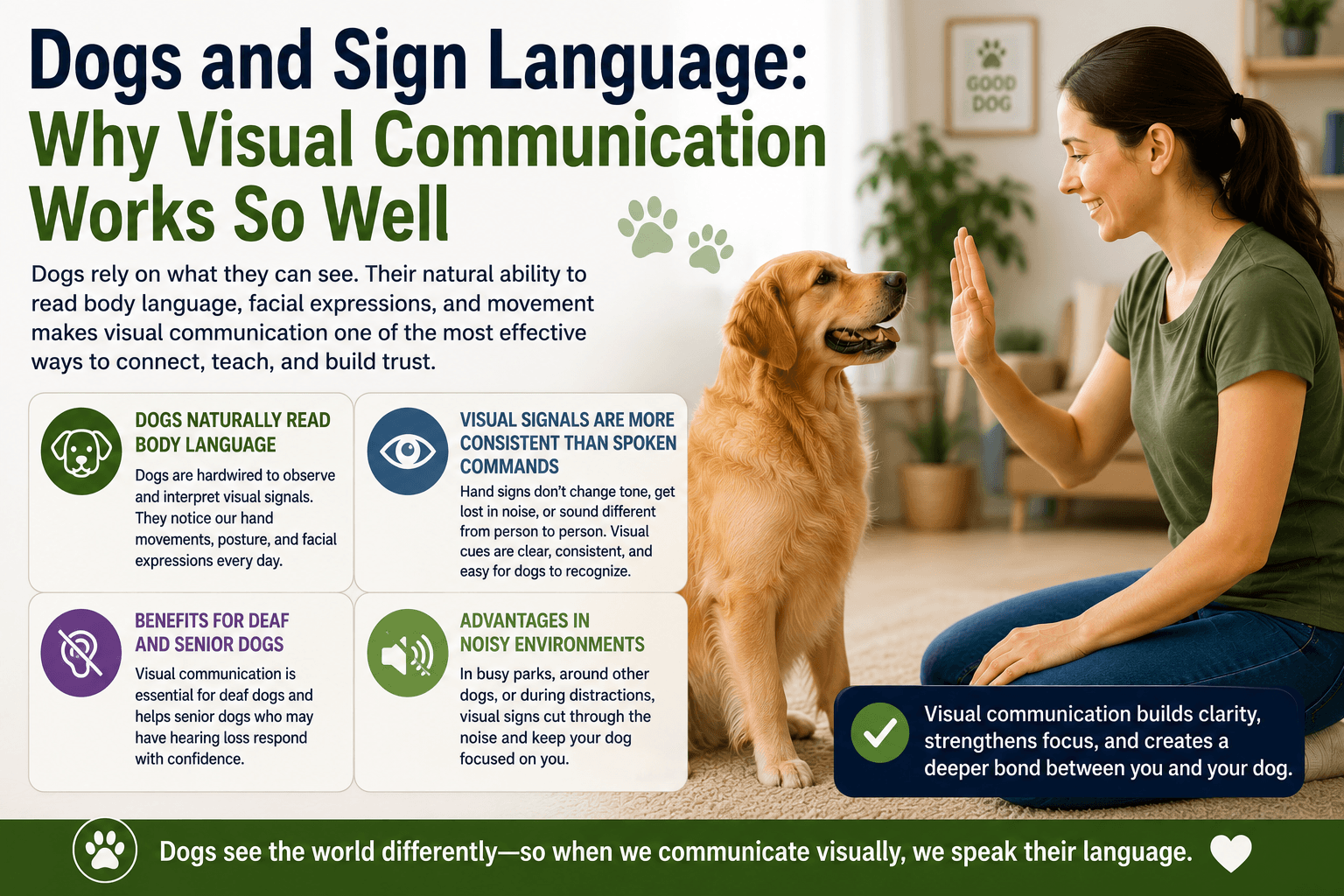
The relationship between dogs and sign language works because dogs naturally communicate through visual information. Every day, dogs observe body posture, movement, facial expressions, and energy levels. These observations help them interpret situations and predict outcomes.
Visual communication also reduces confusion during training. Spoken commands can sound different depending on mood, volume, or environment. A hand signal remains nearly identical each time it is performed correctly.
Another advantage involves noisy environments. Parks, busy streets, and crowded events can make verbal communication difficult. Hand signals allow owners to communicate effectively even when background noise becomes distracting.
Visual communication is especially valuable for deaf dogs and aging pets. As hearing declines, visual cues continue providing clear guidance and reassurance. Many owners discover that incorporating hand signals early creates a stronger foundation for future training success.
What Is the Sign Language for Dog?
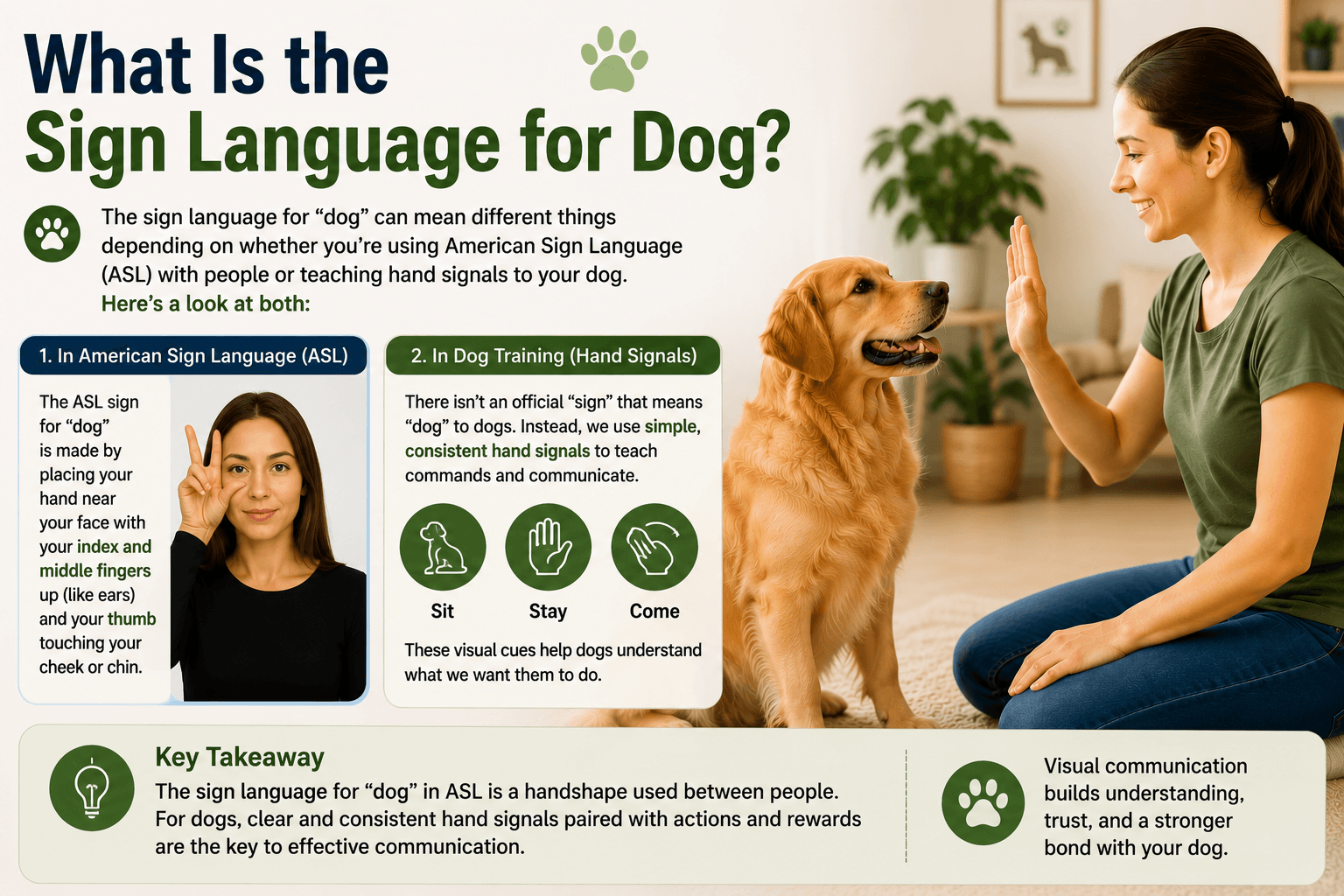
Many people searching for information about dogs and sign language want to know what is the sign language for dog. In American Sign Language, the sign for dog traditionally involves patting your hip near your side, similar to calling a dog to come closer.
Different regions and communities may use slight variations. However, the most widely recognized version involves placing one hand near the hip and making a gentle tapping motion.
It is important to understand that the ASL sign for dog is primarily used for communication between people. It is not automatically a training signal that dogs understand. A dog must still learn the meaning through repetition and positive reinforcement.
Understanding this distinction helps prevent confusion. Human language signs and dog training signals may overlap, but they serve different purposes unless intentionally taught to the dog.
How to Sign Dog in ASL:

If you are wondering how to sign dog in ASL, the process is relatively simple. Start by forming a relaxed hand shape. Position your hand near the side of your hip. Gently tap your hip area twice, similar to calling a dog beside you.
Practice the movement consistently until it feels natural. Remember that facial expressions and body language play important roles in ASL communication. Clear and confident movements make signs easier for people to understand.
When using this sign around your dog, remain consistent. If you want the dog to associate the sign with a specific action, pair it with rewards and positive experiences. Over time, the dog may begin recognizing the sign as part of daily communication.
How to Teach a Dog Sign Language:

Learning how to teach a dog sign language requires patience, consistency, and positive reinforcement. Begin with one simple command rather than introducing multiple signals simultaneously.
Choose an easy behavior such as sit. Perform the visual signal before rewarding the desired action. Immediately provide praise, treats, or affection when the dog responds correctly. Repeating this process helps create a strong connection between the signal and the behavior.
Training sessions should remain short and focused. Most dogs learn better through several brief sessions rather than one lengthy lesson. Consistency across all family members is equally important. Everyone should use the same signal for the same behavior.
As the dog becomes more confident, gradually reduce verbal commands. This transition encourages greater reliance on visual communication while maintaining reliability and accuracy.
Conclusion:
Dogs and sign language offer a simple yet powerful way to improve communication between pets and their owners. Because dogs naturally pay attention to body language and visual cues, they can learn hand signals effectively through consistency, patience, and positive reinforcement. Whether you are training a puppy, working with a deaf dog, or strengthening existing commands, visual communication can make training clearer and more reliable.
Learning how to teach a dog sign language does not require advanced skills or extensive experience. By starting with basic signs and practicing regularly, you can build a stronger bond while helping your dog understand your expectations more clearly. For more pet care tips, training guides, and helpful insights, keep exploring the latest content on Freaky Thread.