Table of Contents
- Introduction
- Why More Dog Owners Are Choosing to Cook for Their Pets
- The Nutritional Basics Behind a Balanced Dog Meal
- Beginner-Friendly Homemade Dog Food Recipes to Start With
- Recipes Designed for Dogs With Allergies or Digestive Issues
- How to Meal Prep and Store Homemade Dog Food Properly
- What to Know Before Fully Switching Your Dog to Home Cooked Meals
- Final Thoughts
Introduction
Many dog owners are taking a closer look at what goes into their pets’ bowls. Growing concerns about processed ingredients, food recalls, and unexplained allergies have encouraged people to explore homemade dog food recipes. Preparing meals at home gives owners more control over ingredients while creating a stronger connection with their dog’s daily nutrition.
While cooking for dogs can be rewarding, it requires more than simply sharing leftovers from dinner. Dogs need balanced nutrition to maintain healthy muscles, bones, organs, and immune systems. Understanding the basics of homemade dog food helps ensure your pet receives the nutrients needed for a long and active life.
This guide explores the essentials of homemade dog food, beginner-friendly recipes, allergy-friendly meal options, meal preparation strategies, and important considerations before making a complete transition.
Why More Dog Owners Are Choosing to Cook for Their Pets

The growing interest in homemade dog food stems from several practical concerns. Many owners have become cautious after reading reports about ingredient quality issues and recalls involving commercial pet food products. As a result, they want greater transparency regarding what their dogs consume every day.
Another common reason involves picky eating habits. Some dogs lose interest in packaged food after months or years of eating the same formula. Freshly prepared meals often provide stronger aromas and improved taste, encouraging reluctant eaters to finish their meals consistently.
Food sensitivities also play a major role. Certain dogs develop itchy skin, digestive discomfort, or recurring ear infections linked to specific ingredients. Preparing meals at home allows owners to identify and remove potential triggers more effectively.
Beyond health concerns, many owners simply appreciate knowing exactly what ingredients are going into their pet’s meals. Home cooking creates a sense of involvement that commercial feeding often lacks. According to many pet owners, preparing food at home feels similar to caring for other family members.
At Freaky Thread, we regularly see growing interest in practical homemade dog food recipes because owners want healthier and more transparent feeding options for their pets.
The Nutritional Basics Behind a Balanced Dog Meal
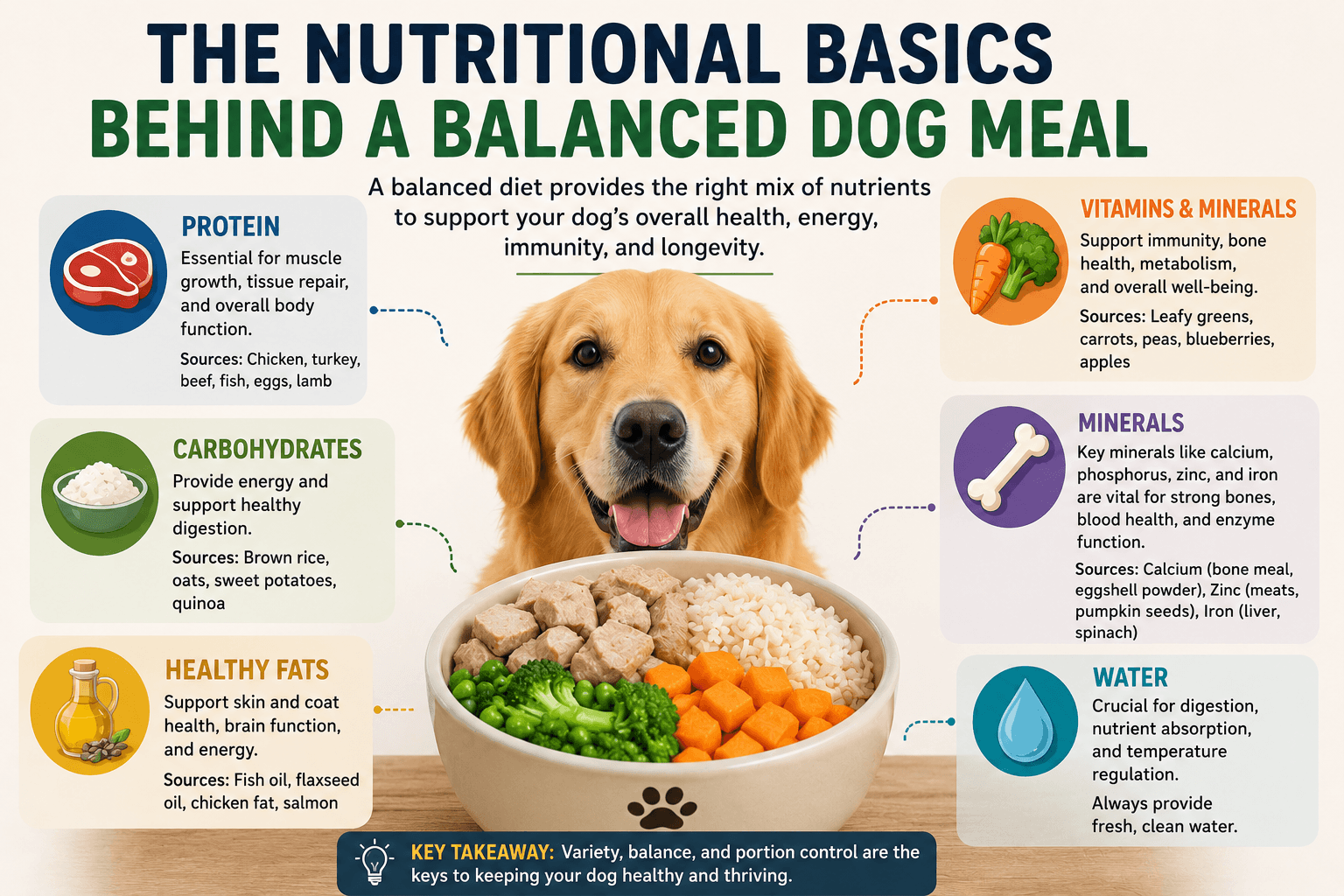
Although homemade dog food offers many benefits, nutrition must remain the top priority. One of the biggest mistakes owners make is following recipes found online without verifying whether they meet a dog’s nutritional requirements.
Dogs require a balance of protein, healthy fats, carbohydrates, vitamins, and minerals. Protein supports muscle maintenance and tissue repair. Quality protein sources include lean beef, turkey, chicken, fish, and eggs. These ingredients should form the foundation of most balanced dog meals.
Carbohydrates provide energy and support digestive health. Common options include brown rice, sweet potatoes, oats, and pumpkin. Vegetables contribute valuable nutrients and fiber that assist normal digestion.
Healthy fats are equally important because they support skin health, coat quality, and brain function. Fish oil, flaxseed oil, and naturally fatty fish can help meet these requirements.
Minerals often become the biggest challenge when creating homemade dog food. Calcium, zinc, phosphorus, magnesium, and iron play critical roles throughout the body. Many homemade recipes lack sufficient calcium, which can eventually contribute to bone-related issues.
Veterinary nutritionists often recommend using properly formulated recipes or nutritional supplements when feeding homemade diets long term. Without appropriate planning, even meals made from high-quality ingredients can become nutritionally incomplete.
A balanced dog meal should focus on variety, nutritional completeness, and portion control rather than simply using ingredients that appear healthy.
Beginner-Friendly Homemade Dog Food Recipes to Start With
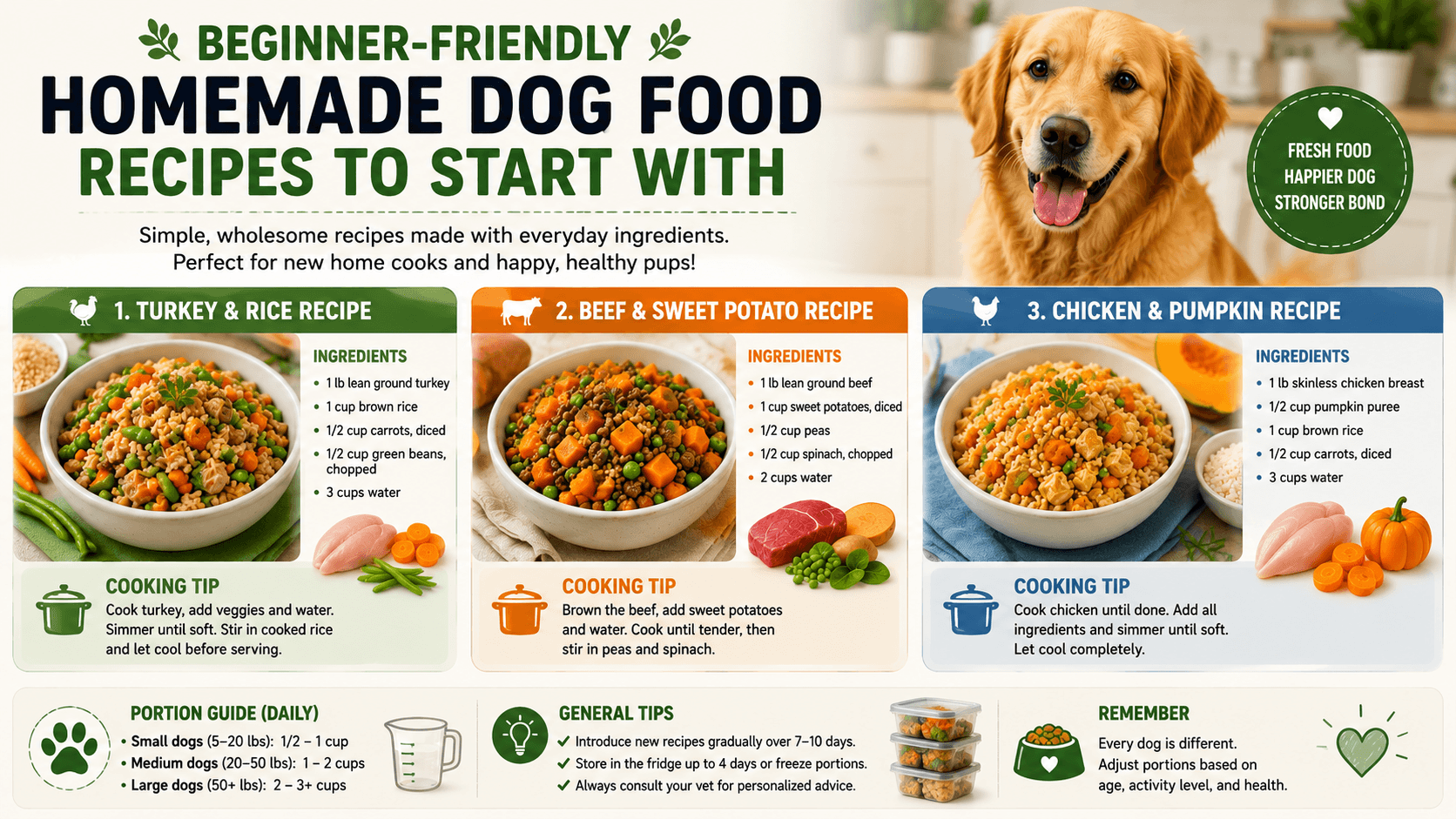
Many owners feel intimidated when preparing homemade dog food for the first time. Fortunately, several simple recipes provide an excellent starting point while keeping preparation manageable.
Turkey and Rice Recipes:
This simple meal works well for many healthy adult dogs.
Ingredients:
- Lean ground turkey
- Brown rice
- Carrots
- Green beans
- Water
Cook the turkey thoroughly before adding vegetables. Simmer until vegetables soften completely. Mix with cooked brown rice and allow the meal to cool before serving.
Beef and Sweet Potato Recipe:
This recipe combines quality protein with nutrient-rich carbohydrates.
Ingredients:
- Lean ground beef
- Sweet potatoes
- Peas
- Spinach
Cook all ingredients thoroughly and combine evenly. Sweet potatoes provide fiber while spinach contributes additional vitamins and minerals.
Chicken and Pumpkin Recipe:
Many dogs enjoy this easy and digestible meal.
Ingredients:
- Skinless chicken breast
- Pumpkin puree
- Brown rice
- Carrots
Cook and combine all ingredients thoroughly before serving.
Portion sizes vary according to breed, weight, activity level, and age. Small dogs generally require smaller servings than large breeds. Puppies, active working dogs, and senior dogs often have different nutritional needs. Consulting your veterinarian can help determine appropriate serving sizes for your individual pet.
Starting with simple homemade dog food recipes allows owners to build confidence while observing how their dogs respond to fresh ingredients.Recipes Designed for Dogs With Allergies or Digestive Issues
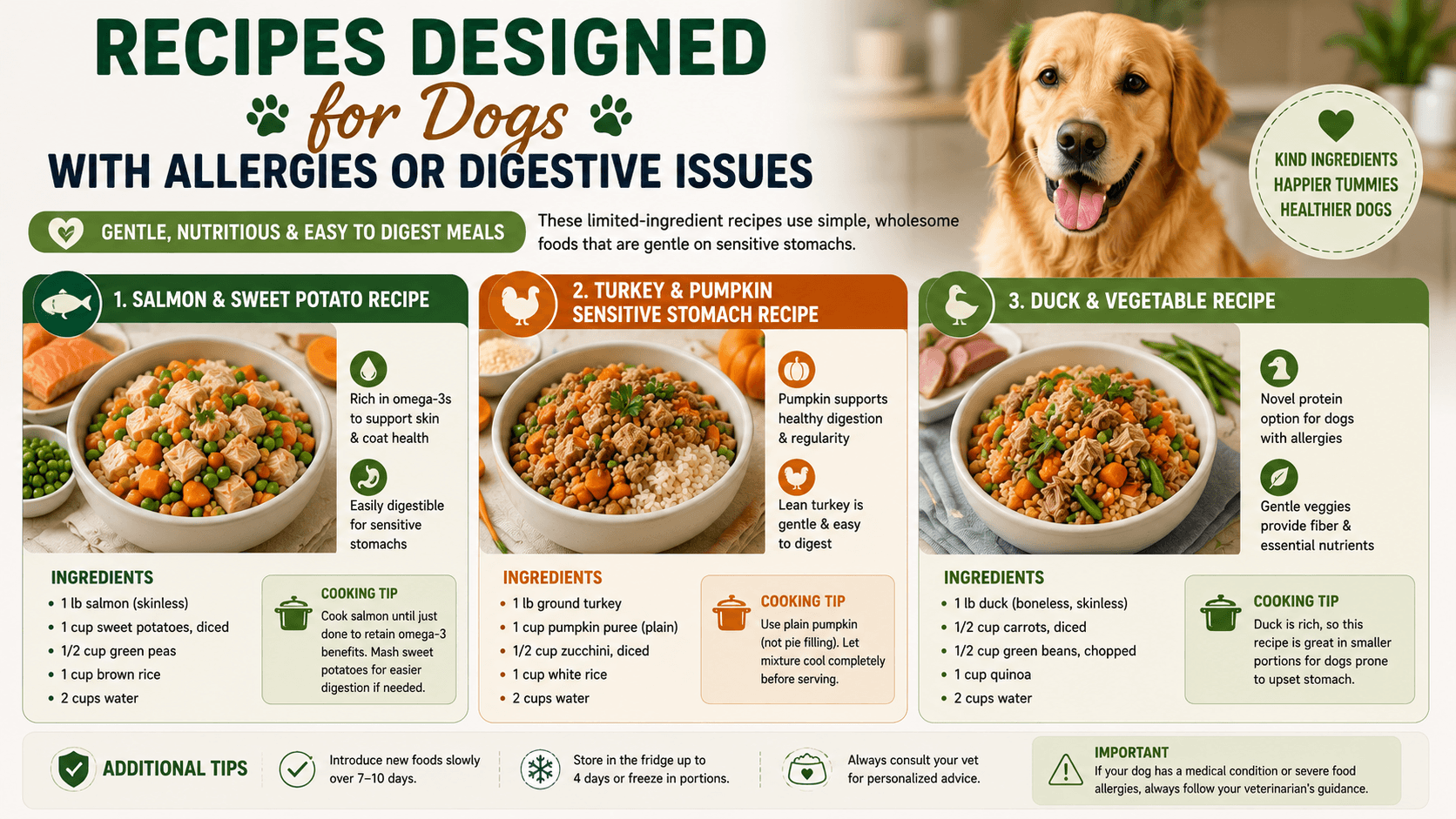
Food allergies and digestive sensitivities can make feeding difficult. Some dogs react poorly to common proteins such as chicken or beef. Others experience digestive upset when exposed to certain grains or additives.
Limited ingredient diets can help identify problem foods while maintaining nutritional quality.
Salmon and Sweet Potato Recipe:
Salmon serves as an excellent alternative protein source.
Ingredients:
- Cooked salmon
- Sweet potatoes
- Green beans
This recipe provides omega-3 fatty acids that may support skin health and reduce inflammation.
Turkey and Pumpkin Sensitive Stomach Recipe:
Many dogs tolerate turkey well compared to other protein sources.
Ingredients:
- Ground turkey
- Pumpkin puree
- White rice
Pumpkin contributes fiber that may help regulate digestion while supporting healthy bowel movements.
Duck and Vegetable Recipe:
Duck is often used when traditional proteins trigger allergic reactions.
Ingredients:
- Lean duck meat
- Zucchini
- Carrots
- Sweet potatoes
This combination offers variety while reducing exposure to common allergens.
When introducing any allergy-focused homemade dog food recipe, owners should monitor their dogs closely. Improvements in itching, digestion, and overall comfort may take several weeks to become noticeable.
Keeping a feeding journal helps identify patterns between ingredients and symptoms. This information becomes valuable when discussing long-term dietary management with a veterinarian.
How to Meal Prep and Store Homemade Dog Food Properly
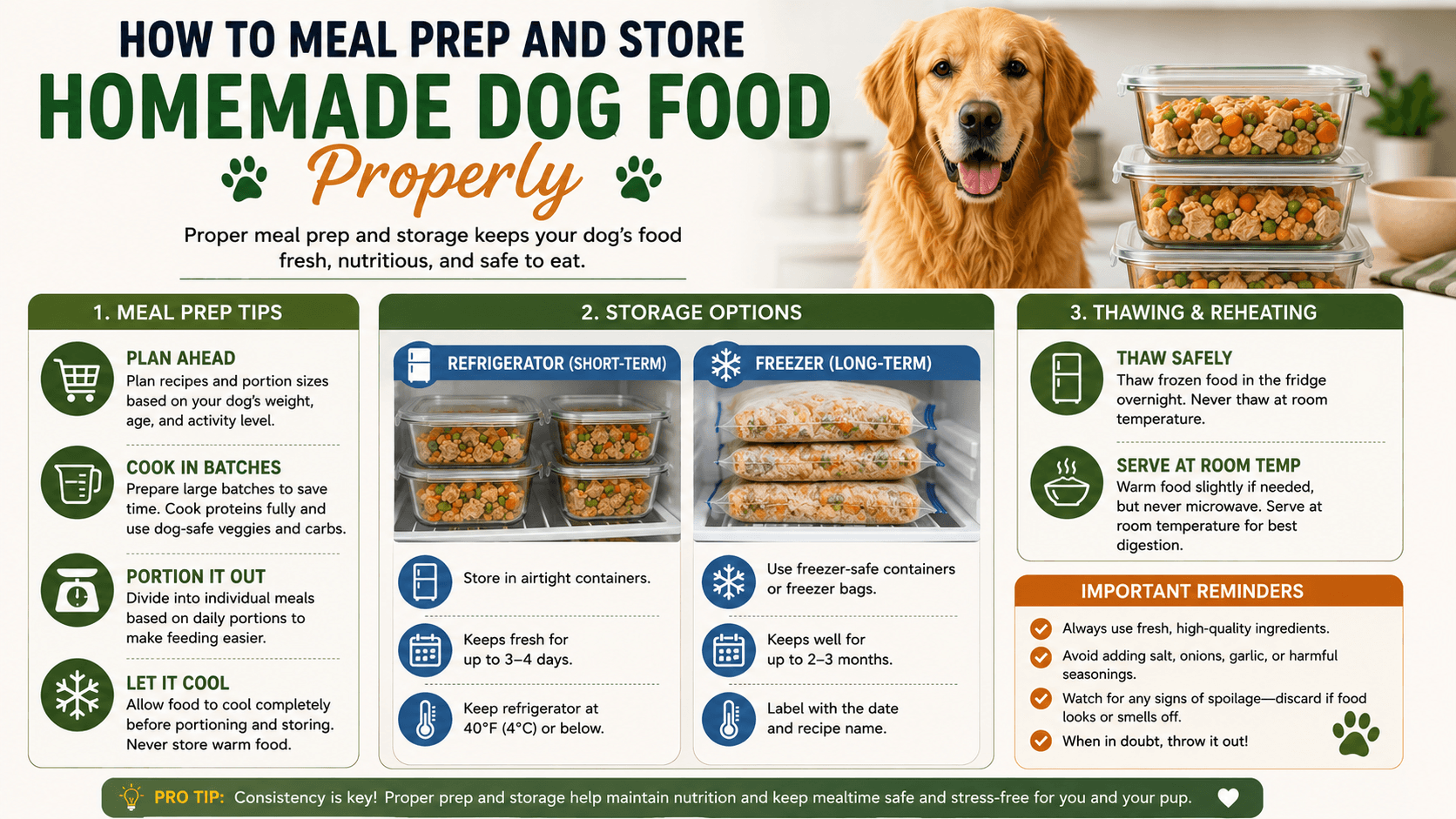
Preparing meals in advance saves time and helps maintain consistency. However, proper storage remains essential for food safety and nutritional quality.
Cooked homemade dog food generally stays fresh in the refrigerator for three to five days when stored in airtight containers. Any meals that will not be used within this period should be frozen promptly.
Portioning food before freezing simplifies daily feeding. Individual servings allow owners to thaw only what they need while minimizing waste. Freezer-safe containers and heavy-duty storage bags work well for preserving freshness.
Clear labeling is extremely helpful during dog meal prep. Each container should include the preparation date and recipe name. This simple habit prevents confusion and ensures older meals are used first.
When thawing frozen meals, transfer them to the refrigerator overnight rather than leaving them at room temperature. Slow thawing helps preserve texture while reducing bacterial growth risks.
Microwaving is generally acceptable for warming food slightly, but meals should never be served excessively hot. Always stir thoroughly and test the temperature before feeding.
Consistent meal preparation practices help maintain quality while making homemade feeding more convenient for busy households.
What to Know Before Fully Switching Your Dog to Home Cooked Meals
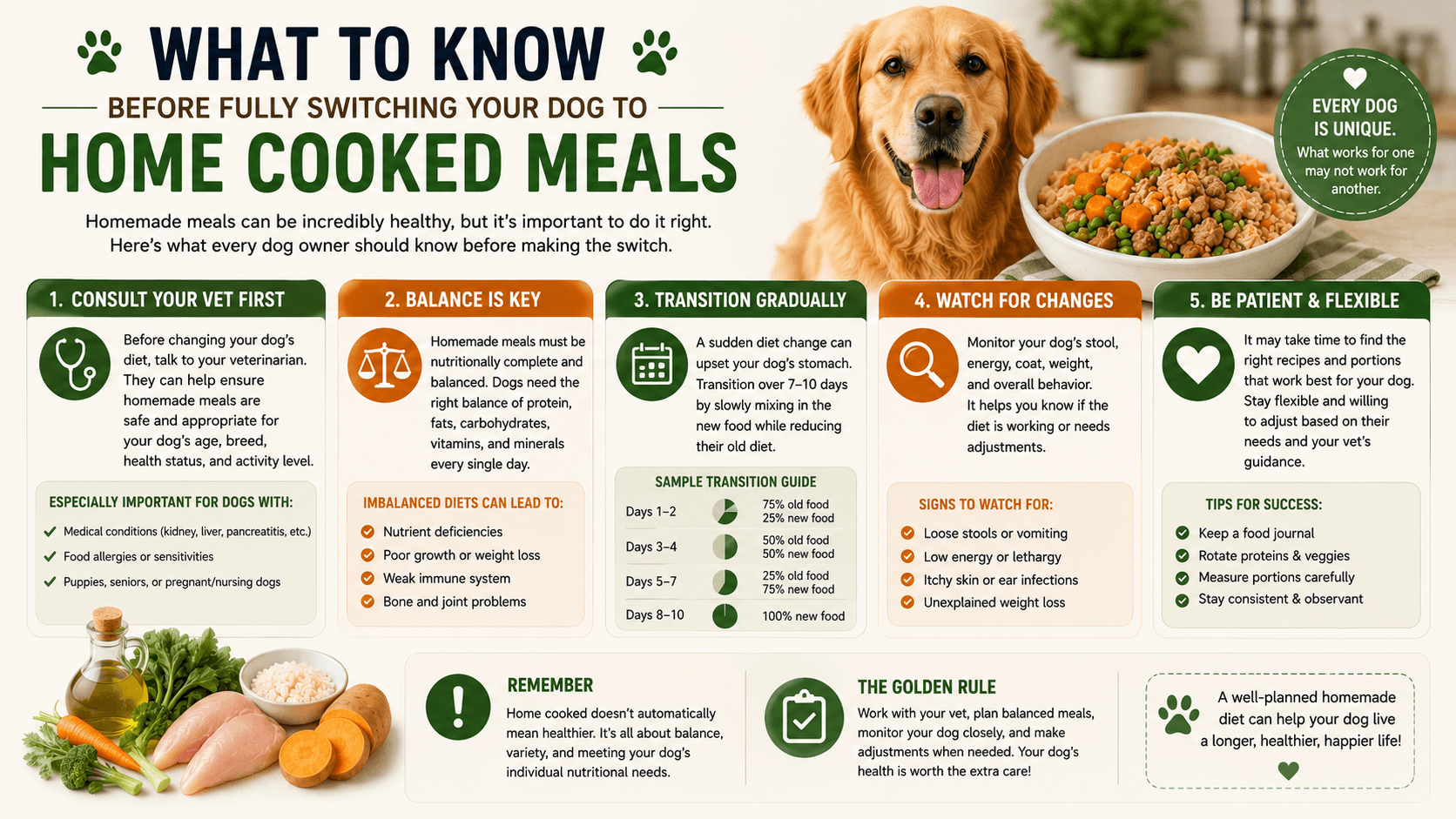
Switching completely to homemade dog food requires patience and planning. Abrupt dietary changes can lead to digestive upset, including vomiting, diarrhea, gas, and bloating.
Most veterinarians recommend transitioning gradually over seven to ten days. Begin by replacing a small portion of the current food with homemade meals. Increase the homemade portion slowly while decreasing the previous diet.
Monitoring your dog’s stool quality, appetite, energy levels, and overall behavior provides valuable feedback during the transition process. Temporary digestive adjustments may occur, but persistent symptoms warrant veterinary attention.
Long-term nutritional balance remains the most important consideration. Homemade meals that seem healthy may still lack essential nutrients when fed exclusively for months or years. Working with a veterinarian or veterinary nutritionist helps prevent deficiencies before they develop.
Certain dogs require specialized diets because of medical conditions, age-related needs, or breed-specific concerns. Professional guidance becomes particularly important for puppies, pregnant dogs, senior dogs, and pets with chronic illnesses.
At Freaky Thread, we encourage responsible home cooking supported by evidence-based nutritional planning. Fresh ingredients can certainly benefit many dogs, but balanced nutrition should always remain the ultimate goal.
Final Thoughts
Homemade dog food recipes offer pet owners greater control over ingredients while creating opportunities for personalized nutrition. Fresh meals can help address food sensitivities, improve meal enjoyment, and strengthen the connection between owners and their pets.
Success depends on understanding nutritional requirements, selecting quality ingredients, and maintaining proper food safety practices. Whether preparing simple beginner recipes or managing complex dietary sensitivities, balanced nutrition should always guide every feeding decision.
Before making a permanent switch to home cooked meals for dogs, consult your veterinarian and develop a plan that supports your dog’s specific needs. With careful preparation and informed choices, homemade dog food can become a safe and rewarding part of your pet’s healthy lifestyle.