Table of Content:
- Introduction
- What Voltage Means in an Electric Lawn Mower Battery
- Understanding Amps and Amp Hours in Lawn Mower Batteries
- Voltage vs Amps: What Actually Matters for Performance
- How Many Volts Does a Lawn Mower Battery Typically Have
- How Many Amps Are in a Lawn Mower Battery
- Battery Runtime and Real World Performance Expectations
- How Long Do Electric Lawn Mower Batteries Last
- Do Electric Lawn Mowers Need Oil or Regular Maintenance
- Signs Your Lawn Mower Battery Needs Replacement
- Choosing the Right Battery for Your Lawn Size and Needs
- Final Thoughts
Introduction:
Electric lawn mowers are now widely used because they offer cleaner operation and reduced maintenance compared to petrol machines. However, most buyers still struggle to understand battery specifications, especially voltage and amps. This confusion often leads to poor buying decisions and unsatisfactory performance. If you want consistent cutting results and long-term value, you must understand how these battery components work together. At Freaky Thread, this guide explains voltage, amps, and lifespan in a simple and practical way. It focuses on real usage scenarios rather than just technical definitions. By the end, you will clearly understand how to choose the right battery-powered lawn mower based on your needs.
What Voltage Means in an Electric Lawn Mower Battery?

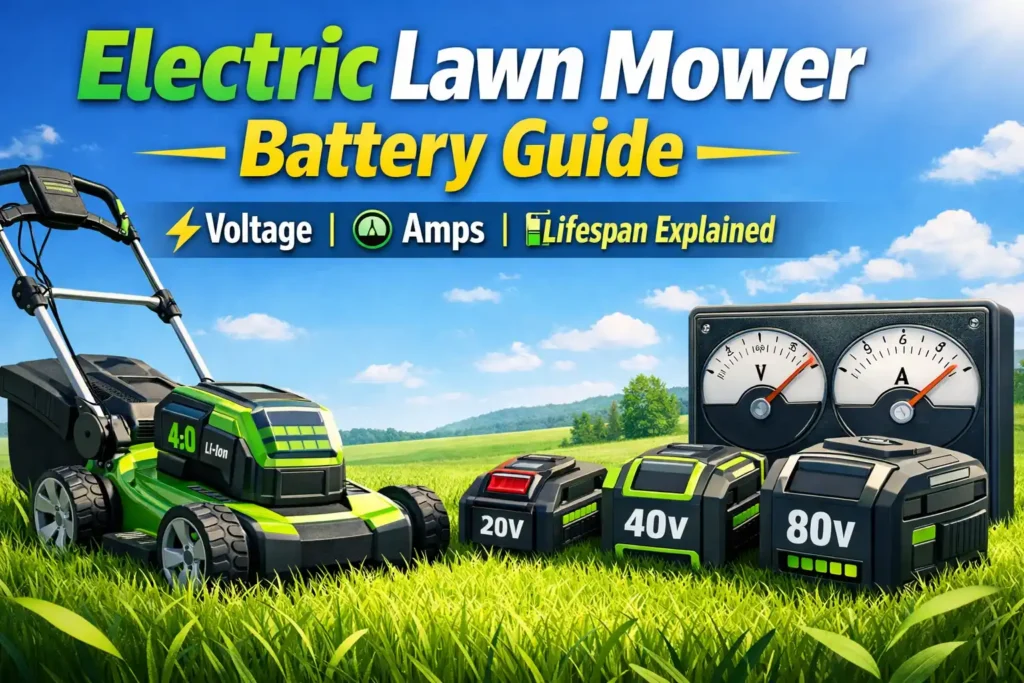
Voltage is the most important specification because it determines how much power your mower can deliver during operation. In simple terms, voltage represents the electrical pressure that drives energy from the battery to the motor. Higher voltage usually means stronger performance, especially when cutting thick or overgrown grass. Most electric lawn mowers come in common voltage ranges such as 20V, 40V, 60V, and 80V systems. Lower voltage mowers are suitable for small lawns with thin grass, while higher voltage models handle larger and more demanding areas efficiently. However, higher voltage also increases cost and weight, which can affect usability in smaller spaces. You should not assume that higher voltage is always better, because the right choice depends on your lawn size and cutting frequency.
Understanding Amps and Amp Hours in Lawn Mower Batteries:

Many users confuse amps with amp hours, which leads to misunderstanding battery performance and runtime expectations. Amps measure the flow of electric current at any given moment during operation. Amp hours represent the total energy storage capacity of the battery over time. For example, a battery rated at 5Ah can deliver five amps for one hour under ideal conditions. In lawn mowers, amp hours are more important than amps because they directly affect how long the machine will run before needing a recharge. A higher amp hour rating means longer runtime, but it also increases the size and cost of the battery. You should always evaluate amp hours alongside voltage because both factors determine real performance and usability. Ignoring this relationship often results in buying a mower that does not meet your expectations.
Voltage vs Amps: What Actually Matters for Performance

Voltage and amp hours work together to define how your electric lawn mower performs under real conditions. Voltage controls the strength of the motor, while amp hours determine how long that power can be sustained. A high voltage battery with low amp hours will deliver strong cutting power but may run out quickly. On the other hand, a lower voltage battery with higher amp hours will last longer but may struggle with thick grass. The ideal combination depends on your lawn type, grass density, and usage frequency. For small lawns, a moderate voltage with decent amp hours is usually enough. For larger or uneven lawns, you need both higher voltage and higher amp hours for consistent performance. Understanding this balance helps you avoid common mistakes and ensures you get the best value from your investment.
How Many Volts Does a Lawn Mower Battery Typically Have

Electric lawn mower batteries are designed with specific voltage levels to suit different types of users and lawn sizes. Entry level models usually operate on 20V systems, which are suitable for light maintenance and small garden spaces. Mid range models often use 40V systems, providing a balance between power and runtime for average residential lawns. High performance models use 60V or 80V systems, which are capable of handling thick grass and larger areas with ease. These higher voltage systems are often used by professionals or homeowners with demanding lawns. It is important to choose a voltage level that matches your actual needs rather than selecting the highest option available. Overspending on unnecessary power will not improve your results if your lawn does not require it.
How Many Amps Are in a Lawn Mower Battery?

When people ask about amps in a lawn mower battery, they often misunderstand what they are actually measuring. The battery does not have a fixed amp output because the current changes depending on the load during operation. For example, cutting thick grass will draw more current than trimming a well maintained lawn. Instead of focusing on amps alone, you should look at the amp hour rating, which indicates total energy capacity. Most lawn mower batteries range between 2Ah and 10Ah depending on the model and intended usage. Higher amp hour batteries provide longer runtime but also increase the overall weight of the mower. Understanding this dynamic helps you choose a battery that matches your workload without unnecessary complexity or cost.
Battery Runtime and Real World Performance Expectations:

Battery runtime is one of the most important factors when choosing an electric lawn mower for regular use. Manufacturers often provide estimated runtime figures, but these numbers are based on ideal conditions that rarely match real usage. Factors such as grass thickness, moisture, terrain, and cutting height can significantly affect how long the battery lasts. For example, wet or dense grass requires more power, which reduces runtime and increases energy consumption. A mower that claims forty minutes of runtime may only deliver twenty five to thirty minutes in challenging conditions. To avoid frustration, you should always choose a battery with higher capacity than your estimated needs. This approach ensures consistent performance and reduces the risk of interruptions during mowing sessions.
How Long Do Electric Lawn Mower Batteries Last?

Battery lifespan is a critical consideration because it directly affects the long term cost of owning an electric lawn mower. Most lithium ion batteries used in modern mowers last between three to five years with regular use. The lifespan depends on factors such as charging habits, storage conditions, and frequency of use. Proper maintenance can extend battery life significantly, while poor handling can shorten it quickly. For example, storing the battery in extreme temperatures can damage its internal structure and reduce efficiency. Similarly, overcharging or completely draining the battery frequently can accelerate wear and tear. Replacing a battery can be expensive, so it is important to follow best practices for charging and storage. Understanding these factors helps you maximise value and avoid unexpected replacement costs.
Do Electric Lawn Mowers Need Oil or Regular Maintenance?

One of the biggest advantages of electric lawn mowers is their low maintenance requirements compared to petrol powered machines. Electric mowers do not require engine oil because they use electric motors instead of combustion engines. This eliminates the need for oil changes, fuel storage, and complex maintenance routines. However, this does not mean they are completely maintenance free. You still need to keep the blades sharp, clean the deck regularly, and check the battery condition over time. Proper care ensures optimal performance and extends the lifespan of both the mower and the battery. While electric mowers are simpler to maintain, neglecting basic upkeep can still lead to reduced efficiency and poor cutting results.
Signs Your Lawn Mower Battery Needs Replacement:

Recognising when your battery needs replacement can save you from performance issues and unexpected downtime during mowing sessions. One of the most common signs is reduced runtime, where the battery drains much faster than it used to. Another sign is inconsistent power output, which can cause uneven cutting or difficulty handling thicker grass. In some cases, the battery may fail to hold a charge or take longer to recharge than usual. Physical signs such as overheating or swelling should also be taken seriously and addressed immediately. If you notice these issues, it is usually more cost effective to replace the battery rather than continue using a degraded one. Regular monitoring helps you maintain performance and avoid sudden failures.
Choosing the Right Battery for Your Lawn Size and Needs:

Selecting the right battery involves understanding your lawn size, grass type, and usage habits before making a purchase decision. Small lawns with light grass can be maintained effectively with lower voltage and moderate amp hour batteries. Medium sized lawns require a balance between power and runtime, making mid range voltage systems a suitable choice. Large or uneven lawns demand higher voltage and higher capacity batteries to ensure consistent performance. You should also consider factors such as charging time, battery compatibility, and replacement cost before finalising your decision. A well chosen battery improves efficiency, reduces effort, and enhances the overall mowing experience. Making an informed decision ensures long term satisfaction and better results.
Final Thoughts:
Understanding voltage, amps, and lifespan is essential if you want to get the best performance from your electric lawn mower. These factors are interconnected and should always be evaluated together rather than in isolation. Choosing the right combination ensures efficient cutting, longer runtime, and better long term value. While electric mowers offer convenience and lower maintenance, their performance depends heavily on battery quality and proper usage. By applying the insights from this guide, you can avoid common mistakes and select a mower that matches your specific needs. This approach not only improves your lawn care results but also maximises the return on your investment.