

Table of Contents
- Introduction
- Why Most People Want a Positive Lifestyle But Never Actually Build One
- How Creating Goals Can Build or Maintain a Positive Lifestyle Over Time
- The Type of Goals That Actually Push You Toward a Positive Lifestyle
- How Goal Setting Builds Better Daily Habits and Routines
- The Connection Between Personal Goals and Mental and Emotional Wellbeing
- Why People Abandon Goals Before They See Lifestyle Results
- How to Set Goals That Build and Maintain a Positive Lifestyle Long Term
- Conclusion
Introduction
Most people say they want a healthier, happier, and more positive lifestyle. They want better energy, less stress, stronger relationships, improved fitness, and more control over their future. Yet many people stay trapped in the same routines for years without seeing meaningful change.
The difference is rarely desire alone. The real difference usually comes down to structure, direction, and consistency. This is exactly where goal setting changes everything.
If you have ever wondered how can creating goals build or maintain a positive lifestyle, the answer is simple. Goals give your actions direction. They turn random effort into consistent progress. They create systems that support long term growth instead of short bursts of motivation.
Why Most People Want a Positive Lifestyle But Never Actually Build One
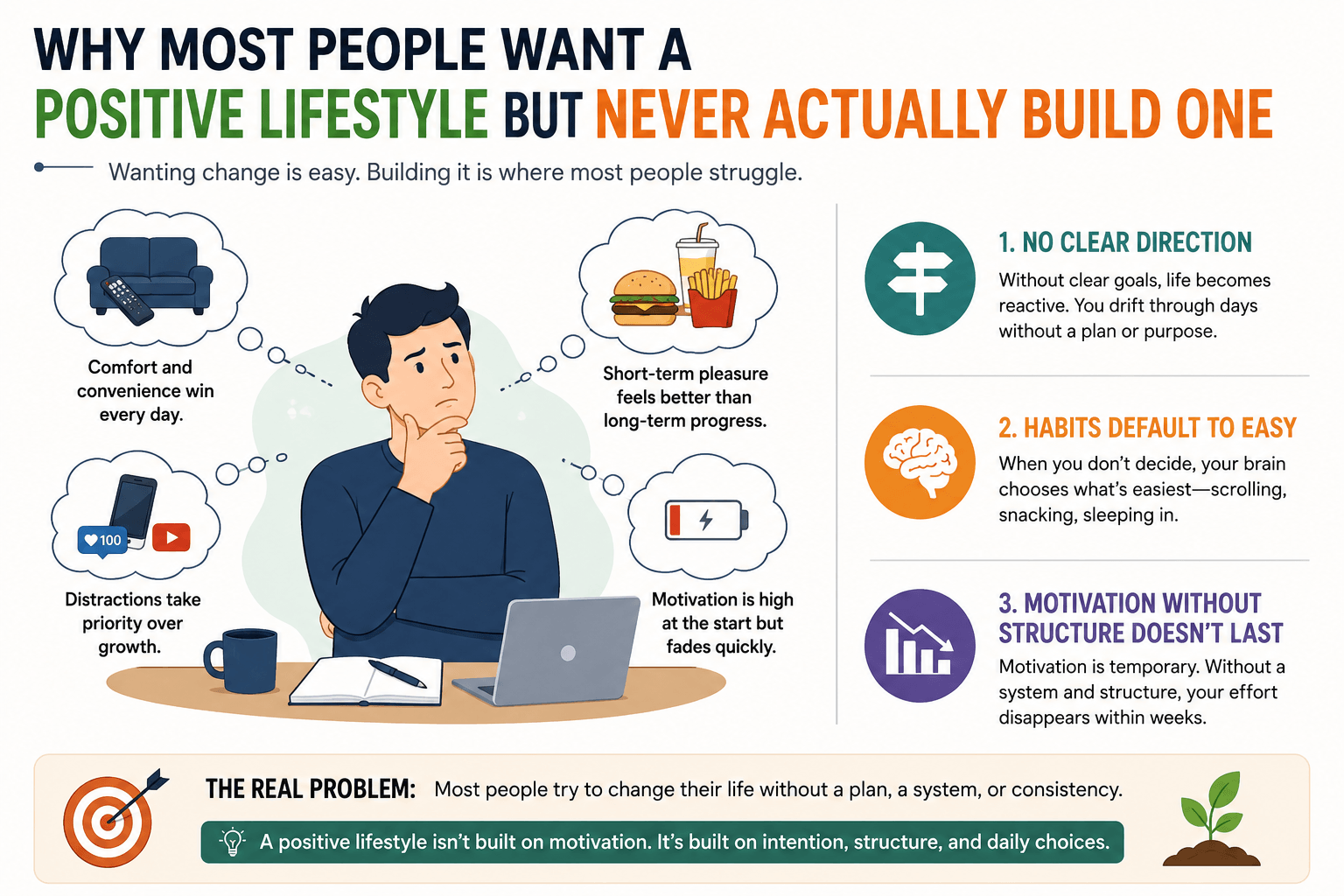
Almost everyone wants to improve their life in some way. Some want to lose weight. Others want better mental health, stronger finances, improved productivity, or more balance. The problem is that wanting change and building change are completely different things.
Without a clear direction, daily habits naturally drift toward comfort and convenience. People choose easy entertainment over exercise, unhealthy food over meal planning, and short term relief over long term improvement.
Motivation also creates a false sense of progress. Many people feel highly motivated at the beginning of a new month or year, but motivation fades quickly when there is no structure supporting it. This is why people often quit healthy routines within weeks.
A positive lifestyle is not built through emotion alone. It is built through repeated actions guided by clear goals.
How Creating Goals Can Build or Maintain a Positive Lifestyle Over Time
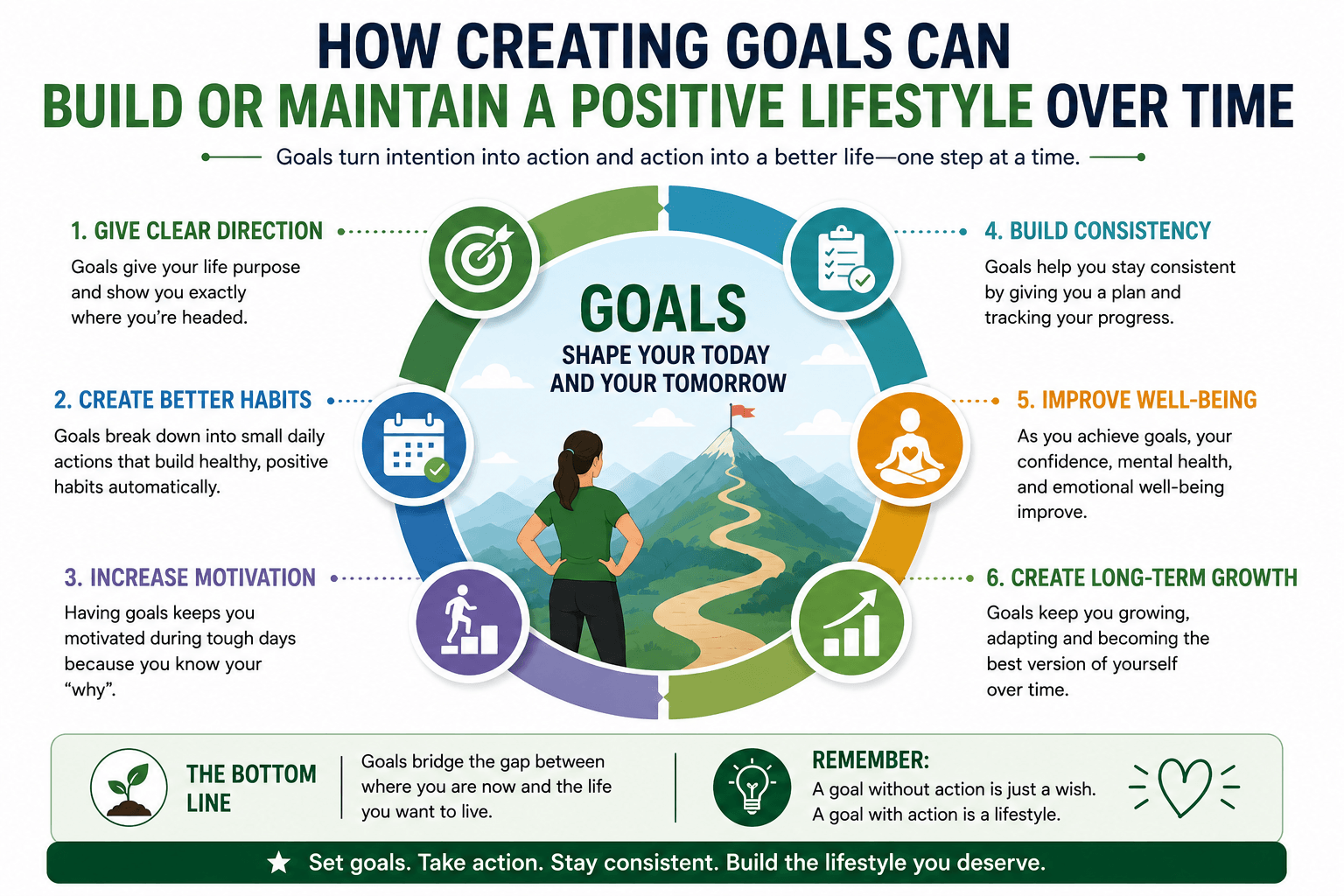
Many people focus only on outcomes. They want a better body, more money, or lower stress levels. What they fail to understand is that outcomes are usually the result of consistent systems and behaviors.
This is where goal setting becomes powerful.
When goals are properly structured, they remove uncertainty from daily life. Instead of constantly deciding what to do next, people already know the actions required to move forward. This reduces mental exhaustion and improves consistency.
Understanding how can creating goals build or maintain a positive lifestyle starts with recognizing that goals create intentional living. People without goals often react to life passively. People with goals actively shape their routines, choices, and priorities.
For example:
- A fitness goal encourages healthier eating and regular exercise
- A financial goal improves spending habits and discipline
- A mental health goal encourages meditation, journaling, or therapy
- A productivity goal reduces procrastination and wasted time
Over time, these small adjustments reshape an entire lifestyle.
The Type of Goals That Actually Push You Toward a Positive Lifestyle
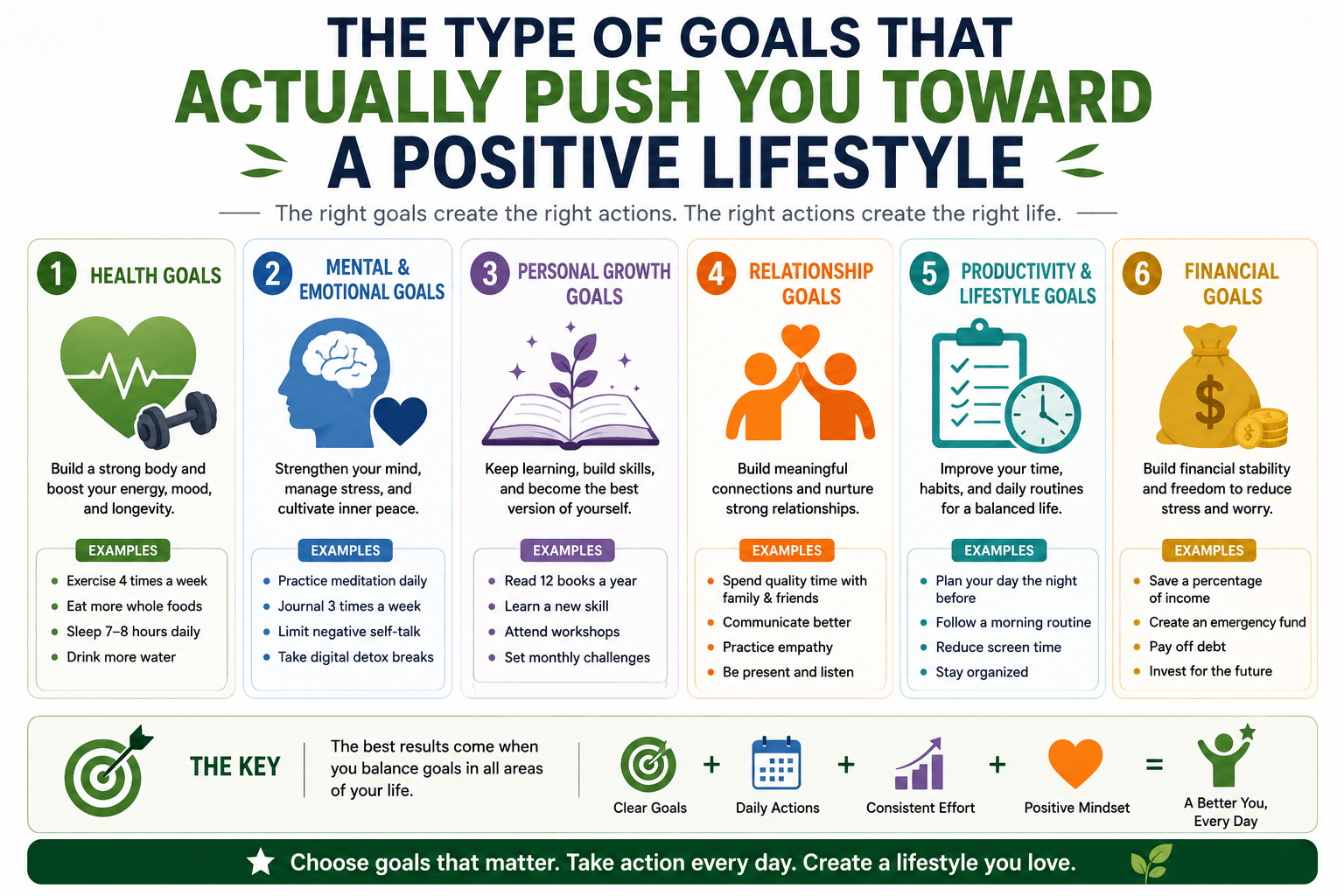
Not all goals are effective. Some goals sound positive but fail because they are too vague or unrealistic.
Goals like:
- “Be happier”
- “Get healthier”
- “Stress less”
sound good emotionally, but they give the brain no clear action to follow.
On the other hand, goals that are too large and distant often create pressure and anxiety. Someone trying to completely transform every part of their life overnight usually burns out quickly.
The most effective goals sit slightly outside your comfort zone while still feeling achievable.
Good examples include:
- Walk 30 minutes five days a week
- Read one book every month
- Save a fixed amount weekly
- Sleep before midnight consistently
- Limit social media use to one hour daily
These goals create clarity, direction, and measurable progress.
How Goal Setting Builds Better Daily Habits and Routines
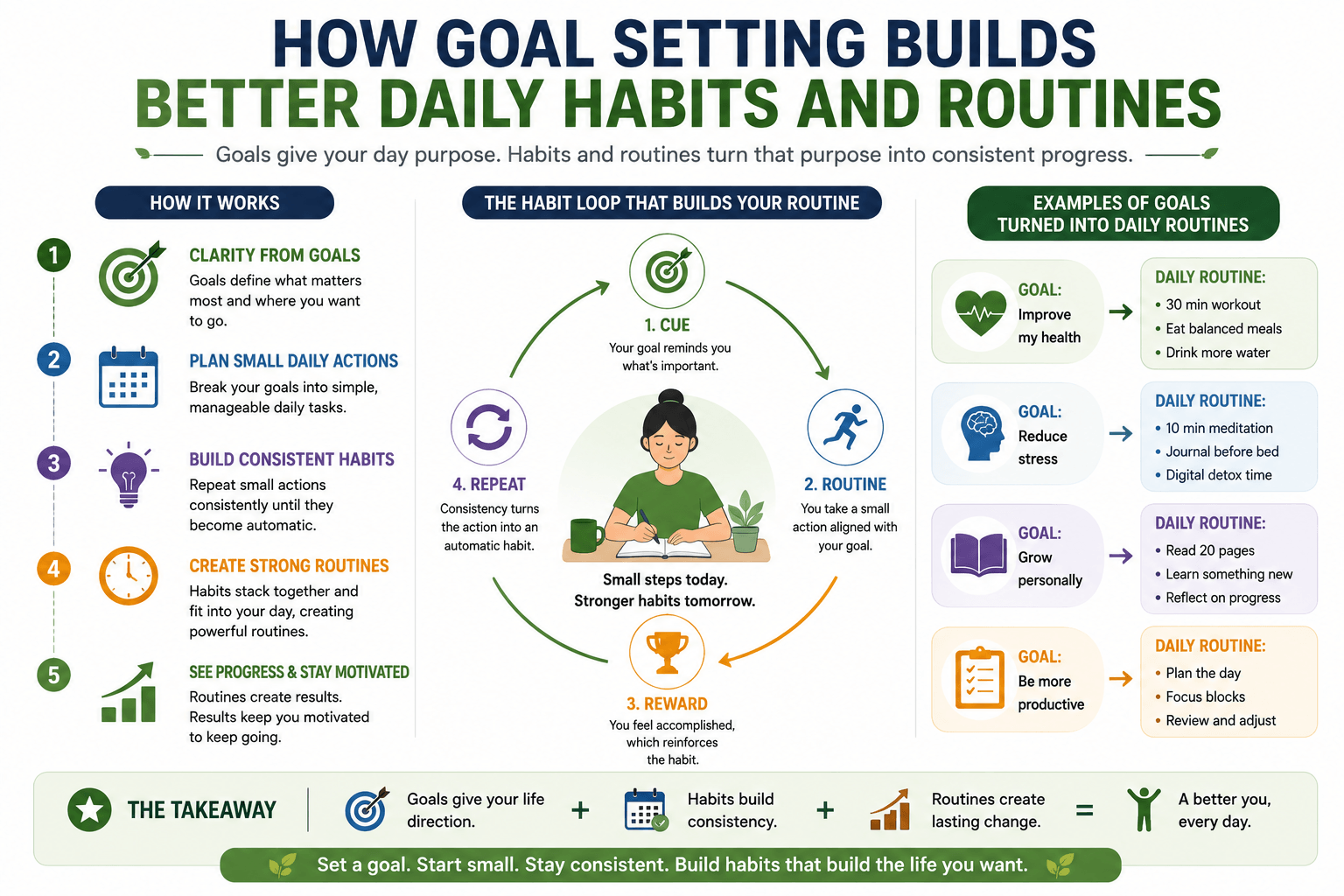
Most people obsess over the final result while ignoring the system required to achieve it.
The truth is that lifestyle change happens through habits, not single moments of motivation.
When goals are connected to routines, they become easier to maintain. Daily actions begin to feel automatic instead of forced. Over time, these repeated behaviors create the compound effect that transforms physical health, emotional wellbeing, and overall quality of life.
For example:
- A goal to improve fitness creates a consistent workout schedule
- A goal to reduce stress encourages healthier sleep routines
- A goal to improve focus reduces unnecessary distractions
- A goal to improve relationships increases intentional communication
This is another major reason how can creating goals build or maintain a positive lifestyle is such an important question. Goals create systems that support healthy behaviors long after motivation disappears.
The Connection Between Personal Goals and Mental and Emotional Wellbeing
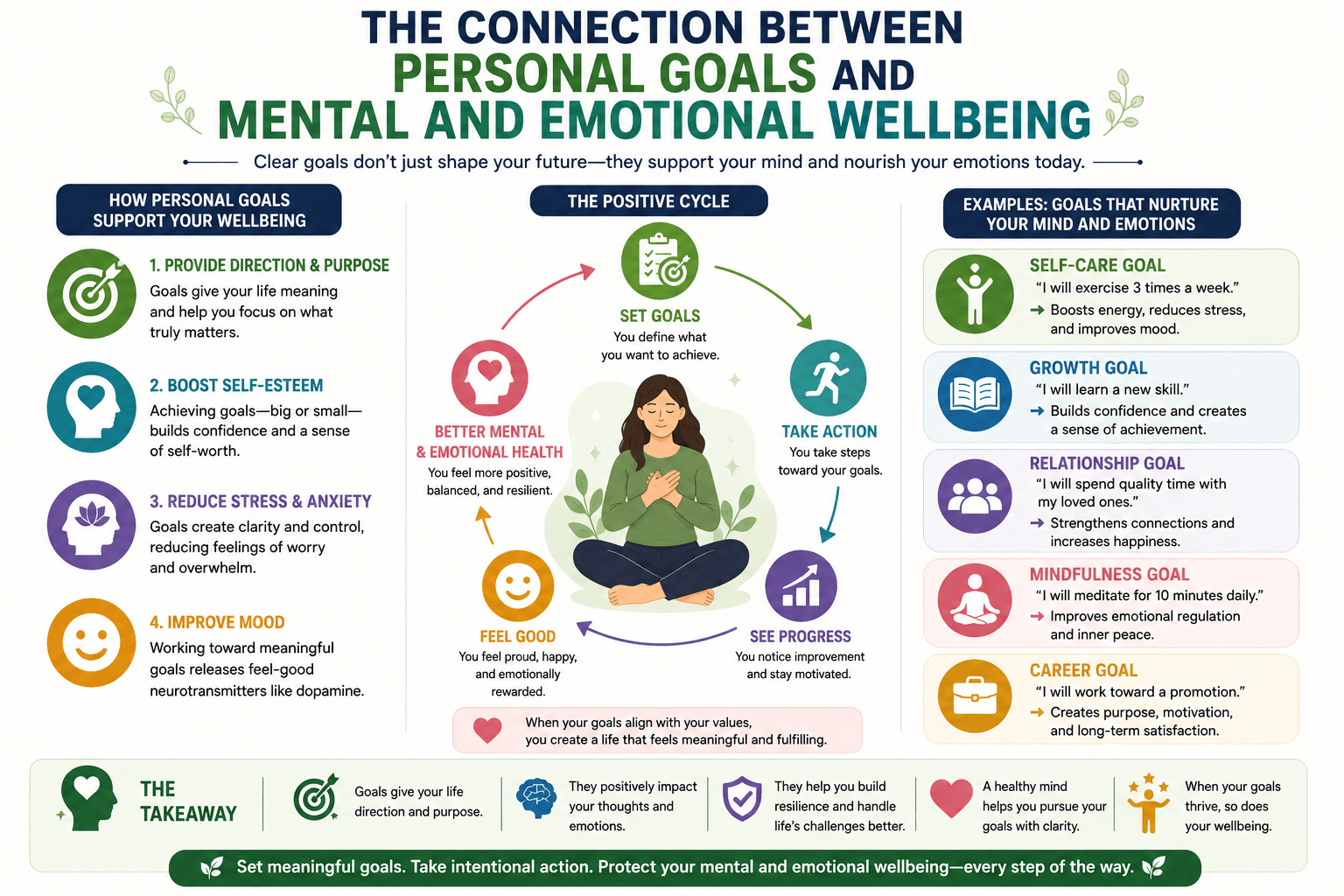
People often underestimate the emotional impact of living without direction.
A lack of goals can create a constant feeling of drift. Days begin to blend together. Progress feels invisible. This often contributes to frustration, low confidence, and emotional exhaustion.
Clear goals help counter this feeling by giving people a sense of purpose and momentum.
Even small achievements matter psychologically. Completing a workout, sticking to a routine, or finishing a weekly target creates a dopamine response in the brain. This reinforces positive behavior and increases motivation to continue.
People with defined goals often experience:
- Higher self confidence
- Greater emotional stability
- Better resilience during stress
- Stronger self discipline
- Increased sense of control
Progress itself becomes a source of emotional strength.
Why People Abandon Goals Before They See Lifestyle Results
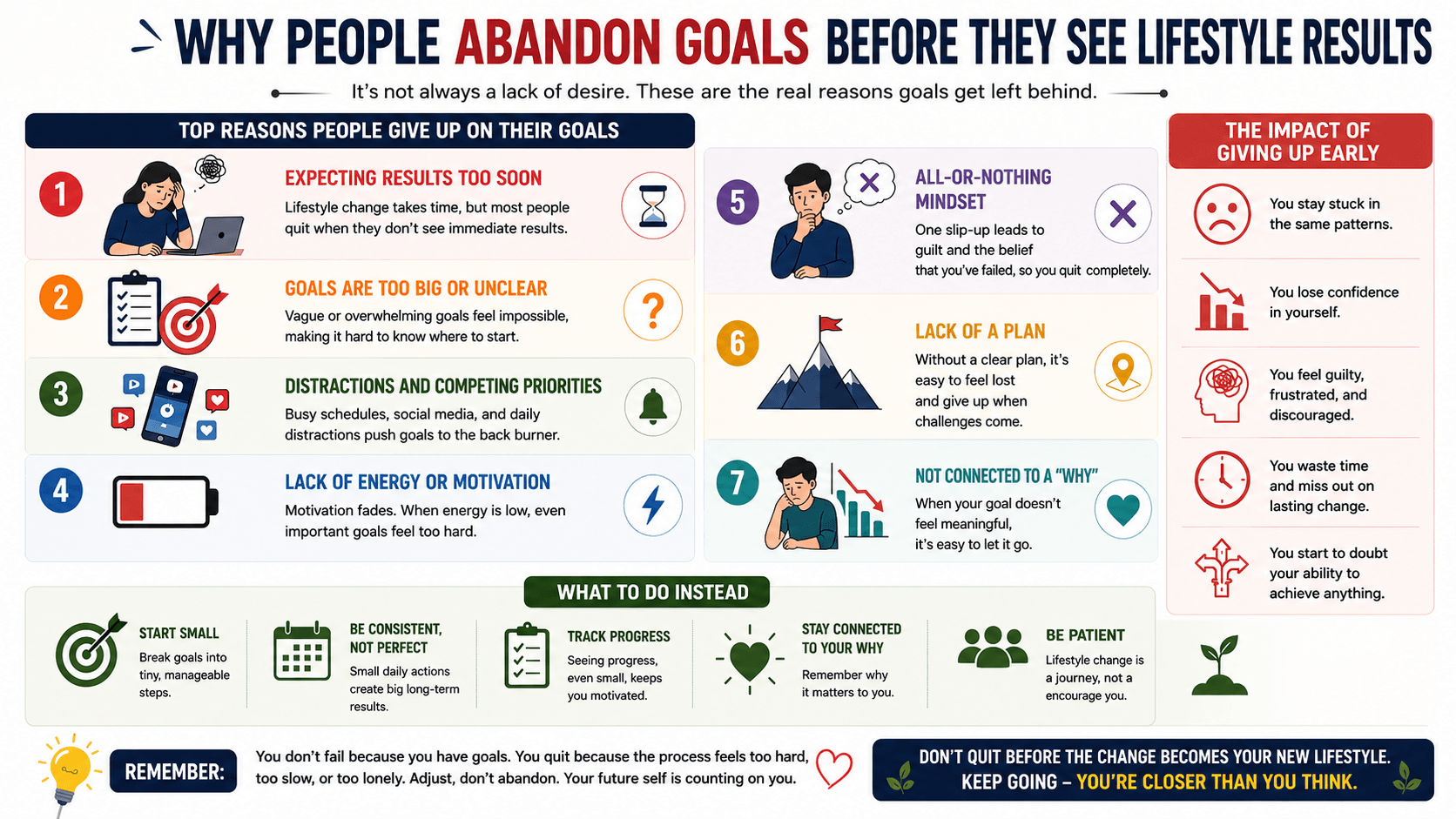
One of the biggest mistakes people make is relying on emotion to sustain long term effort.
Many goals are created during moments of excitement, frustration, or inspiration. However, once that emotional intensity fades, there is no system left to support consistency.
Another major issue is the lack of review and adjustment. People drift away from goals slowly without realizing it because they never track progress or evaluate what is working.
Failure also damages confidence when viewed incorrectly. Missing one target or struggling temporarily does not mean goal setting failed. It usually means the system needs adjustment.
Successful people rarely achieve goals perfectly from the beginning. They adapt, improve, and continue moving forward.
How to Set Goals That Build and Maintain a Positive Lifestyle Long Term
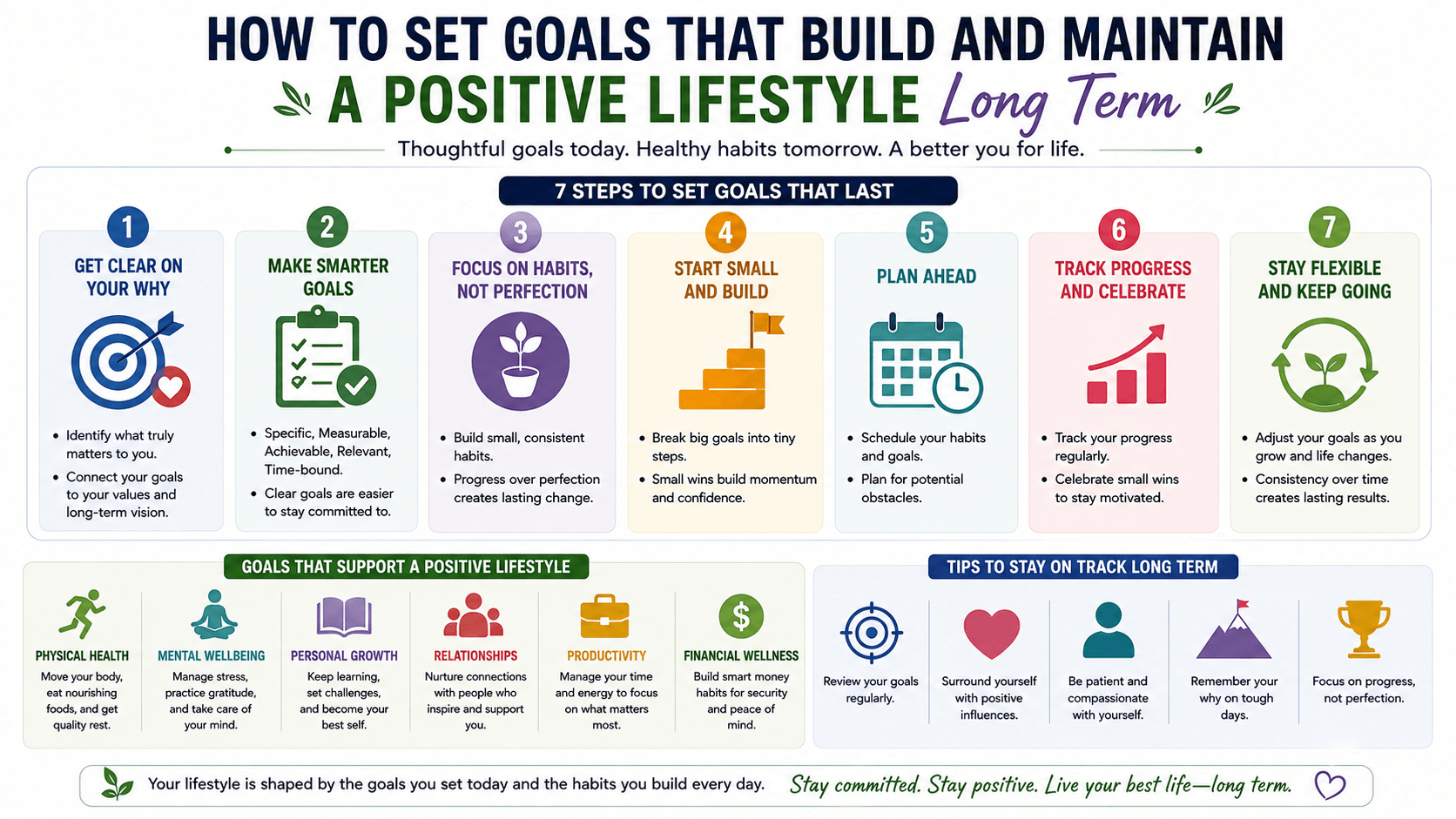
Effective goal setting requires more than simply writing down wishes.
A goal becomes powerful when it includes:
- Clear direction
- Realistic expectations
- Daily action steps
- Measurable progress
- A timeline for accountability
Large goals should also be broken into smaller weekly and monthly actions. This makes progress visible and reduces overwhelm.
For example:
- Instead of “get healthy,” focus on exercising four times weekly
- Instead of “save money,” track weekly savings goals
- Instead of “be productive,” create a structured daily schedule
Regular reviews are equally important. Life changes over time, and goals should evolve with it. Adjusting goals does not mean failure. It means staying realistic and adaptable.
The people who maintain positive lifestyles long term are rarely the most motivated. They are usually the most structured and consistent.
Conclusion
Understanding how can creating goals build or maintain a positive lifestyle comes down to one core truth: goals create direction, and direction shapes behavior.
Without goals, life becomes reactive and inconsistent. With goals, daily actions gain purpose and structure. Small habits begin stacking together until they create meaningful long term change.
A healthier and happier lifestyle rarely appears overnight. It is built gradually through clear goals, consistent routines, and repeated positive decisions.
The people who seem most balanced, productive, and fulfilled are often not lucky. They simply created systems that guide their behavior every day.


