Table of Contents:
Introduction:
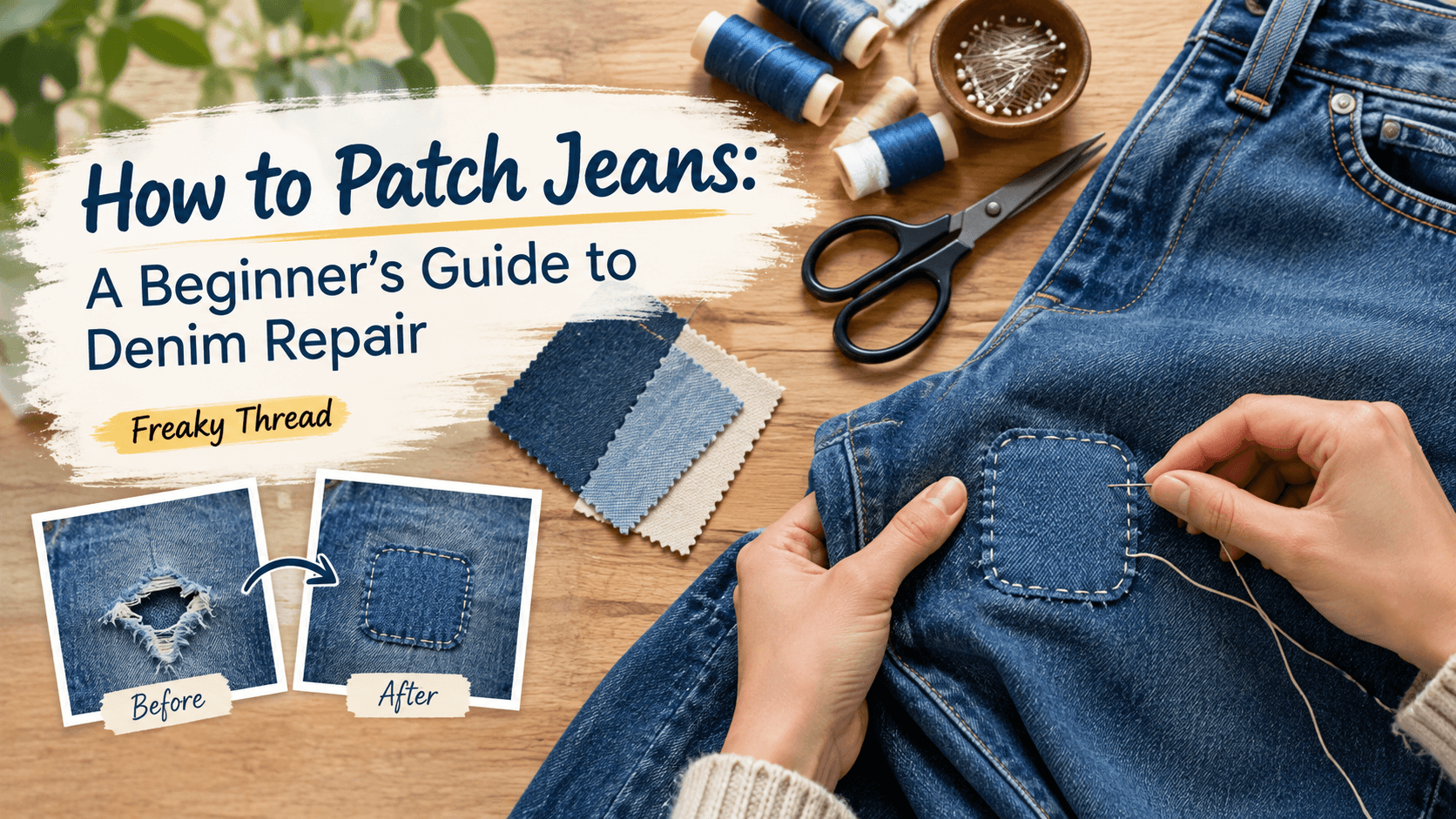
Your favorite jeans can develop holes, tears, and worn patches through regular everyday use. Instead of throwing them away, you can repair many damaged areas using simple sewing techniques. Learning how to patch jeans helps you save clothing while developing useful creative skills. With the right materials, even beginners can achieve neat and practical denim repairs.
At Freaky Thread, we believe practical fashion ideas should combine creativity with everyday usefulness. A well-placed patch can restore damaged fabric while giving old jeans a fresh appearance. You can choose matching denim for a subtle repair or contrasting fabric for a decorative design. This guide explains different ways to repair jeans, from basic patching to removing old patches.
You will also learn how to select suitable materials and avoid common repair mistakes. Whether you have a small tear or a larger hole, preparation matters. Let’s explore the steps that can help you repair your jeans confidently at home.
What You Need to Patch Jeans at Home:
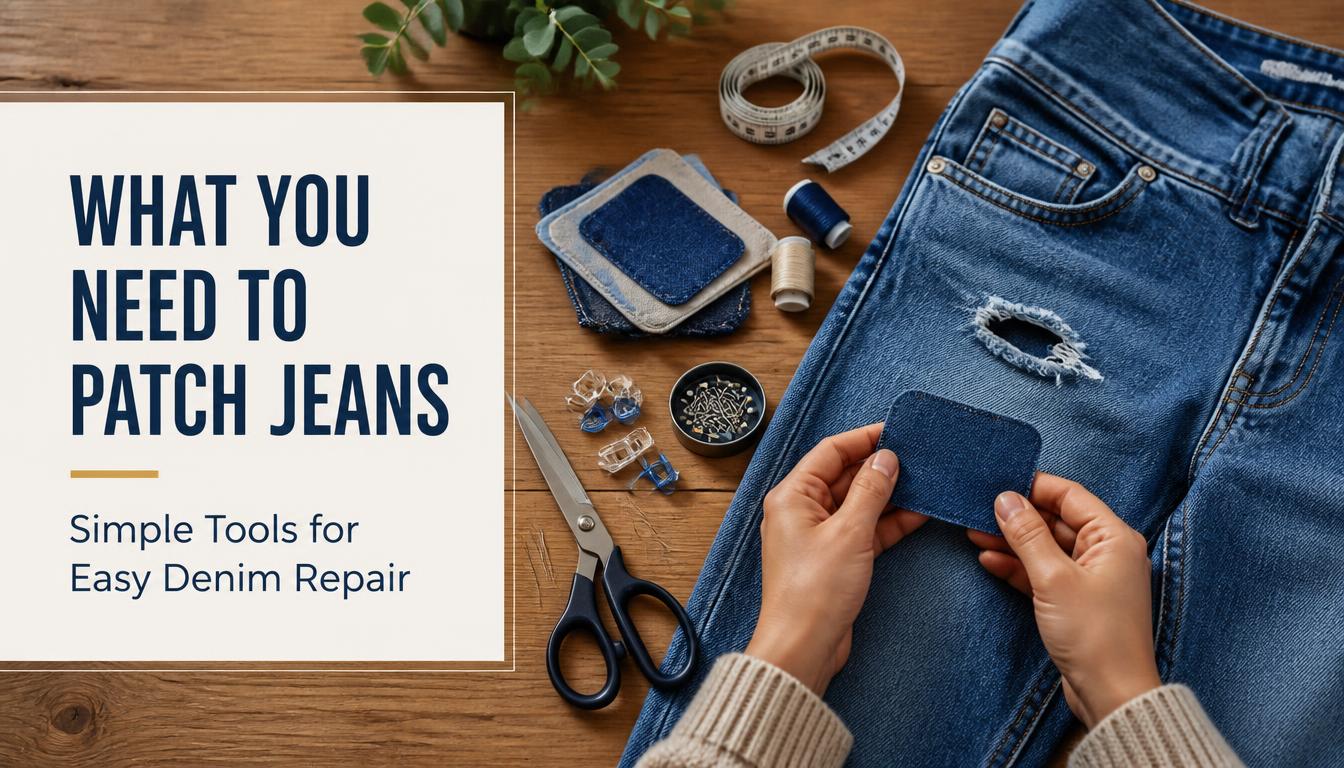
Before starting your repair, gather the right materials for the damaged area. Having everything ready makes the process easier and helps prevent unnecessary mistakes. Your supplies may vary depending on the hole’s size, location, and appearance.
Essential materials include:
- Fabric patch: Choose denim or another suitable fabric for reinforcement.
- Needle and thread: Select thread appropriate for the fabric and intended stitching.
- Fabric scissors: Use sharp scissors to cut clean patch edges.
- Pins or fabric clips: Secure the patch before beginning the stitching process.
- Measuring tape: Measure the damaged area and determine suitable patch coverage.
- Iron: Use an iron when appropriate for preparing fabric or securing compatible patches.
Wash and dry the jeans according to their care instructions before repairing them. This helps you work with fabric that has already settled after washing. Examine the surrounding denim because worn fabric may require additional reinforcement.
Choose materials that suit the jeans’ weight and flexibility for better results. Always follow the manufacturer’s instructions when using adhesive patches or heat. If you’re new to sewing, practice basic stitches on a denim scrap first.
You May Also Like:
How to Patch a Hole in Jeans Step by Step:
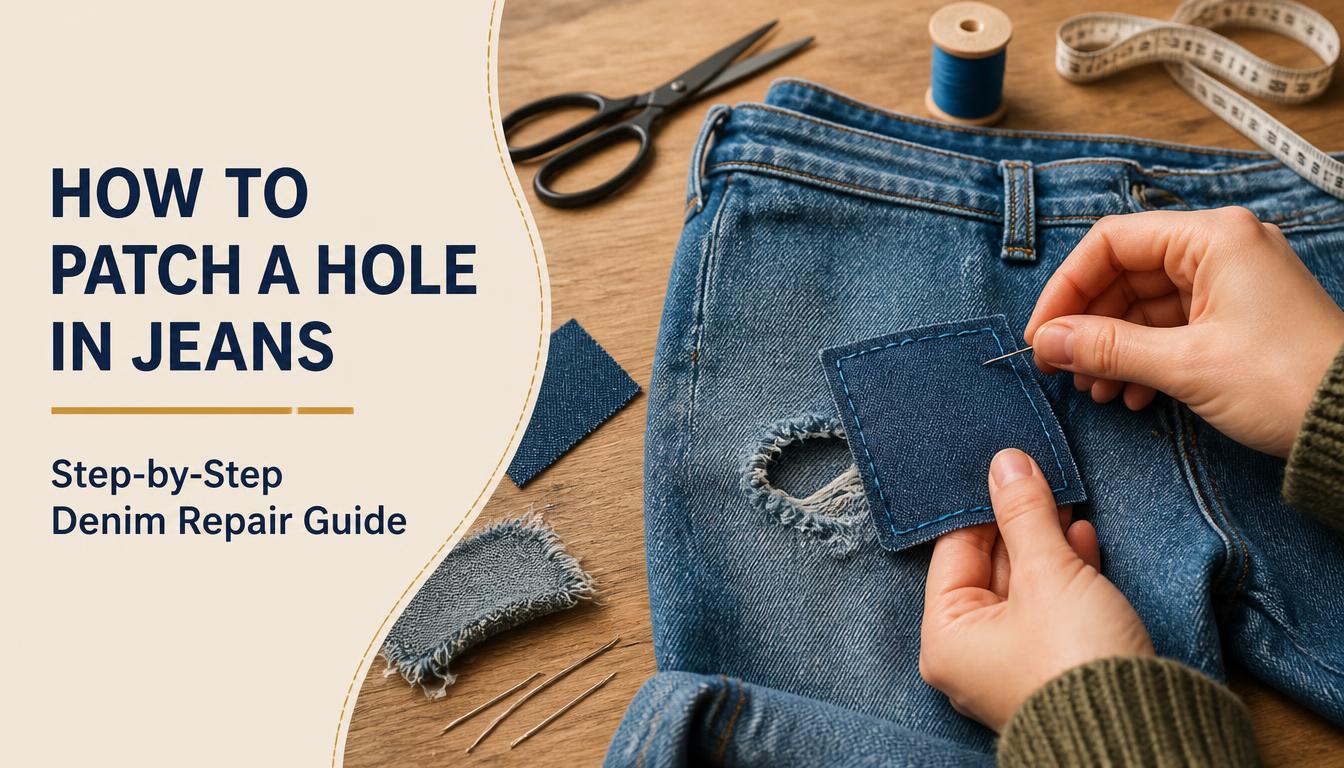
Learning how to patch a hole in jeans becomes easier with careful preparation. A suitable patch supports damaged fabric and helps prevent further tearing during everyday wear. Start by examining the hole and checking whether surrounding denim feels thin. This inspection helps you decide how much fabric your repair needs.
Follow these steps for a basic denim patch:
- Prepare the damaged area: Trim loose threads carefully without cutting healthy surrounding denim.
- Measure the hole: Determine the patch size by checking the entire damaged area.
- Cut the patch: Make the patch larger than the hole on every side.
- Position the fabric: Place the patch behind or over the hole, depending on your preferred finish.
- Secure the patch: Use pins or clips to prevent movement during sewing.
- Stitch the edges: Sew through the patch and surrounding denim using suitable stitches.
- Finish the repair: Secure the thread and inspect the repaired area carefully.
For a hidden repair, placing a fabric patch inside the jeans creates a less visible finish. A decorative patch placed outside can become part of the jeans’ overall design. Keep the fabric flat while sewing to reduce unwanted puckering.
You May Also Like:
How to Patch Jeans With Fabric for a Strong Repair:
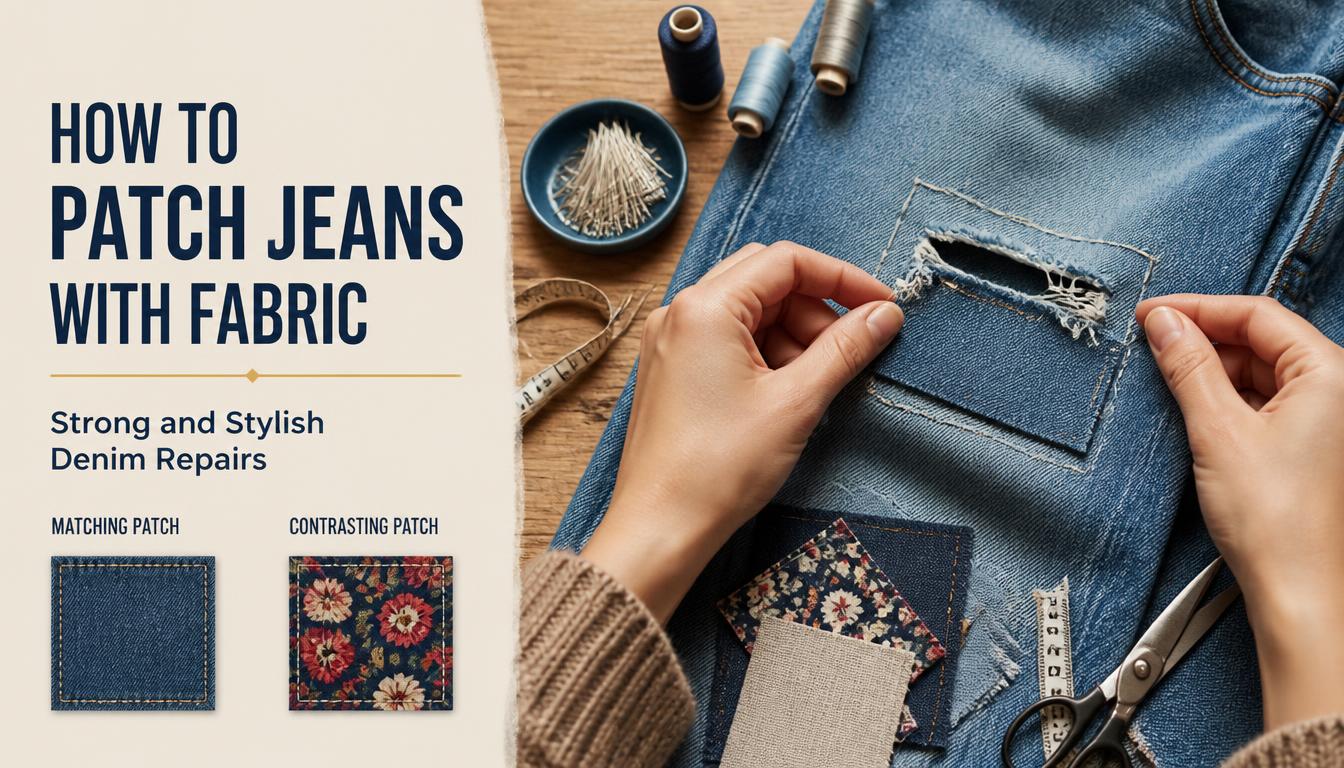
Fabric selection plays an important role when repairing damaged jeans. The right patch should support the hole without creating unnecessary stiffness. Denim scraps work well when their weight suits the original jeans. You can also choose another woven fabric for a contrasting appearance.
If you wonder how to patch jeans with fabric, begin by choosing your desired finish. An inside patch offers reinforcement while keeping the repair relatively discreet. An outside patch creates a visible detail that can complement your personal style.
Cut the fabric with enough overlap to cover the damaged area completely. Rounded corners can help reduce the likelihood of edges catching during everyday wear. Secure the patch before sewing, ensuring it covers the weak surrounding fabric.
For iron-on patches, always follow the product’s temperature and application instructions. Heat-sensitive fabrics and adhesives may respond differently during the application process. Sewing around an iron-on patch can provide additional security when appropriate. However, the suitability depends on the patch construction and garment material.
You may also like:
How to Sew a Hole in Pants Without Using a Patch:
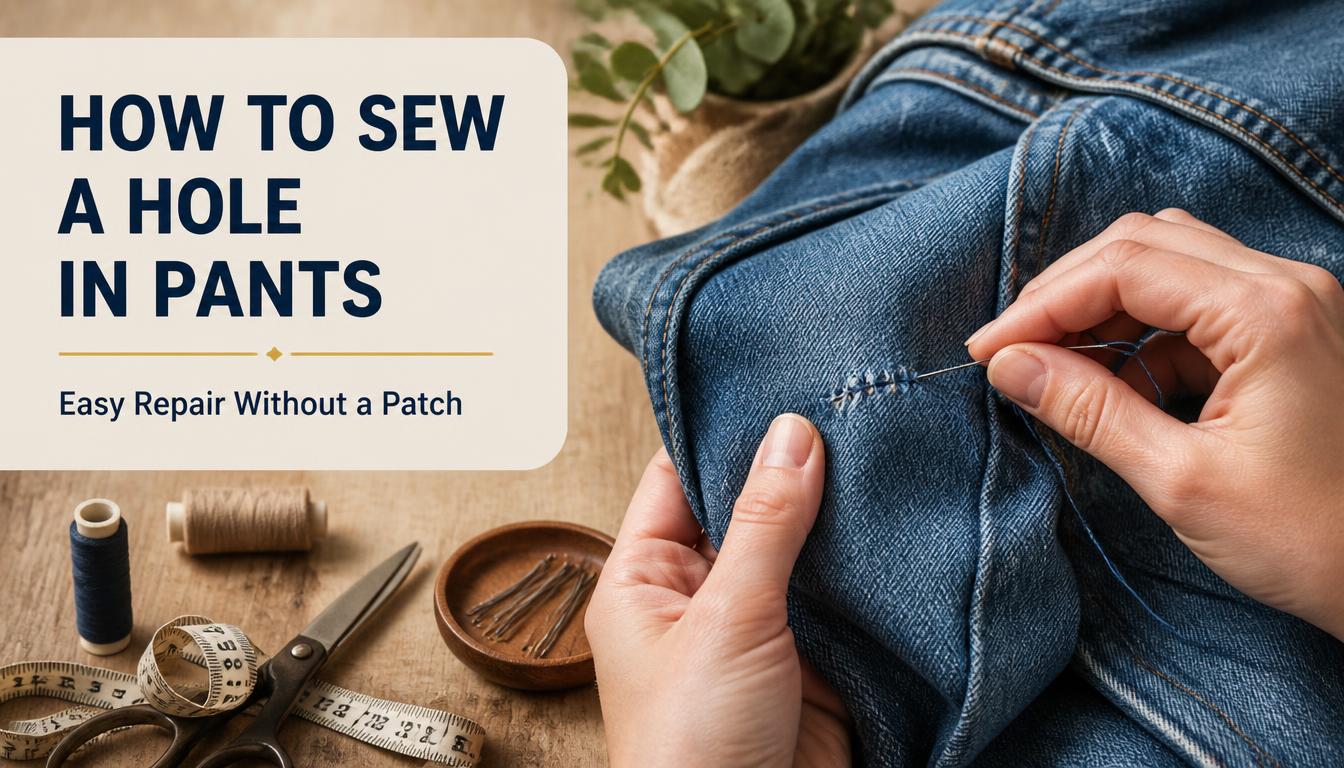
Not every clothing repair requires adding a separate piece of fabric. Small tears may sometimes respond well to careful stitching alone. The best approach depends on the hole’s size and surrounding fabric condition. Inspect the area before deciding whether stitching provides sufficient support.
If you want to learn how to sew a hole in pants, start gently. Bring the damaged edges together without pulling the fabric excessively. Use small, even stitches that pass through stable surrounding material. Avoid relying entirely on weakened or frayed denim edges.
A running stitch can work for certain basic repairs, while other stitches suit different situations. Larger holes generally need additional support because missing fabric cannot simply be recreated through stitching. A backing patch can help distribute stress across a wider area.
When using a sewing machine, select a needle and settings suitable for denim. Practice on scrap material before working directly on your favorite jeans. Always keep your fingers away from the moving needle during machine operation.
You may also like:
How to Remove a Patch From Jeans Safely:
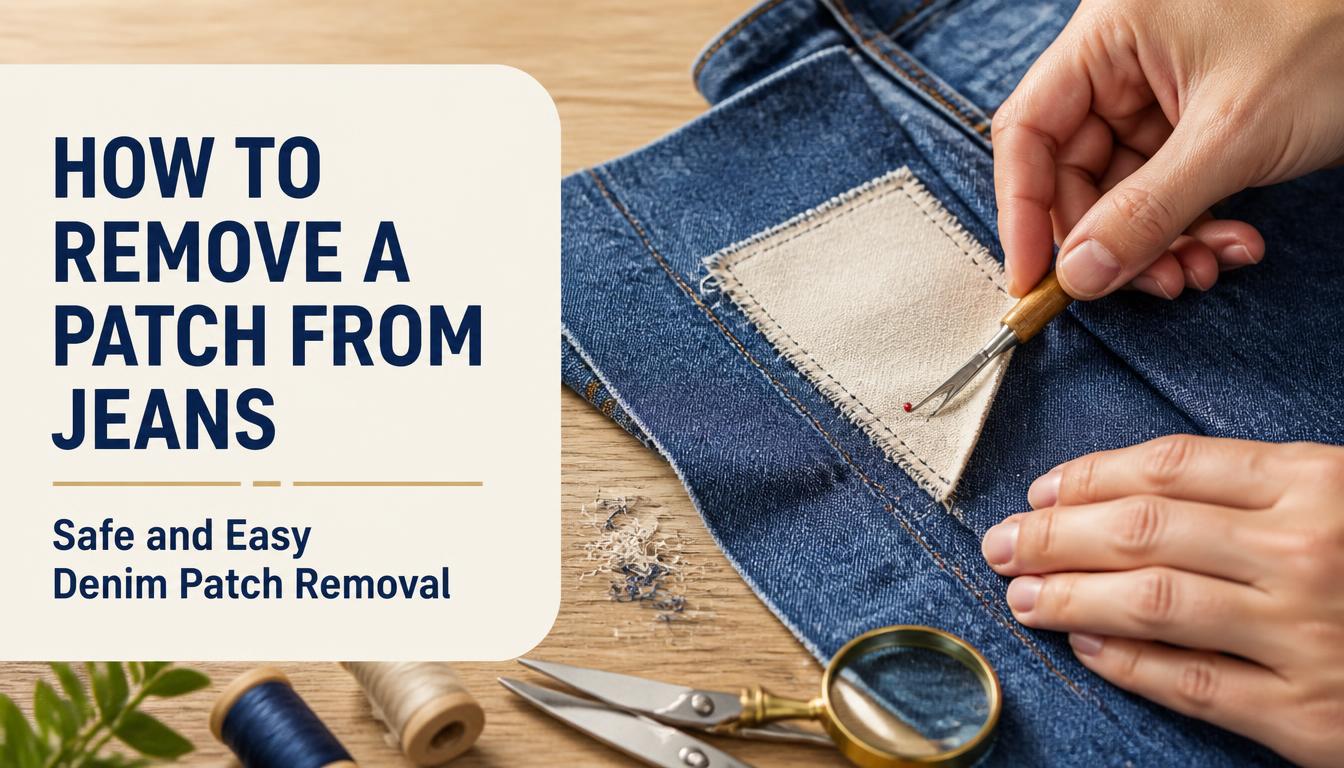
Sometimes you may want to remove an old patch before repairing your jeans differently. The removal process depends on whether the patch uses stitching, adhesive, or both. Examine the attachment method carefully before attempting any removal.
For sewn patches:
- Turn the jeans inside out when practical for better access.
- Identify the stitches connecting the patch with the denim.
- Carefully cut individual threads using a suitable seam ripper.
- Lift the patch gradually without pulling forcefully against the fabric.
- Inspect the denim afterward for remaining damage or loose threads.
Adhesive patches require additional care because their bonding method varies. Follow the manufacturer’s removal guidance whenever available. Avoid applying excessive heat or chemicals without checking fabric compatibility. Some treatments can discolor denim or affect its fibers and finish.
After removing the patch, inspect the area before applying another repair. If the fabric remains weak, additional reinforcement may be necessary.
You may also like:
Common Mistakes to Avoid When Patching Jeans:

Even simple denim repairs can produce disappointing results without proper preparation. Avoiding common mistakes helps you achieve a cleaner and more practical repair. Beginners should focus on fabric stability rather than rushing through each step.
Using a patch that is too small: A patch should cover the damaged area and extend into stable surrounding fabric. Insufficient coverage may leave weak denim unsupported around the hole.
Sewing only through damaged edges: Fragile denim may not hold stitches securely during regular movement. Include stronger surrounding material when positioning and sewing your patch.
Pulling thread too tightly: Excessive tension can cause puckering and distort the repaired fabric. Maintain consistent tension while allowing the denim to lie naturally.
Ignoring the patch’s fabric type: Extremely different fabric weights can create uncomfortable stiffness or uneven results. Consider the jeans’ flexibility and the intended location of your repair.
Skipping a test repair: Practice on spare denim before attempting complicated repairs. This helps you understand stitching tension and fabric behavior beforehand.
Conclusion:
Learning how to patch jeans gives you a practical way to repair damaged clothing. With suitable materials and careful stitching, many everyday denim repairs become manageable. Fabric patches can provide reinforcement while also creating opportunities for personal creativity.
Whether you’re fixing a small tear or covering a larger hole, preparation remains important. Choose a method that suits the fabric condition, repair location, and appearance you want. You can start with simple hand stitching before exploring more advanced techniques.
At Freaky Thread, we encourage practical fashion ideas that help you care for clothing creatively. Repairing your jeans can extend their useful life while giving you valuable DIY experience. Take your time, practice your technique, and discover a repair style that suits you.