
Table of Contents:
- Introduction
- What Is the Best Time to Visit Hawaii?
- Hawaii Weather by Season: What to Expect
- When Is the Cheapest Time to Go to Hawaii?
- What Is the Best Month to Go to Hawaii?
- Best Time to Visit Each Hawaiian Island
- Best Time to Visit Hawaii for Popular Activities
- How to Choose the Right Time for Your Hawaii Trip
- Conclusion
Introduction:
Planning a Hawaiian vacation becomes easier when you understand seasonal weather and travel conditions. Hawaii offers beautiful beaches, scenic landscapes, cultural experiences, and outdoor adventures throughout the year. However, choosing suitable travel dates can affect your budget, activities, and overall vacation experience.
What is the best time to visit Hawaii? The answer depends on your priorities, including comfortable weather, affordable accommodation, and fewer crowds. Some travelers prefer spring and fall, while others enjoy summer beach trips or winter whale watching. In this guide, Freaky Thread explores Hawaii’s seasons, monthly travel considerations, and practical planning tips. You’ll discover how to choose travel dates that match your interests and spending plans.
What Is the Best Time to Visit Hawaii?
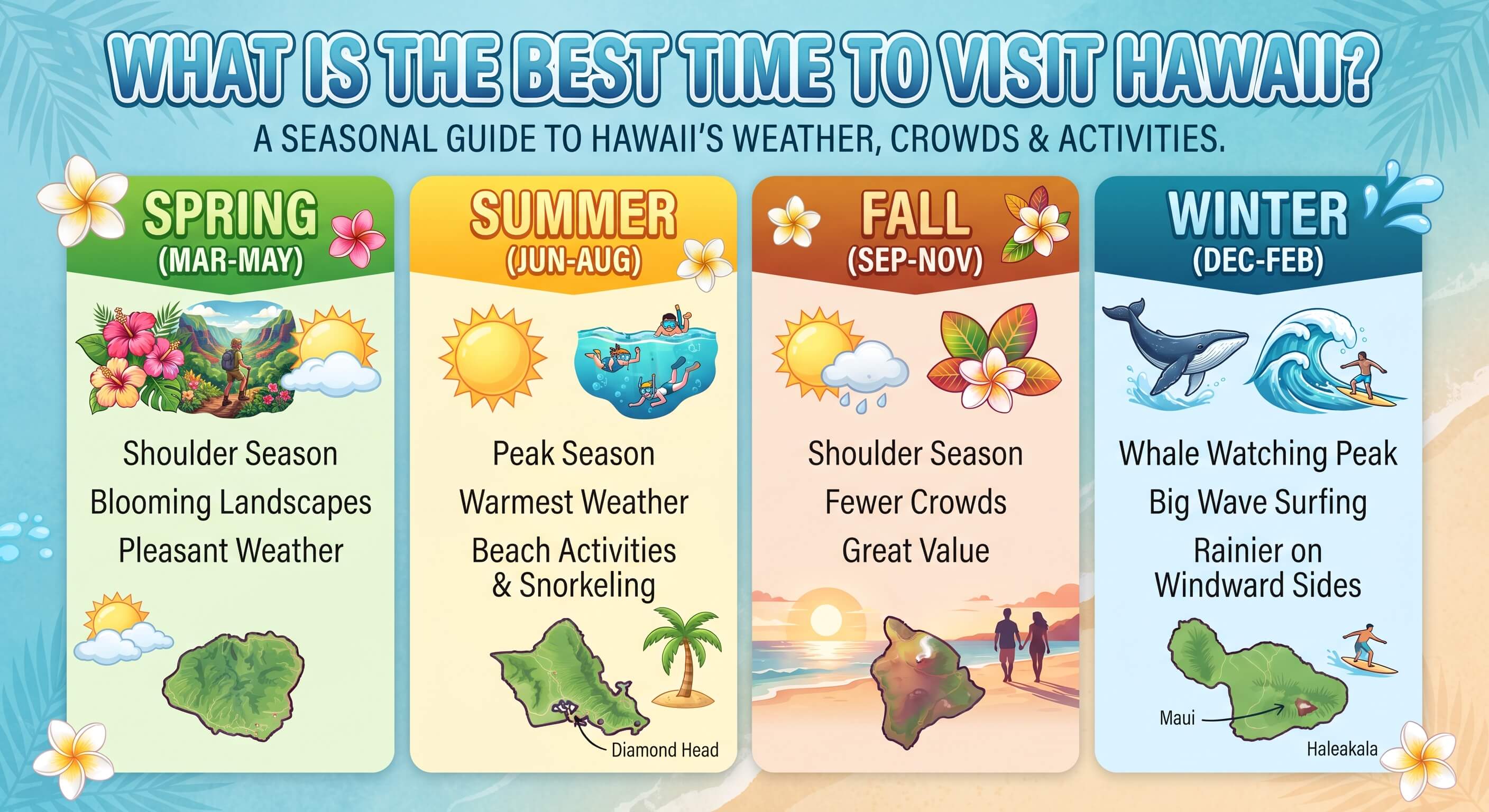
The best time to visit Hawaii depends on your preferred activities, budget, and tolerance for crowds. Hawaii experiences relatively mild temperatures throughout the year, although rainfall varies between locations. Summer generally brings warmer conditions, while winter often brings more frequent rainfall. However, local geography creates noticeable weather differences between neighboring areas.
Many travelers consider spring and fall attractive because these periods offer useful scheduling flexibility. Mid-April through early June and September through mid-November are commonly suggested shoulder-season windows. These periods may offer a balance between comfortable weather and manageable visitor demand. However, actual prices depend on specific dates, destinations, and accommodation availability.
If you enjoy whale watching, winter and early spring deserve special consideration. Humpback whales typically visit Hawaiian waters between December and May. January and February are particularly important months for whale-watching opportunities. Travelers should also consider ocean conditions before planning specific water-based activities.
You may also like:
Hawaii Weather by Season: What to Expect
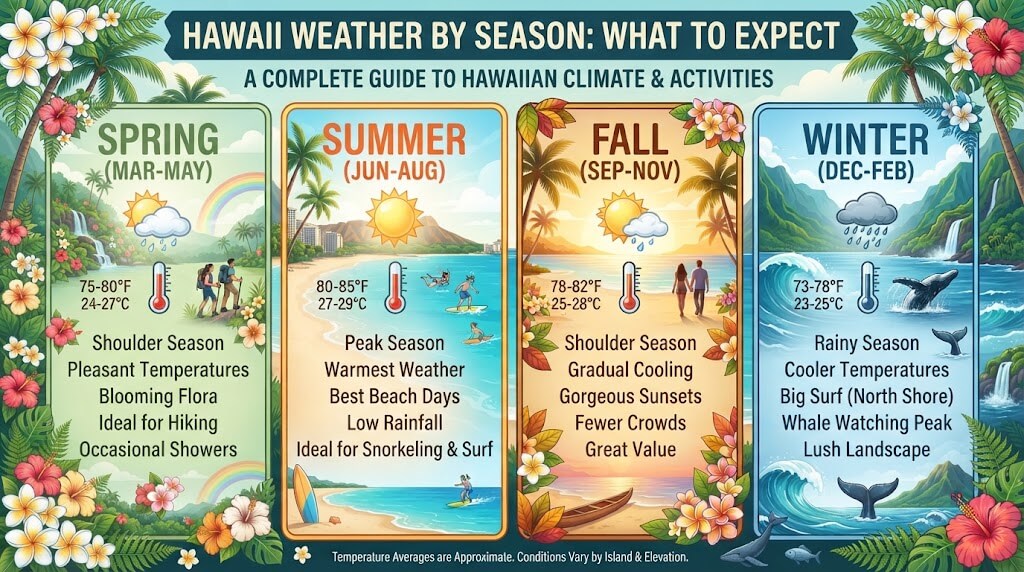
Hawaii has two broad seasons, although conditions vary considerably across islands. Summer generally runs from May through October, while winter extends from November through April. Average daytime temperatures at sea level reach approximately 85°F during summer. Winter daytime temperatures average around 78°F, making both seasons suitable for many outdoor activities.
Spring, from March through May, offers changing conditions and outdoor exploration opportunities. Rainfall often decreases toward late spring, although individual locations experience different patterns. Hiking, sightseeing, and garden visits can work well during suitable weather conditions. Spring break and holiday periods may still increase visitor numbers and accommodation demand.
Summer, from June through August, generally brings warmer and drier conditions. Families often plan vacations during school holidays, which can increase demand. This season suits travelers interested in beach activities and outdoor adventures. Nevertheless, checking local forecasts remains important before scheduling specific excursions.
Fall, from September through November, brings changing conditions across the islands. September and October can provide warm temperatures and useful travel flexibility. Rainfall may begin increasing toward November, particularly in some locations. Visitors should compare island-specific weather rather than relying exclusively on seasonal averages.
Winter, from December through February, brings increased rainfall in several regions. However, rain does not necessarily affect every part of an island simultaneously. Winter also provides opportunities for whale watching and seasonal surfing experiences. Visitors should check ocean conditions and follow local safety warnings before entering the water.
You may also like:
When Is the Cheapest Time to Go to Hawaii?

Travel costs represent an important consideration when planning a Hawaiian vacation. The cheapest time to go to Hawaii depends on your departure location, travel dates, and chosen accommodation. Airfare and hotel prices can change significantly during holidays and school vacation periods. Therefore, travelers should compare several date combinations before confirming their bookings.
Shoulder seasons are often worth researching because demand may decrease outside major holiday periods. Mid-April through early June and September through mid-December are frequently identified as potential value-oriented travel windows. However, Thanksgiving and other holidays can increase prices during particular weeks. Always compare actual prices instead of assuming every date offers identical savings.
Christmas and New Year frequently attract substantial visitor demand throughout Hawaii. Summer vacations can also create increased competition for flights and accommodation. Travelers seeking lower costs should consider flexible departure dates whenever their schedules allow. Booking decisions should include baggage fees, transportation, meals, and activity expenses.
You can also reduce unnecessary expenses by comparing different accommodation locations. Properties outside popular tourist districts may offer different pricing and transportation considerations. However, a cheaper room may require additional spending on rental cars or transportation. Calculate your estimated total costs before choosing accommodation based solely on nightly rates.
You may also like:
What Is the Best Month to Go to Hawaii?
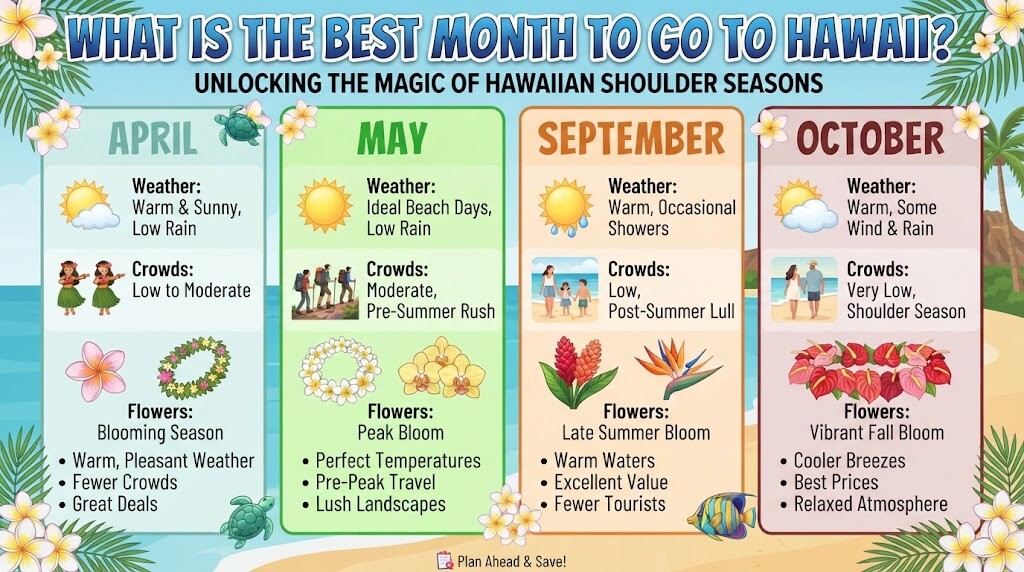
There is no universally perfect month because different travelers prioritize different experiences. However, several months deserve attention when comparing weather, demand, and activity opportunities. April, May, September, and October frequently appear in shoulder-season travel recommendations. Each month still requires checking specific weather patterns and current accommodation prices.
April offers a spring travel option with generally mild tropical conditions. Travelers can explore outdoor attractions while considering occasional rainfall and holiday demand. Late April may provide different crowd patterns than earlier spring dates. Check event schedules and accommodation availability before selecting your exact travel week.
May can suit travelers seeking warmer weather before peak summer vacations. Rainfall patterns vary between islands and their individual coastal regions. This month can work well for sightseeing, hiking, and carefully planned beach activities. Travelers should still review local conditions before scheduling water-based excursions.
September offers warm conditions after many summer vacation periods have ended. Some travelers may find this month useful when comparing shoulder-season travel dates. However, prices vary between islands, properties, and individual booking periods. September also falls within Hawaii’s hurricane season, which generally runs from June through November.
October provides another option for travelers researching fall vacation dates. Weather conditions remain variable across different islands and elevations. Compare flight prices and accommodation availability before making your final decision. Remember that a suitable month depends on your specific destination and planned activities.
You may also like:
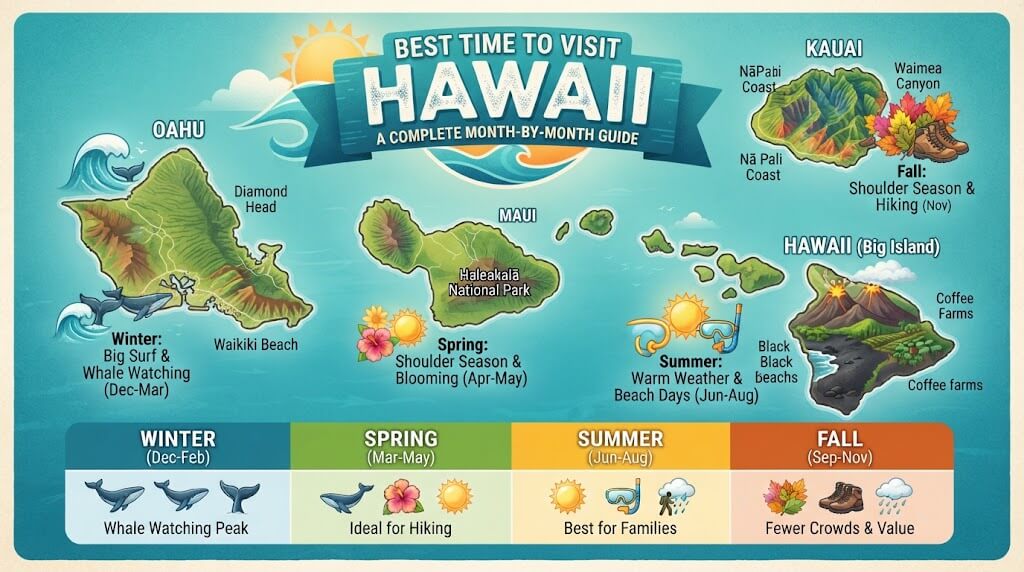
Best Time to Visit Each Hawaiian Island:
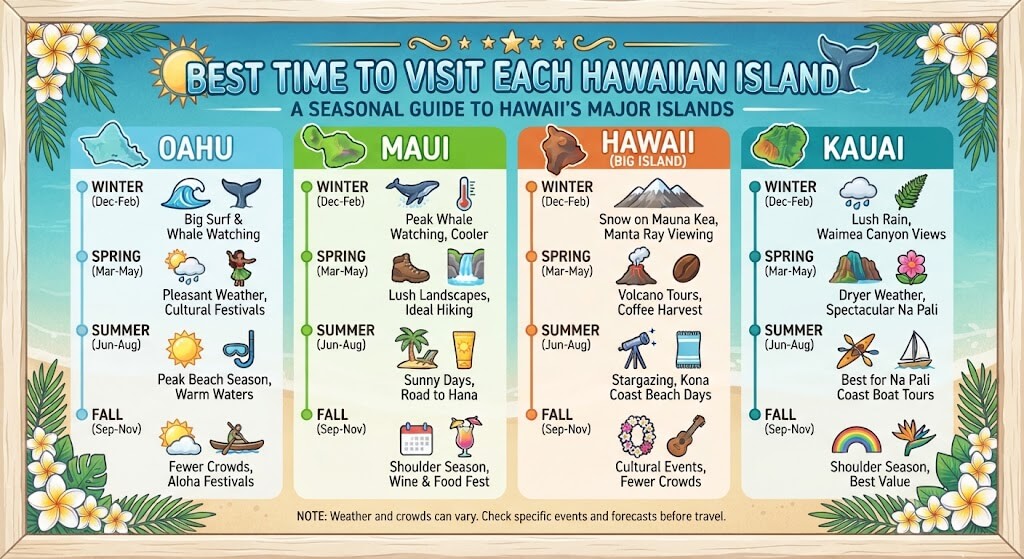
Hawaii’s major islands offer different landscapes, weather patterns, and travel experiences. Choosing the right island can influence your overall vacation experience and daily itinerary. Weather conditions may also differ substantially between windward and leeward locations. Research your preferred destinations instead of assuming one forecast represents the entire island.
Oahu offers attractions such as Honolulu, Waikiki, and the North Shore. Winter can provide opportunities to observe seasonal surfing conditions along suitable coastlines. Visitors should exercise caution because large winter waves can create dangerous swimming conditions. Sheltered beaches may experience different conditions during the same period.
Maui provides beaches, scenic landscapes, and opportunities for seasonal whale watching. Humpback whales commonly visit surrounding waters during the winter and spring period. The waters between Maui, Lanai, and Molokai are important whale-watching locations. Responsible wildlife viewing requires maintaining appropriate distances from marine animals.
The Big Island contains diverse environments because of its substantial geographic variation. Visitors can experience different conditions between the Kona and Hilo regions. Mountain elevations also create weather patterns unlike those found along coastal areas. Plan individual attractions according to their locations, elevation, and current operating conditions.
Kauai is known for lush landscapes, hiking opportunities, and scenic coastal areas. Rainfall differs between the island’s windward and leeward regions. Travelers should check specific trail conditions before beginning outdoor excursions. Flexible plans can help visitors adjust activities when weather changes unexpectedly.
You may also like:
Best Time to Visit Hawaii for Popular Activities:
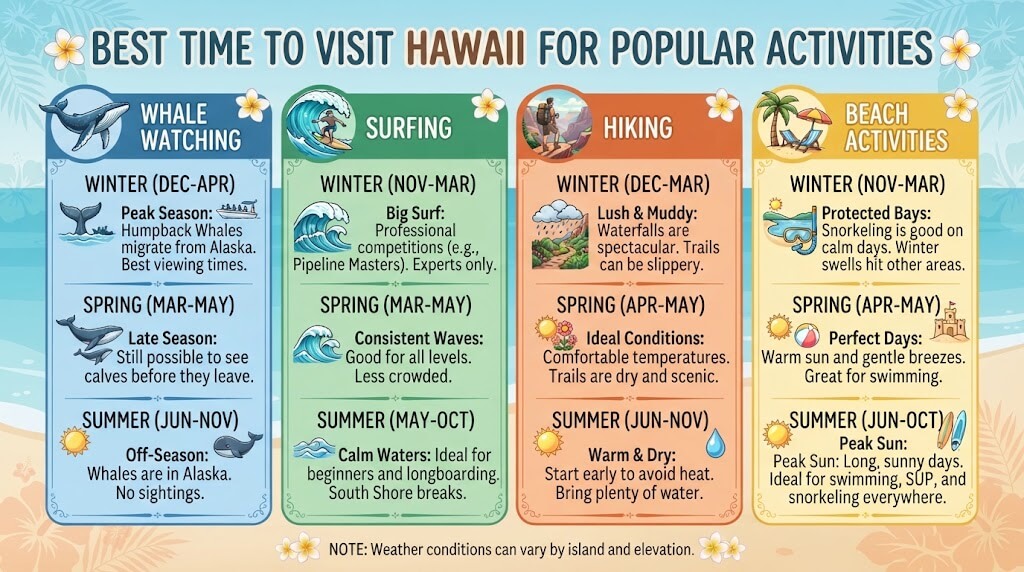
Your ideal travel month may change depending on the activities you want to experience. Beach vacations, whale watching, surfing, and hiking each involve different seasonal considerations. Understanding these differences helps travelers create realistic itineraries. Always follow local guidance when weather or ocean conditions become unsafe.
Whale watching is particularly associated with Hawaii’s winter and spring seasons. Humpback whales generally visit Hawaiian waters between December and May. January and February are recognized as important peak viewing months. Maui’s surrounding waters provide notable opportunities for observing these seasonal visitors.
Surfing conditions depend heavily on the island’s coastline and season. Winter swells can produce substantial waves along certain northern shores. Summer conditions may differ considerably between northern and southern coastal areas. Beginners should seek appropriate instruction and follow lifeguard recommendations.
Hiking requires attention to rainfall, trail conditions, and elevation changes. Hawaii’s mountains create different climates within relatively short distances. Wet conditions can affect trail surfaces and visibility in particular areas. Check official park information before traveling to remote hiking destinations.
Beach activities require careful consideration of currents and wave conditions. Ocean conditions can change quickly, even during generally favorable weather. Strong currents may make certain beaches unsuitable for swimming. Check warning signs and ask qualified local staff about current conditions.
You may also like:
How to Choose the Right Time for Your Hawaii Trip:
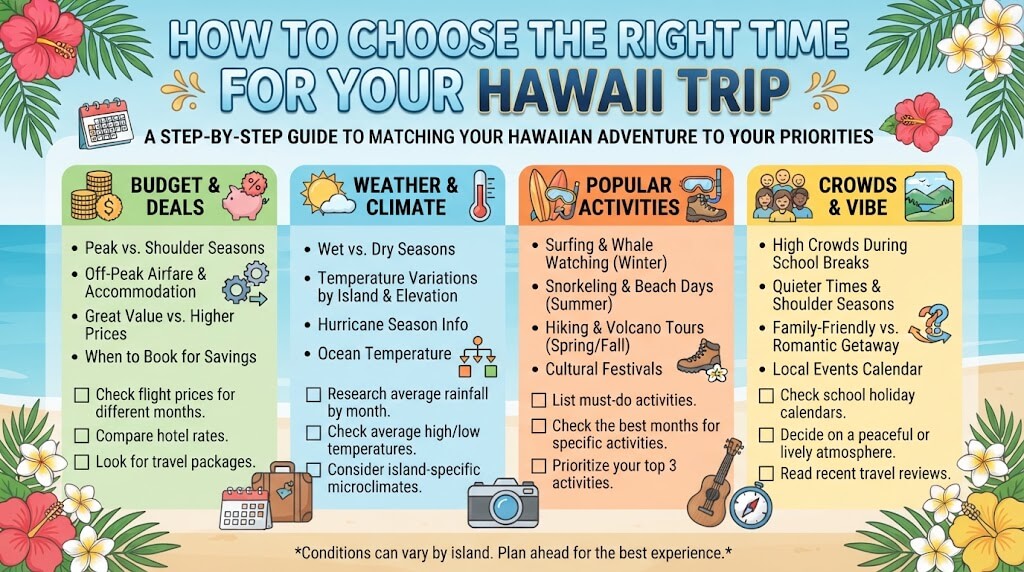
Choosing your travel dates becomes easier when you identify your most important priorities. Begin by deciding whether weather, budget, activities, or crowds matter most. Then compare available months against your preferred island and planned experiences. This approach helps you avoid choosing dates based on general recommendations alone.
If budget matters most, compare shoulder-season dates and avoid major holiday periods. However, potential savings should always be confirmed through actual flight and accommodation searches. If whale watching interests you, consider winter or early spring travel dates. Travelers interested in surfing should research coastline-specific seasonal wave conditions.
Families may prefer planning around school calendars and available vacation periods. Couples or flexible travelers might consider dates outside major holiday demand. Hiking enthusiasts should research trail accessibility and weather conditions before booking excursions. A practical itinerary should allow adjustments when local conditions change.
Remember that Hawaii’s weather differs between regions, even during the same season. A rainy forecast for one location does not necessarily describe another coastline. Consider regional forecasts when selecting accommodation and scheduling outdoor activities. This simple step can make your vacation planning more informed and flexible.
You may also like:
Conclusion:
The best time to visit Hawaii depends on your budget, interests, and preferred travel experience. Spring and fall can provide useful shoulder-season opportunities for travelers seeking flexibility. Winter offers whale-watching possibilities, while summer supports many popular outdoor activities. However, weather and ocean conditions vary across islands and individual destinations.
Before booking your vacation, compare travel costs, seasonal conditions, and your preferred activities. Consider checking regional forecasts and official safety information before planning excursions. A flexible itinerary can help you enjoy Hawaii despite changing weather conditions. Freaky Thread hopes this guide helps you choose suitable dates for your next Hawaiian adventure.


