
If you have ever wished you could move more during the workday without leaving your desk, learning how to use a walking pad could be the perfect answer. A walking pad is a slim, motorized walking surface designed to slide under a standing desk so you can walk slowly while you type, answer emails, or join video calls. It is one of the simplest ways to add gentle movement to a day that would otherwise be spent entirely in a chair.
The short answer: To use a walking pad, slide it under a raised standing desk, step on the belt, and start at about 1 mph while you type. Keep the speed low enough to type and talk comfortably, usually 1 to 2 mph. Build up gradually from 15 minute sessions, and aim for one to two hours spread across your workday.
What Is a Walking Pad and How Is It Different From a Treadmill?
A walking pad is a compact, low profile treadmill built for slow walking rather than running. It has a slim belt, a simple remote or app control, and usually no handrails, which lets it slide neatly under a standing desk or a sofa when you are done.
Most walking pads top out around 4 mph, which covers a brisk walk but nothing faster. A full size treadmill is larger, louder, and built for running, while a walking pad is designed to be quiet, portable, and easy to store in a small home office.
How to Use a Walking Pad While You Work
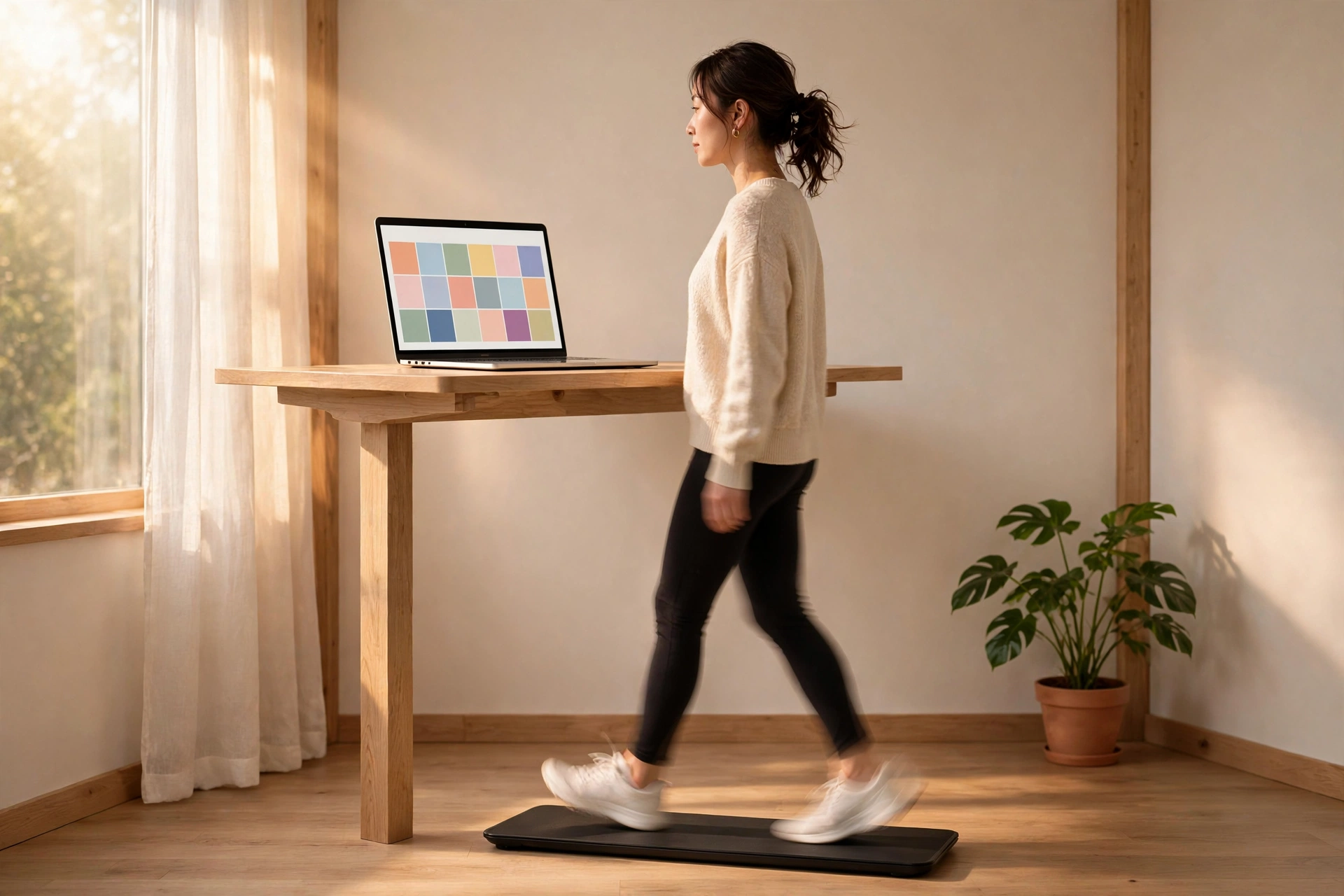
You use a walking pad by placing it under a height adjustable desk, starting the belt at a slow speed, and walking gently while you handle your normal tasks. The trick is keeping your pace slow enough that typing, reading, and talking feel completely natural.
Most people settle into a rhythm within a few days. You might walk during emails and reports in the morning, sit for deep focus work after lunch, and then walk again during a relaxed afternoon call. There is no strict rule, so let the flow of your workday guide you.
How Do You Set Up a Walking Pad for Your Desk?
Setting up your walking pad the right way makes every session more comfortable and keeps your posture healthy. Follow these steps before your first walk.
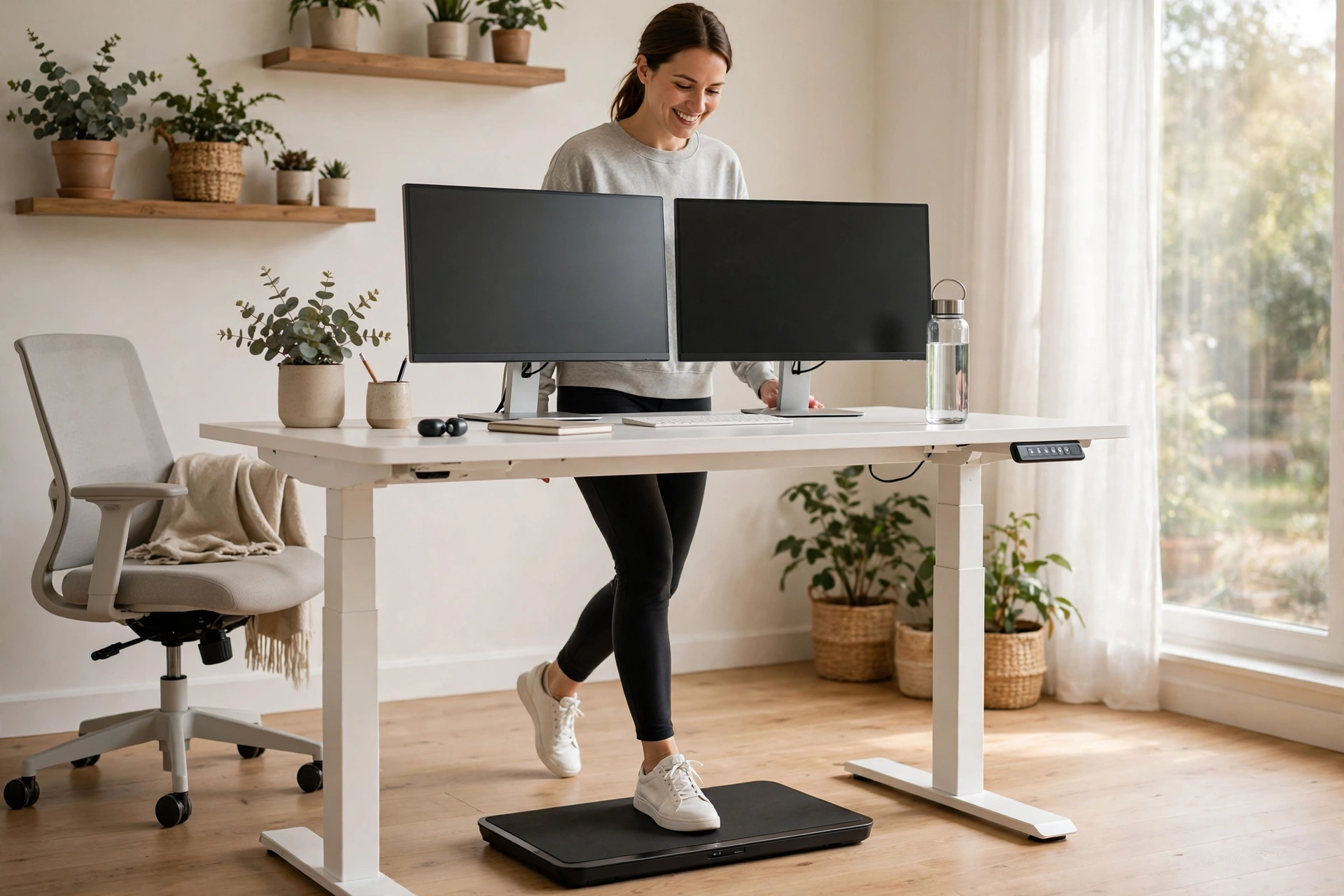
- Place the pad on a flat floor surface under your desk, leaving a little clearance on all sides so the belt has room to move.
- Raise your standing desk until your elbows rest near a 90 degree angle while you stand on the belt.
- Position your monitor at eye level so your neck stays relaxed during longer walks.
- Plug in the pad and test the remote or app controls at the slowest speed before stepping on.
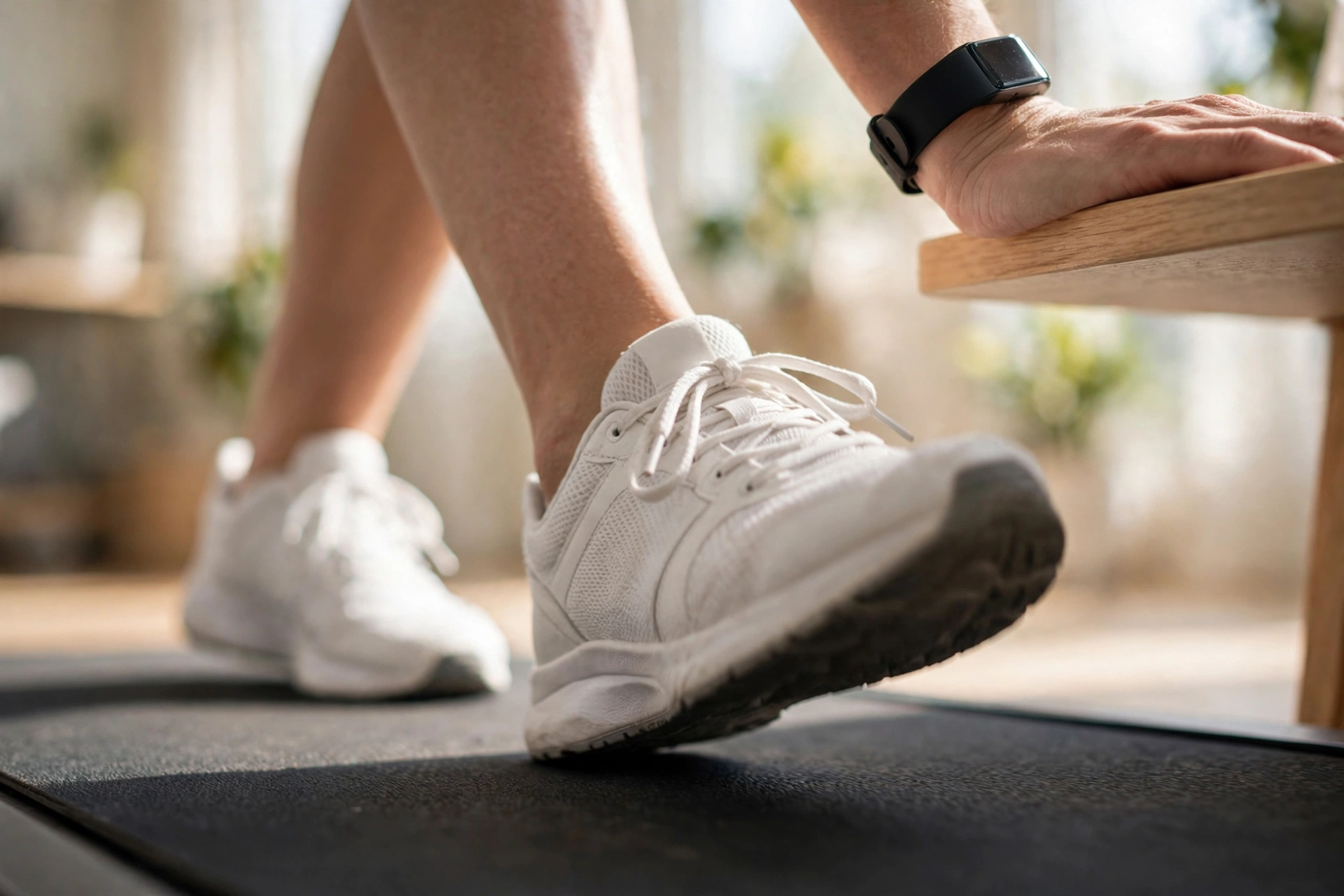
- Wear supportive, flat shoes and keep a water bottle within reach of your desk.
How Fast Should You Walk While You Work?
Most beginners walk comfortably at 1 to 2 mph while typing or reading, which feels like a gentle stroll. This pace lets you think clearly and keeps your hands steady on the keyboard.
You can go a little faster, up to about 2.5 mph, for lighter tasks like phone calls or watching a training video. Save the higher speeds your pad offers, usually up to about 4 mph, for times when you are not typing. If you find yourself bouncing or gripping the desk, slow down.
How Do You Build Up Your Walking Time Safely?
Build up your walking pad time gradually, starting with short sessions and adding a little more each week. Your legs and feet need time to adjust to the new routine, even though the movement feels easy.
- Week one: walk 10 to 15 minutes at a time, two or three times during the day.
- Week two: stretch sessions to 20 to 30 minutes and notice how your typing feels at each speed.
- Week three: aim for 45 to 60 minutes of total walking time spread across the day.
- Week four onward: settle into a rhythm of one to two hours daily, broken into comfortable sessions.
Listen to your body as you progress. If your calves or feet feel tired, take a sitting break or drop back to a shorter session the next day. If your legs feel a little achy while you adjust, this beginner guide to magnesium glycinate explains how this popular supplement may support muscle recovery and relaxation.
What Safety Tips Should Every Beginner Follow?
Follow a few simple safety habits and your walking pad will be a safe and relaxing part of your routine. These tips matter most during your first couple of weeks.
- Attach the safety clip or know where the emergency stop button is before you start walking.
- Step onto the belt only when it is moving at a very slow speed, and step off the same careful way.
- Keep the area around the pad clear of cords, clutter, pets, and loose rugs.
- Look at your screen, not your feet, to keep your posture tall and your neck relaxed.
- Stop and rest right away if you feel dizzy, tired, or sore in your joints.
How Many Steps Can a Walking Pad Add to Your Day?
A walking pad can easily add several thousand steps to your day without a separate workout. An hour of gentle walking at 1 mph covers roughly one mile, which is about 2,000 steps for most people.
Recent research suggests that 7,000 to 10,000 steps per day is a great target for most adults, and every extra thousand steps counts. Two relaxed walking sessions during a workday can move you from a mostly sedentary day into that healthy range.
Daytime movement also supports better rest at night. An evening wind down walk, even a short one, can help you feel calmer before bed, and this sleep maxxing guide shows how to build a full relaxing sleep routine around habits like these.
Frequently Asked Questions
How fast should you walk on a walking pad?
Most people walk at 1 to 2 mph while typing or reading, which feels like a gentle stroll. You can go a little faster, up to about 2.5 mph, for phone calls or watching videos. Most walking pads reach about 4 mph, but that pace is usually too fast for focused desk work.
Can you run on a walking pad?
No, walking pads are designed for walking only, not running. Their slim belts and lower top speeds, usually around 4 mph, are not built for the impact of running. If you want to jog or run indoors, choose a full size treadmill with handrails instead.
Do walking pads help with weight loss?
A walking pad can support weight management by adding gentle activity to your day, but it works best alongside balanced eating and other exercise. Slow walking burns fewer calories per minute than brisk walking or running. Think of it as a tool for fighting long sitting hours rather than a quick weight loss fix.
Are walking pads noisy enough to bother coworkers?
Most modern walking pads run quietly enough for a home office, especially at slow speeds. The hum is usually softer than normal conversation. If you share a space or take frequent calls, test the sound at your usual walking speed before committing to long sessions.
Key Takeaways to Remember
- Slide the pad under a height adjustable desk and start walking at about 1 mph.
- Keep your working pace at 1 to 2 mph so typing stays comfortable.
- Build up slowly from short sessions toward one to two hours of daily walking.
- Follow basic safety habits like clearing the area and knowing your emergency stop.
- Track your steps and enjoy the extra movement as a bonus, not a chore.
Starting a walking pad habit is really about small, steady changes. Give yourself a week or two to find the speed and schedule that feel natural for your workday. Once it clicks, you may wonder how you ever sat through every single meeting.
Remember that gentle movement counts. Every stroll at your desk adds steps, eases stiffness, and lifts your energy. Lace up, press start, and enjoy walking while you work.


