
Table of Contents:
Introduction:
A junk journal is much more than a collection of recycled papers and decorative materials. It offers a creative space where memories, ideas, and personal stories come together naturally. Many beginners discover this hobby while searching for enjoyable ways to express themselves without expensive supplies or advanced artistic skills.
If you have ever wondered what is a junk journal, you are certainly not alone. Thousands of people begin exploring junk journaling every year because it combines creativity, sustainability, and storytelling into one rewarding activity. Unlike traditional notebooks, every junk journal reflects the personality and experiences of its creator.
This guide explains everything beginners need before starting their first project. You will learn about the purpose of junk journals, the materials you can use, and practical techniques for building your own unique creation. Whether you enjoy crafting occasionally or plan to make journaling a regular hobby, this guide will help you begin with confidence.
At Freaky Thread, we enjoy sharing creative ideas that inspire readers to develop new hobbies while making thoughtful use of everyday materials. By the end of this guide, you will understand why junk journaling continues attracting creative people across different age groups and artistic backgrounds.
What Is a Junk Journal?

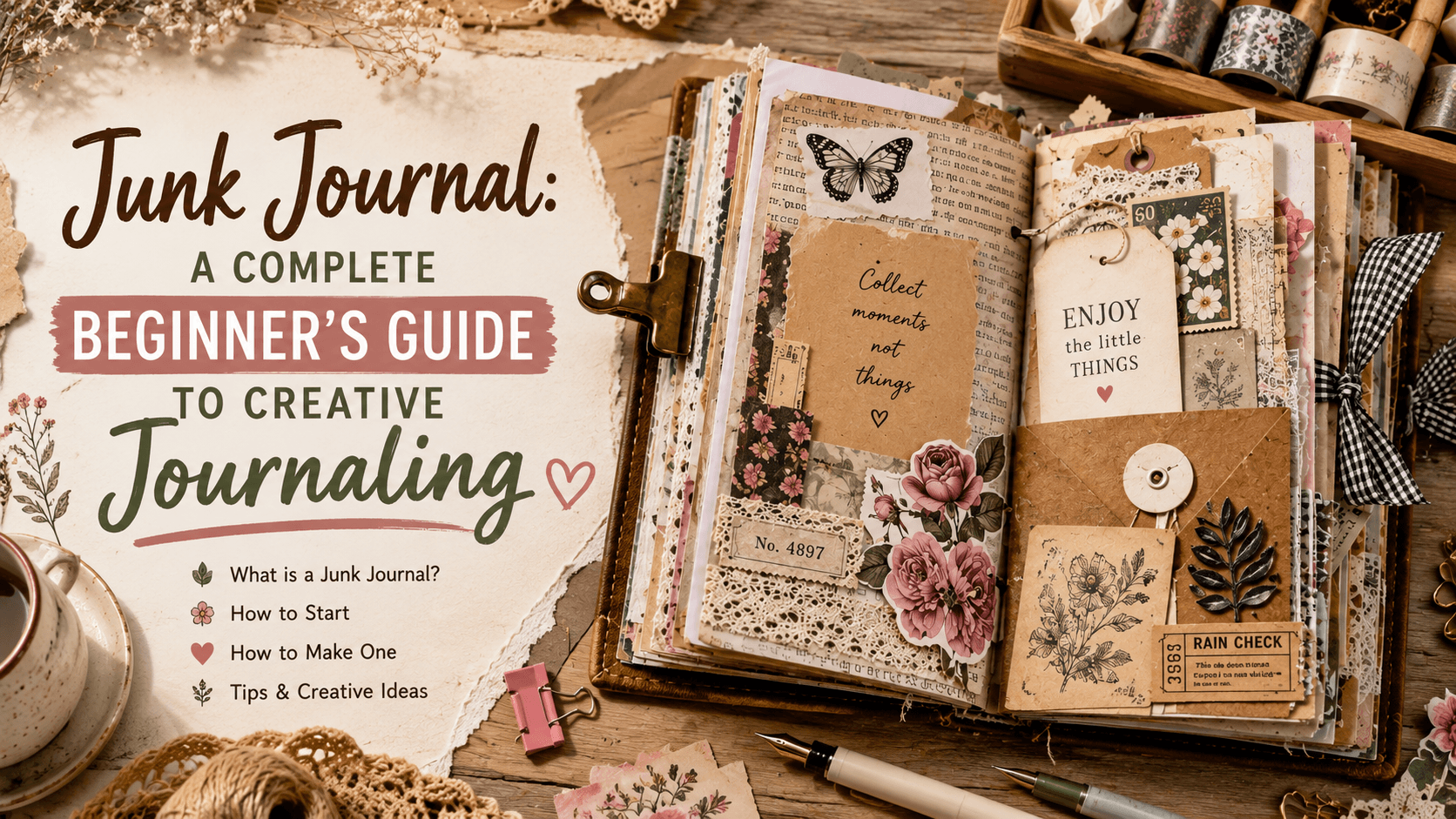
Many beginners ask, what is a junk journal, before collecting their first materials. Simply explained, a junk journal is a handmade book created from recycled, vintage, or everyday items instead of only using brand new paper. The name comes from transforming ordinary objects into something meaningful rather than throwing them away.
A typical junk journal may include book pages, envelopes, greeting cards, maps, magazine clippings, receipts, wrapping paper, postcards, fabric scraps, ribbons, or handwritten notes. These different materials create interesting textures and visual variety throughout every page.
Unlike a traditional diary, a junk journal does not follow strict rules or fixed layouts. Some people write daily reflections, while others focus entirely on artistic decoration. Many creators combine writing, photographs, drawings, pressed flowers, and keepsakes inside one journal to preserve important memories creatively.
Another reason this hobby remains popular involves its flexibility. Every journal becomes completely unique because no two people collect identical materials or arrange them in the same way. This creative freedom allows beginners to experiment without worrying about making mistakes.
Many experienced crafters also appreciate the environmentally friendly aspect of junk journaling. Reusing paper items extends their purpose instead of sending them directly into recycling or waste bins. Creating something beautiful from ordinary materials often feels more rewarding than purchasing expensive craft supplies.
Although the word “junk” appears in its name, the finished journal often becomes a treasured keepsake filled with meaningful memories and personal creativity. The materials may begin as everyday objects, but thoughtful design transforms them into something genuinely valuable.
You May Also Like:
What Are Junk Journals Used For?

Understanding what are junk journals used for helps beginners decide how they want their own journal to look and function. Since there are no fixed rules, every journal can serve a different purpose depending on personal interests and creative goals.
Many people use a junk journal to preserve important memories from everyday life. Ticket stubs, postcards, handwritten notes, and family photographs create lasting records that digital albums often cannot replace. Every page tells a personal story through carefully selected keepsakes and thoughtful decorations.
Creative expression represents another popular reason people enjoy junk journaling. Artists frequently experiment with watercolor, stamps, calligraphy, collage techniques, and layered paper designs inside their journals. The pages become a safe place for testing ideas without worrying about perfection.
Others prefer using a junk journal as a travel companion. Maps, restaurant receipts, transportation tickets, brochures, and small souvenirs help document memorable trips while creating a personalized travel diary. Looking through these pages later often brings back details that photographs alone cannot capture.
Some individuals also create gratitude journals, reading journals, recipe collections, seasonal planners, or goal trackers using the same creative approach. This flexibility makes junk journaling suitable for almost every lifestyle and personal interest.
Many people also find junk journaling relaxing after busy workdays. Focusing on arranging papers, selecting colors, and adding meaningful details encourages mindfulness while reducing everyday stress. The creative process becomes just as enjoyable as the finished journal itself.
Whether your goal involves preserving memories, exploring artistic techniques, or simply enjoying a peaceful hobby, a junk journal provides endless opportunities for creativity. Every completed page reflects your experiences while encouraging new ideas for future projects.
You may also like:
Essential Supplies Every Beginner Needs:

Starting a junk journal does not require a large budget or a room filled with craft supplies. Most beginners already own many useful materials that can become part of their first creative project. Looking around your home often reveals interesting items waiting for a second purpose.
Paper forms the foundation of every junk journal. Old book pages, notebook sheets, scrapbook paper, newspapers, magazines, and printable designs all work beautifully together. Mixing different paper types creates visual interest while giving each page its own personality.
Decorative materials help bring every spread to life with colour and texture. Washi tape, stickers, lace, ribbon, stamps, fabric scraps, pressed flowers, and vintage labels remain popular choices among experienced journal creators. However, simple decorations can look just as beautiful when arranged thoughtfully.
Basic crafting tools also make the process much easier. Scissors, a paper trimmer, glue sticks, liquid adhesive, double sided tape, and a hole punch cover most beginner projects. Many people also keep coloured pens, pencils, and markers nearby for writing and illustration.
Storage deserves some attention as your collection grows over time. Small boxes, envelopes, folders, or divided containers help organise papers by colour, theme, or size. Staying organised saves time whenever inspiration appears for a new journal page.
Remember that creativity matters far more than expensive materials. Beautiful junk journals often begin with recycled papers and simple decorations collected from everyday life. Your imagination will always contribute more value than the price of your supplies.
You may also like:
How to Start a Junk Journal:

Learning how to start a junk journal becomes much easier when you focus on simple steps instead of perfection. Many beginners delay their first project because they believe every page must look professionally designed. The truth remains much simpler because creativity grows through regular practice.
Begin by choosing a theme that genuinely interests you. Some people create travel journals, while others prefer seasonal memories, favourite books, family photographs, or personal reflections. Having a clear theme helps guide your material choices without limiting creativity.
Next, gather papers and decorative elements that match your chosen subject. Look through magazines, envelopes, postcards, wrapping paper, tickets, and handwritten notes before buying anything new. Everyday items often become the most meaningful additions to your journal.
Select a journal size that feels comfortable for your projects. Smaller journals travel easily, while larger formats provide extra space for layered designs and longer writing. There is no universally perfect size because every creator has different preferences.
Avoid planning every page before you begin. Leave room for unexpected ideas, future memories, and spontaneous inspiration. Many experienced creators believe the most memorable pages develop naturally instead of following detailed plans.
Finally, enjoy the process instead of comparing your work with others. Every completed page teaches new techniques while helping you discover your own creative style. Confidence develops gradually through consistent practice rather than immediate perfection.
You may also like:
How to Make a Junk Journal Step by Step:

Understanding how to make a junk journal becomes less intimidating when you divide the project into manageable stages. Building your first journal should feel enjoyable instead of overwhelming, especially when you work patiently through each step.
Start by preparing your pages using different paper types and textures. Combine plain paper with recycled materials to create interesting contrasts throughout the journal. Fold larger sheets carefully until they match your preferred journal size.
Arrange your pages into small groups called signatures before binding them together. Many beginners use simple stitching methods, binder rings, or removable binding systems because these techniques require minimal equipment. Choose the option that feels most comfortable for your skill level.
After assembling the journal, begin adding interactive elements that encourage exploration. Small pockets, envelopes, fold out pages, tags, and hidden notes create engaging experiences for anyone turning each page. These details also provide practical storage for photographs and keepsakes.
Decorate gradually instead of filling every page immediately. Layer papers, add meaningful embellishments, and include handwritten thoughts whenever inspiration appears. Empty spaces remain valuable because they allow room for future memories and creative ideas.
Once your journal begins taking shape, personalise every section with items reflecting your experiences and interests. Family photographs, favourite quotes, travel souvenirs, or meaningful letters transform an ordinary notebook into a lasting personal keepsake.
Many creators discover that making one junk journal naturally inspires another project. Every completed journal teaches valuable techniques while encouraging greater creativity during future designs. The journey continues long after finishing your very first handmade creation.
You may also like:
Common Beginner Mistakes to Avoid:

Every beginner makes small mistakes while learning a new creative hobby. Fortunately, these experiences often become valuable lessons that improve future projects. Understanding common challenges helps you enjoy the process with greater confidence.
One frequent mistake involves buying too many supplies before creating the first journal. Beautiful craft collections may seem exciting, but they are rarely necessary for beginners. Start with materials already available at home before investing in specialised products.
Another common problem comes from trying to make every page look perfect. Junk journaling celebrates creativity, experimentation, and personal expression instead of flawless designs. Small imperfections often add charm while making every journal feel authentic.
Many beginners also compare their work with experienced artists on social media. While inspiration is helpful, comparison can reduce confidence and limit creativity. Focus on developing your own style instead of copying every detail from someone else’s journal.
Using too much decoration without leaving writing space creates another challenge. Decorative elements should enhance your pages while still allowing room for memories, reflections, and meaningful notes. A balanced layout usually feels more inviting than an overcrowded design.
Finally, remember that every completed page teaches something new. Progress matters much more than perfection because creativity develops through consistent practice and personal exploration.
You may also like:
Conclusion:
A junk journal offers much more than an enjoyable craft project. It provides a creative space where memories, imagination, and everyday moments come together in a meaningful way. Whether you prefer writing, collage, painting, or collecting keepsakes, this hobby welcomes every creative approach.
Throughout this guide, you have learned what is a junk journal, what are junk journals used for, how to start a junk journal, and how to make a junk journal using simple techniques. These fundamentals provide a strong foundation while leaving plenty of room for personal creativity and future experimentation.
The best time to begin remains today. Gather a few recycled papers, choose meaningful keepsakes, and allow your creativity to guide each page naturally. Every journal becomes a reflection of your experiences rather than a measure of artistic perfection.
At Freaky Thread, we believe creativity grows through curiosity, practice, and personal expression. Your first junk journal does not need to be perfect because every page helps you develop new skills and preserve meaningful memories. Start creating today, enjoy the journey, and let every page tell a story that is uniquely your own.


