

Table of Contents:
- Introduction
- What Non Layered Hair Means
- Volume and Movement Differences
- Face Shape Considerations
- Hair Thickness and Texture
- Styling Effort and Maintenance
- Style Versatility and Hair Health
- Celebrity Influence and Trends
- Cost, Salon Visits, and Personal Expression
- Seasonal, Color, and Product Considerations
- Conclusion
Introduction:
Layered haircuts vs non layered hair is a question many people ask when deciding on a new hairstyle. Choosing between these two options depends on hair texture, face shape, lifestyle, and personal style goals. Some people prefer volume and movement, while others want a sleek, even finish. Finding the right haircut can transform your appearance and boost your confidence. This guide explores the core differences, benefits, and considerations for layered hair and non layered hair. Understanding these details helps you make an informed decision that suits your individual hair needs and styling preferences.
Layered haircuts involve cutting the hair at varying lengths to create depth, texture, and movement. Stylists remove weight from certain sections to make the hair appear fuller and more dynamic. This technique works especially well for people with thick hair who want to reduce bulk and add shape. Layered hair also suits wavy and curly textures, improving the natural pattern and reducing frizz. By strategically removing excess weight, layered hair can create a more balanced silhouette that frames the face and enhances its features naturally.
What Non Layered Hair Means:
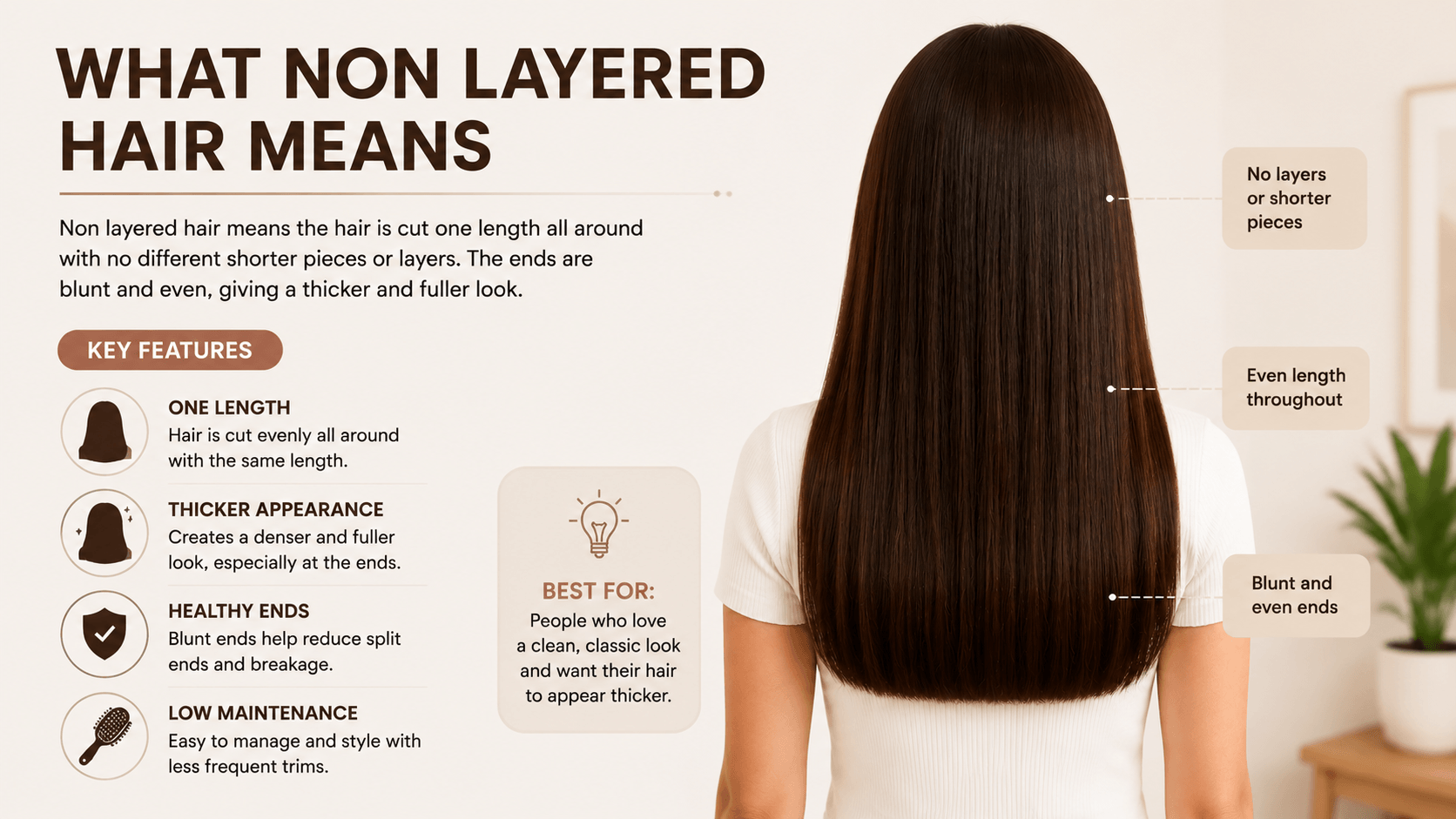
Non layered hair means the hair is cut at a single length with minimal texturizing. This results in a smooth, uniform appearance from roots to tips. Many people choose non layered hair because it looks sleek and is easy to maintain with simple brushing and minimal styling. Straight or fine hair often benefits from this approach because it can appear thicker when the ends are all the same length. Non layered hair creates a classic, timeless style that feels polished and elegant without requiring complex upkeep.
The choice between layered haircuts and non layered hair depends heavily on personal preference. Some people enjoy dynamic movement and volume, while others prefer uniform consistency. Considering how hair behaves naturally and interacts with your face shape can simplify the decision-making process. It is important to evaluate how much styling time and effort you are willing to invest before committing to either option.
Volume and Movement Differences:
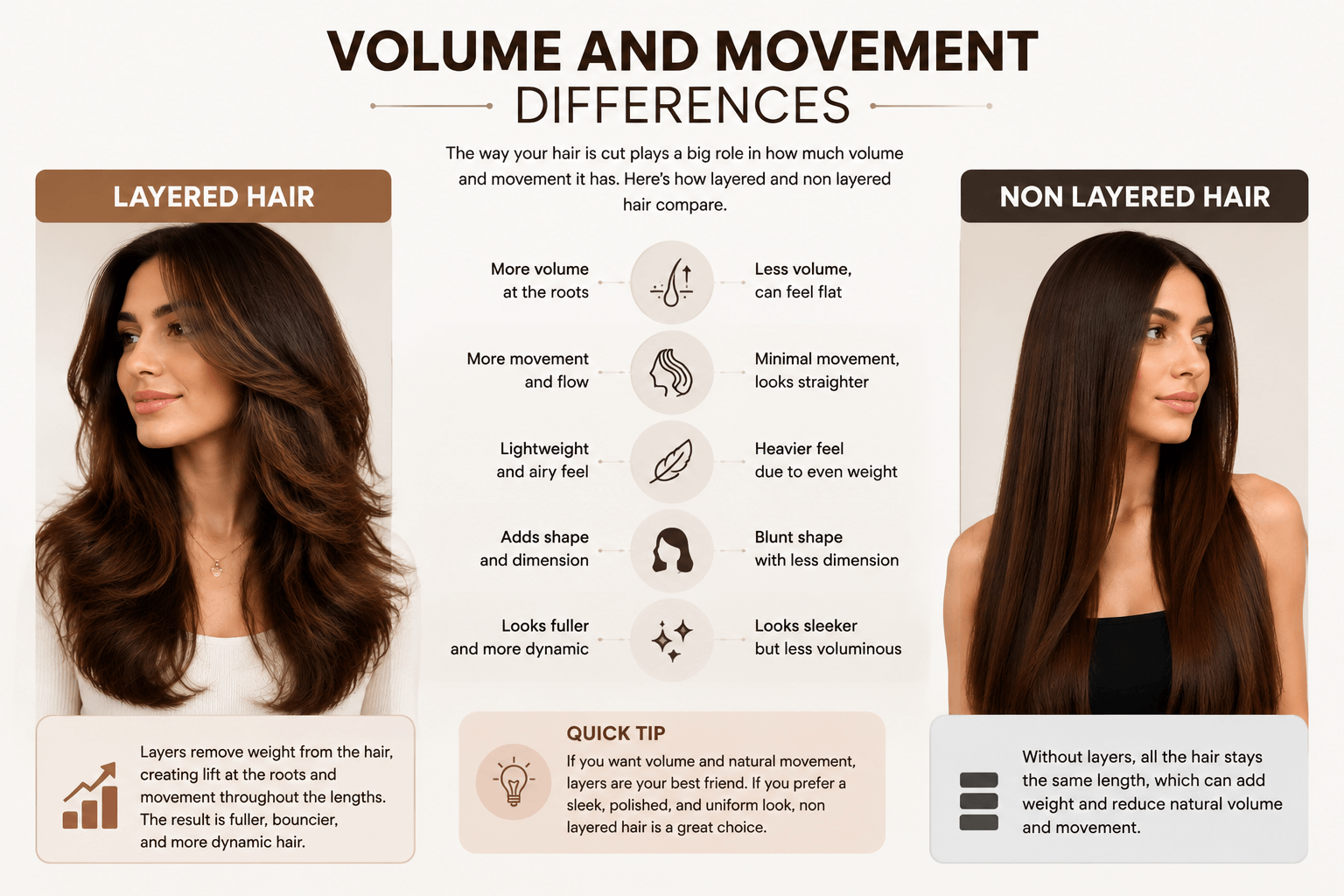
One of the main differences between layered haircuts and non layered hair lies in movement and volume control. Layered hair often appears more airy and lively because of the graduated lengths that allow strands to move independently. This effect can help fine hair look more voluminous without adding artificial bulk. Meanwhile, non layered hair holds shape uniformly, which can feel heavier but smooth in appearance. Choosing between these options depends on whether you want dynamic motion or a more consistent texture throughout your hair length.
The overall visual impact of each style differs based on hair thickness and texture. Layered hair can create softness around facial features, while non layered hair emphasizes sleekness and shine. The choice also affects styling versatility, allowing for more curls or waves in layered hair and more structured looks in non layered hair.
Face Shape Considerations:
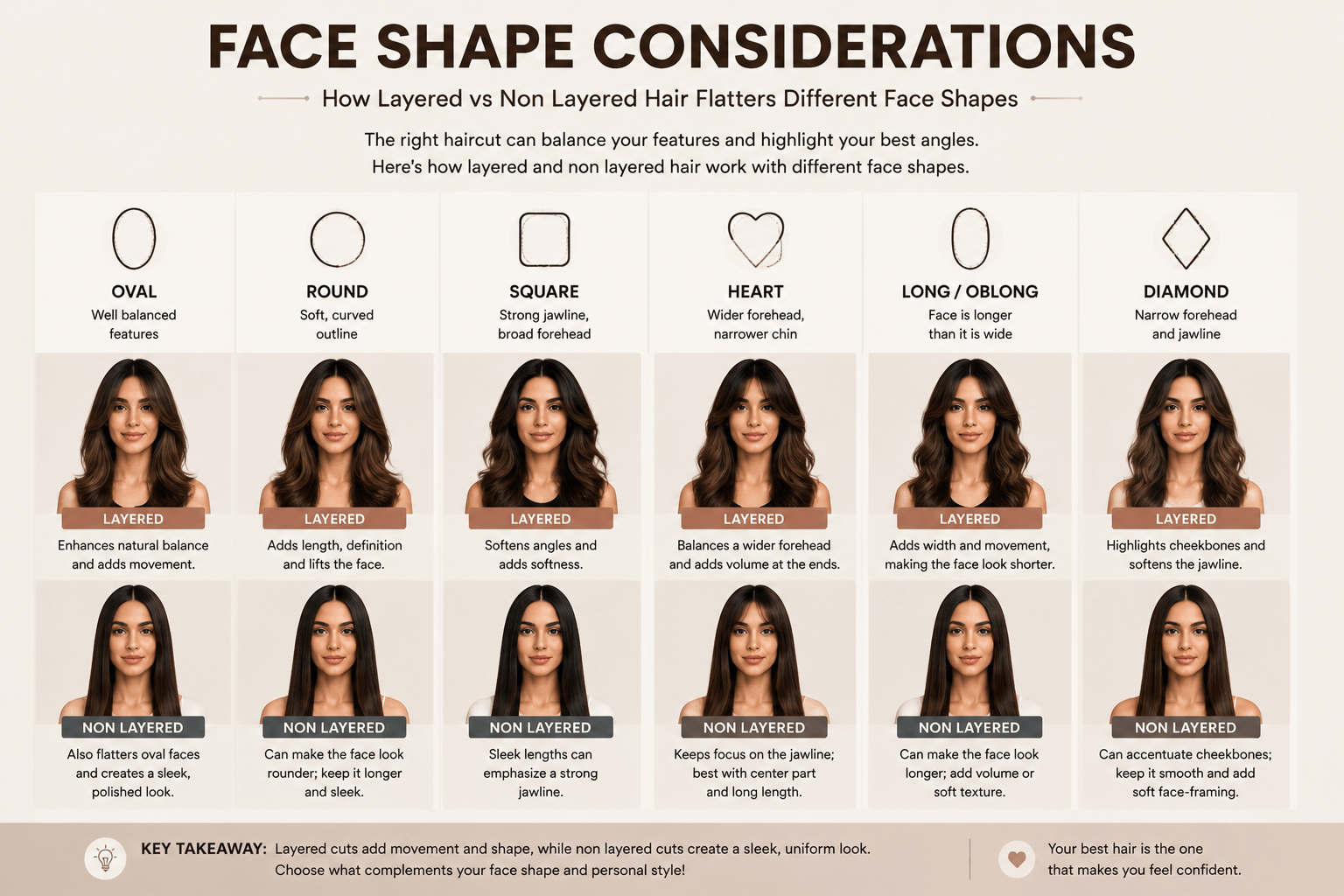
Face shape plays a significant role in how hairstyles look and feel. For example, layered hair with soft face framing enhances round and square face shapes by drawing attention to cheekbones and jawlines. Wispy layers around the face can further soften angles and create balance. On the other hand, non layered hair works well with oval and long faces because it keeps the eye flowing smoothly down the hair length. Understanding how your face shape interacts with hairstyle choices ensures a more flattering outcome.
Facial symmetry and features also influence styling decisions. Layered hair can add dimension that complements facial curves, while non layered hair keeps features sharp and uniform. Consulting a stylist can help determine which cut highlights your best attributes effectively.
Hair Thickness and Texture:
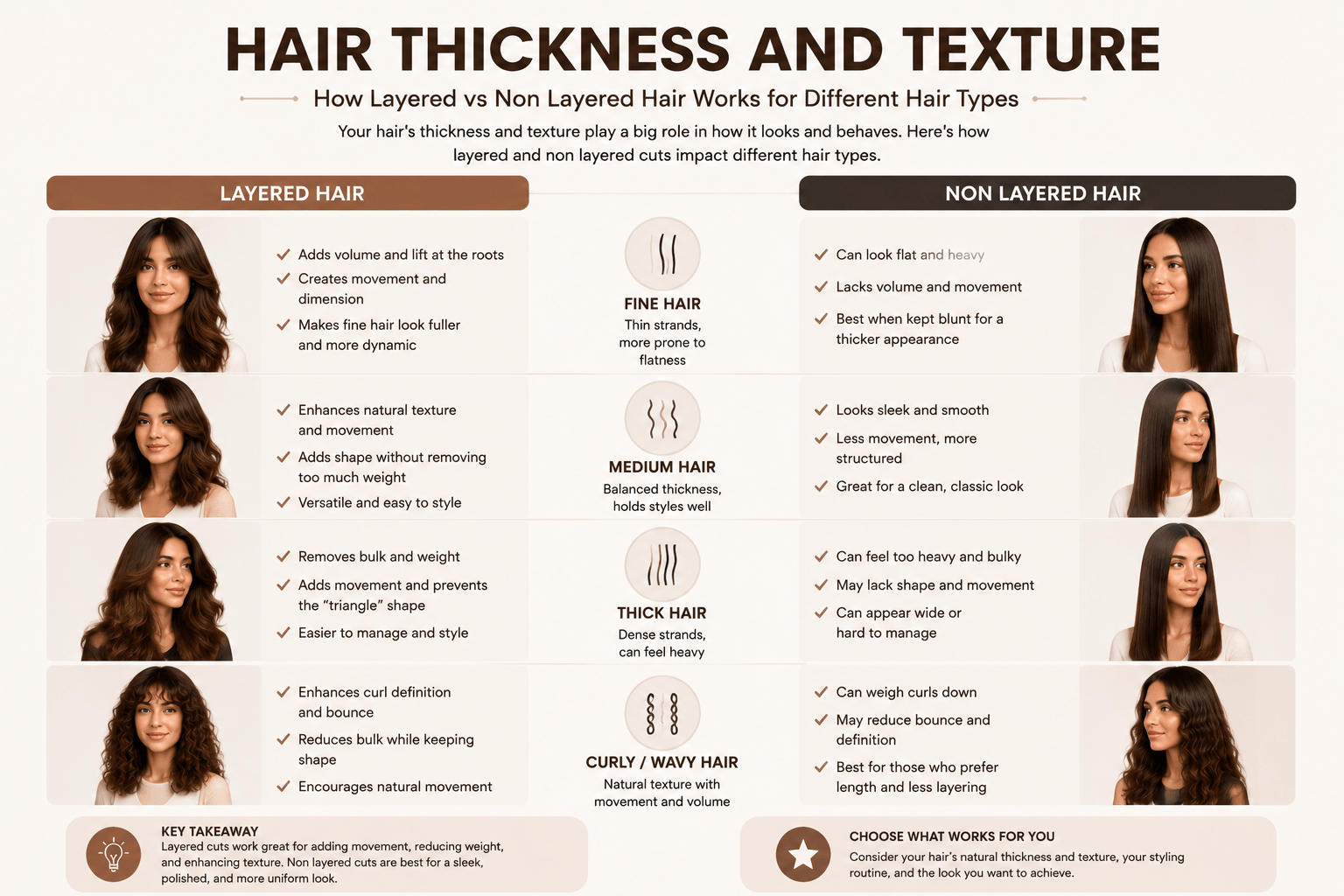
The thickness and texture of your hair also influence whether layered haircuts or non layered hair suits you best. Thick hair benefits from layering because it reduces weight and prevents hair from looking too bulky or heavy at the ends. Curly hair can also behave more predictably with layers, encouraging natural bounce and preventing odd bulges. In contrast, fine or thin hair can appear fuller with a non layered cut, as all strands hang together uniformly. This visual density creates the perception of thicker hair without the need for extensions or styling products.
Texture management is also important for long-term maintenance. Layered cuts help manage frizz in coarse or wavy hair, while non layered cuts maintain sleek lines for straight or delicate hair. Choosing the right style maximizes hair’s natural qualities and reduces styling frustration.
Styling Effort and Maintenance:
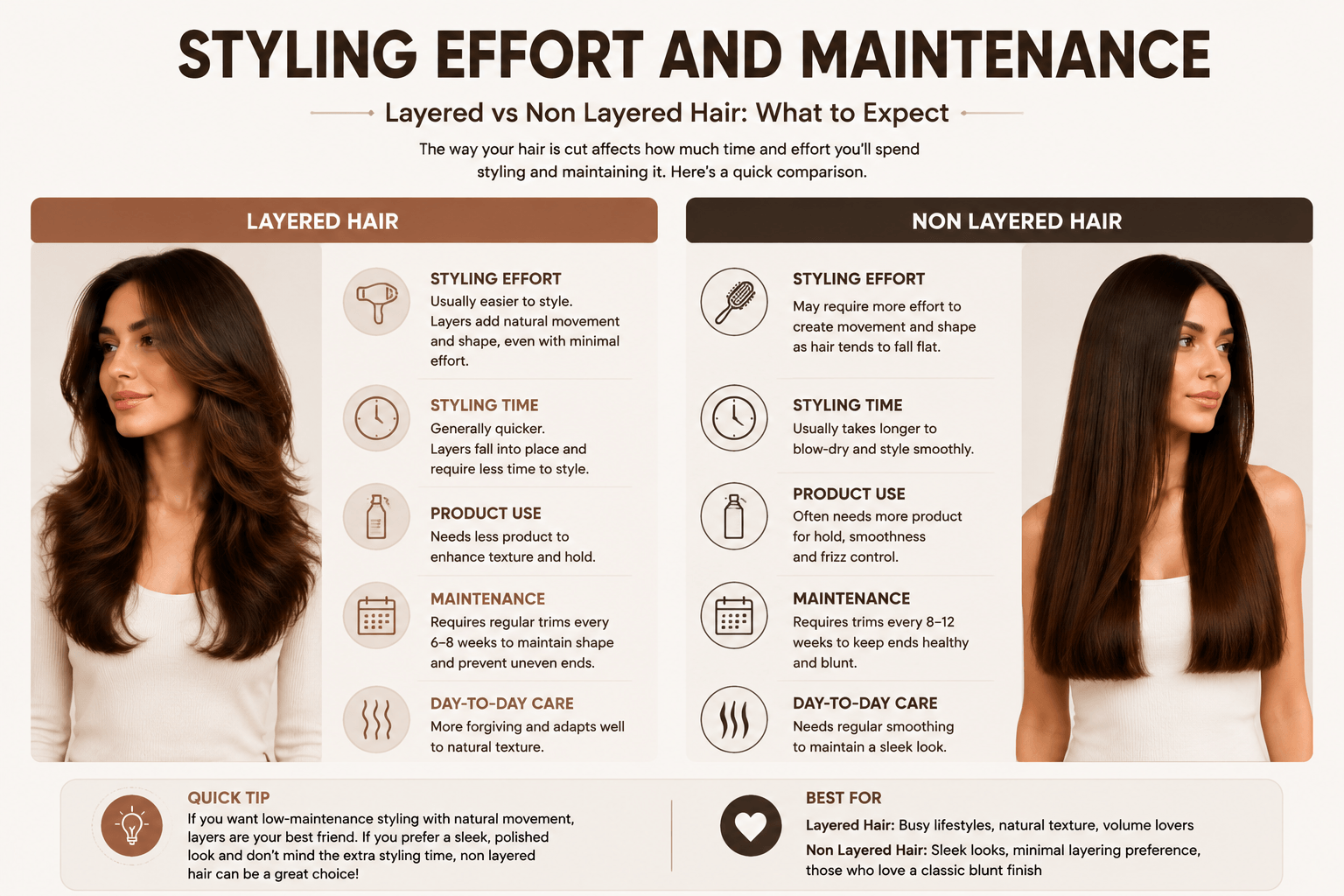
Layered hair often requires more attention, including blow drying, product application, or curling to accentuate texture. People who enjoy experimenting with hairstyles may appreciate this variety. Conversely, non layered hair can be easier to style for everyday routines because its even weight makes it behave predictably. A simple blowout or natural air dry often results in a sleek finish that requires minimal product or fuss.
Maintenance and growth stages differ significantly between the two haircut styles. Layered haircuts require more frequent trims to maintain shape, especially if the layers are dramatic or face framing. Non layered hair trims are mostly to remove split ends and retain overall length. Understanding these patterns helps plan salon visits and keep hair looking its best.
Style Versatility and Hair Health:
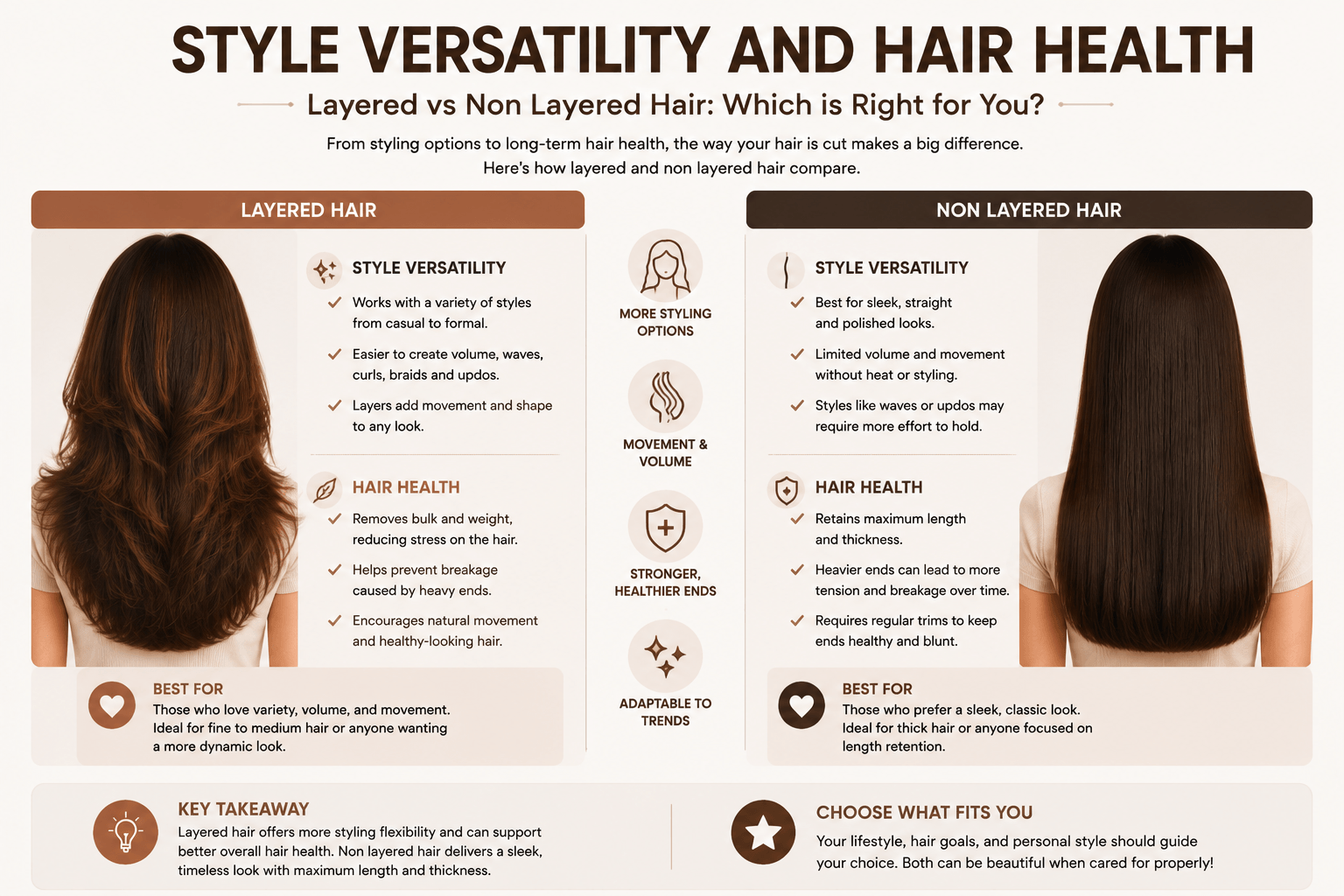
Layered hair allows for a wide range of looks such as messy waves, tousled beach hair, or voluminous curls that feel effortless. Those with layers can also experiment with braids and updos that gain extra lift from the graduated lengths. Non layered hair tends to look most polished when straight or gently waved. It shines in sleek ponytails and minimalistic buns because of its uniform fall. Your preferred daily hairstyles help determine which option aligns best with your lifestyle.
Hair health should guide your choice between layered and non layered hair. Regular trimming and shaping of layered hair can help prevent split ends and promote healthier growth. Non layered hair can conceal split ends longer but may appear unhealthy at the tips if trimming is infrequent. A stylist’s advice ensures the balance between style goals and healthy hair maintenance.
Celebrity Influence and Trends:
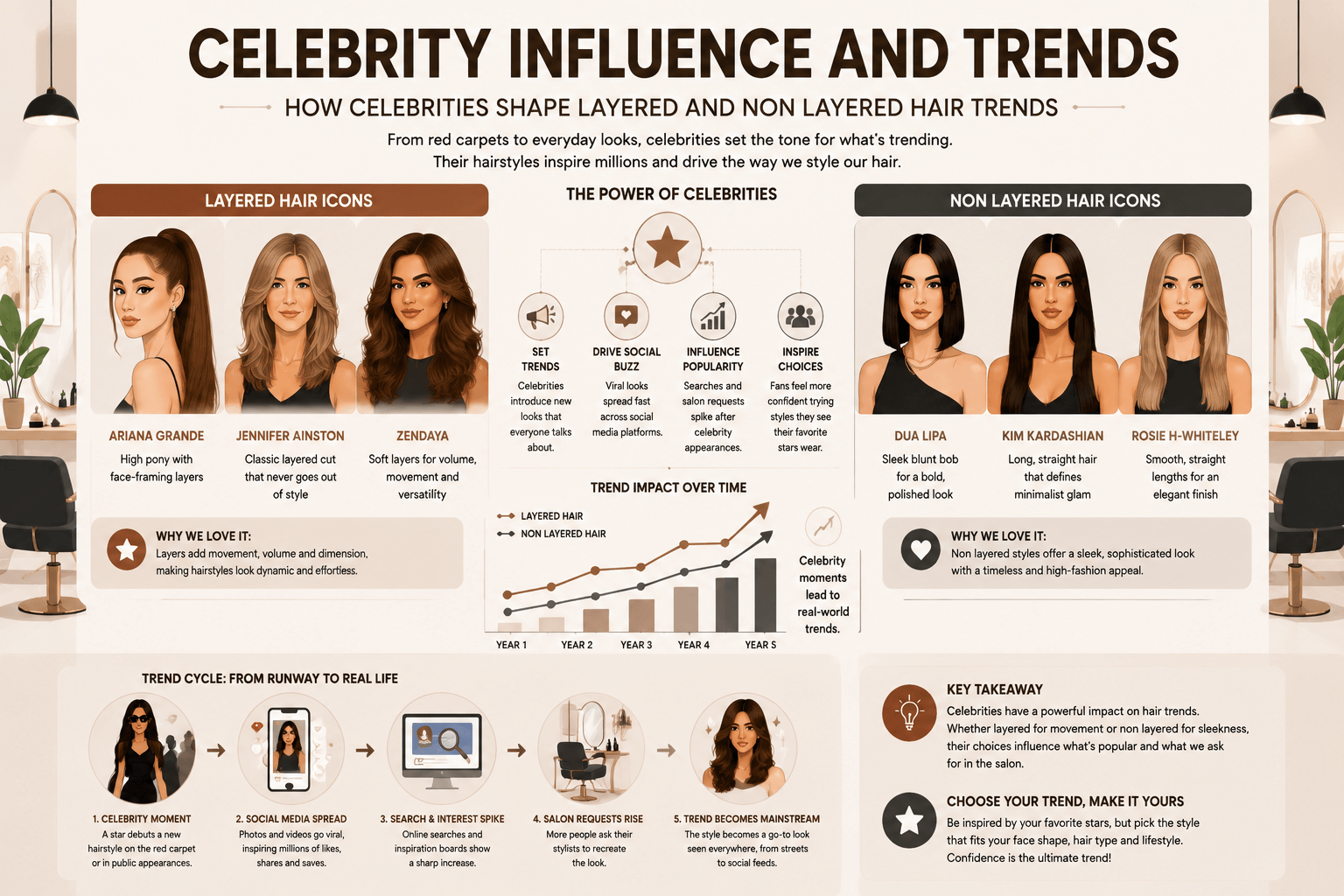
Celebrity and trend influence often shapes how people view layered haircuts vs non layered hair. Many stylists point to icons such as Farrah Fawcett in the 1970s and Jennifer Aniston in the 1990s as pioneers of layered looks that became classics. Sleek, non layered styles continue to be popular among people seeking elegance and simplicity. Trends shift over time, but the principles of layering and non layering remain rooted in hair texture and face shape. Understanding this context helps you choose confidently rather than following trends blindly.
Both styles are flexible enough to adapt to current trends. Layered hair allows playful experimentation, while non layered hair offers timeless elegance. Combining inspiration from celebrities with your hair type helps create a personalized, flattering look.
Cost, Salon Visits, and Personal Expression:
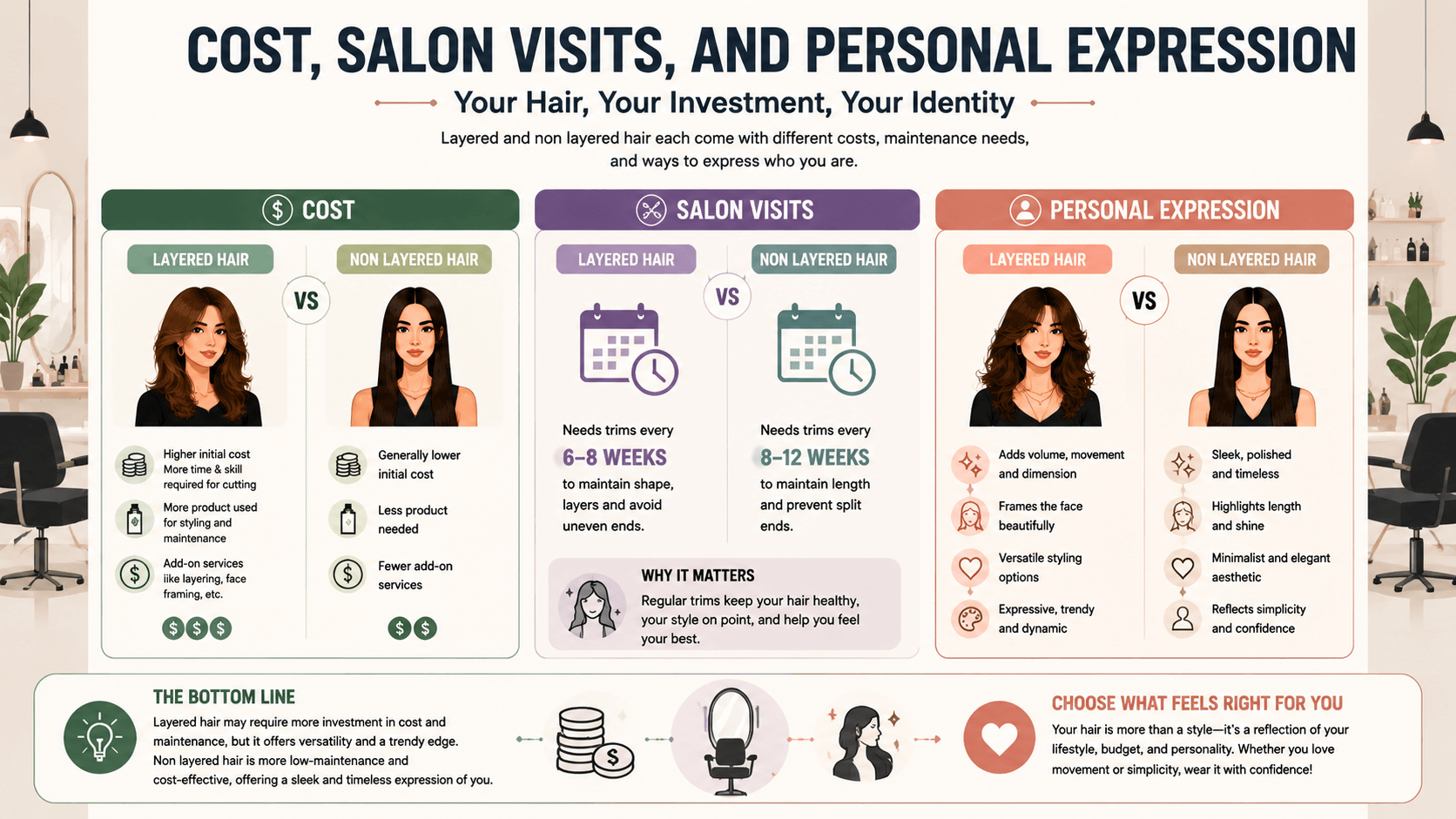
Layered cuts may cost more due to additional time and precision required by stylists. Follow-up trims to maintain the intended silhouette also add long-term expense. Non layered cuts are simpler and quicker to execute, reducing immediate cost. However, letting non layered hair grow without trims may require corrective treatments later. Budget planning should consider both initial cost and future maintenance.
Your haircut is also part of personal identity and self expression. Layered cuts reflect dynamic, bold personalities while non layered hair communicates simplicity and elegance. Choosing a hairstyle that matches your lifestyle ensures confidence and satisfaction with your look. Freaky Thread recommends evaluating your style, lifestyle, and hair needs before deciding on a cut.
Seasonal, Color, and Product Considerations:
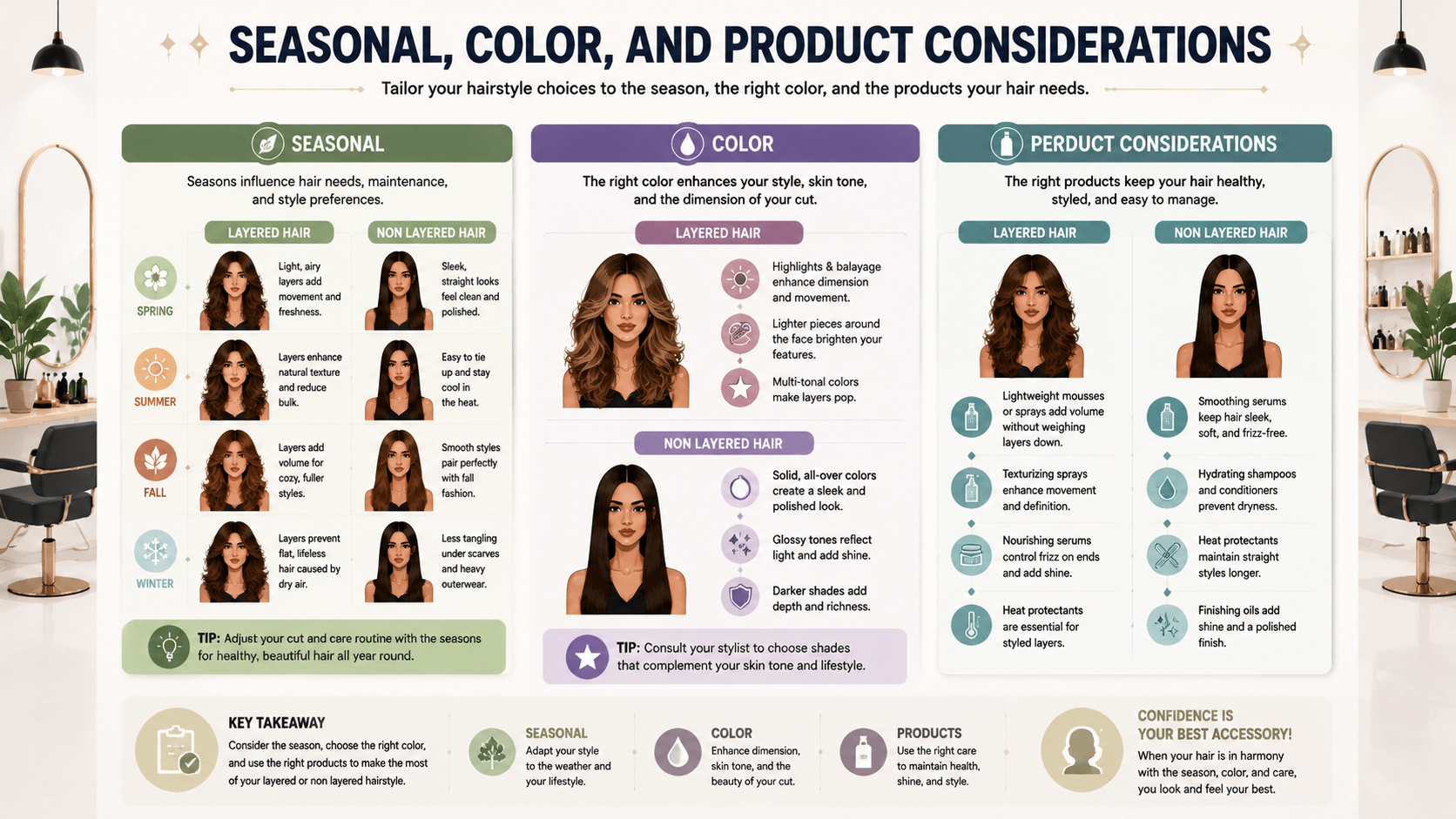
Layered hair can feel lighter and more breathable in hot weather by removing bulk and reducing frizz. Non layered hair feels heavier but smoother, which some prefer during cooler months. Hair color interacts differently with each style as well. Layers enhance multidimensional color techniques like balayage and highlights, while non layered hair displays color uniformly. Product use also varies: layers require volumizers and texturizers, while non layered hair looks best with smoothing serums. Understanding these factors helps maintain style throughout the year.
Conclusion:
Choosing between layered haircuts and non layered hair ultimately comes down to personal needs, lifestyle, and aesthetic goals. Layered cuts provide dynamic movement, customizable shapes, and enhanced texture. Non layered hair offers simplicity, elegance, and timeless polish. Considering hair type, face shape, styling time, and maintenance ensures a decision that feels natural and flattering. By understanding layered haircuts vs non layered hair, you can select a style that enhances confidence and personal expression.
At Freaky Thread, our goal is to help readers make informed hairstyle choices that reflect their personality and lifestyle. Both layered and non layered haircuts have unique advantages, and knowing the details ensures a style you love for years to come.


