

Table of Content:
Introduction:
Crying is a natural emotional response, yet many people notice an uncomfortable burning sensation during tears. This feeling can be confusing, especially when tears are expected to soothe rather than irritate your eyes. If you often think, “my eyes burn when I cry,” you are not alone, and there are clear explanations behind this reaction. Understanding why burning eyes after crying happens requires looking beyond emotions and focusing on eye health and underlying conditions.
When tears come into contact with sensitive or irritated eye surfaces, they can trigger a stinging or burning sensation. This reaction may feel mild for some people, while others experience intense discomfort that makes crying unpleasant. The key point is that crying itself is rarely the direct cause, and instead it reveals an existing issue that affects the eye’s natural balance.
Why Do My Eyes Burn When I Cry?
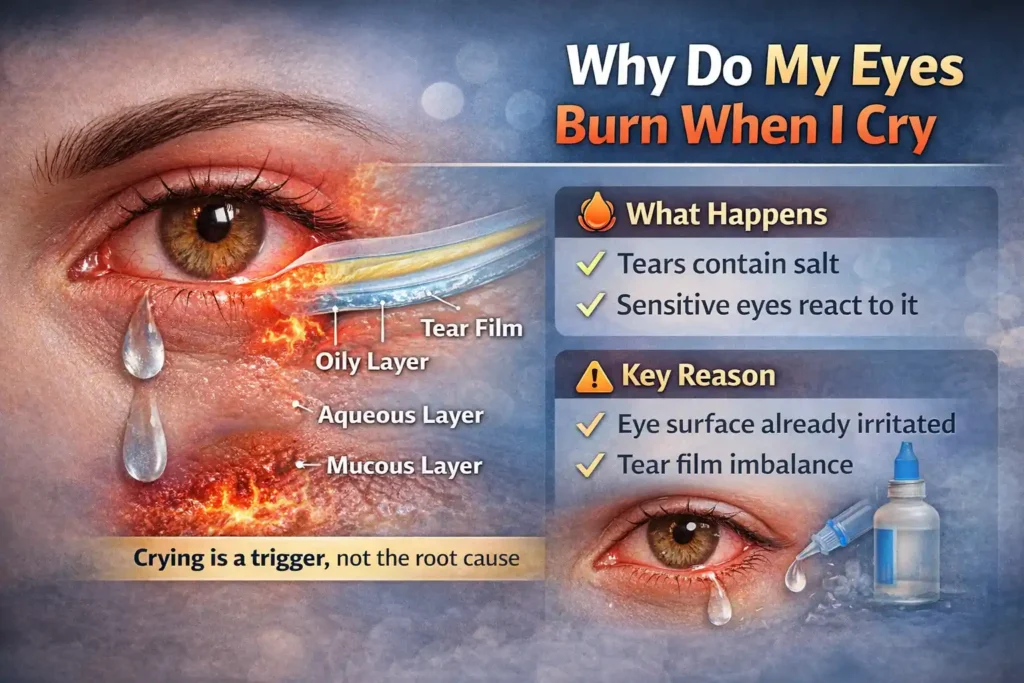
The most important thing to understand is that tears contain salt and enzymes, which can irritate already sensitive eyes. When your eyes are healthy, tears protect and lubricate the surface without causing discomfort. However, when the eye surface is compromised, even normal tears can feel harsh or acidic. This is why some people describe the sensation as “why do my tears burn like acid,” even though the chemistry of tears remains relatively stable.
Burning eyes when crying often indicate that the tear film is not functioning properly. The tear film is a thin layer that keeps the eye hydrated and protected from external irritants. When this layer becomes unstable or disrupted, the eyes become more vulnerable to irritation. As a result, even emotional tears can cause stinging instead of relief.
Common Causes of Burning Eyes After Crying:
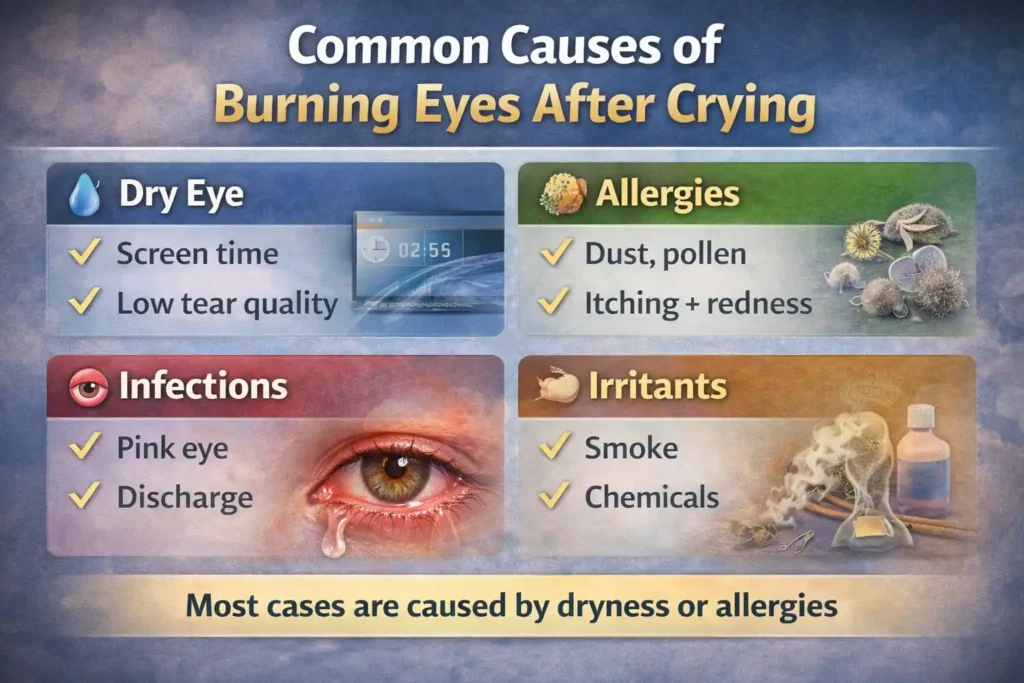
Several underlying conditions can explain why your eyes burn when you cry. Each cause affects the eye differently, but all of them increase sensitivity to tears and environmental exposure.
Dry Eye Syndrome:
One of the most common causes is Dry eye syndrome, which occurs when your eyes do not produce enough quality tears. In this condition, the tear film becomes unstable, leaving the eye surface exposed and irritated. When you cry, the sudden flow of tears mixes with this imbalance and creates a burning sensation. People who spend long hours on screens or in air-conditioned environments are especially prone to this issue.
Allergic Reactions:
Another frequent cause is Allergic conjunctivitis, which results from exposure to allergens like dust, pollen, or pet dander. Allergies cause inflammation in the eyes, leading to itching, redness, and increased sensitivity. When tears flow during crying, they interact with inflamed tissues, creating a noticeable burning or stinging effect.
Eye Infections:
Infections such as Conjunctivitis can also make tears feel irritating. Viral or bacterial infections cause redness, discharge, and discomfort, making the eyes more reactive to any additional moisture. Crying during an infection often worsens the burning feeling because the eye surface is already inflamed.
Environmental Irritants:
Exposure to smoke, pollution, or strong chemicals can damage the eye’s natural protective layer. These irritants can linger on the eye surface, and when tears are produced, they spread these particles across the eye. This process increases irritation and explains why burning eyes after crying is more common in polluted or smoky environments.
Why Do My Tears Burn Like Acid?
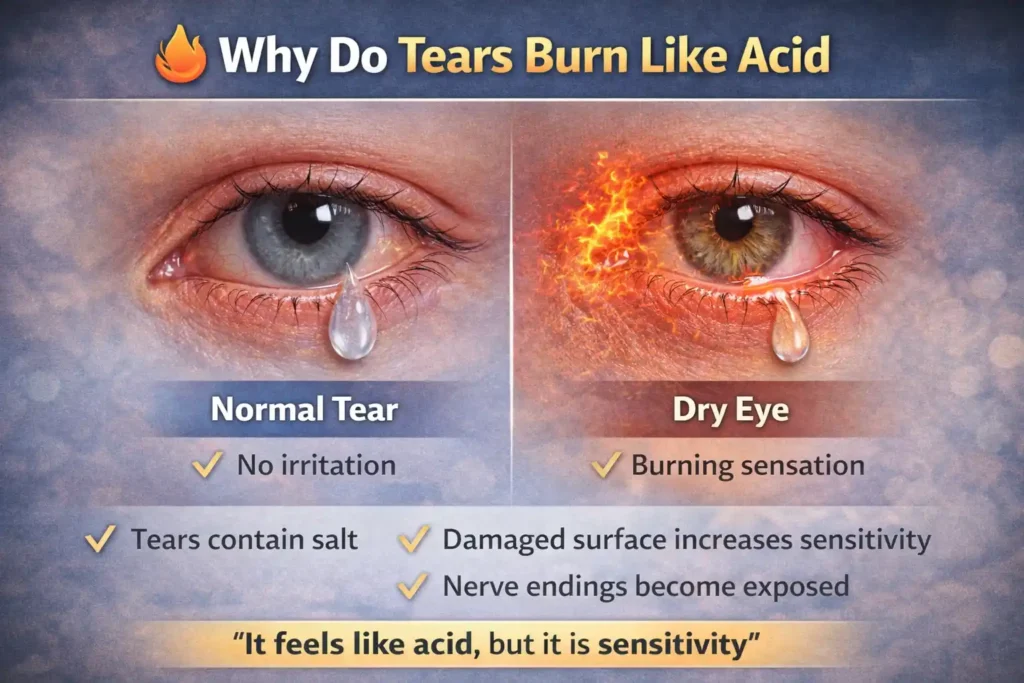
The sensation of tears burning like acid is more about sensitivity than actual chemical changes. Tears contain salt, which can sting when the eye surface is dry or damaged. When the protective tear film is disrupted, nerve endings in the eye become more exposed and reactive. This heightened sensitivity makes even normal tears feel harsh or uncomfortable.
Another factor is the composition of emotional tears, which can differ slightly from reflex tears produced by irritation. Emotional tears may contain stress-related substances that can affect how the eyes respond. While this difference is not harmful, it can contribute to the perception of increased burning during emotional crying episodes.
Burning Eyes When Crying and Lifestyle Factors:
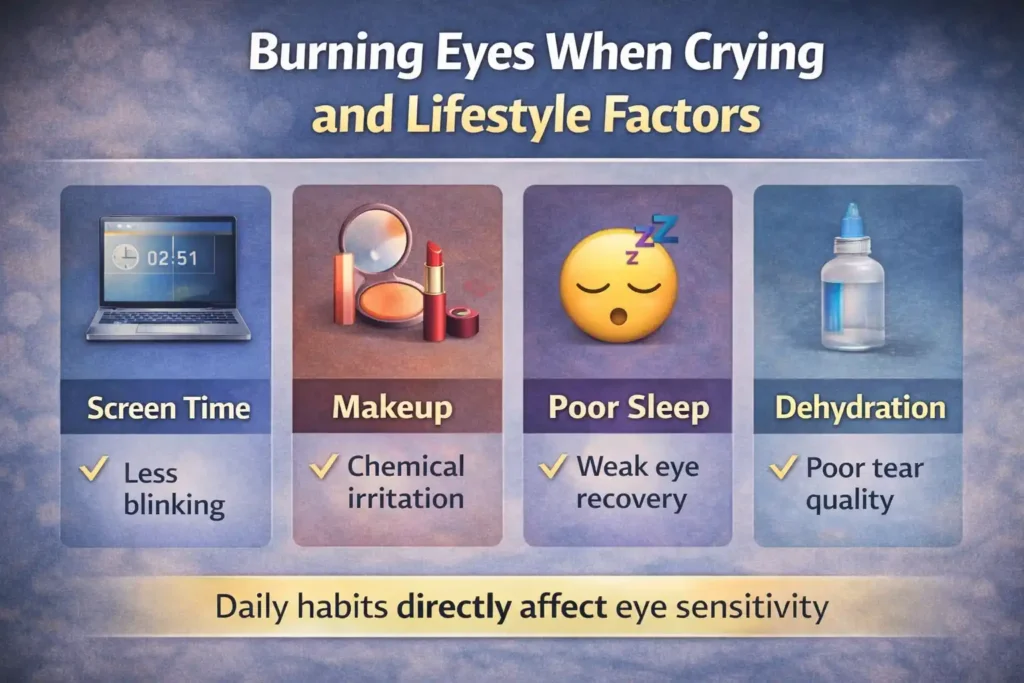
Daily habits play a major role in how your eyes respond to tears. Long screen time reduces blinking frequency, which leads to dryness and irritation over time. When you finally cry, your eyes are already strained, making the burning sensation more noticeable. Similarly, poor hydration can affect tear quality and make the eyes more sensitive.
Using makeup or skincare products near the eyes can also contribute to irritation. Some products contain chemicals that remain on the skin and enter the eyes during crying. This exposure can increase discomfort and create a stinging sensation that feels stronger than usual.
Even sleep patterns can influence eye health, as lack of rest reduces the eye’s ability to repair and maintain its protective layers. When combined with crying, this weakened condition can lead to more intense burning sensations.
Quick Relief Tips for Burning Eyes After Crying:
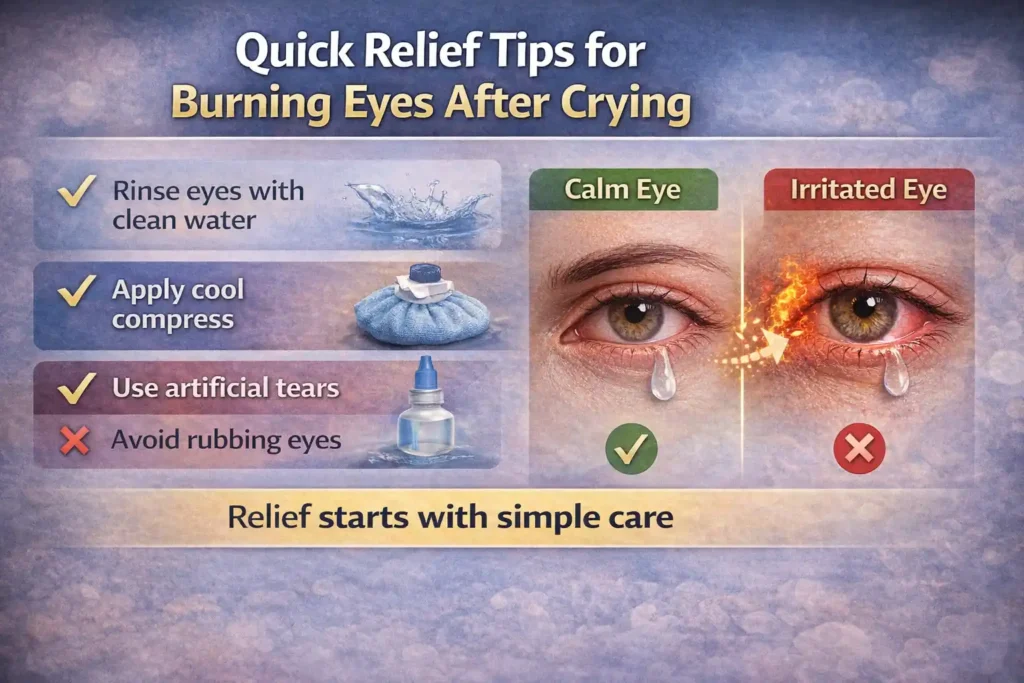
Managing burning eyes when crying requires addressing both immediate discomfort and long-term eye health. Simple steps can help reduce irritation and improve overall comfort.
First, gently rinse your eyes with clean water after crying to remove any irritants or residue. This helps clear the eye surface and reduce the burning sensation. Applying a cool compress can soothe inflammation and provide immediate relief from discomfort.
Artificial tears can also help restore moisture and stabilise the tear film. These drops are especially useful for people experiencing dry eye symptoms, as they improve lubrication and reduce sensitivity. Avoid rubbing your eyes, as this can worsen irritation and damage the delicate surface further.
Maintaining good hygiene is essential, especially if discharge or infection is present. Washing your hands regularly and avoiding touching your eyes can prevent the spread of bacteria and reduce irritation.
When to Be Concerned About Burning Eyes?
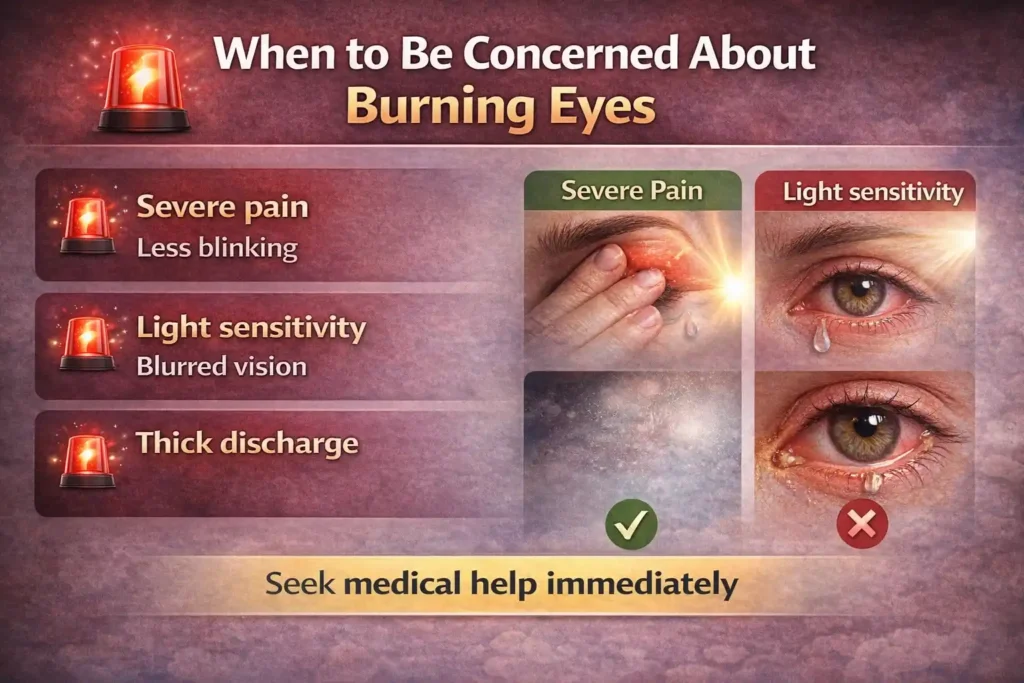
Occasional burning during crying is usually harmless, but persistent symptoms may indicate a deeper issue. If you experience severe pain, blurred vision, or sensitivity to light, it is important to seek medical advice. Thick discharge, swelling, or redness that does not improve can also signal an infection that requires treatment.
Chronic dryness or frequent irritation may require professional evaluation to determine the underlying cause. Early diagnosis can prevent complications and improve long-term eye comfort.
Preventing Burning Eyes When Crying:
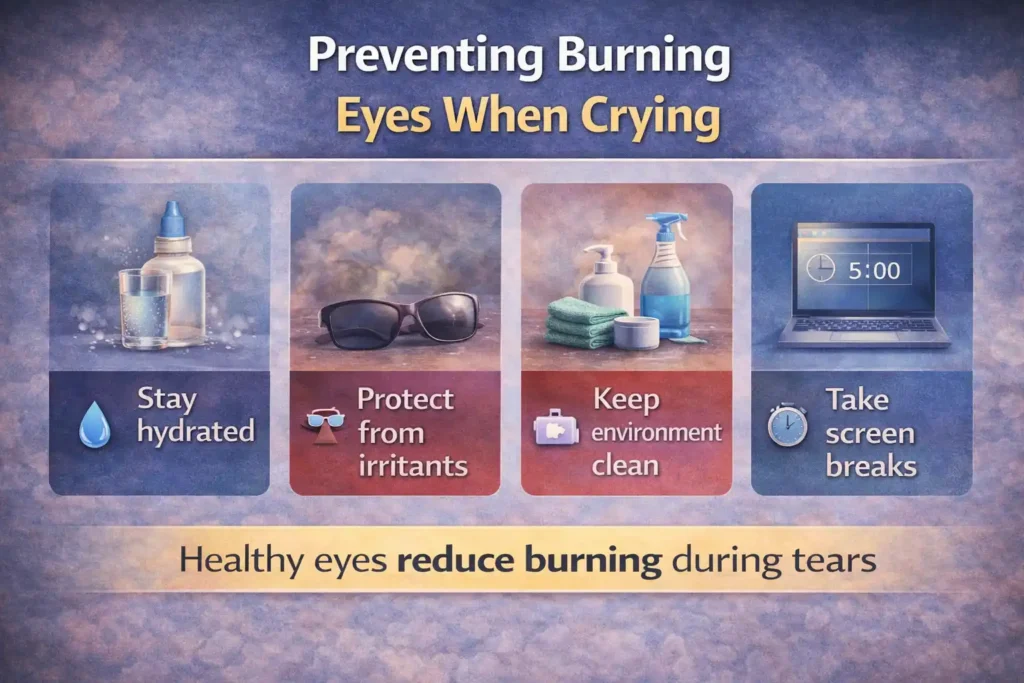
Prevention focuses on maintaining a healthy eye environment and reducing exposure to irritants. Staying hydrated supports tear production and improves eye lubrication. Taking regular breaks from screens helps maintain blinking patterns and prevents dryness.
Using protective eyewear in polluted environments can reduce exposure to harmful particles. Choosing gentle, eye-safe cosmetic products can also minimise irritation during crying. Keeping your living space clean and free from allergens can further reduce the risk of inflammation.
These simple habits can make a significant difference in how your eyes respond to tears and reduce the likelihood of discomfort.
Final Thoughts:
If you often find yourself thinking, “why do my eyes burn when I cry,” the answer usually lies in underlying eye sensitivity rather than the act of crying itself. Conditions like Dry eye syndrome, allergies, or mild infections can all contribute to this sensation. Understanding these causes allows you to take practical steps to improve your eye health and reduce discomfort.
At Freaky Thread, we focus on simplifying everyday health concerns so you can make informed decisions without confusion. Burning eyes after crying may feel alarming, but in most cases, it is manageable with proper care and attention. By addressing the root cause and following simple relief strategies, you can protect your eyes and maintain comfort even during emotional moments.
You May Also Like:


