Table of Content:
Introduction:
Living in a small space requires thoughtful furniture choices that maximise both comfort and usability without overcrowding the room. Many people compare daybeds and sofa beds when trying to balance seating and sleeping needs within limited square footage. These two options may appear similar at first glance, yet they function differently in real life situations and offer distinct advantages depending on how you use your space daily.
A daybed is designed as a bed that can double as a sofa through smart styling and placement. It typically uses a standard mattress, which allows for consistent comfort throughout the day and night. A sofa bed, however, is built primarily as a sofa that converts into a bed when needed, usually through a fold-out or pull-out mechanism hidden inside the frame. This structural difference impacts comfort, durability, space planning, and overall convenience in compact living environments.
Understanding the Daybed in Small Space Living
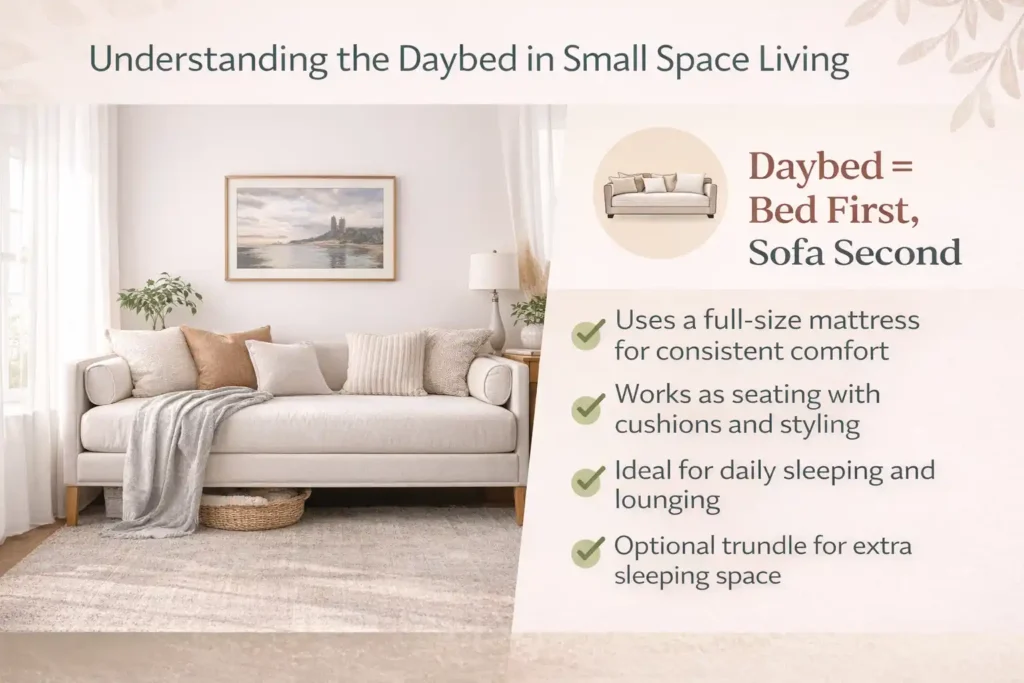
A daybed offers a straightforward approach to multifunctional furniture because it does not require transformation between uses. The mattress remains in place at all times, allowing you to sit, lounge, or sleep without adjusting the structure. This makes it highly practical for people who use the same piece of furniture throughout the day for multiple purposes.
In small apartments or studio layouts, a daybed can act as the main seating area while also serving as the primary sleeping surface. This eliminates the need for separate furniture pieces, which helps maintain a cleaner and more open layout. Many users style daybeds with layered cushions and throws to create a sofa-like appearance that blends seamlessly with modern interiors.
Another important advantage is the availability of trundle options, which provide an additional hidden sleeping surface. This feature becomes valuable when hosting guests without sacrificing permanent space in your home. Since the daybed uses a full mattress, it tends to deliver better support and comfort compared to foldable alternatives, making it suitable for daily sleeping needs.
Understanding the Sofa Bed and Its Practical Use:
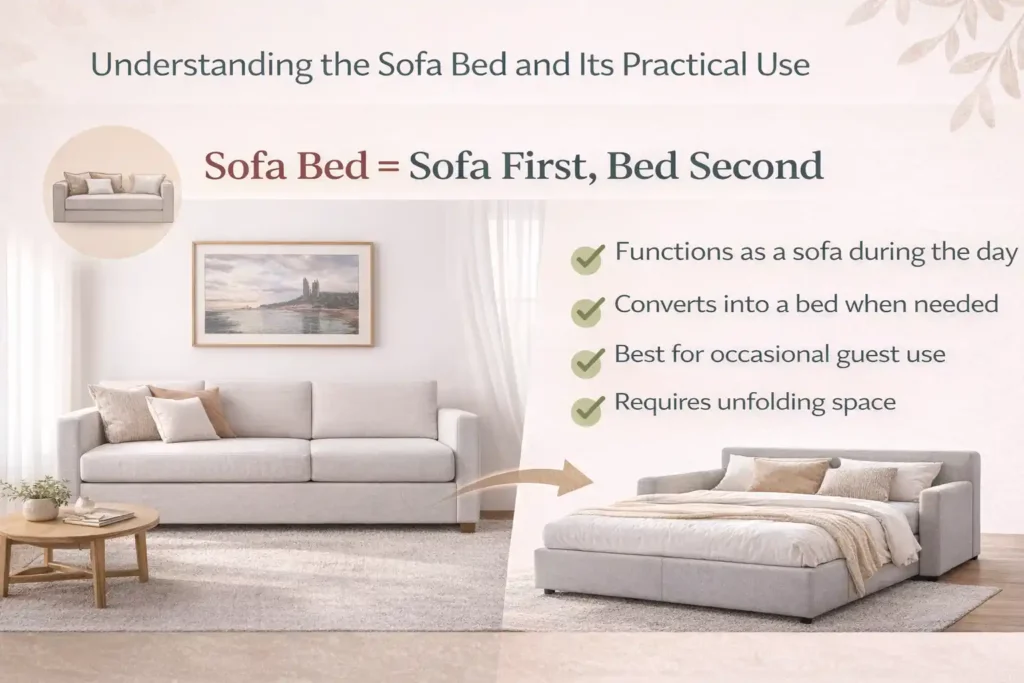
A sofa bed focuses on maintaining a traditional seating experience while offering the flexibility of a hidden sleeping option. During the day, it functions as a standard sofa, which makes it ideal for living rooms where appearance and seating comfort are the primary concerns. When needed, the bed can be unfolded or pulled out to create a sleeping surface.
This dual functionality makes sofa beds appealing for people who only require a bed occasionally, such as when guests visit. However, the transformation process requires additional space in front of the sofa, which can limit placement options in smaller rooms. Planning the layout becomes more complex because you must account for both seating and sleeping configurations.
Comfort levels vary depending on the quality of the mattress and mechanism used in the sofa bed. Higher quality models provide better support, but they often come at a higher price point. In many cases, the mattress is thinner than a standard one, which can affect sleep quality if used frequently. Despite these limitations, sofa beds remain a practical solution for occasional use in compact homes.
Space Efficiency and Layout Considerations:
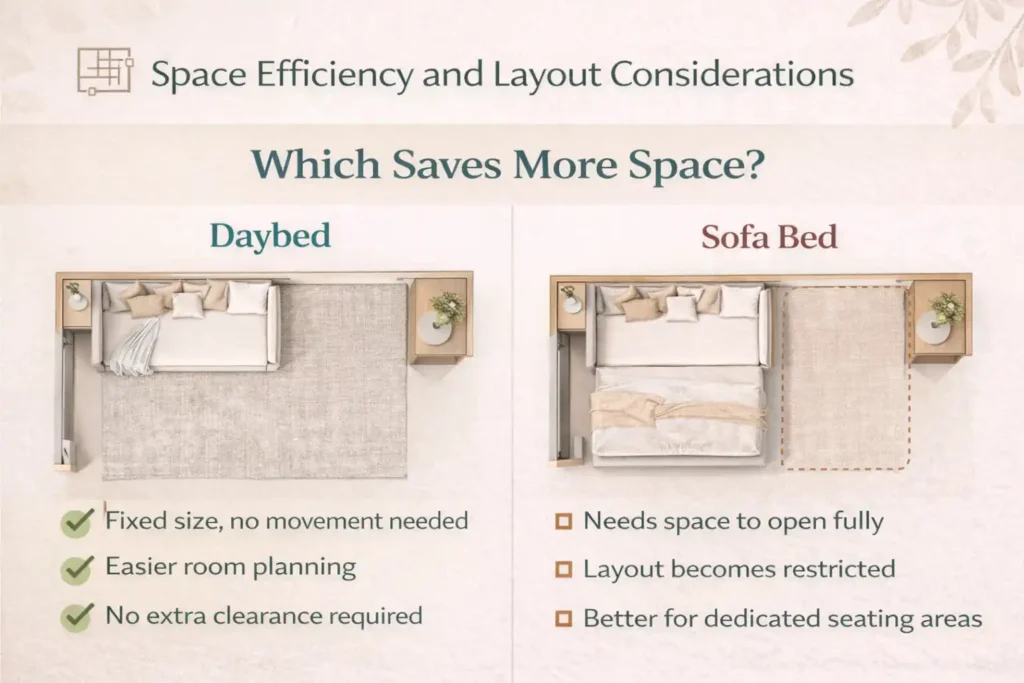
Space efficiency is one of the most critical factors when choosing between a daybed and a sofa bed. A daybed maintains a consistent shape and size throughout its use, which simplifies room planning and furniture arrangement. You do not need to leave extra clearance for unfolding or adjusting the structure, making it easier to optimise limited space.
A sofa bed, on the other hand, requires additional room to extend into its sleeping position. This means you must carefully plan the surrounding layout to ensure there is enough clearance for the mechanism to operate smoothly. In very tight spaces, this requirement can restrict where the sofa bed can be placed.
However, a sofa bed may feel more compact when used strictly as seating, especially in narrow living areas. If your primary need is a sofa with occasional sleeping capability, it can still be a suitable choice. For daily use that combines sitting and sleeping, the daybed often proves to be more efficient because it does not demand extra space adjustments.
Comfort Levels for Sitting and Sleeping:
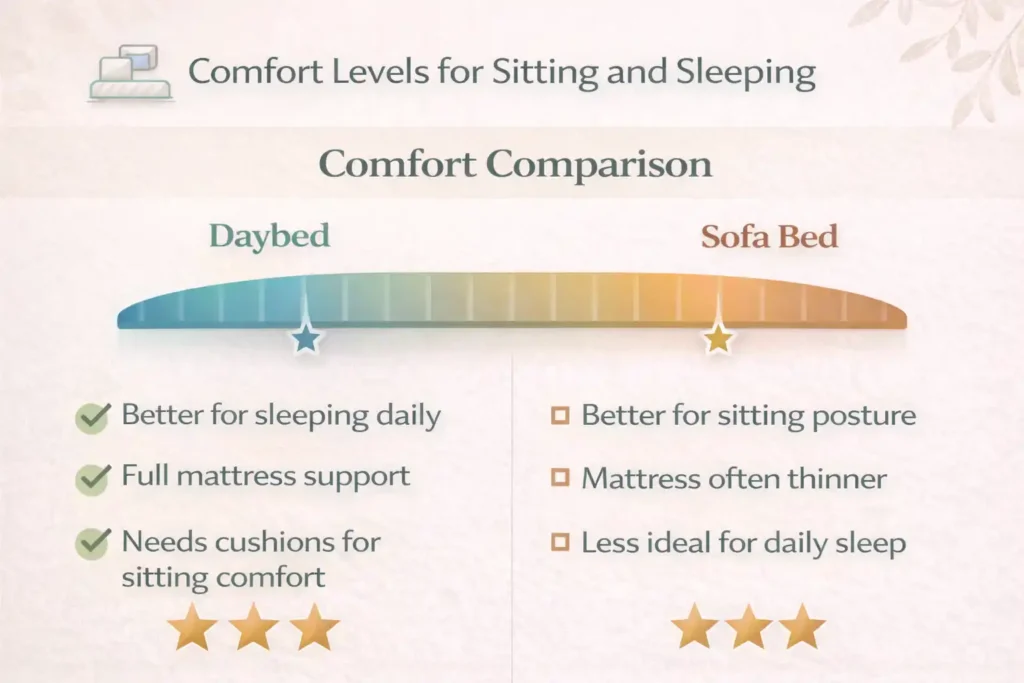
Comfort is often the deciding factor when selecting furniture for small spaces, especially when it serves multiple purposes. A daybed generally provides superior sleeping comfort because it uses a standard mattress that offers consistent support. This makes it a reliable option for everyday use, particularly in studio apartments where it may function as the main bed.
For sitting, the comfort of a daybed depends on how well it is styled with cushions and back support. When properly arranged, it can provide a comfortable seating experience that rivals traditional sofas. Without adequate cushioning, however, it may feel less structured for prolonged sitting sessions.
Sofa beds are typically designed with seating comfort as the primary focus, which means they often provide better back support in their sofa configuration. When converted into a bed, the comfort level depends on the mattress quality and the support structure beneath it. Lower quality models may have uneven surfaces or thinner mattresses, which can affect sleep quality over time.
Design Flexibility and Aesthetic Appeal:

Design flexibility plays a significant role in how well furniture integrates into your living space. Daybeds offer greater versatility because they can be styled in various ways using cushions, throws, and upholstery choices. This allows you to change the look of the furniture without replacing it, which is ideal for people who enjoy updating their interior design.
Sofa beds, in contrast, have a fixed design that limits customisation options. While they can match existing decor more easily, they do not provide the same level of adaptability as daybeds. This makes them less suitable for those who prefer a dynamic and evolving interior style.
Many design-focused platforms, including blogs like Freaky Thread, emphasise the importance of styling when using multifunctional furniture. A well-styled daybed can easily resemble a modern sofa, making it both a functional and visually appealing addition to small spaces.
Durability and Maintenance Over Time:
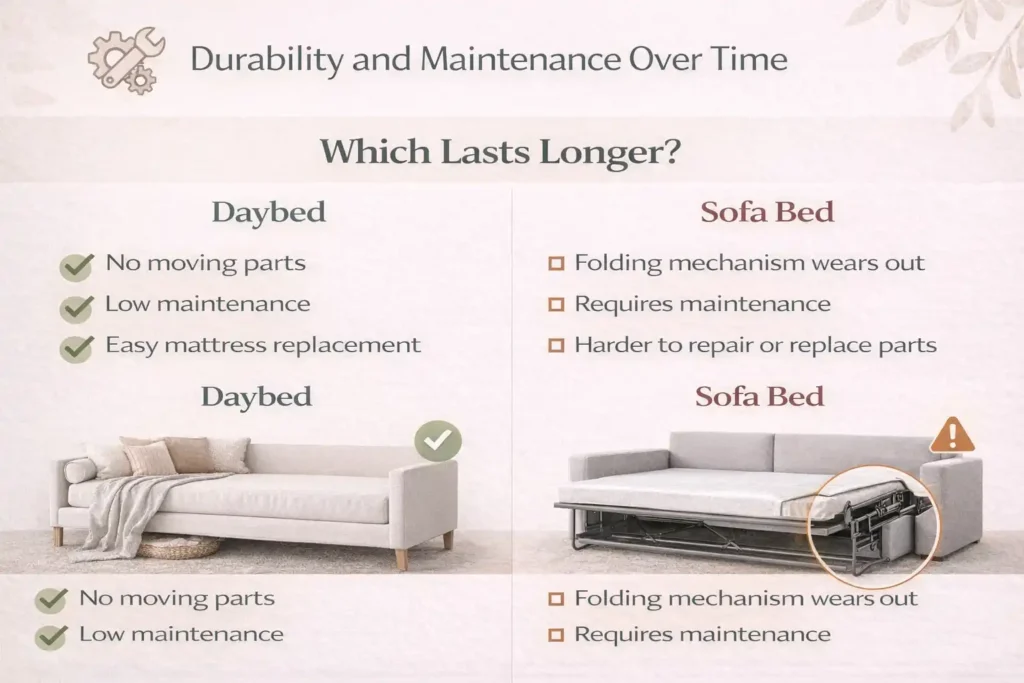
Durability is another important consideration when investing in multifunctional furniture for small spaces. Daybeds typically have a simpler structure with fewer moving parts, which reduces the risk of mechanical issues over time. This makes them a more reliable option for long-term use.
Sofa beds rely on folding mechanisms and internal frames that can wear out with repeated use. Hinges and support structures may require maintenance to ensure smooth operation, especially in lower quality models. Over time, these components can affect both comfort and functionality.
Maintenance is also easier with daybeds because the mattress can be replaced or rotated without difficulty. Sofa bed mattresses are often integrated into the frame, making them harder to replace and maintain. This can lead to higher long-term costs if repairs or replacements become necessary.
Cost and Overall Value:
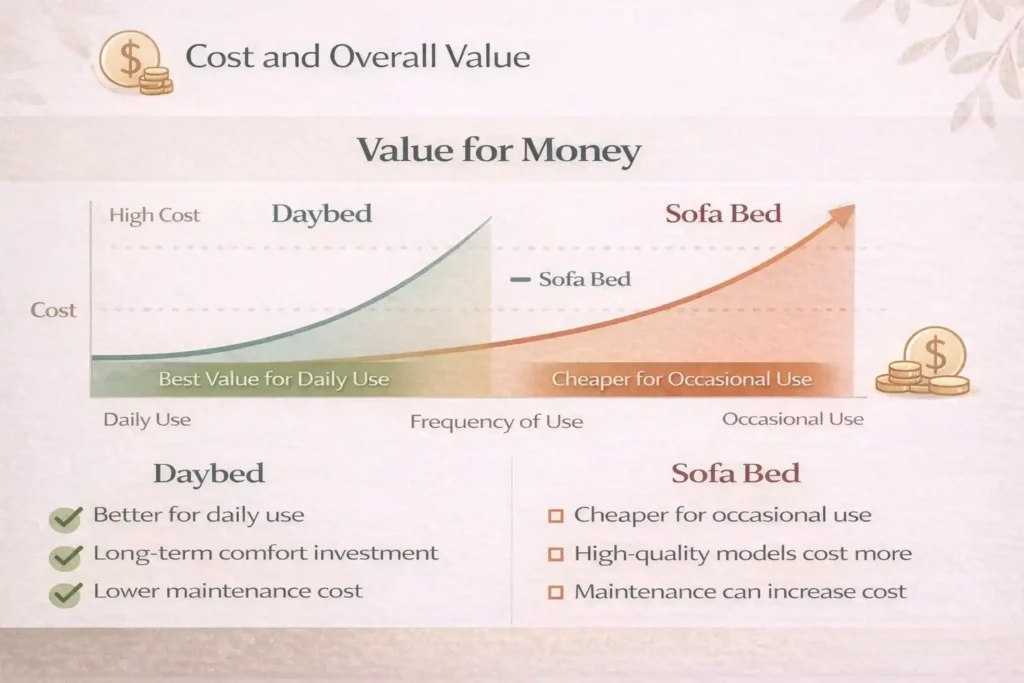
Cost plays a significant role in the decision-making process, especially when furnishing a small space on a budget. Daybeds often provide better value for those who need a primary sleeping solution because they offer consistent comfort without requiring additional purchases. The ability to use a standard mattress also adds to their practicality.
Sofa beds can be more affordable initially, particularly for basic models designed for occasional use. However, the long-term value depends on the quality of the mattress and mechanism. Investing in a high-quality sofa bed can improve comfort and durability, but it usually comes at a higher price.
From a value perspective, a daybed may be the better choice for daily use, while a sofa bed can be a cost-effective option for occasional sleeping needs. Understanding your usage patterns will help you determine which option offers the best return on investment.
Final Insight:
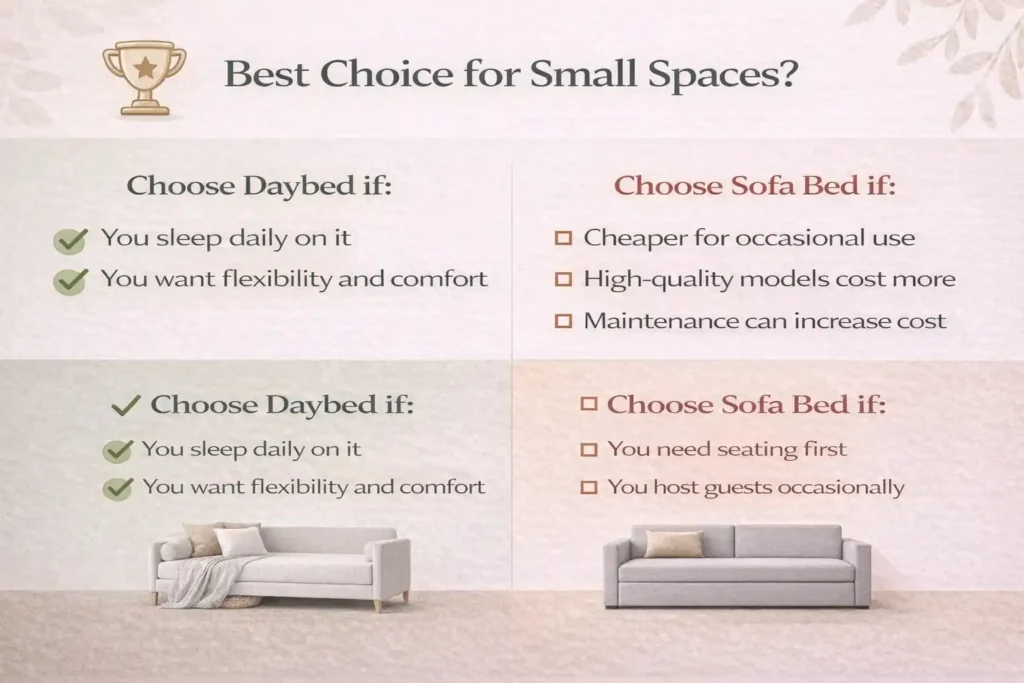
Choosing between a daybed and a sofa bed ultimately depends on how you plan to use the furniture in your daily life. If you need a reliable sleeping solution that also functions as seating, a daybed is likely the better option. It provides consistent comfort, easier maintenance, and greater styling flexibility.
If your primary need is a sofa that occasionally converts into a bed, a sofa bed may be more suitable. It maintains a traditional living room appearance while offering a convenient sleeping option for guests. However, it may not provide the same level of comfort for regular use.
For most small spaces, the daybed tends to offer a more balanced solution, combining practicality with visual appeal. As highlighted in design discussions on Freaky Thread, the right choice should align with your lifestyle rather than simply following trends. Making an informed decision ensures that your furniture enhances your living experience instead of creating limitations.
You May Also Like: