Table of Contents:
- Introduction
- The Evolution of the Retail Clothing Industry
- Defining Exactly What Is Fast Fashion Today
- The Hidden Environmental Impact of Cheap Clothes
- Unfair Labor Practices in the Global Supply Chain
- The Psychological Trap of Micro Trends
- Identifying Harmful Brands Before You Shop
- Realistic Steps to Break the Cycle of Overconsumption
- Conclusion
Introduction:
Fashion has become faster and more affordable than ever before, making new styles available almost every week. While inexpensive clothing offers convenience, it also raises serious concerns about environmental sustainability, labor practices, and excessive consumerism. Understanding what is fast fashion helps shoppers make informed decisions that benefit both people and the planet. At Freaky Thread, we believe informed consumers can help create a more responsible and sustainable fashion industry through everyday choices.
The fashion industry has transformed dramatically because of globalization, online shopping, and rapidly changing consumer trends. Many brands now produce large collections in short cycles to satisfy constant demand for fresh designs. This approach encourages frequent purchases but often creates hidden environmental and social costs that remain invisible to most buyers.
Learning how fast fashion operates allows consumers to recognize its long-term effects on communities and natural resources. Greater awareness encourages thoughtful purchasing habits while reducing unnecessary waste and supporting ethical production practices. Every responsible shopping decision contributes to a healthier environment and a more sustainable future.
The Evolution of the Retail Clothing Industry:

The clothing industry once followed predictable seasonal collections that remained available for several months. Today, many retailers introduce new designs every week to keep customers returning for the latest trends. This rapid production model has completely changed how people shop for clothing around the world.
Consumers often feel overwhelmed because social media constantly promotes new styles through influencers and online advertisements. Many shoppers experience pressure to update their wardrobes regularly to keep pace with changing fashion trends. This cycle encourages frequent purchases even when existing clothing remains perfectly wearable.
Online shopping platforms have accelerated this transformation by making trendy clothing available with just a few clicks. Fast production, low prices, and aggressive marketing encourage impulse buying instead of thoughtful purchasing decisions. As a result, clothing consumption has increased significantly while garment lifespans continue becoming shorter.
You May Also Like:
Defining Exactly What Is Fast Fashion Today:

Understanding what is fast fashion begins with recognizing its focus on producing inexpensive clothing at extremely high speed. Fashion companies quickly transform runway designs and popular trends into affordable products for mass-market consumers. These garments often prioritize low production costs and rapid availability over durability and long-term quality.
Many consumers struggle to identify fast fashion because marketing campaigns frequently emphasize sustainability without meaningful environmental improvements. This practice, commonly called greenwashing, creates misleading impressions about a company’s environmental responsibility. Buyers should therefore examine independent sustainability information instead of relying solely on promotional claims.
Fast fashion does not depend only on low prices because production speed also defines the business model. Brands continuously release new collections to encourage repeat purchases throughout the year instead of traditional seasonal shopping. This constant cycle supports higher sales while increasing resource consumption across the global fashion industry.
You may also like:
The Hidden Environmental Impact of Cheap Clothes:

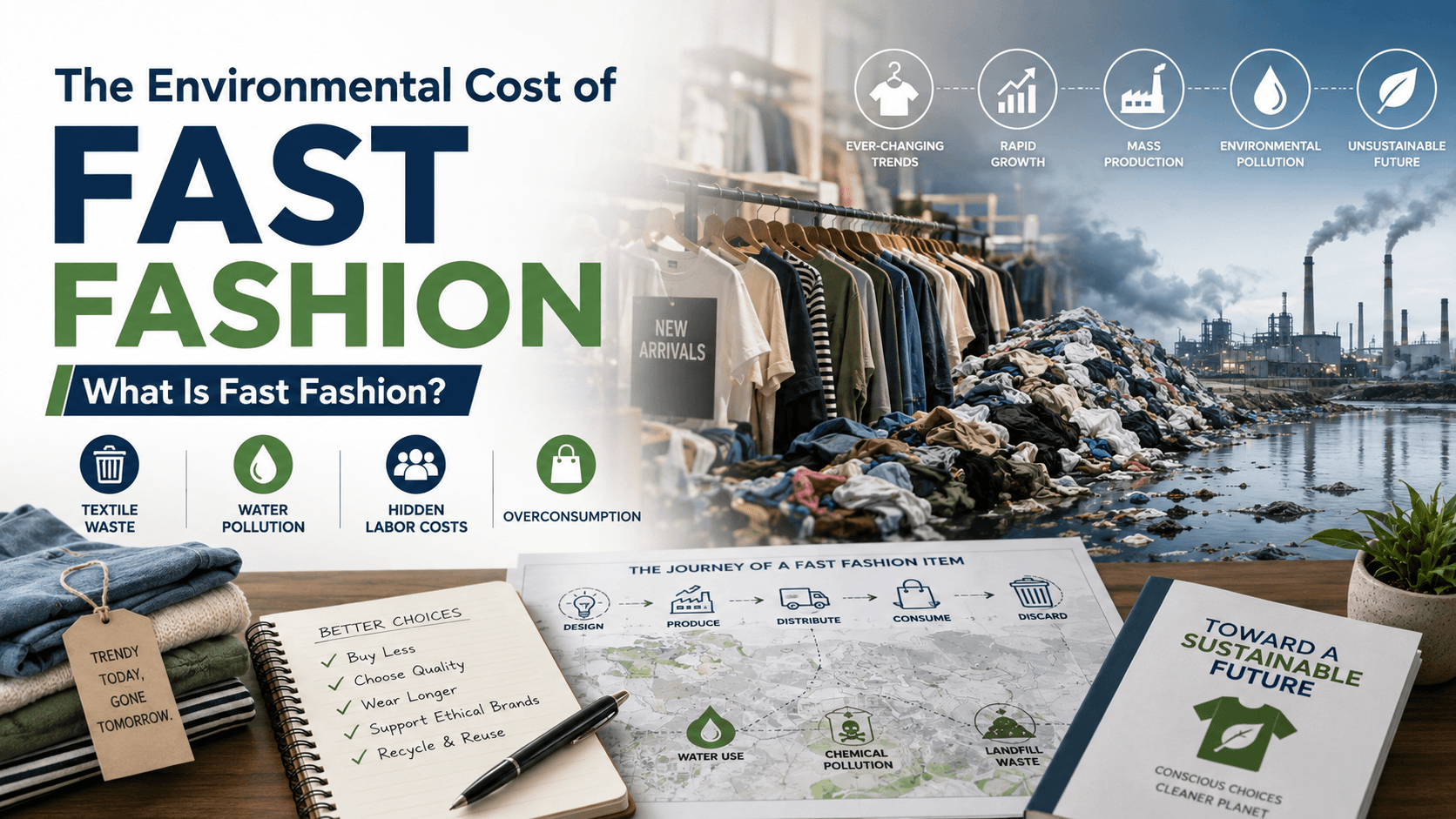
The environmental consequences of fast fashion extend far beyond clothing stores and online shopping platforms. Manufacturing garments requires significant amounts of water, energy, raw materials, and transportation throughout complex global supply chains. Producing millions of inexpensive garments each year places considerable pressure on natural ecosystems.
Large quantities of discarded clothing eventually reach landfills because many garments wear out quickly or become unfashionable. Synthetic fabrics may take decades to decompose while releasing tiny plastic fibers into surrounding environments. Textile waste continues increasing as consumers replace clothing more frequently than previous generations.
Chemical dyes and textile finishing processes may also contribute to water pollution when wastewater receives inadequate treatment. Some manufacturing regions face environmental challenges because industrial waste affects nearby rivers and local communities. Choosing higher-quality garments and extending clothing use helps reduce demand for excessive production while supporting more sustainable consumption.
You may also like:
Unfair Labor Practices in the Global Supply Chain:

Reducing unnecessary clothing purchases does not require abandoning fashion or spending large amounts of money. Creating a shopping list before visiting stores helps prevent impulse purchases driven by temporary trends. Buying fewer, higher-quality garments often provides better long-term value than repeatedly replacing inexpensive items.
Secondhand clothing stores, clothing swaps, and repairing damaged garments provide affordable alternatives to constant new purchases. These practices extend product lifespans while reducing textile waste entering landfills each year. Small lifestyle changes can collectively create meaningful environmental benefits without dramatically increasing personal expenses.
Consumers should focus on building wardrobes that reflect personal needs rather than short-lived online trends. Every thoughtful purchase supports responsible manufacturing while reducing unnecessary environmental pressure across the fashion industry. Sustainable fashion becomes more achievable when consistent habits replace occasional environmentally friendly decisions.
You may also like:
The Psychological Trap of Micro Trends:

Micro trends have changed shopping habits by making fashion feel temporary instead of timeless. Social media platforms continuously introduce new clothing styles that quickly gain popularity before disappearing within weeks. This constant cycle encourages consumers to purchase more frequently than they genuinely need.
Influencer marketing often creates a fear of missing out by presenting new styles as essential purchases. Many shoppers begin comparing themselves with carefully curated online content rather than focusing on personal style. This comparison can lead to unnecessary spending and ongoing dissatisfaction despite owning many clothing items.
Building a versatile wardrobe based on quality and personal preferences offers a healthier alternative. Classic pieces remain fashionable longer while reducing pressure to chase every temporary trend. Choosing timeless clothing encourages confidence while supporting more sustainable shopping habits.
You may also like:
Identifying Harmful Brands Before You Shop:

Researching clothing brands may seem difficult because marketing messages often highlight selective sustainability achievements. Consumers should look beyond advertising and examine publicly available information about environmental policies and supply chain transparency. Independent certifications can also provide helpful insight into responsible manufacturing practices.
Reading garment labels carefully helps shoppers understand fabric composition and product quality before making purchases. Natural fibers, recycled materials, and durable construction may support longer clothing lifespans when properly maintained. Buyers should also remain cautious about vague sustainability claims that lack supporting evidence or independent verification.
Learning what is fast fashion includes recognizing purchasing patterns rather than focusing only on individual companies. Extremely low prices, constant product launches, and rapidly changing collections often indicate fast fashion business models. Thoughtful research becomes easier over time as consumers become familiar with responsible clothing practices.
You may also like:
Realistic Steps to Break the Cycle of Overconsumption:

Reducing unnecessary clothing purchases does not require abandoning fashion or spending large amounts of money. Creating a shopping list before visiting stores helps prevent impulse purchases driven by temporary trends. Buying fewer, higher-quality garments often provides better long-term value than repeatedly replacing inexpensive items.
Secondhand clothing stores, clothing swaps, and repairing damaged garments provide affordable alternatives to constant new purchases. These practices extend product lifespans while reducing textile waste entering landfills each year. Small lifestyle changes can collectively create meaningful environmental benefits without dramatically increasing personal expenses.
Consumers should focus on building wardrobes that reflect personal needs rather than short-lived online trends. Every thoughtful purchase supports responsible manufacturing while reducing unnecessary environmental pressure across the fashion industry. Sustainable fashion becomes more achievable when consistent habits replace occasional environmentally friendly decisions.
Conclusion:
Understanding what is fast fashion helps consumers recognize the environmental, social, and economic effects behind inexpensive clothing production. While affordable fashion offers convenience, it also contributes to growing textile waste, resource consumption, and ongoing labor challenges in many regions. Greater awareness empowers shoppers to make choices that balance affordability with long-term sustainability.
Every purchase represents an opportunity to support better production practices and reduce unnecessary overconsumption. Choosing durable clothing, researching brands, and shopping more intentionally can create positive change over time. At Freaky Thread, we encourage readers to embrace mindful fashion choices that benefit both their wardrobes and the planet for future generations.