

Journaling sounds simple, and it is. You sit down, open a notebook, and write what is on your mind. Yet many beginners never start because they worry about doing it wrong. They wonder what to write, how long it should take, and whether their entries need to sound good. The truth is much kinder than that. There is no wrong way to journal, and a few honest lines a day can change how your whole day feels.
To start journaling, pick any notebook and pen, choose a quiet time of day, and write for 5 minutes about whatever is on your mind. You do not need a fancy journal, a perfect routine, or good handwriting. Start with one simple prompt, such as “Today I feel…”, and write honestly. Small daily entries build the habit faster than long occasional ones.
What Is Journaling, Exactly?
Journaling is the habit of writing down your thoughts, feelings, plans, or experiences on a regular basis. It can be a few sentences in a notebook, a list in a phone app, or a full page of free writing. There are no grades, no audience, and no rules about what counts.
Some people journal to clear their mind before bed. Others use it to plan their day, track goals, or work through a tough emotion. A journal can be a diary, a planner, a sketchbook, or all three at once. The form matters far less than the habit itself.
Why Should You Start Journaling?
Journaling gives your thoughts a place to land. When ideas and worries stay in your head, they loop and grow louder. Writing them down moves them onto paper, where you can look at them clearly and decide what to do next. Many people find that even five minutes of writing makes their mind feel quieter.
It also helps you notice patterns. After a few weeks of entries, you may spot what lifts your mood and what drains it. You may see that slow mornings help you focus, or that late night scrolling leaves you tired. That self knowledge is the real gift of journaling.
Journaling before bed can also support a better sleep routine, especially when you pair it with a calm wind down and a regular bedtime. Writing out tomorrow’s tasks can stop them from spinning in your head all night.
What Do You Need to Start Journaling?
You need almost nothing to begin. A pen and any notebook will do, even a spare one from a drawer. If you prefer typing, a notes app on your phone works just as well. The tool matters far less than the habit, so start with what you already have.

That said, a few small choices can make the habit more pleasant. A notebook you like looking at invites you to open it. A pen that writes smoothly removes a tiny friction. A quiet corner, a favorite mug, and five calm minutes turn journaling from a chore into a small daily treat. Keep it simple at first. You can always upgrade your supplies later, once the habit sticks.
How Do You Start Journaling in 5 Simple Steps?
Follow these five steps on your first day, and you will have a finished entry in under ten minutes.
- Pick your time. Choose a moment that already exists in your day, such as right after breakfast or just before bed. Attach journaling to that moment so you do not have to remember it separately.
- Pick your tool. Grab any notebook and pen, or open a notes app. Do not spend a week shopping for the perfect journal. The perfect journal is the one you actually use.
- Set a tiny goal. Aim for three lines or five minutes, whichever comes first. A tiny goal removes the pressure and makes it easy to show up again tomorrow.
- Start with a prompt. If a blank page freezes you, answer one question. “How do I feel right now?” and “What do I want from today?” are both excellent openers.
- Write without editing. Spelling, grammar, and neat handwriting do not matter here. Nobody else will read it. Let the words come out messy and honest.
That is the whole method. Repeat it tomorrow, and the day after, and you are officially a person who journals.
Which Journaling Method Is Right for You?
There is no single best method. The right one is the one you enjoy enough to repeat. Try a few of these and keep the one that feels natural.
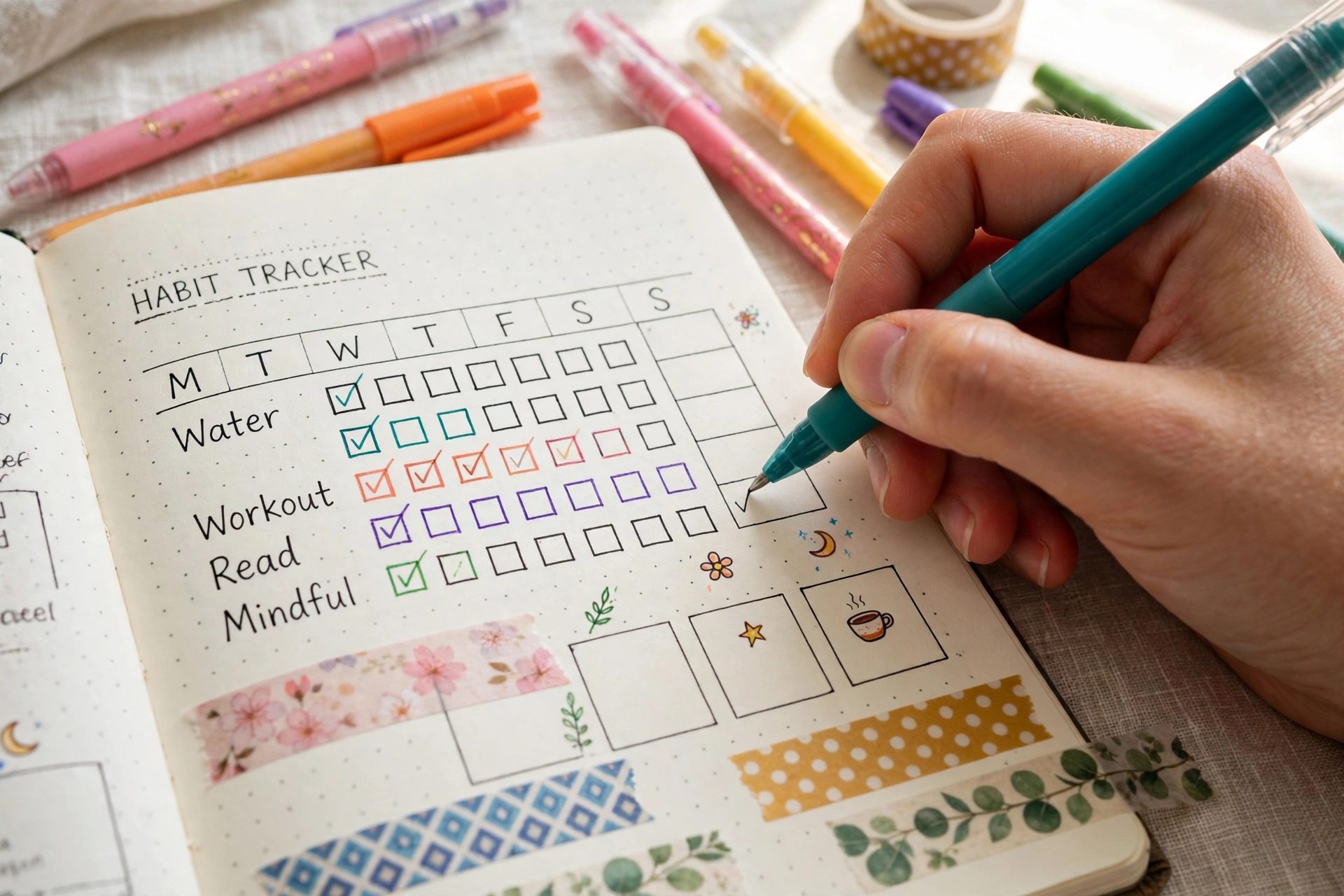
- Free writing. Write whatever comes to mind without stopping. This is the easiest method for beginners because there are no rules at all.
- Gratitude journaling. List three things you are grateful for each day. It takes two minutes and gently trains your attention toward the good.
- Morning pages. Write three pages first thing in the morning, before you check your phone. This clears mental clutter and often sparks ideas.
- Bullet journaling. Use short lines, symbols, and small boxes to track tasks, habits, and events. It suits people who like structure and visual order.
- Prompt journaling. Answer one written prompt each day, such as “What made me smile today?” Prompts remove the blank page problem completely.
- One line a day. Write a single sentence about your day. It takes under a minute, and after a year you have a beautiful record of your life.
- Art journaling. Combine words with doodles, stickers, photos, or paint. It suits visual thinkers who process feelings through images.
Start with free writing or gratitude journaling. Both are forgiving, quick, and easy to keep up while you find your rhythm.
What Should You Write About? 25 Prompts to Try
When you do not know what to write, a prompt is your best friend. Here are 25 beginner friendly prompts, grouped by theme. Pick one each day and write for five minutes.
Morning prompts:
- How do I feel this morning, in one honest sentence?
- What is one thing I want to focus on today?
- What would make today feel like a good day?
- What am I looking forward to this week?
- What is one small thing I can do for myself today?
Gratitude prompts:
- What are three things I am grateful for right now?
- Who made my day better recently, and how?
- What is something small that brought me joy today?
- What is a challenge I am grateful I survived?
- What is my favorite part of my daily routine?
Reflection prompts:
- What did I learn about myself this week?
- What is something I keep avoiding, and why?
- What would I tell myself a year ago?
- When did I feel most like myself recently?
- What is one habit I want to change, and what is the first step?
Evening prompts:
- What went well today?
- What would I do differently tomorrow?
- What is one thing I can let go of tonight?
- What made me laugh today?
- How did my body feel today, and what does it need?
Dream and goal prompts:
- What does my ideal morning look like?
- What is a goal I want to reach in the next three months?
- What is something new I want to try this year?
- If I had a free day with no plans, how would I spend it?
- What does success look like for me right now?
Save this list in the front of your journal. On a blank day, open it, point at a number, and start writing.
How Do You Make Journaling a Daily Habit?
A habit sticks when it is easy, pleasant, and tied to something you already do. Put your journal where you cannot miss it, such as on your pillow or next to your coffee maker. When the journal is visible, you are far more likely to open it.

Pair journaling with a habit you already love. Write while your coffee brews, after your shower, or during your evening wind down. This trick is called habit stacking, and it works because the old habit reminds you to do the new one. You can even pair journaling with movement. If you work from home, a short walk is a lovely warm up for reflection, and many people combine a walk with thinking time before they write, sometimes while walking while you work on a slow day.
Keep the bar low on busy days. One sentence still counts. A streak of short entries beats a streak of skipped days every time. If you miss a day, do not quit. Just write the next day, without guilt and without trying to catch up.
On days when writing feels hard, try one of these simple activities at home instead, then jot down one line about how it felt. The journal can hold a single sentence. It still counts.
What Mistakes Should Beginners Avoid?
The biggest mistake is aiming for perfection. A journal is not a performance. Messy handwriting, half finished thoughts, and skipped days are all normal. The second mistake is writing too much too soon. A full page every day sounds inspiring on day one and exhausting by day four. Start small and let the entries grow on their own.
Another common mistake is buying expensive supplies before you have the habit. A beautiful journal will not write itself. Start with what you have, and treat yourself to a nicer notebook after a month of steady entries. Finally, do not compare your journal to the pretty ones you see online. Those pages are styled for photos. Yours only needs to be honest.
Frequently Asked Questions
How long should a journal entry be?
As long as it needs to be, and no longer. Three lines count. Five minutes is a great daily target for beginners. Some days you will write a paragraph, other days a page. Both are fine.
What is the best time of day to journal?
The best time is the time you will actually do it. Morning journaling sets intentions and clears your head. Evening journaling helps you reflect and unwind. Try both for a week and keep the one that fits your life.
Is it better to journal on paper or on a phone?
Paper feels calmer and more personal for most people, and it keeps you away from notifications. A phone is more private and always with you. Choose the one you will open every day. You can switch later without losing anything.
What if I do not know what to write?
Use a prompt. Start with “Today I feel…” and finish the sentence. Or describe your day in three lines: what happened, how it felt, and what you noticed. Prompts exist for exactly this moment, so keep a list handy.
Can journaling help with stress?
Yes, for many people it can. Writing worries down moves them out of your head and onto paper, where they often look smaller and more manageable. It is not a replacement for professional support when stress is severe, but as a daily habit it helps many people feel calmer and clearer.
Conclusion
Journaling is one of the simplest habits you can start, and one of the most rewarding. You do not need special supplies, a perfect routine, or beautiful handwriting. You need a pen, a few quiet minutes, and the willingness to be honest on paper. Start tonight or tomorrow morning with three lines and one prompt. Then do it again the next day. In a month, you will have a small record of your life, your moods, and your growth, and you may wonder how you ever went without it.


