Introduction:
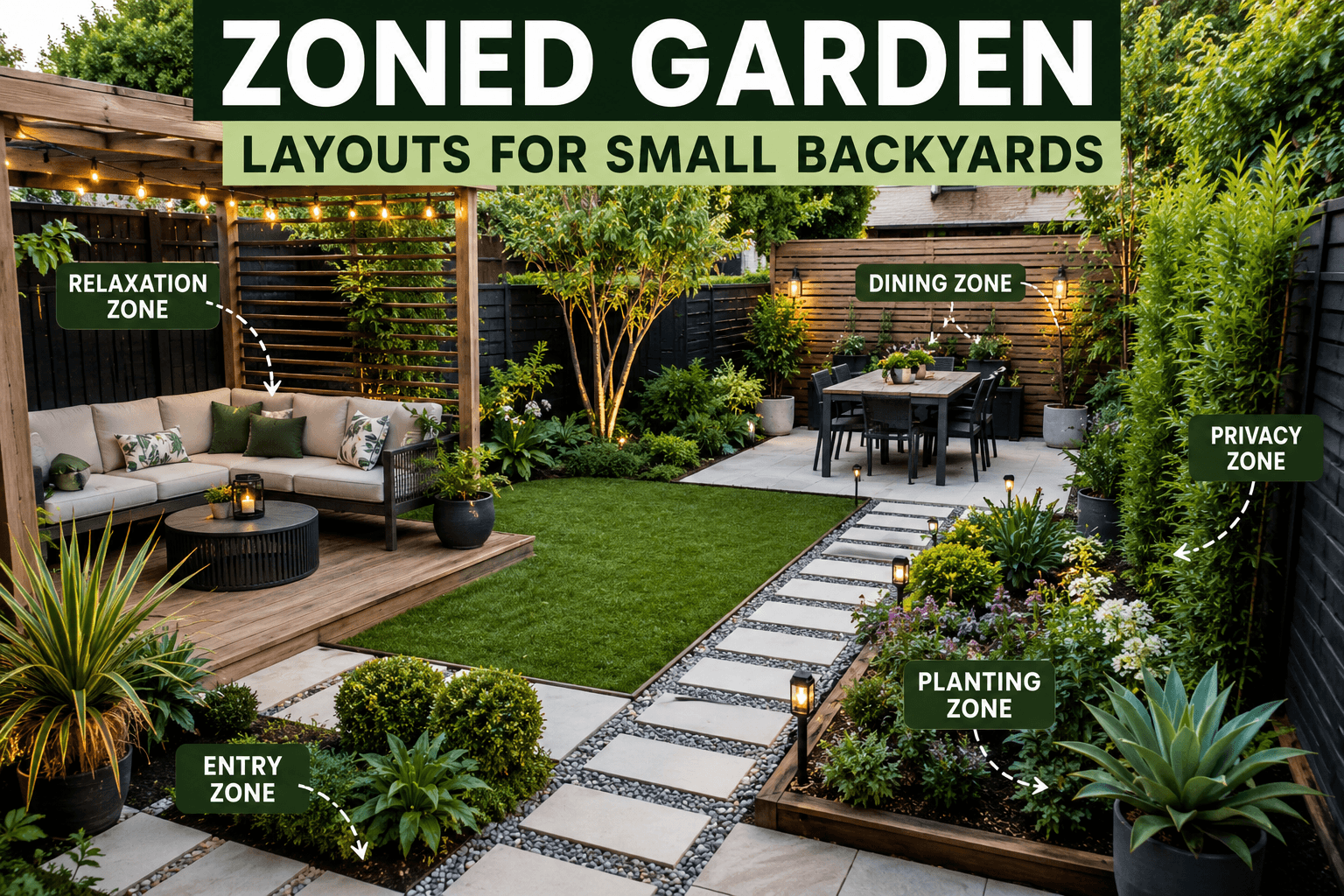
A small backyard does not need to feel cramped or disorganized anymore. Modern homeowners now use smart outdoor planning methods to create stylish and practical spaces. One of the most effective approaches today is the zoned garden concept. This landscaping method divides outdoor areas into separate sections based on purpose and functionality.
A well planned zoned garden can make even the smallest backyard feel larger and more comfortable. Instead of placing everything randomly, each section serves a clear role. Some zones focus on relaxation, while others support dining, gardening, entertainment, or privacy.
At Freaky Thread, outdoor design trends continue gaining popularity because homeowners want more useful and visually balanced spaces. The rise of compact homes and urban living has made smart backyard planning more important than ever.
What Is a Zoned Garden?
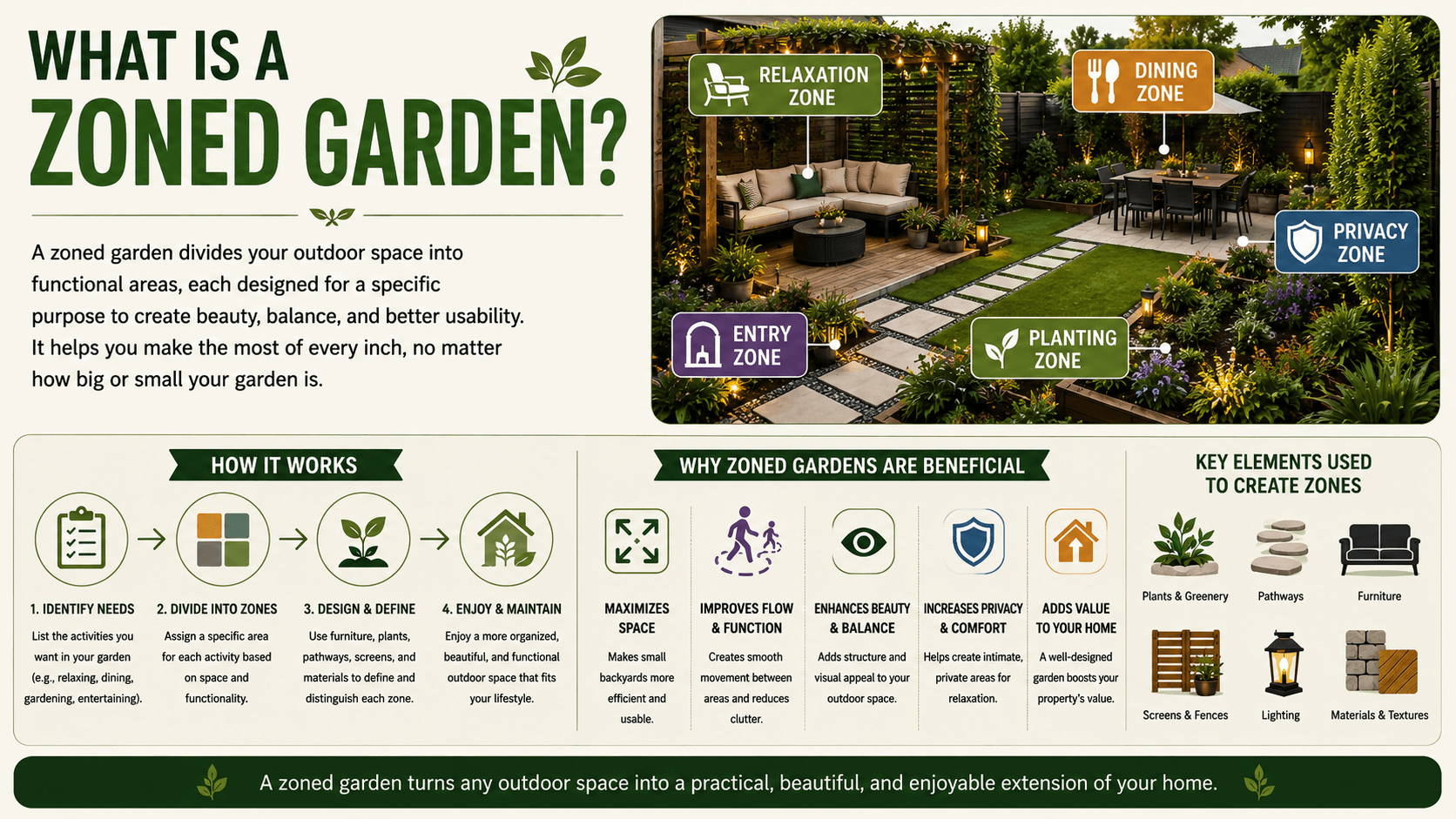
A zoned garden is an outdoor layout divided into dedicated functional sections. Each area supports a specific activity while maintaining a smooth visual flow throughout the backyard.
For example, one section may include a dining setup with outdoor furniture. Another section could feature decorative plants, while a separate area supports relaxation with seating or a fire pit.
This landscaping method works especially well in small backyards because it creates structure and organization. A backyard without clear zones often feels cluttered and visually overwhelming.
The most successful zoned garden layouts usually include:
- Relaxation areas
- Dining spaces
- Walkways
- Decorative plant sections
- Privacy screens
- Entertainment corners
- Small gardening spaces
Each section should connect naturally without making the backyard feel crowded or disconnected.
Why Zoned Garden Layouts Work So Well in Small Backyards
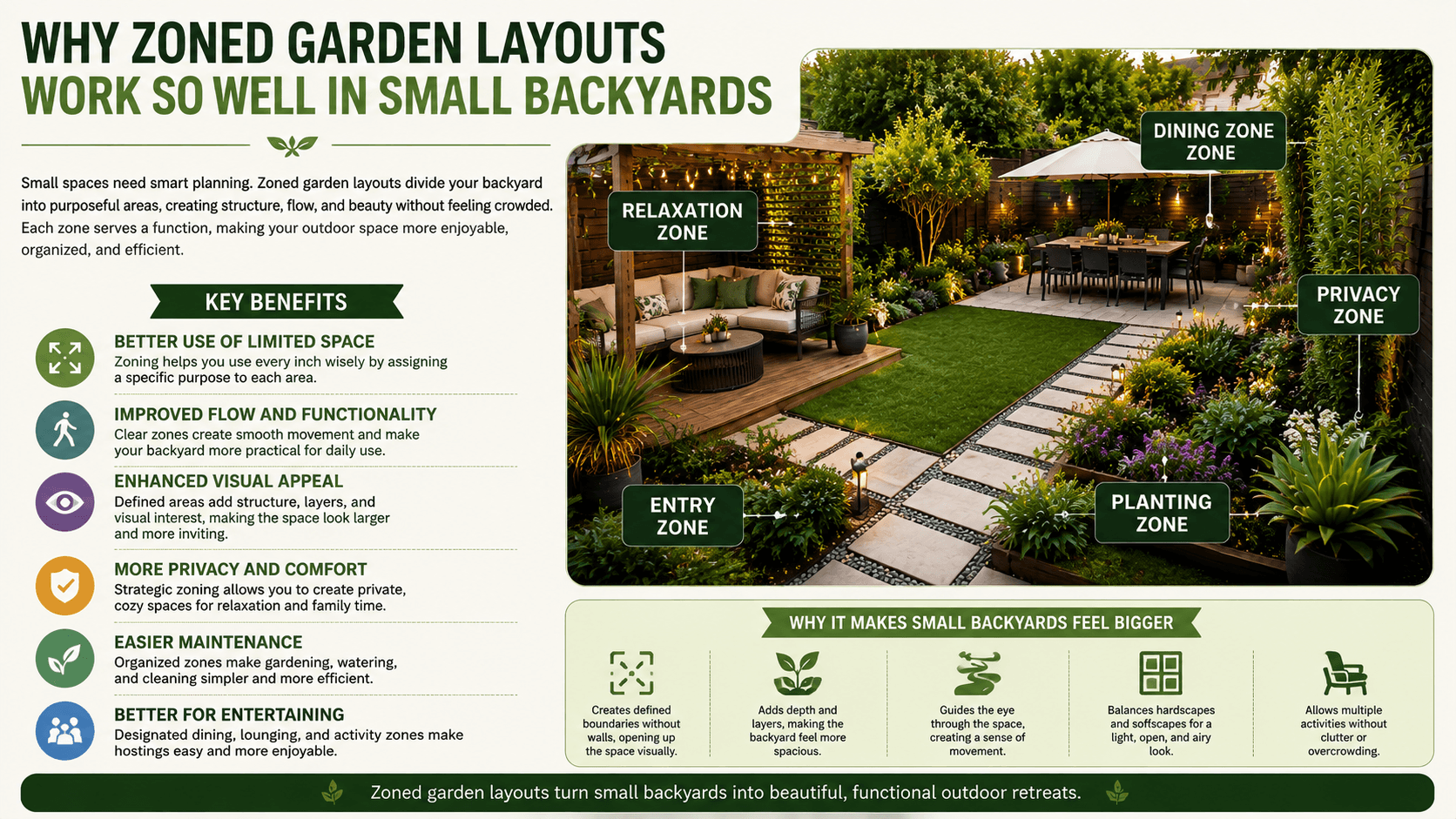
Small outdoor spaces require efficient planning to avoid visual chaos and poor functionality. Zoned garden layouts solve this issue by creating intentional boundaries between activities and design elements.
A properly organized backyard immediately feels larger because the eye can easily understand the layout. Different materials, textures, and plant arrangements help define spaces without needing physical walls.
Research from landscape design professionals consistently shows that organized outdoor spaces improve usability and visual comfort. Homeowners also tend to spend more time outdoors when their backyard feels practical and relaxing.
Small backyard zoned garden designs provide several important advantages:
- Better use of limited outdoor space
- Improved traffic flow between sections
- Increased visual appeal
- More privacy and comfort
- Easier maintenance and organization
- Better entertainment possibilities
Instead of treating the backyard as one open area, zoning introduces purpose and balance throughout the design.
Best Zoned Garden Layout Ideas for Small Spaces
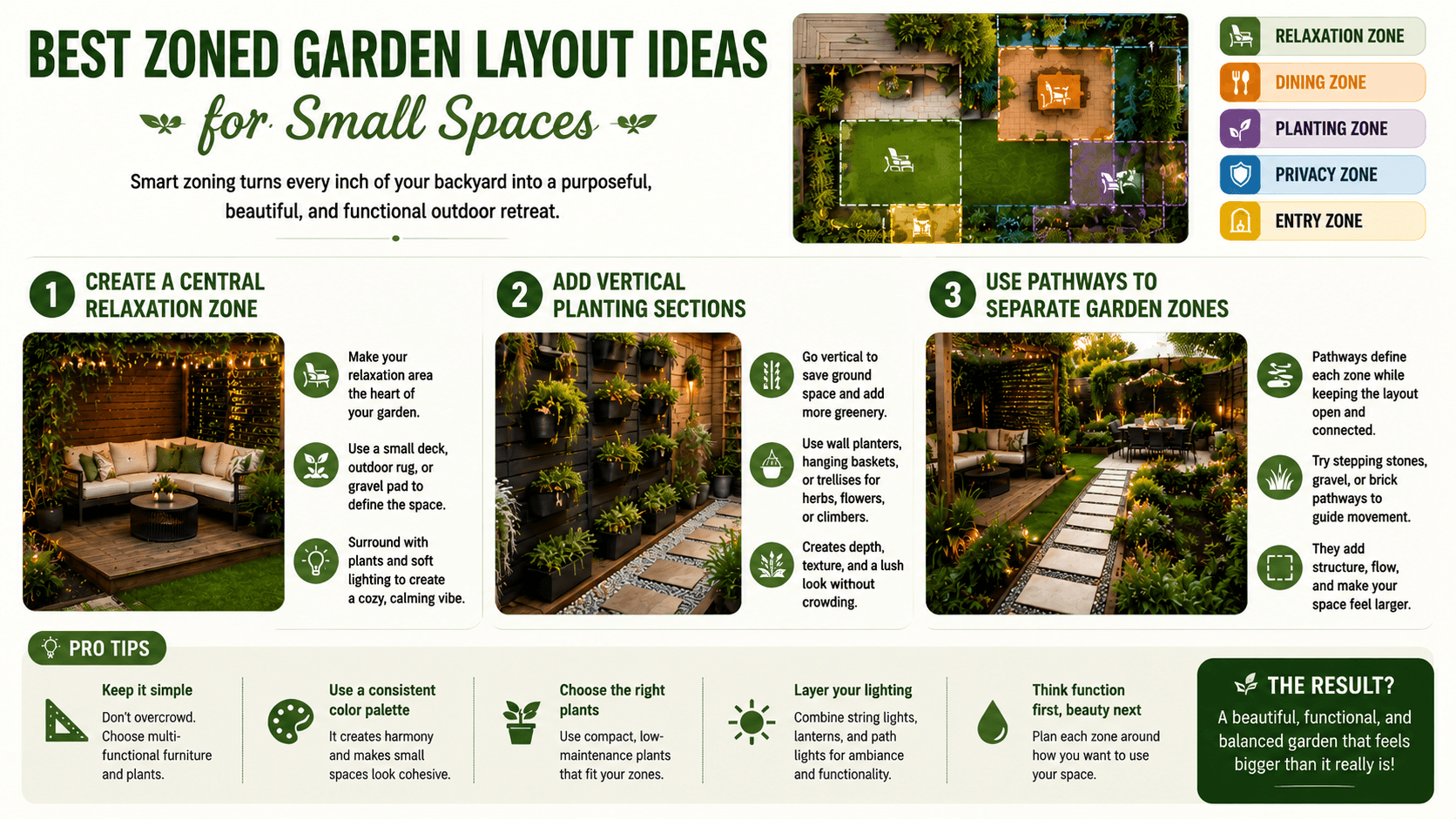
Create a Central Relaxation Zone:
Every small backyard benefits from having a clear focal point. A central relaxation area creates structure while making the outdoor space feel welcoming and comfortable.
This section may include:
- Outdoor lounge chairs
- Compact sofas
- Small coffee tables
- Decorative lighting
- Fire pits
- Pergolas
Keep furniture proportional to the backyard size. Oversized seating arrangements can quickly overwhelm compact outdoor spaces.
Soft lighting also helps define this zone during evening hours while improving the atmosphere significantly.
Add Vertical Planting Sections:
Small backyards usually lack horizontal gardening space. Vertical planting solves this problem while adding greenery without reducing usable floor space.
Vertical garden zones may include:
- Hanging planters
- Trellis walls
- Climbing plants
- Wall mounted herb gardens
- Decorative plant shelves
This approach creates visual depth while making the backyard feel taller and more dynamic. Plants also soften hard landscaping materials and improve overall outdoor comfort.
Many modern zoned garden designs now combine vertical greenery with privacy screens for better functionality.
Use Pathways to Separate Garden Zones:
Pathways help visually divide different backyard sections without making the space feel enclosed. Even narrow walkways can guide movement naturally while improving backyard organization.
Popular pathway materials include:
- Gravel
- Stepping stones
- Wood decking
- Brick pavers
- Concrete slabs
Curved pathways often make small gardens appear larger because they create movement and visual interest. Straight lines work better for minimalist and modern backyard layouts.
A thoughtful pathway design improves accessibility while reinforcing the zoned garden structure.
Smart Dining and Entertainment Areas
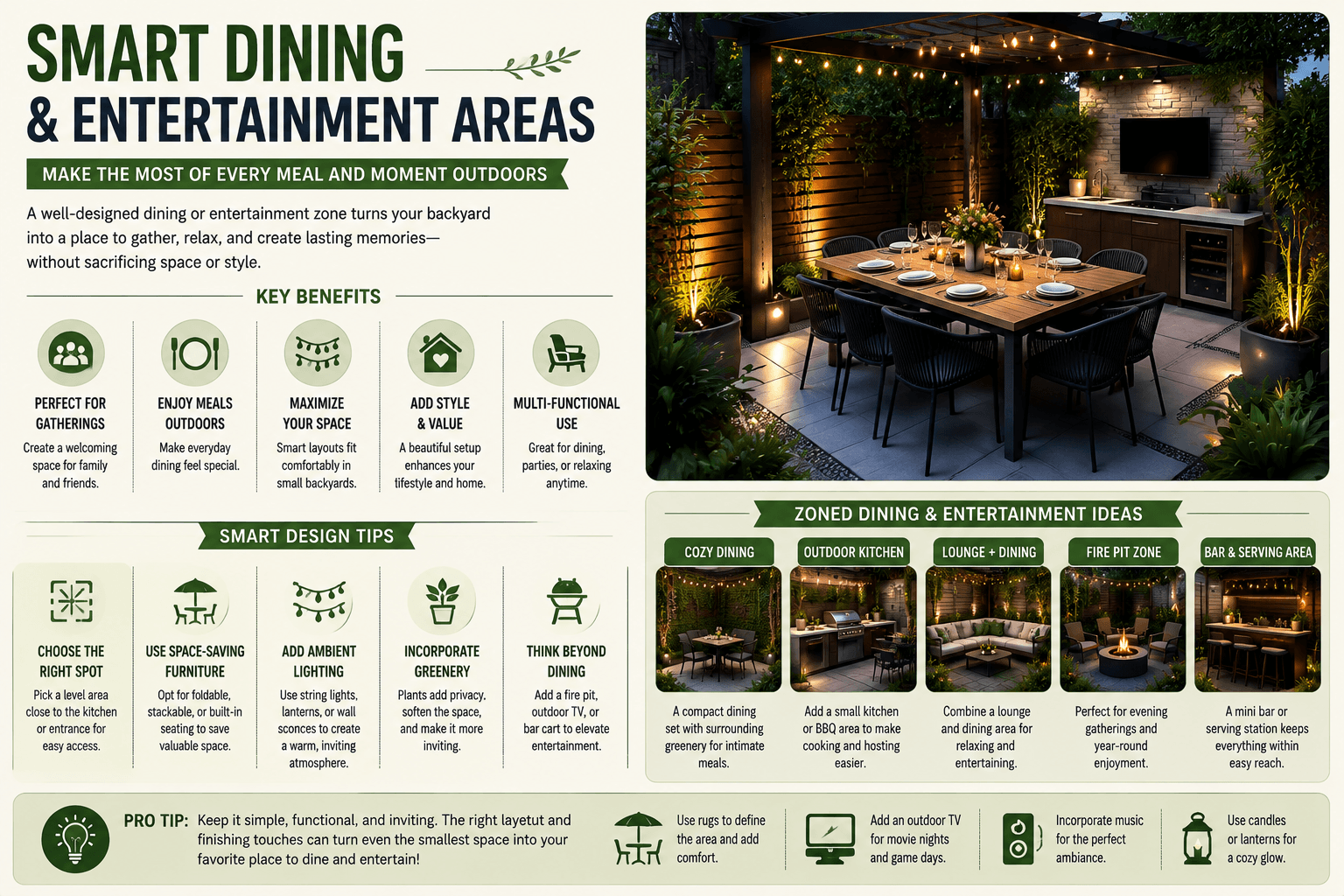
Outdoor dining remains one of the most popular backyard features today. Even compact gardens can include functional dining sections when planned correctly.
Choose foldable or compact furniture whenever possible. Built in benches also save space while increasing seating capacity.
To improve comfort and functionality, include:
- Shade umbrellas
- Compact dining tables
- Weather resistant furniture
- Outdoor lighting
- Decorative planters
Position dining zones close to the house whenever possible. This improves convenience while maintaining smoother movement between indoor and outdoor areas.
Many homeowners now combine dining and entertainment spaces into one flexible backyard zone.
Privacy Zones Improve Comfort and Design
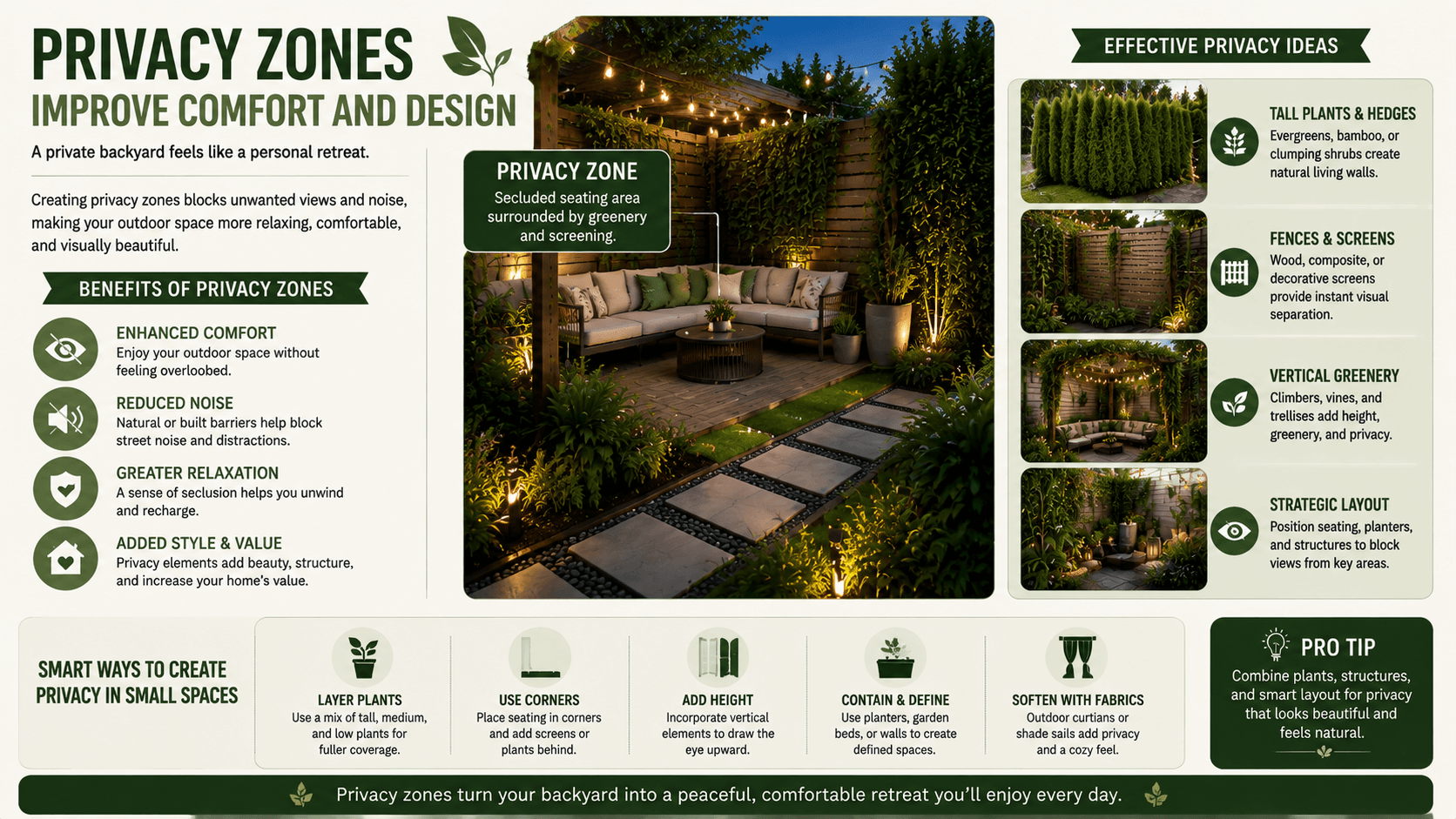
Privacy plays a major role in successful small backyard landscaping. Without privacy, outdoor spaces often feel exposed and uncomfortable.
Fortunately, zoned garden layouts allow privacy features to blend naturally into the overall design.
Effective privacy elements include:
- Wooden slat screens
- Bamboo fencing
- Tall ornamental grasses
- Climbing plants
- Decorative hedges
Natural privacy solutions usually create a softer and more relaxing environment compared to solid walls or heavy fencing.
Strategic privacy placement also makes each backyard zone feel more intimate and purposeful.
How to Avoid Common Zoned Garden Mistakes
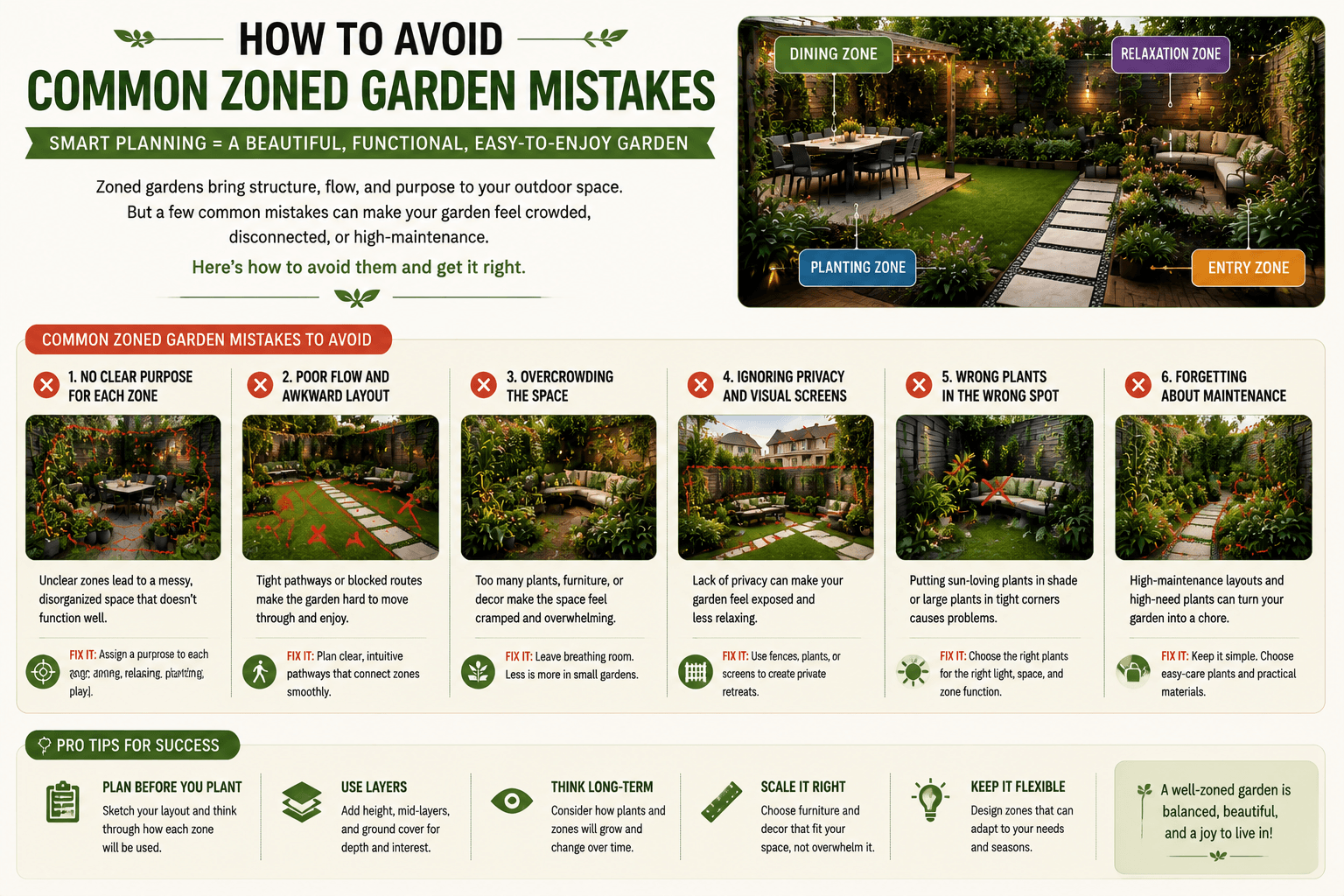
Many homeowners accidentally overcrowd small backyards with too many decorative elements. A zoned garden should improve organization rather than increase visual clutter.
Avoid these common mistakes:
- Using oversized furniture
- Adding too many plant varieties
- Blocking natural movement paths
- Ignoring lighting placement
- Creating unnecessary barriers
Consistency also matters when designing backyard zones. Materials, colors, and textures should complement each other throughout the space.
A simple and balanced layout often performs better than an overly complicated design.
Conclusion
A well designed zoned garden can completely transform a small backyard into a stylish and functional outdoor retreat. Smart zoning creates structure, improves comfort, and maximizes every available inch of space.
The best zoned garden layouts focus on simplicity, functionality, and natural visual flow. Each section should feel connected while supporting a clear purpose.
As more homeowners prioritize outdoor living, small backyard landscaping continues evolving rapidly. Thoughtful zoning techniques now help compact gardens feel larger, more practical, and visually impressive.
At Freaky Thread, modern outdoor design trends continue proving that even the smallest backyard can become an elegant and relaxing space with the right planning strategy.