
Table of Contents:
Introduction:
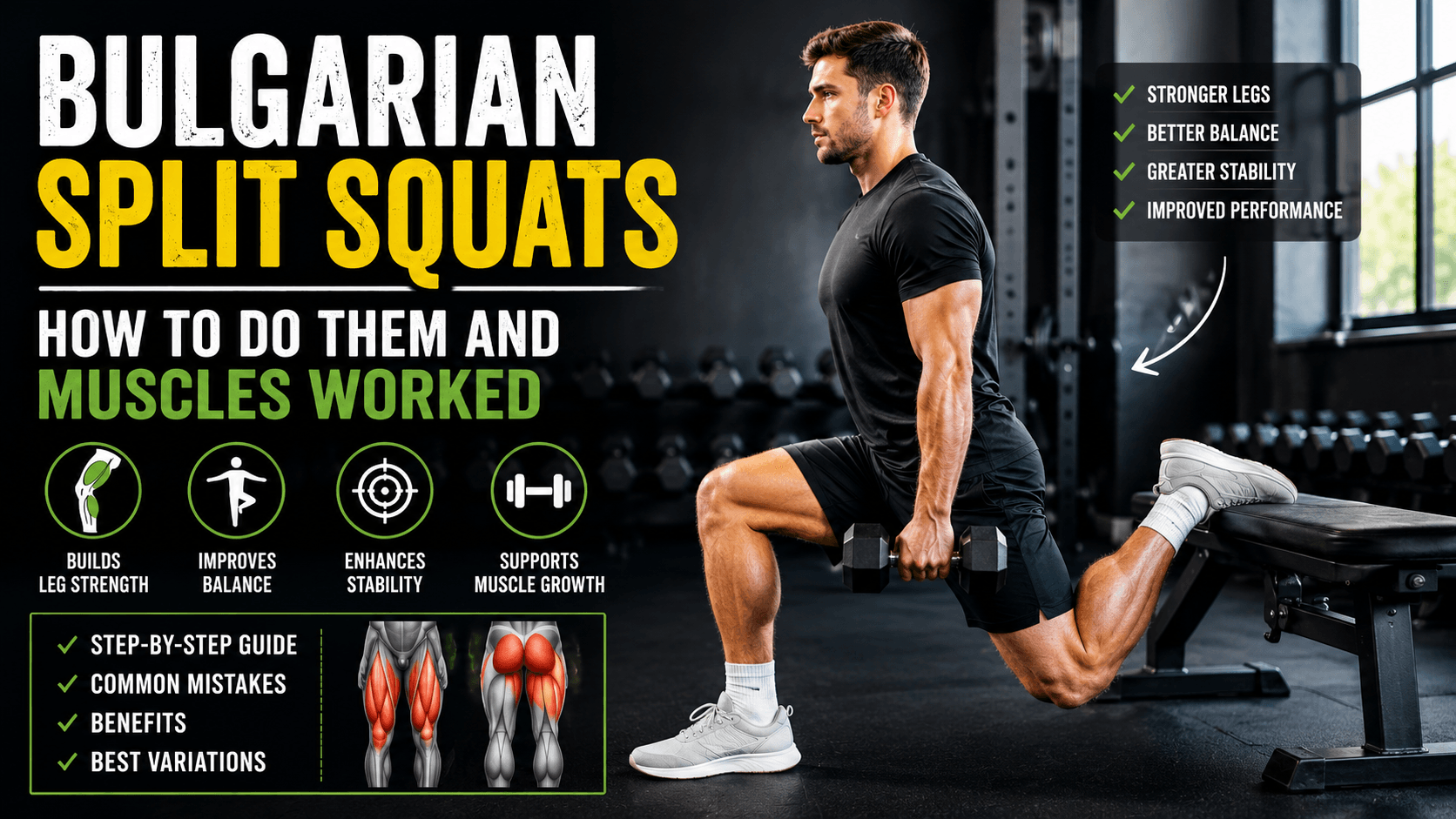
Bulgarian split squats are a challenging exercise for building strong and capable lower-body muscles. This movement uses one primary working leg while the opposite foot rests behind you. The setup makes the exercise different from conventional bilateral squats. It also challenges balance, coordination, stability, and controlled movement throughout every repetition. Freaky Thread explores practical fitness topics that help readers train with greater confidence.
Unlike regular squats, Bulgarian split squats place greater emphasis on unilateral lower-body strength. Your front leg performs most of the movement while your rear leg provides support. This arrangement can make relatively modest amounts of resistance feel surprisingly demanding. Proper positioning therefore matters greatly when learning this exercise for the first time. Research also identifies the Bulgarian split squat as an effective unilateral strength exercise.
Learning the correct technique can make the exercise more comfortable and productive. It is also important to understand which muscles contribute during every stage. This guide explains how to do Bulgarian split squat movements with better control. It also covers muscles worked, common mistakes, benefits, and useful training variations. These details can help beginners and experienced lifters approach the movement more effectively.
What Are Bulgarian Split Squats?
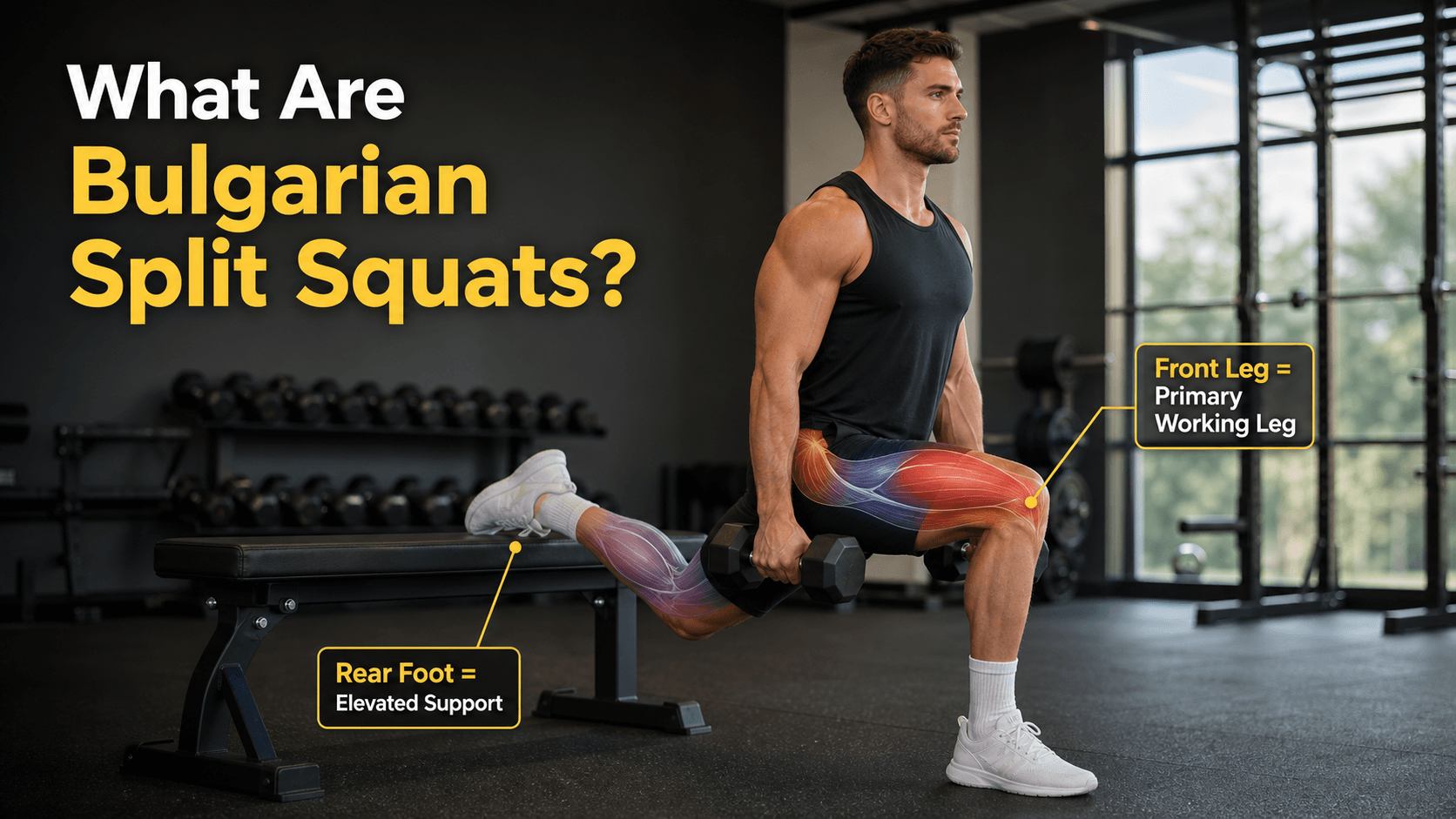
Bulgarian split squats are commonly known as rear-foot elevated split squats. They involve placing one foot behind your body on a stable elevated surface. Your front foot remains planted while your body moves downward and upward. The exercise therefore combines single-leg loading with additional support from your rear leg. This makes the movement challenging without requiring extremely heavy external resistance.
The position of your front foot can significantly influence your movement mechanics. Standing too close may make the movement feel cramped and uncomfortable. Standing excessively far away can create unwanted tension around your rear hip. Finding a comfortable distance usually requires some individual adjustment and practice. The reference article also emphasizes setup as one of the movement’s most important aspects.
Bulgarian split squats can complement traditional exercises within a balanced strength program. They provide unilateral training while the elevated rear leg offers some assistance. This combination allows you to challenge one side without completely removing stability. Research comparing Bulgarian split squats with back squats confirms meaningful differences between their joint demands.
You may also like:
What Do Bulgarian Split Squats Work?
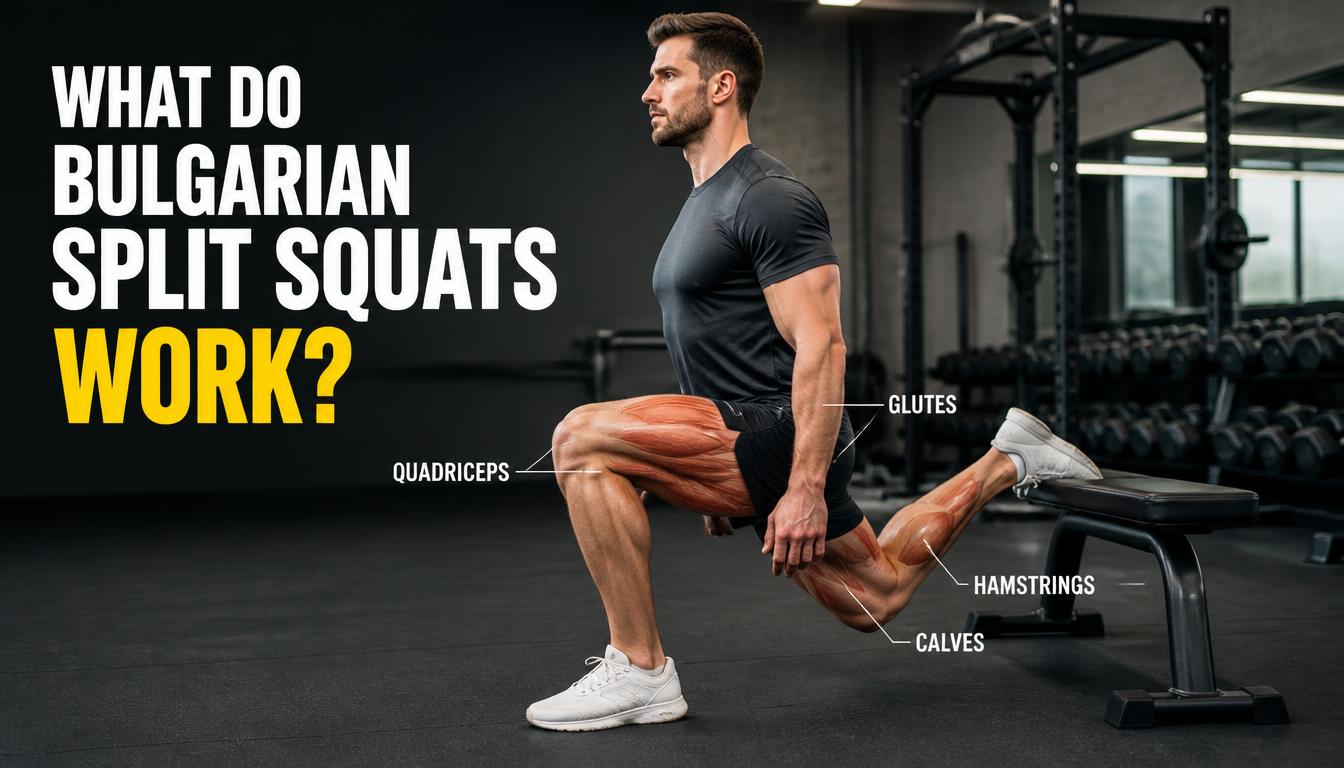
So, what do Bulgarian split squats work during a controlled repetition? The exercise primarily challenges muscles responsible for extending your knee and hip. Your quadriceps help straighten the knee as you rise upward. Your gluteal muscles contribute strongly by extending the hip during the movement. These muscles work together while maintaining control throughout the entire repetition.
The exercise also requires considerable stabilization from muscles around your hips and trunk. Your body must resist unwanted rotation while maintaining a controlled position. This stability requirement becomes especially noticeable when you increase resistance. Research examining Bulgarian split squat variations has measured activity across several lower-body muscles. Those muscles include the gluteus maximus, quadriceps, hamstrings, and stabilizing trunk muscles.
Because one leg performs most of the work, unilateral strength becomes especially important. Training each side separately can reveal differences in strength and movement control. However, Bulgarian split squats should not automatically be described as correcting every imbalance. Individual differences require proper assessment rather than assumptions based on exercise selection alone. Their strongest general advantage remains effective unilateral lower-body training.
You may also like:
What Muscles Do Bulgarian Split Squats Work?
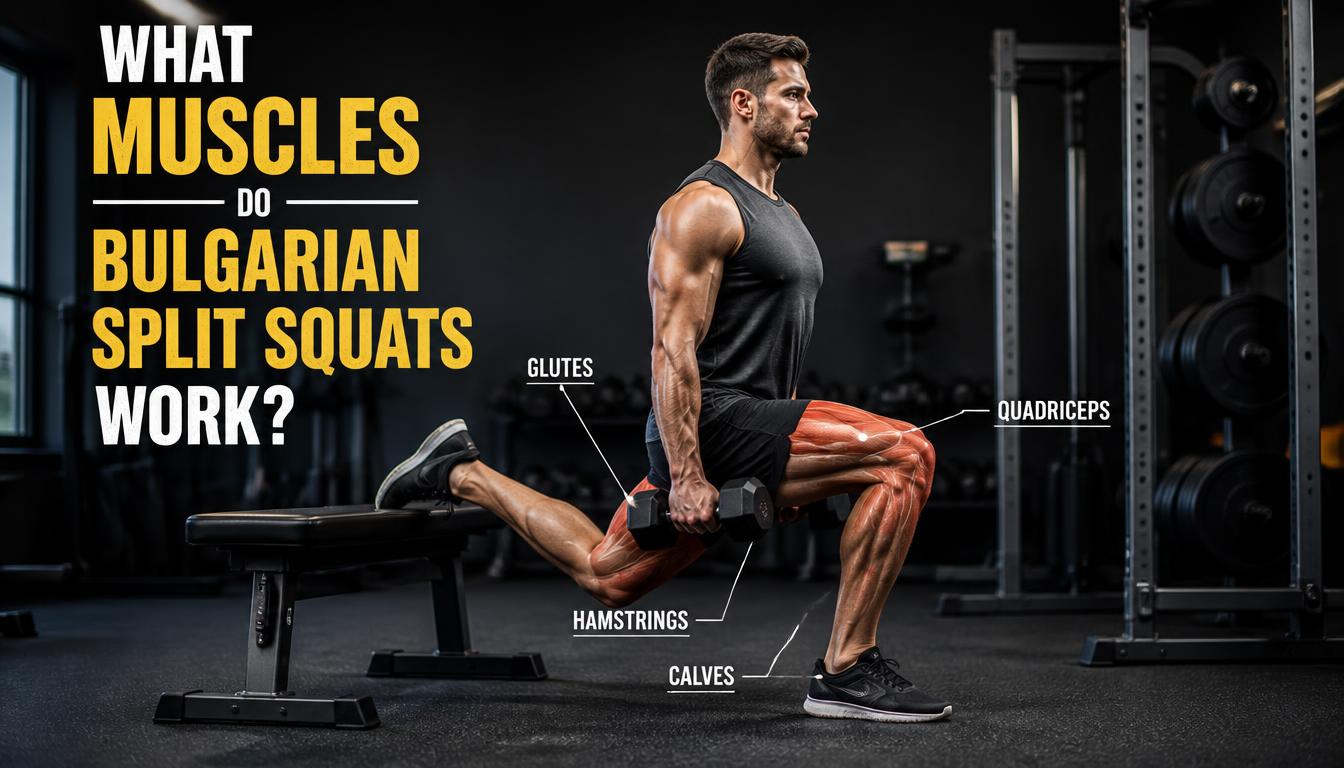
The quadriceps are among the primary muscles working during Bulgarian split squats. These muscles help extend your knee as you push upward. The gluteus maximus also contributes significantly through hip extension during each repetition. Together, these muscles provide much of the force needed to complete the movement. The exact emphasis can change according to your individual technique and positioning.
Your hamstrings and adductors also contribute to the movement and overall leg control. The hamstrings assist with hip extension while helping stabilize the knee. The adductors contribute to hip control and help maintain proper lower-body alignment. These muscles therefore support the major movers rather than working completely independently.
Your core and smaller stabilizing muscles also have important supporting responsibilities. They help maintain posture while your legs move through the exercise. A controlled torso can make the movement feel more stable and predictable. Research suggests that changing trunk position can alter muscle activation during this exercise. Therefore, technique changes should match your specific training goal rather than happen randomly.
You may also like:
How to Do Bulgarian Split Squat Correctly:
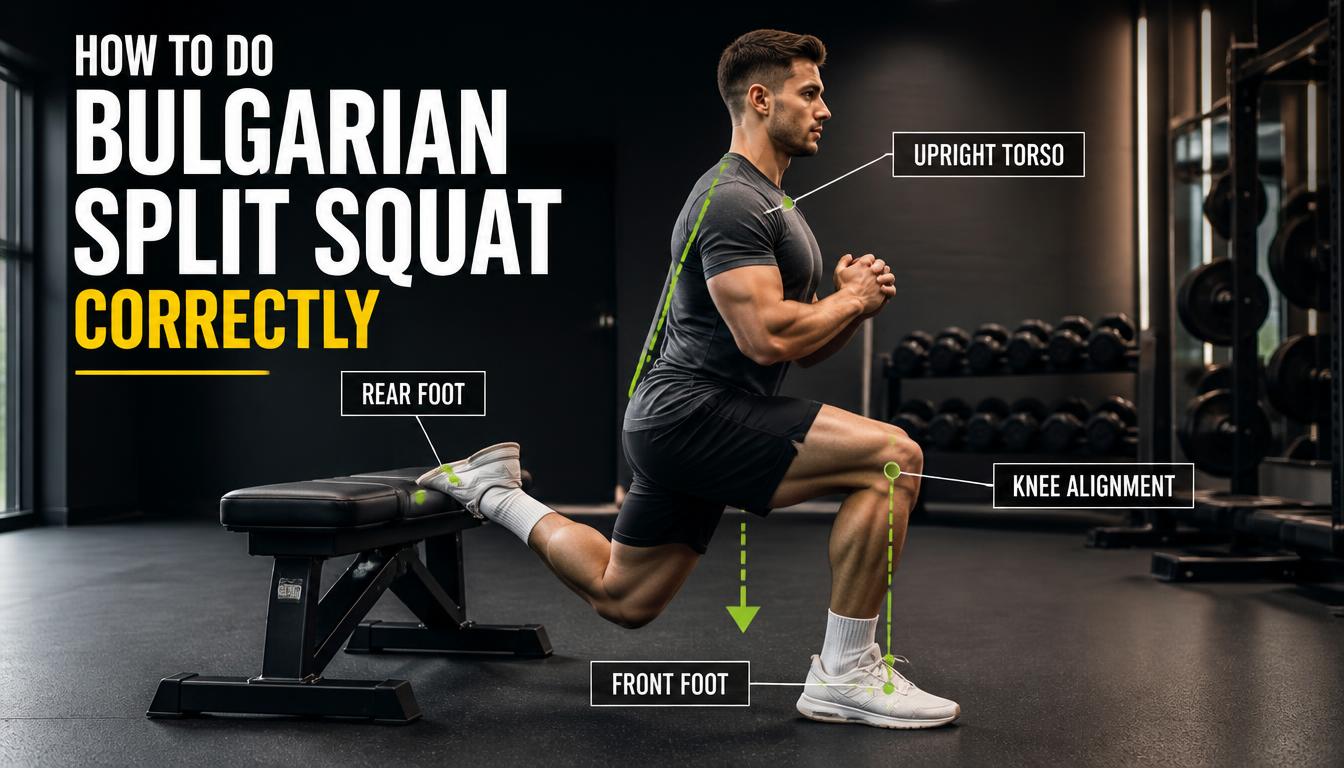
Begin by standing several steps in front of a stable bench or platform. Place one foot behind you onto the elevated surface comfortably. Keep your front foot firmly planted and establish a balanced starting position. Your stance should allow your front knee and hip to move naturally. Finding this position may require several small adjustments before beginning repetitions.
Lower your body gradually by bending the front knee and hip. Keep your chest controlled while allowing your body to descend smoothly. Your front foot should remain stable instead of shifting throughout the movement. Continue lowering until you reach a comfortable depth with controlled positioning. Then push through the front foot and return smoothly to your starting position.
Perform several controlled repetitions before changing sides and repeating the movement. Beginners should focus on balance, range of motion, and consistent technique initially. Adding weight should happen only after the movement pattern feels comfortable. Dumbbells can provide a practical progression without immediately requiring heavy barbell loading. The reference article similarly recommends mastering lighter loading before progressing toward heavier resistance.
You may also like:
Common Mistakes When Performing Bulgarian Split Squats:
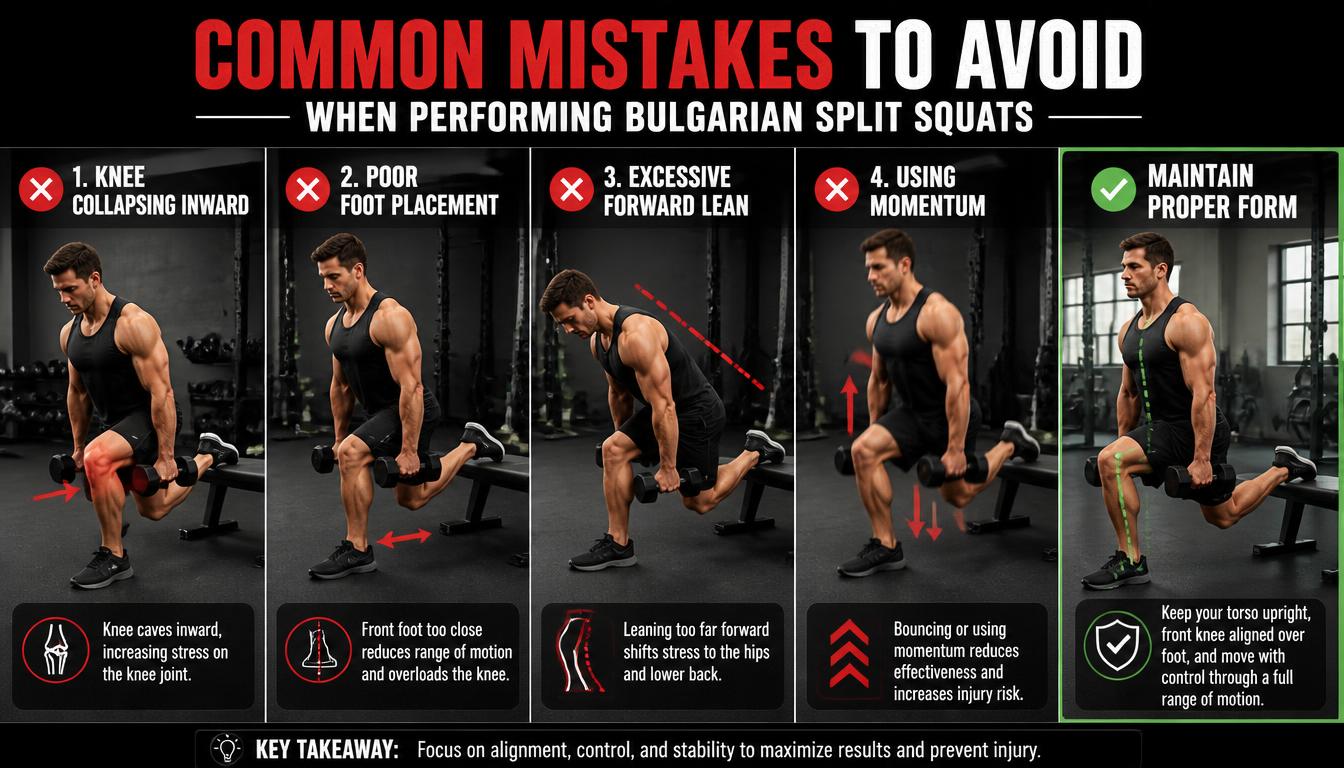
One common mistake involves positioning yourself too close to the elevated surface. This can restrict movement and place excessive emphasis on certain parts. It may also make maintaining a comfortable torso position more difficult. Moving slightly farther forward can sometimes create a more natural movement pattern. However, there is no single stance distance suitable for every person.
Another mistake occurs when someone positions the front foot excessively far forward. This can create uncomfortable stretching around the rear hip or groin. It may also encourage unwanted movement through the lower back during repetitions. Adjusting your stance can help you maintain better control and comfort. Your individual proportions and mobility should guide the final setup.
Using excessive weight before learning proper technique creates another avoidable problem. Heavy resistance can make balance and movement control much harder. Beginners should first establish consistent bodyweight repetitions before adding substantial loading. Controlled repetitions are generally more useful than chasing heavier numbers with poor technique. If the movement causes sharp or unusual pain, stop and seek appropriate professional guidance.
You may also like:
Benefits and Variations of Bulgarian Split Squats:
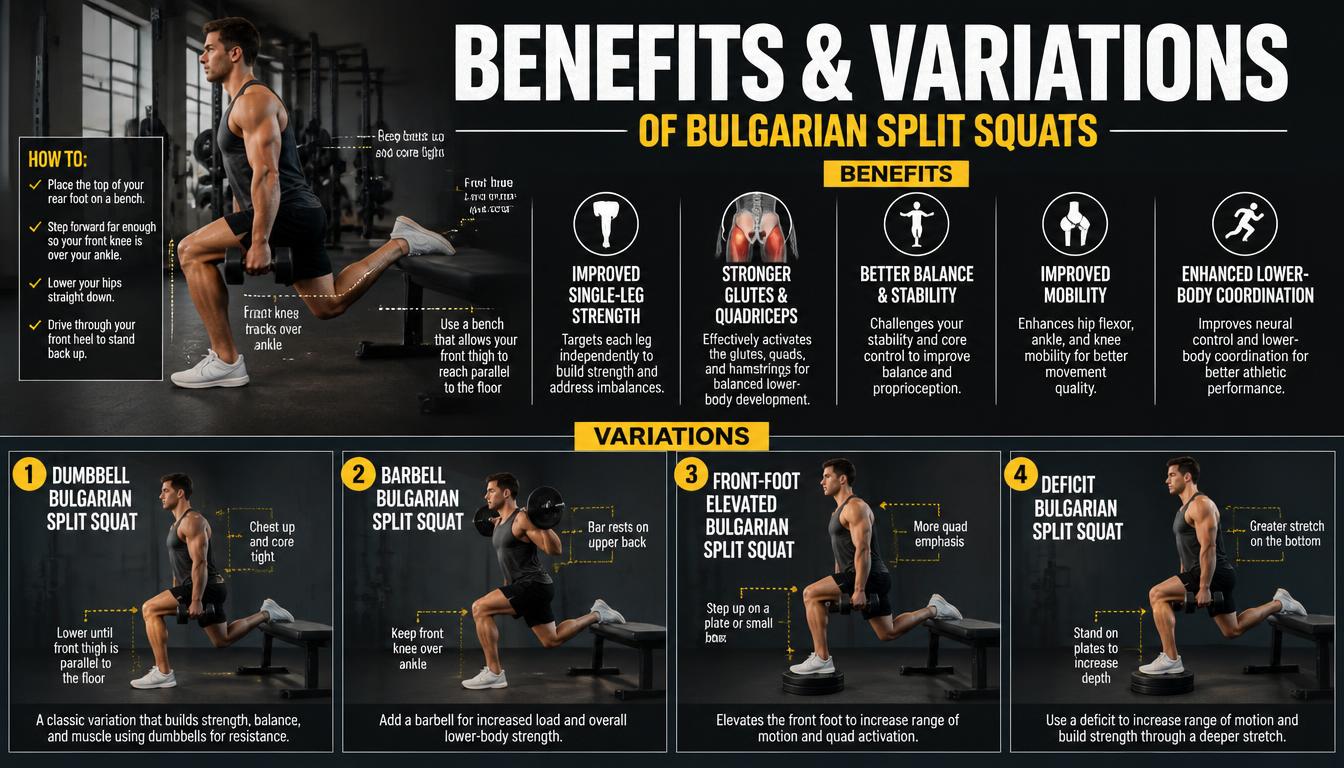
Bulgarian split squats can develop unilateral lower-body strength while challenging balance and stability. They also provide an effective way to train without extremely heavy weights. This makes them practical for many gym environments and limited-equipment situations. Research has found that unilateral resistance training can improve important lower-body performance qualities. However, training outcomes depend on the complete program rather than one exercise alone.
Several variations can make the exercise easier, harder, or simply different. Beginners can start with bodyweight Bulgarian split squats to learn positioning. Dumbbells or kettlebells can then provide manageable external resistance for progression. More advanced lifters may use front-rack, barbell, or resistance-band variations. Slow eccentric repetitions and pauses can also increase the movement’s difficulty without immediately adding substantial weight.
The best variation depends on your training experience and specific exercise objective. There is little reason to choose difficult variations simply because they look impressive. A useful variation should improve your training rather than complicate the movement unnecessarily. Gradual progression remains more important than constantly changing exercise techniques. Current research also demonstrates that Bulgarian split squat training can support strength and muscle adaptations.
You may also like:
Conclusion:
Bulgarian split squats offer an effective way to strengthen your lower body unilaterally. They primarily challenge the quadriceps, glutes, adductors, and supporting stabilizing muscles. The movement also demands balance, coordination, and controlled positioning throughout every repetition. These qualities make the exercise useful for many general strength-training programs. Proper setup remains essential because individual proportions can affect movement comfort.
Learning how to do Bulgarian split squat movements correctly should come before increasing resistance. Start with a comfortable stance and practice controlled repetitions using your bodyweight. Once your technique becomes consistent, gradually introduce dumbbells or other appropriate resistance. Avoid treating heavier weight as the main measure of exercise quality. Consistent technique and progressive training provide a more reliable approach to improvement.
For readers of Freaky Thread, Bulgarian split squats can become a valuable lower-body training option. They can complement traditional squats, lunges, deadlifts, and other strength exercises effectively. Remember that your training program should reflect your experience, goals, recovery, and individual needs. With appropriate technique and gradual progression, this exercise can become extremely challenging. Most importantly, prioritize controlled movement and quality repetitions throughout your training.


