
Table of Contents:
Introduction:
Tight hip flexors can affect movement, posture, and comfort during everyday activities. Many people spend long hours sitting at desks, driving, studying, or using digital devices. These habits may keep the hips in a flexed position for extended periods. As a result, people often look for simple exercises that may help improve hip mobility and flexibility.
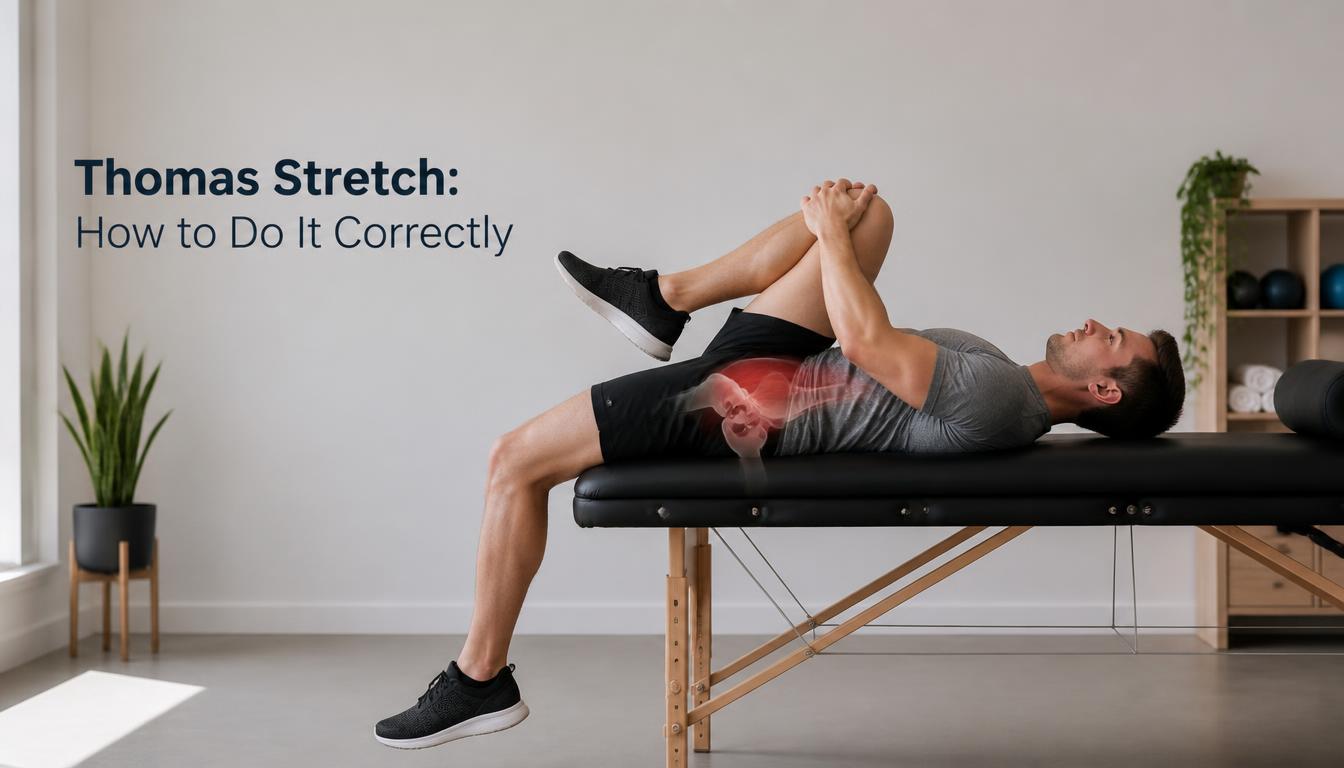
The Thomas stretch is one technique commonly used to stretch the muscles located at the front of the hip. It uses a position similar to the modified Thomas test, which healthcare and movement professionals often use to assess hip flexibility. The stretch allows one leg to relax downward while the opposite leg remains pulled toward the chest.
In this guide from Freaky Thread, you will learn what a Thomas stretch is and how to perform it correctly. You will also discover the muscles involved, potential benefits, common mistakes, and important safety considerations. Understanding proper technique can help you include this stretch more confidently within your regular mobility routine.
What Is a Thomas Stretch?
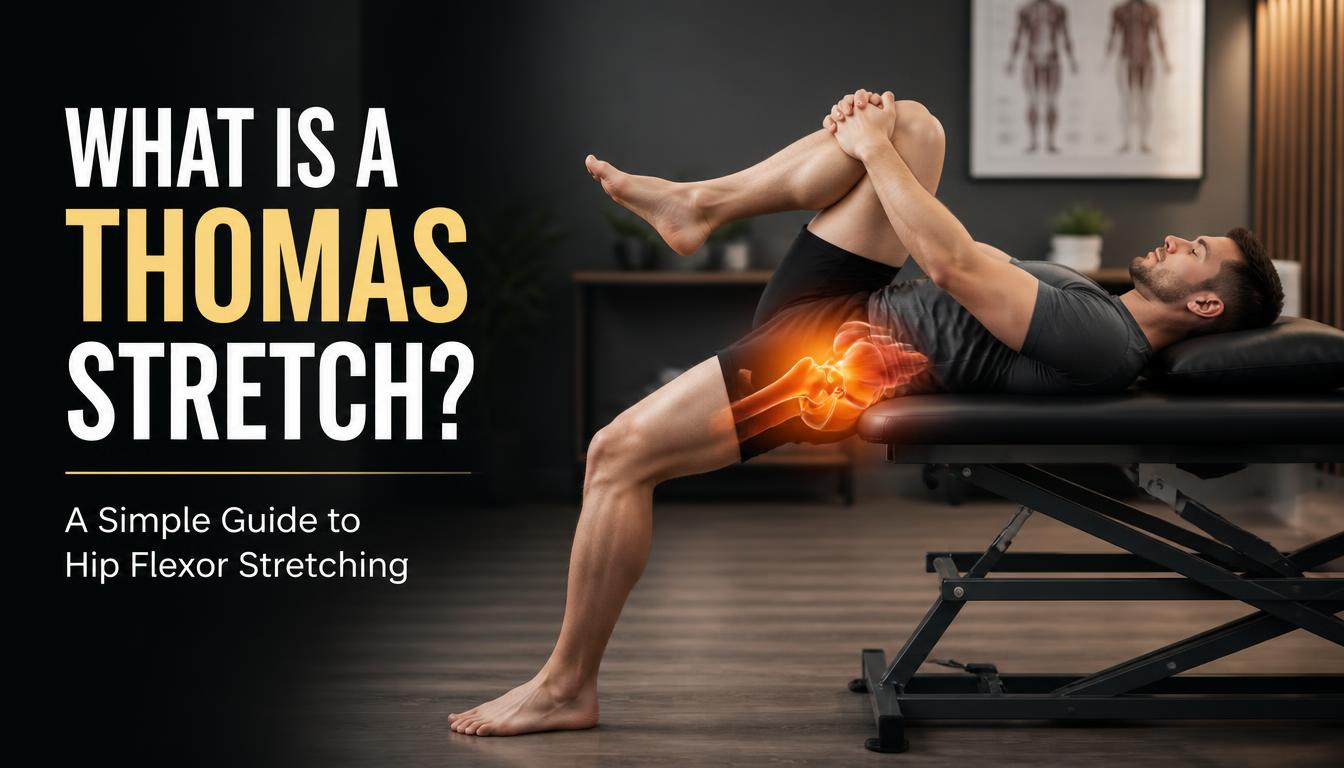
What is a Thomas stretch? The Thomas stretch is a hip flexibility exercise performed while lying near the edge of a stable elevated surface. One knee is held toward the chest while the opposite leg hangs naturally downward. Gravity helps create a gentle stretch through the muscles at the front of the hip.
The exercise is closely related to the Thomas test and modified Thomas test. The original tests are primarily used to assess hip flexor flexibility and movement limitations. However, the same body position can also be used as a stretching intervention. When used for stretching, the goal is relaxation rather than simply measuring movement.
The Thomas stretch mainly targets muscles involved in hip flexion and knee movement. These may include the iliopsoas and rectus femoris, along with other muscles crossing the hip joint. The exact sensation can vary depending on body structure, flexibility, and positioning. Proper pelvic control remains important during the movement.
You may also like:
Muscles Targeted During the Thomas Stretch:
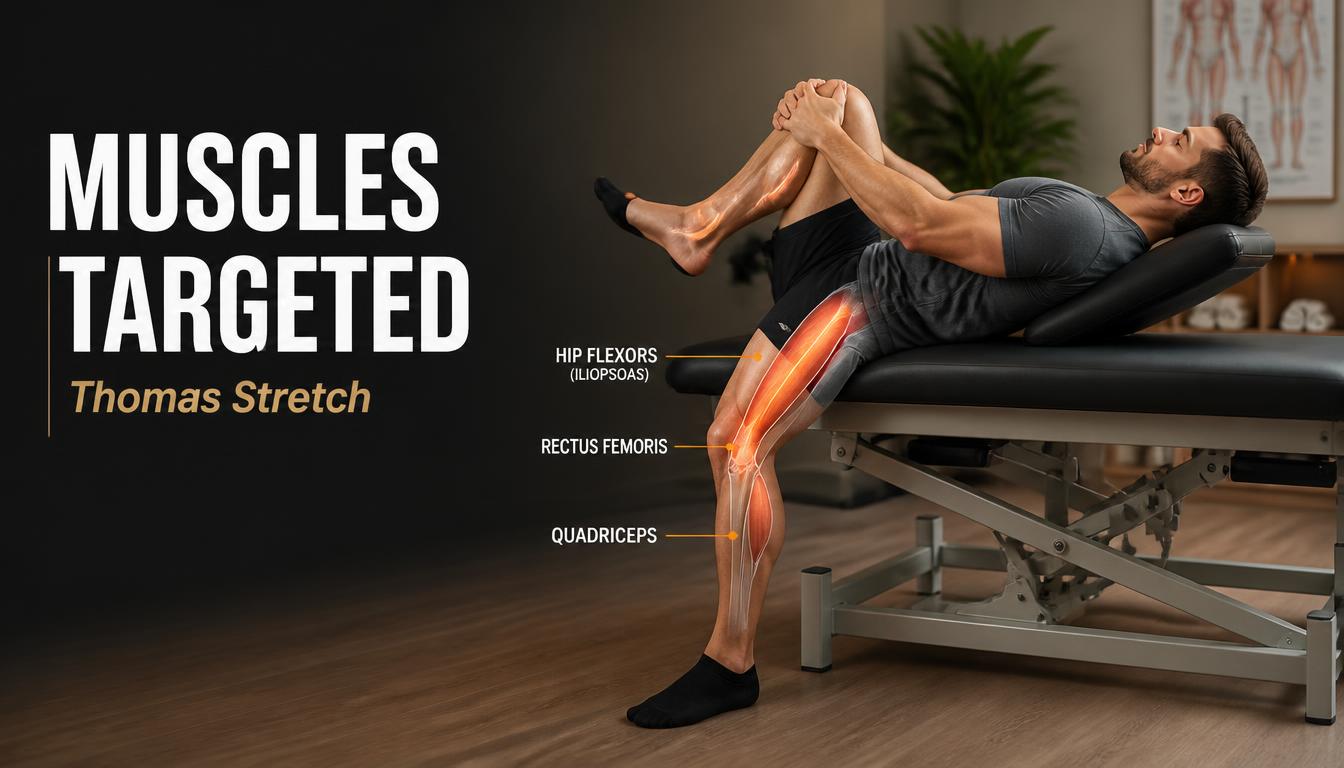
The hip flexors are a group of muscles that help lift the thigh toward the torso. These muscles are involved in walking, running, climbing stairs, and many other daily movements. When the hip remains flexed for prolonged periods, some people may experience reduced comfort or limited movement through hip extension.
The iliopsoas is one of the primary muscle groups associated with hip flexion. The rectus femoris also contributes to hip flexion while crossing the knee joint. Because these muscles have different anatomical roles, the Thomas stretch position may create slightly different sensations depending on how the hanging leg is positioned.
The modified Thomas position is useful because it allows the hip and knee to move naturally. Research involving this position has examined both hip extension and knee movement when evaluating flexibility. Maintaining the opposite knee toward the chest can also help control pelvic positioning during the stretch.
You may also like:
Potential Benefits of the Thomas Stretch:

The main purpose of the Thomas stretch is to encourage temporary improvements in hip extension range of motion. A 2024 study examining gravity stretching in the modified Thomas test position found significant immediate changes following a single three-minute intervention. However, those improvements were not significantly maintained after 48 hours.
This finding suggests that the Thomas stretch may provide short-term flexibility benefits rather than guaranteed long-term changes from one session. Regular mobility work may therefore be more important than relying on occasional stretching. Individual results can also vary according to training habits, activity levels, and overall movement patterns.
The stretch may be useful for people who spend substantial time sitting or performing repetitive movements. Athletes, office workers, and physically active individuals may include hip mobility exercises within broader routines. However, stretching should not be viewed as a guaranteed treatment for pain, injuries, or medical conditions without professional guidance.
You may also like:
How to Do the Thomas Stretch Correctly:
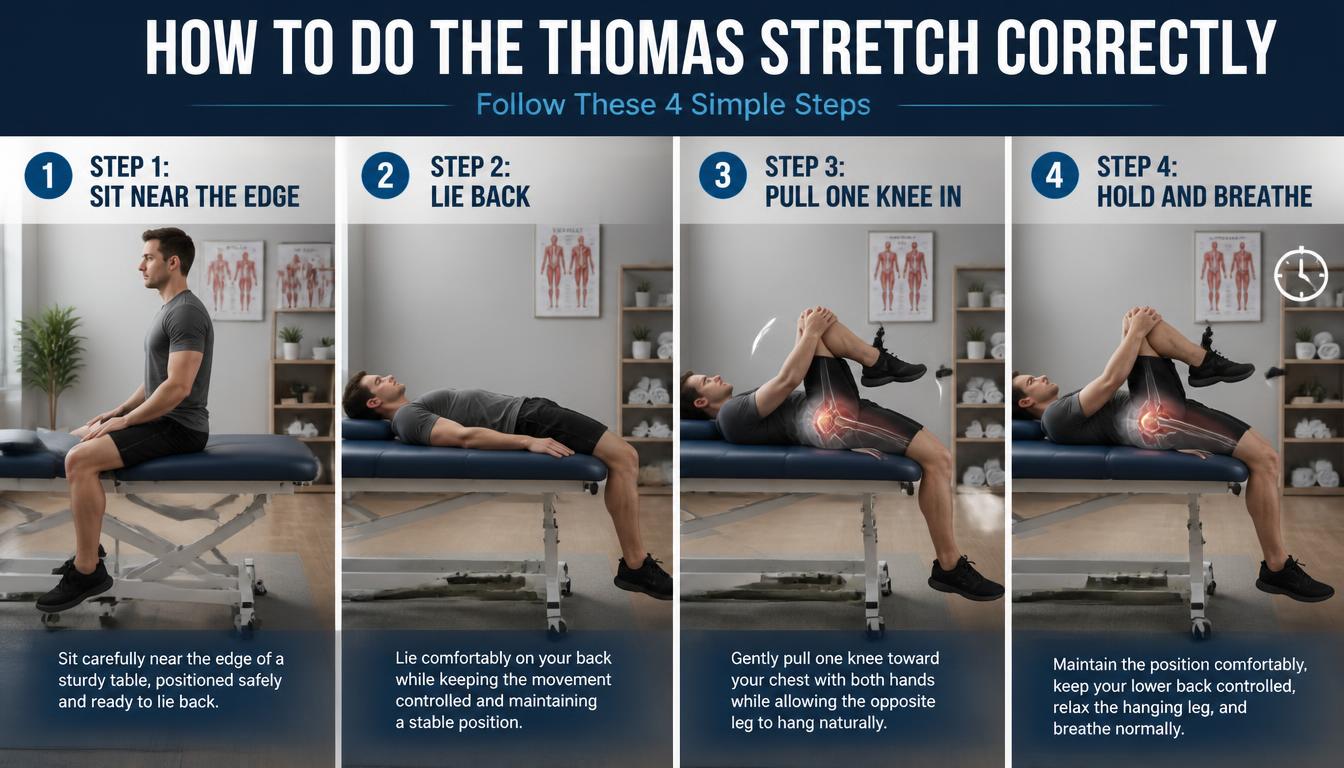
To learn how to do the Thomas stretch, begin by choosing a stable and secure elevated surface. A firm treatment table or sturdy bed may work if the position allows your leg to hang safely. Sit near the edge, then carefully lower your upper body until you are lying comfortably on your back.
Pull one knee gently toward your chest and hold it using both hands. Keep your back relaxed against the surface while maintaining a controlled position. Allow the opposite leg to hang naturally toward the floor without forcing it downward. The movement should feel controlled and comfortable rather than painful or aggressive.
Remain relaxed and breathe normally throughout the stretch. Avoid excessive lower-back arching because uncontrolled pelvic movement can change the position of the hip. Hold the stretch according to your comfort and experience level, then carefully return to the starting position. Repeat the movement on the opposite side if appropriate.
You may also like:
Common Mistakes to Avoid:
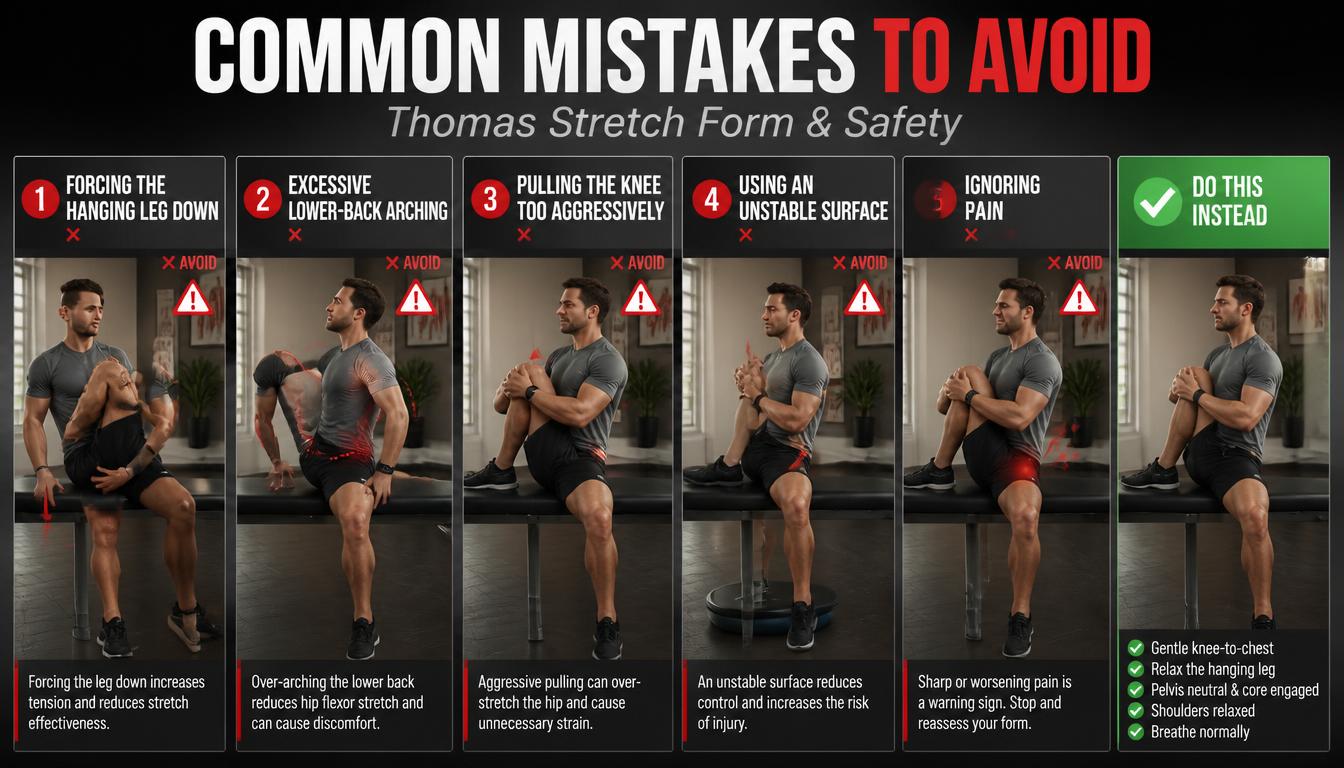
One common mistake is forcing the hanging leg toward the floor to increase the stretching sensation. A stronger sensation does not always mean the stretch is more effective or safer. Allowing gravity to gradually create the movement is generally more consistent with the Thomas stretch approach used in research.
Another mistake involves excessive arching through the lower back during the exercise. This can alter pelvic positioning and make it difficult to understand where movement is occurring. Keeping the opposite knee comfortably toward the chest may help reduce unwanted pelvic movement and improve control throughout the stretch.
Using an unstable surface is another important concern that people should avoid. The Thomas stretch requires you to position part of your body near an elevated edge. Always ensure the surface is stable before beginning the movement. Stop immediately if you experience sharp, worsening, or unusual pain during stretching.
You may also like:
Thomas Stretch vs. Thomas Test:
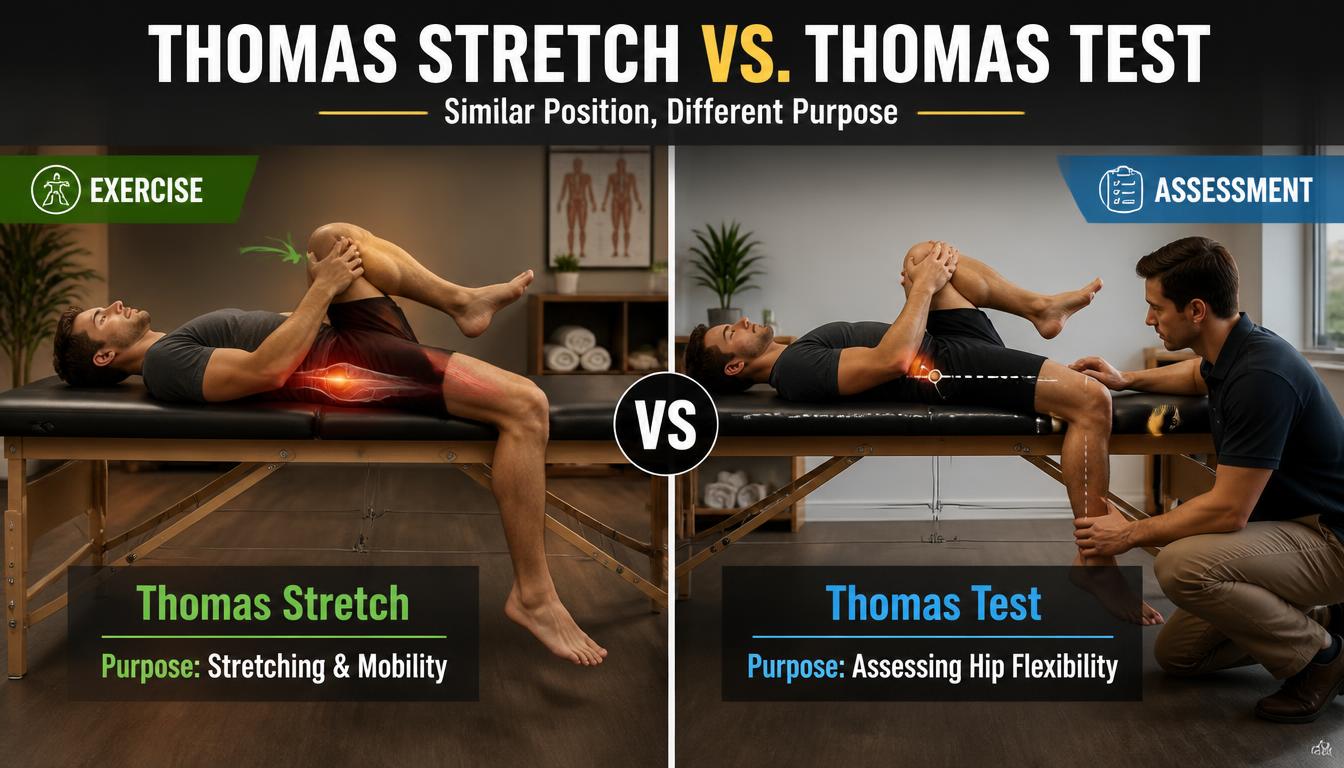
The Thomas test and Thomas stretch are related, but they serve different primary purposes. The Thomas test is traditionally used as an assessment tool for identifying possible limitations in hip flexibility. Professionals may observe the position of the thigh and knee to evaluate movement characteristics.
The Thomas stretch uses a similar position as an exercise rather than purely an assessment. Instead of measuring the body’s movement, the individual remains relaxed and allows gravity to create a stretching effect. This makes the technique practical for people interested in hip mobility and flexibility exercises.
Research on the modified Thomas test has demonstrated that the same position can function as both an assessment and intervention method. The 2024 reference study used gravity stretching for three minutes and found immediate range-of-motion changes. However, the researchers concluded that one isolated stretching session was insufficient for prolonged flexibility improvements.
You may also like:
Who Should Consider the Thomas Stretch?
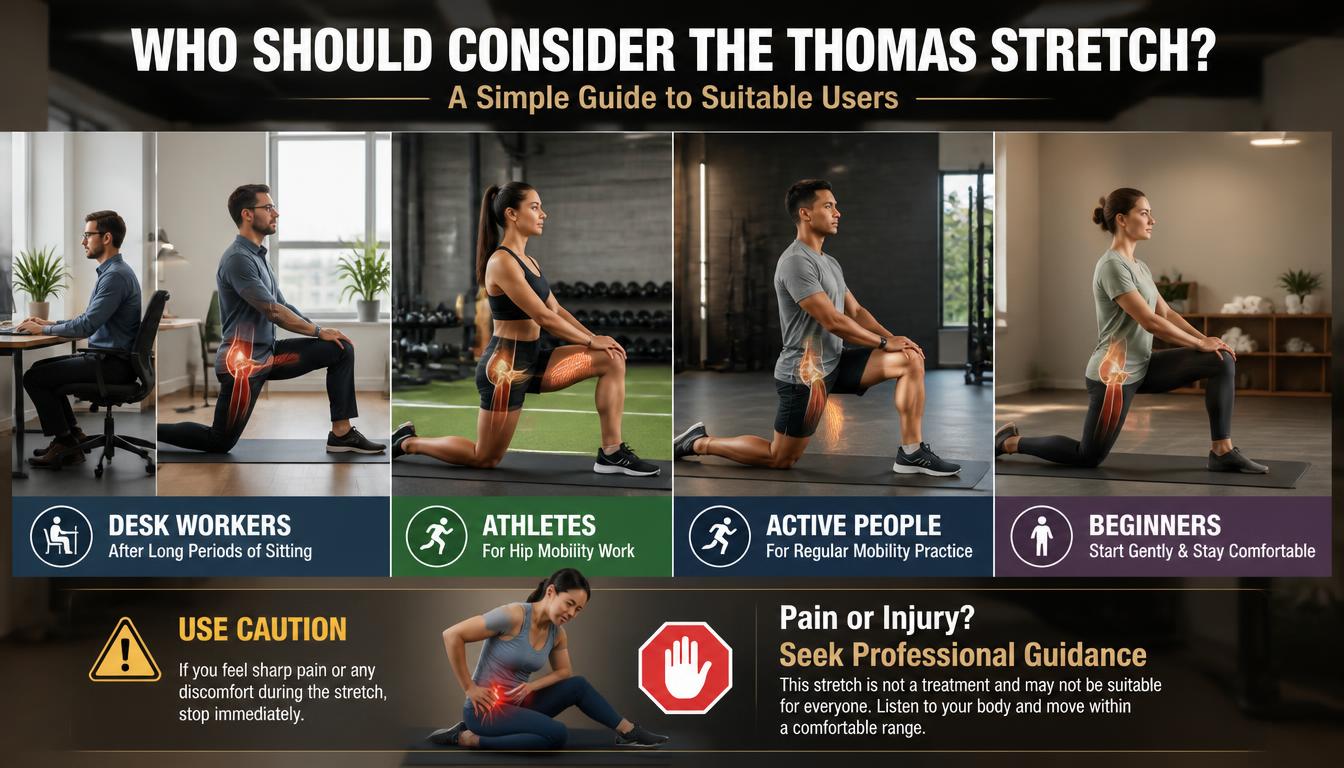
The Thomas stretch may be considered by generally healthy individuals looking to include hip mobility exercises within their routines. People who sit frequently may find gentle stretching useful after prolonged periods of inactivity. Athletes and recreational exercisers may also use mobility work as part of broader training programs.
Beginners should approach the exercise carefully and avoid pushing beyond their comfortable range of movement. Flexibility varies considerably between individuals, and comparing your range of motion with another person can be misleading. A controlled and relaxed position is generally more valuable than trying to achieve an extreme stretch.
People recovering from injuries or experiencing persistent hip, back, knee, or pelvic pain should seek professional advice first. The Thomas stretch is not a substitute for medical assessment or individualized rehabilitation. A physiotherapist or qualified healthcare professional can determine whether this movement is appropriate for specific limitations or conditions.
You may also like:
Conclusion:
The Thomas stretch is a simple hip mobility exercise based on a position similar to the modified Thomas test. It involves holding one knee toward the chest while allowing the opposite leg to relax downward. This position may help create a stretch through important muscles located at the front of the hip.
Understanding how to do the Thomas stretch correctly can help you avoid unnecessary mistakes and discomfort. Research suggests that gravity stretching in this position can produce immediate improvements in hip range of motion. However, one stretching session alone should not be expected to create lasting flexibility changes over time.
For best results, focus on proper positioning, relaxed breathing, and consistent movement habits. Never force the stretch or continue through sharp pain. At Freaky Thread, we believe practical fitness information should be simple, evidence-based, and easy to understand. The Thomas stretch can be a useful addition to a balanced mobility routine when performed safely and appropriately.


