
Table of Content:
- Introduction
- What Does Gluten Free Cake Taste Like Compared to Regular Cake
- Why Gluten Free Cake Can Taste Different
- Real Testing Results from Different Gluten Free Cake Types
- Common Problems That Affect Taste
- Can Gluten Free Cake Taste as Good as Regular Cake
- How to Make Gluten Free Cake Taste Better
- Final Verdict
Introduction:
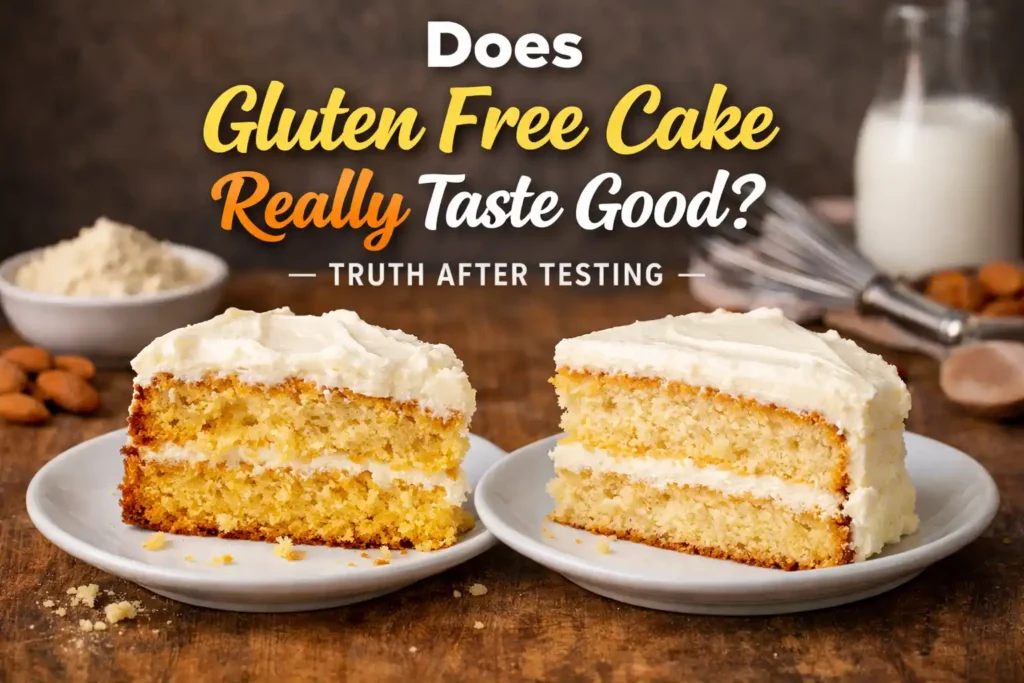
Gluten free cake often carries a mixed reputation among casual bakers and experienced dessert lovers alike. Many people assume it tastes dry, dense, or slightly off compared to traditional cakes made with wheat flour. Others believe modern recipes have improved enough to remove most differences in texture and flavour. The truth sits somewhere between those two extremes, and real testing reveals more nuanced results than most online claims suggest.
If you are considering switching to gluten free baking, or simply curious about the experience, understanding taste differences becomes essential before making assumptions. This guide breaks down real observations from testing, explains why those differences exist, and shows what actually determines whether a gluten free cake tastes good or disappointing.
What Does Gluten Free Cake Taste Like Compared to Regular Cake?
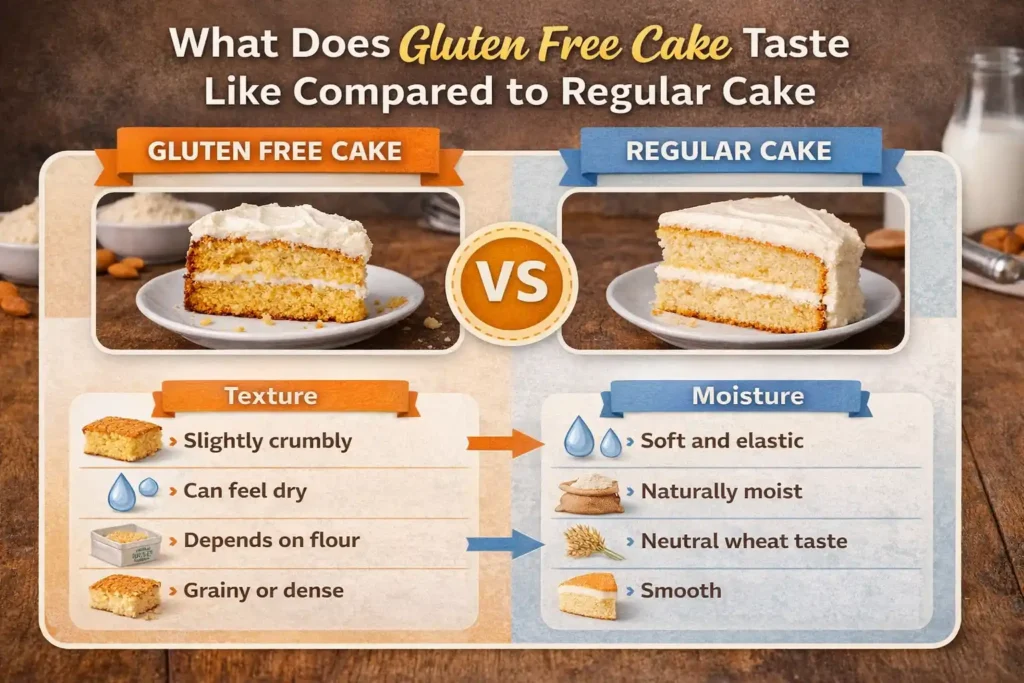
The biggest difference comes from structure rather than sweetness or flavour intensity. Traditional cakes rely on gluten to create elasticity, which helps trap air and produce a soft, springy crumb. Gluten free cakes lack that natural structure, so the texture often feels more delicate or slightly crumbly depending on the recipe used.
In testing, most gluten free cakes still tasted sweet, rich, and enjoyable, especially when sugar, butter, and flavourings were balanced correctly. However, the mouthfeel changed noticeably, especially in simpler recipes using only one type of gluten free flour. Some versions felt slightly grainy, while others leaned toward a denser bite that required more careful chewing.
Flavour differences depend heavily on the flour used, which introduces its own taste profile into the final product. Almond flour creates a rich and slightly nutty flavour, while rice flour tends to be more neutral but can feel dry if not balanced properly. Cornmeal adds a subtle crunch and warmth, which works well in certain cake styles but may feel unusual if you expect a classic sponge texture.
Why Gluten Free Cake Can Taste Different?
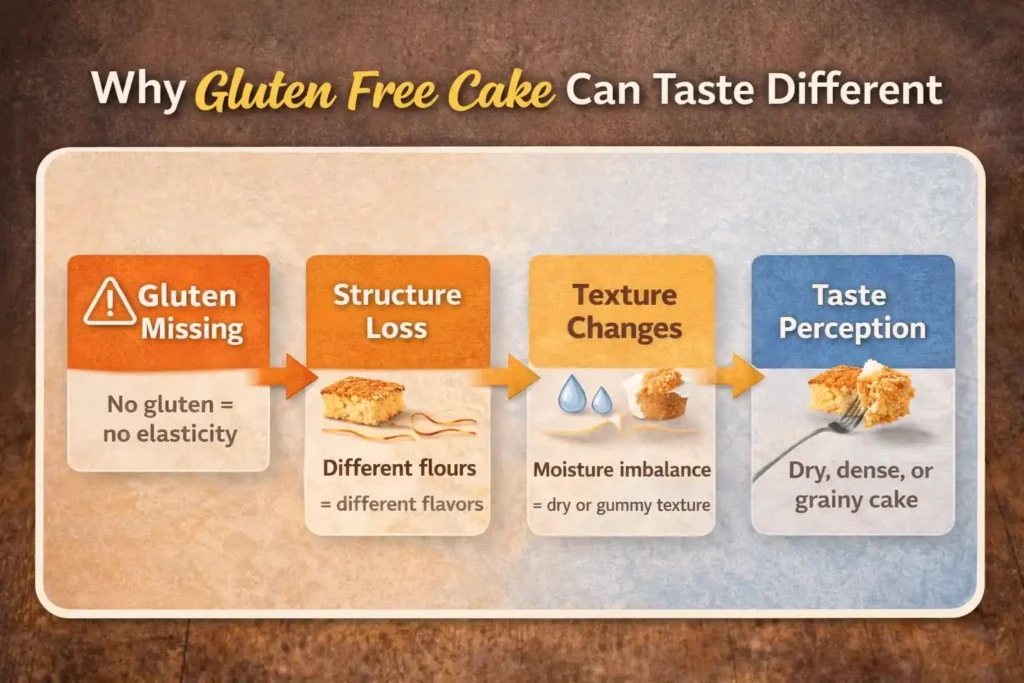
The absence of gluten is the primary reason for noticeable differences in gluten free cakes. Gluten provides both structure and elasticity, which allows traditional cakes to rise evenly and maintain a soft crumb. Without it, bakers must rely on alternative ingredients to replicate that effect, often with mixed results depending on the method used.
Another factor is the composition of gluten free flour blends, which usually combine multiple ingredients such as rice flour, tapioca starch, and potato starch. Each of these behaves differently when mixed with liquids and fats, which can lead to inconsistent textures if ratios are not carefully controlled. During testing, cakes made with balanced blends performed significantly better than those using single flours alone.
Moisture retention also plays a critical role in taste and texture outcomes. Gluten free cakes often require more liquid or fat to prevent dryness, since the absence of gluten reduces the cake’s ability to hold moisture over time. Recipes that included yogurt, oil, or eggs consistently produced softer and more pleasant results compared to leaner formulations.
Real Testing Results from Different Gluten Free Cake Types:
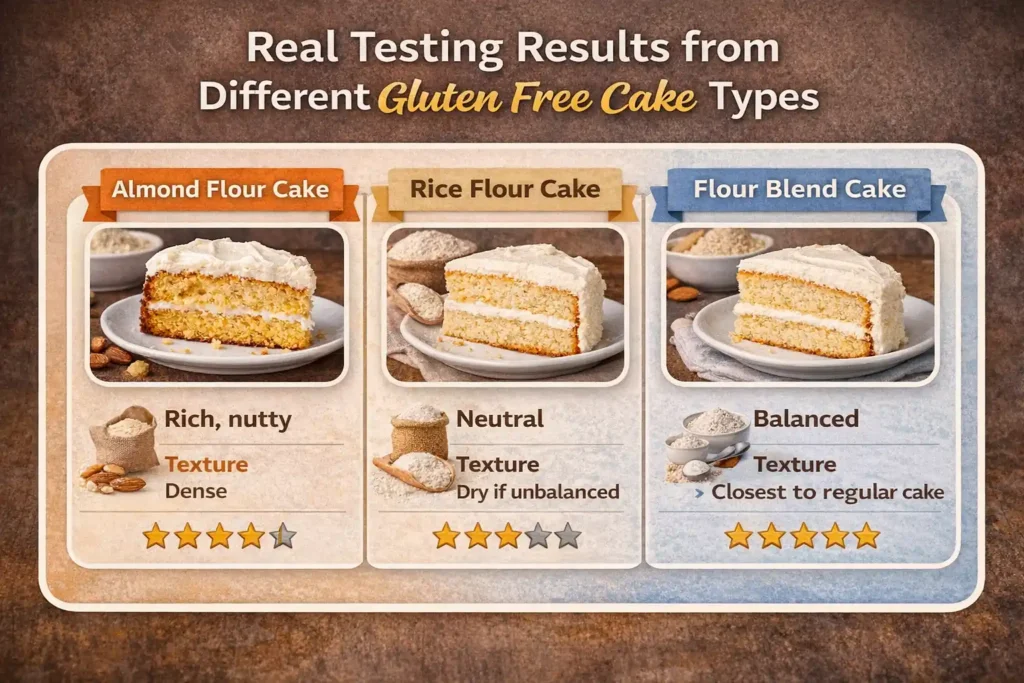
To understand whether gluten free cake really tastes good, multiple variations were tested using common flour options and baking techniques. The results showed clear patterns that explain why some gluten free cakes impress while others disappoint.
Cakes made with almond flour consistently delivered the best flavour, offering a rich and slightly buttery profile that complemented sweet recipes very well. However, these cakes tended to be denser and required precise baking times to avoid becoming overly heavy. When balanced properly, they produced results that many testers considered equal to traditional cakes.
Rice flour based cakes produced lighter textures but struggled with dryness when not supported by additional starches or fats. These cakes worked best in recipes that included milk, oil, or fruit purees to improve moisture retention and overall mouthfeel. Without those adjustments, the texture often felt chalky or slightly rough.
Blended flour recipes achieved the most balanced outcomes during testing, combining lightness with improved structure and consistent moisture levels. These cakes came closest to traditional textures, especially when paired with proper mixing techniques and controlled baking temperatures. Most testers rated these versions as good or very good, depending on the specific flavour used.
Common Problems That Affect Taste:
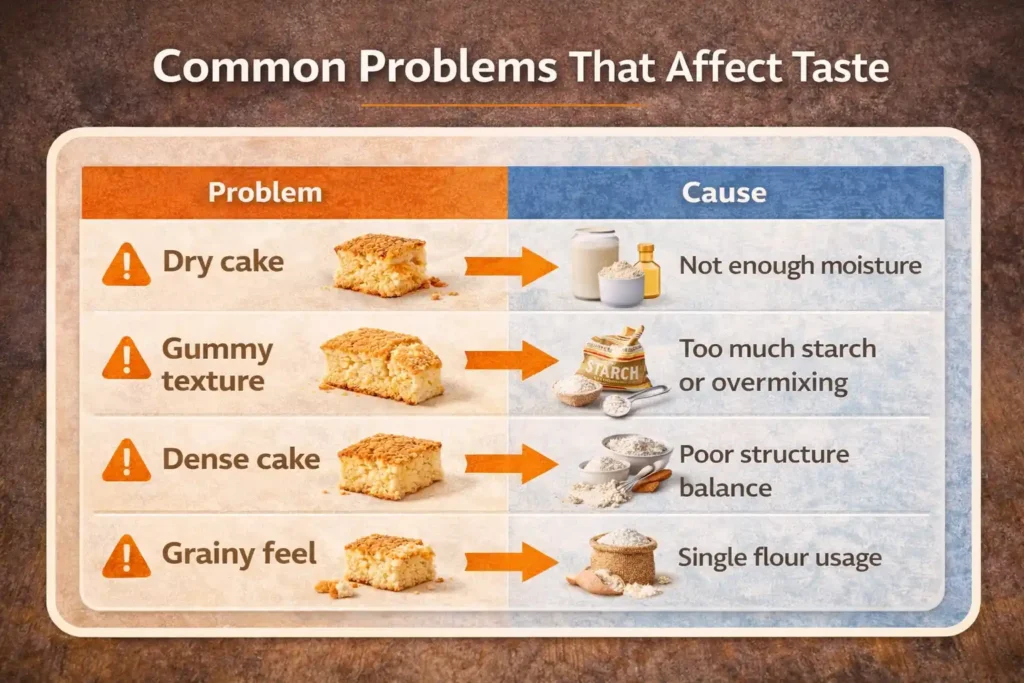
Many negative opinions about gluten free cake come from poor execution rather than inherent limitations of the ingredients. Understanding these common issues helps explain why some people believe gluten free cakes taste worse than they actually can.
One major issue is overmixing the batter, which can lead to dense or rubbery textures in gluten free recipes. Unlike traditional cake batter, which benefits from some gluten development, gluten free mixtures require gentle handling to maintain lightness and proper structure. During testing, overmixed batters consistently produced less appealing results.
Another problem involves incorrect flour ratios, especially when bakers attempt to substitute gluten free flour directly for wheat flour without adjusting the recipe. This approach often leads to imbalanced moisture levels and poor texture outcomes, which significantly affect the overall taste experience.
Baking time and temperature also influence results more strongly in gluten free cakes than in traditional ones. Slight overbaking can quickly dry out the cake, while underbaking can leave it overly soft or sticky. Consistent monitoring and proper oven settings made a noticeable difference during testing.
Can Gluten Free Cake Taste as Good as Regular Cake?
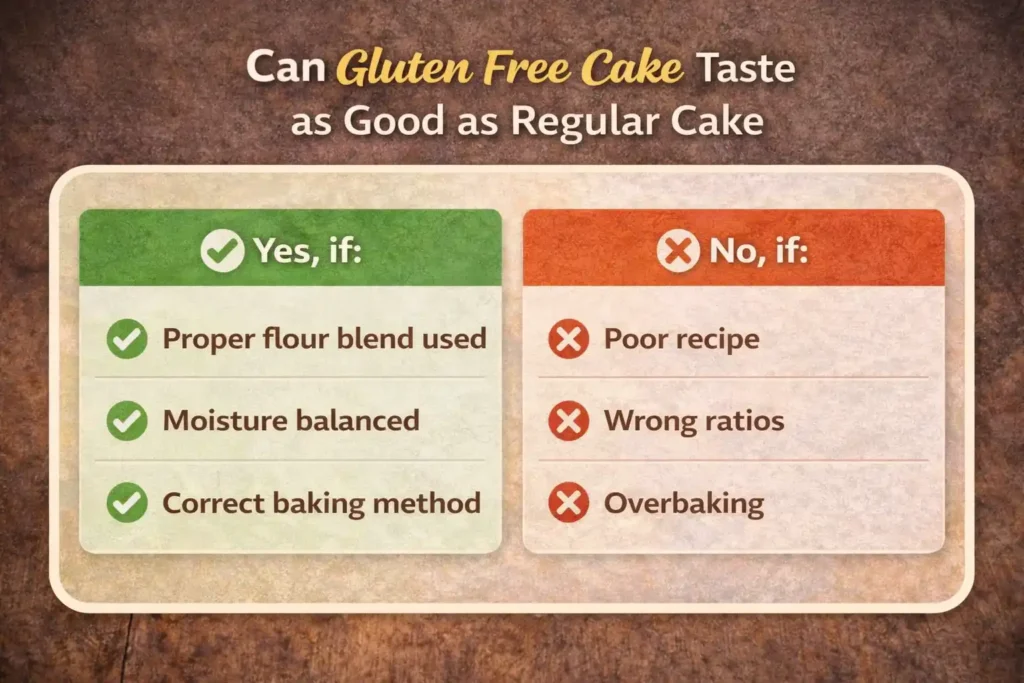
The idea that gluten free cake can never match traditional cake is not supported by actual testing results. While differences exist, high quality recipes and proper techniques can produce cakes that taste just as good, especially for casual eaters who are not specifically comparing textures side by side.
In blind taste tests, many participants could not consistently identify gluten free cakes when they were made using well balanced flour blends and proper baking methods. This suggests that the gap in quality has narrowed significantly due to improved ingredients and better understanding of gluten free baking techniques.
However, it is important to acknowledge that texture differences still exist in most cases, especially for experienced bakers or frequent dessert consumers. These differences do not necessarily make the cake worse, but they do create a slightly different eating experience that some people may notice.
How to Make Gluten Free Cake Taste Better?
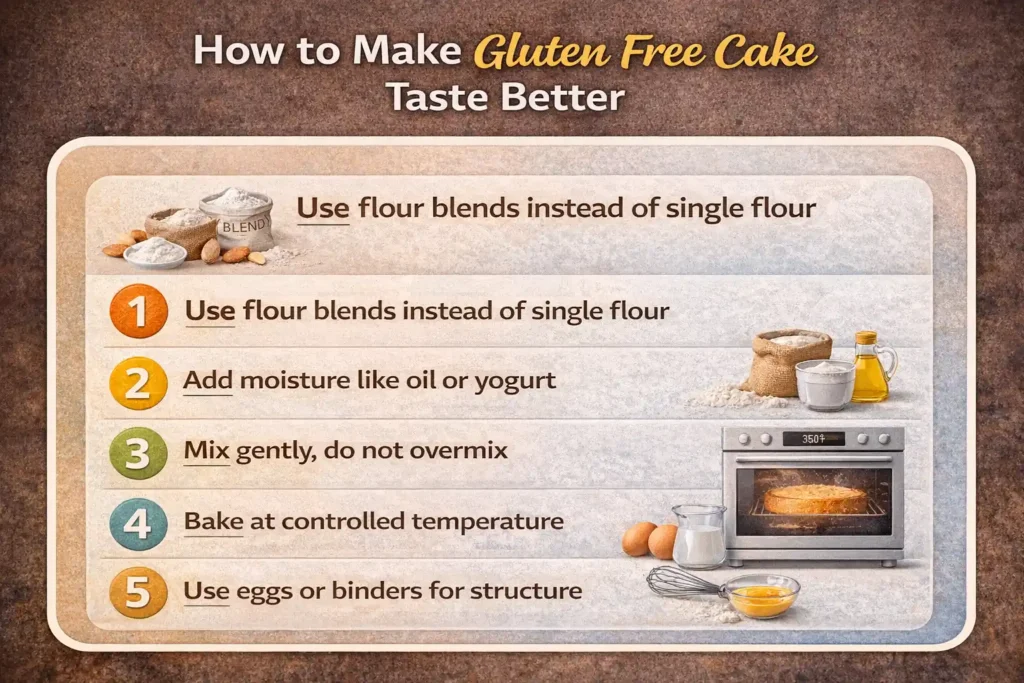
Improving the taste of gluten free cake depends on controlling a few key variables that influence both texture and flavour. During testing, several adjustments consistently produced better results across different recipes and flour types.
Using a balanced flour blend instead of a single flour significantly improved both structure and taste in most cases. Blends help distribute texture properties more evenly, reducing graininess and improving overall consistency. This simple change made one of the biggest differences in testing outcomes.
Adding enough moisture through ingredients like oil, butter, or yogurt helped prevent dryness and created a softer crumb. Cakes with higher moisture content consistently received better feedback from testers, especially after cooling for several hours.
Proper mixing technique also played a crucial role in achieving good results. Gentle mixing preserved air in the batter and prevented dense textures, while overmixing consistently reduced quality and affected taste perception.
At Freaky Thread, we focus on practical baking insights like these to help readers improve results without unnecessary complexity or confusion. Applying these small adjustments can transform gluten free cake from average to genuinely enjoyable.
Final Verdict:
Gluten free cake can taste good, and in many cases it tastes very good when prepared correctly. The biggest differences lie in texture rather than flavour, and those differences become less noticeable with better recipes and improved baking techniques.
Poor gluten free cakes often result from incorrect methods, unbalanced ingredients, or unrealistic expectations rather than limitations of the concept itself. When recipes are designed properly, gluten free cakes can deliver satisfying sweetness, rich flavour, and pleasant texture that appeals to a wide range of people.
For beginners, the key is to approach gluten free baking as its own method rather than a direct replacement for traditional cake baking. Understanding how ingredients interact and adjusting expectations accordingly leads to better outcomes and more enjoyable results.
If you focus on structure, moisture, and ingredient balance, gluten free cake can absolutely meet expectations and even exceed them in certain cases. At Freaky Thread, we continue exploring these practical improvements to help you get consistent results every time you bake.
Want more food and wellness content? Check out our Food category now.
You May Also Like:


