

Winter can turn even normal skin dry, tight and flaky, and makeup that looked flawless in summer suddenly settles into fine lines and dry patches. If your foundation looks patchy by lunchtime or your concealer creases around your nose, the problem is rarely your technique. It is the season, and your routine needs a winter switch. This guide shows you how to apply makeup for dry winter skin so your base stays smooth, comfortable and glowing from morning to night.
You do not need a new makeup bag or expensive products. A few small changes in prep, formulas and tools make the biggest difference. Work through the steps below in order, and you will see the change in the mirror before you leave the house.
In short: To apply makeup for dry winter skin, start with a gentle cleanser and a rich moisturizer, then add a hydrating primer and a creamy foundation or tinted moisturizer. Use cream blush and a light mist to set, and skip heavy powder. It keeps skin smooth, stops makeup from clinging to dry patches, and leaves a glow that lasts all day.
Why Does Winter Make Skin So Dry?
Cold air holds far less moisture than warm summer air, and indoor heating dries the air even further. Hot showers feel wonderful on a cold morning, yet they strip the natural oils that keep your skin barrier strong. When that barrier weakens, water escapes from the skin faster and flakes appear.
Makeup sits on top of whatever surface it finds. On dry winter skin it catches on flakes, sinks into fine lines and fades in patches instead of blending smoothly. That is why the same foundation can look perfect in July and disappointing in January. The fix starts before you open a single makeup product.
How Should You Prep Dry Skin Before Makeup?
Good prep does more than any foundation can. Think of it as building a smooth, hydrated canvas so every product after it performs better. Give each layer a minute or two to settle before you add the next one.
Start With a Gentle Cleanse
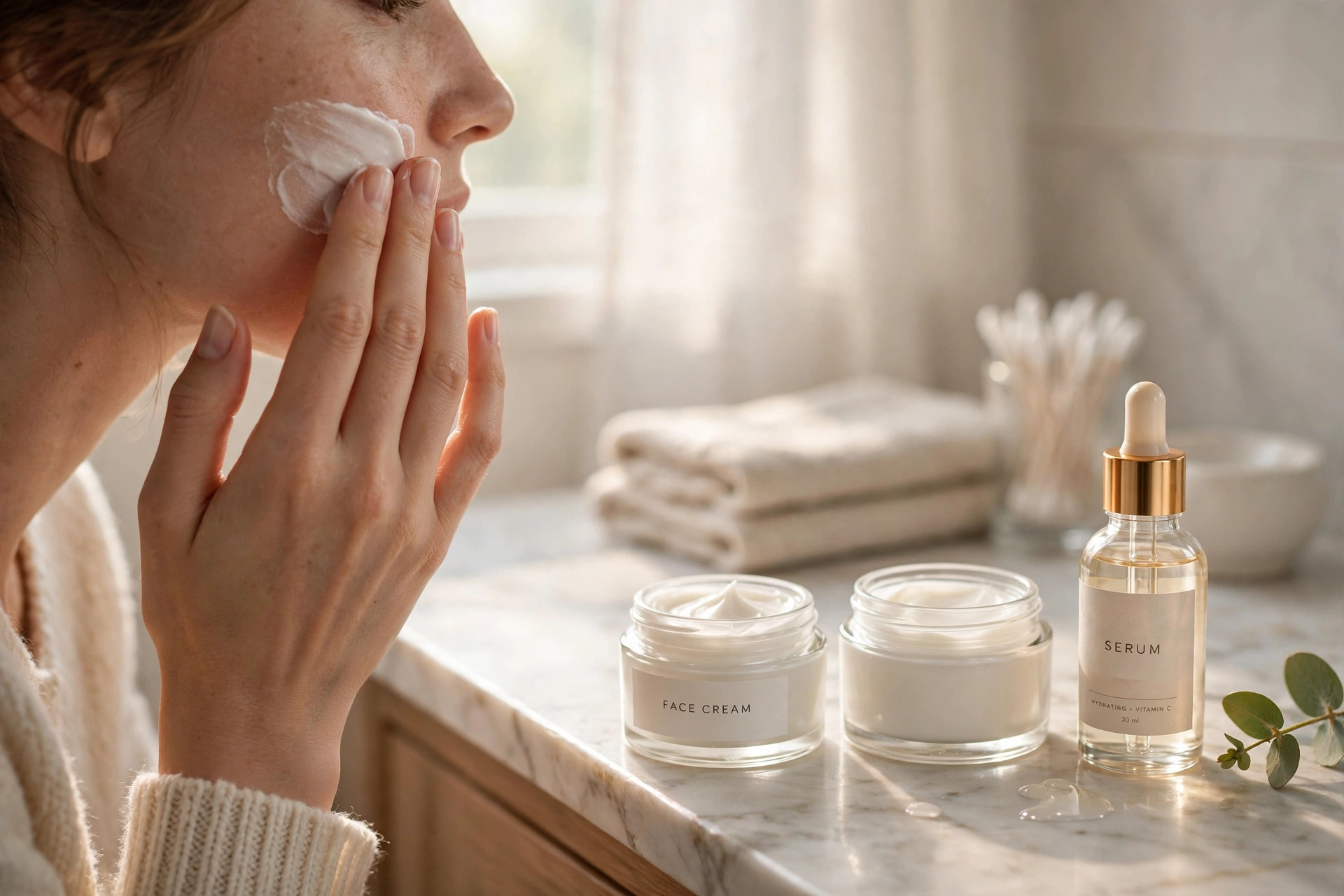
Wash your face with lukewarm water and a creamy or milky cleanser that leaves skin feeling soft, not tight. Foaming cleansers that squeak can strip the oils your skin needs in winter, so save those for summer. Pat your face dry with a soft towel instead of rubbing, which can irritate already dry skin.
Layer Moisture While Skin Is Still Damp
Apply your hydrating products while your skin is still slightly damp from cleansing, because damp skin absorbs moisture far better than dry skin. Start with a hydrating toner or essence, follow with a serum that contains hyaluronic acid, then seal everything in with a rich moisturizer. Look for ceramides and squalane on the label, since both help rebuild the skin barrier. If you want a full morning and evening plan, our winter skincare routine for dry skin walks through the exact order in detail.
Add a Soothing Mist Before Primer
A gentle mist adds one more layer of hydration and calms skin that feels tight or stressed after a cold commute. A hypochlorous acid spray works well here because it soothes without stinging and layers neatly under moisturizer and primer. Mist lightly, wait about thirty seconds, then move on to primer while the skin still feels fresh and dewy.
Never Skip Sunscreen, Even in Winter
Winter sun and UV rays bouncing off snow can still damage skin, and sun damage makes dryness worse over time. Use a broad spectrum sunscreen of SPF 30 or higher as the last step of your skincare, before primer. Choose a hydrating formula rather than a mattifying one, and let it settle for a few minutes so your makeup does not slide around on top of it.
What Makeup Products Work Best for Dry Winter Skin?
The right formulas matter more in winter than in any other season. Creamy, dewy and hydrating products blend into dry skin, while matte and powder heavy formulas sit on top of it and highlight every flake. If you are still finding your look, our guide to help you discover your makeup style is a good place to start before you shop.
Choose a Hydrating Primer
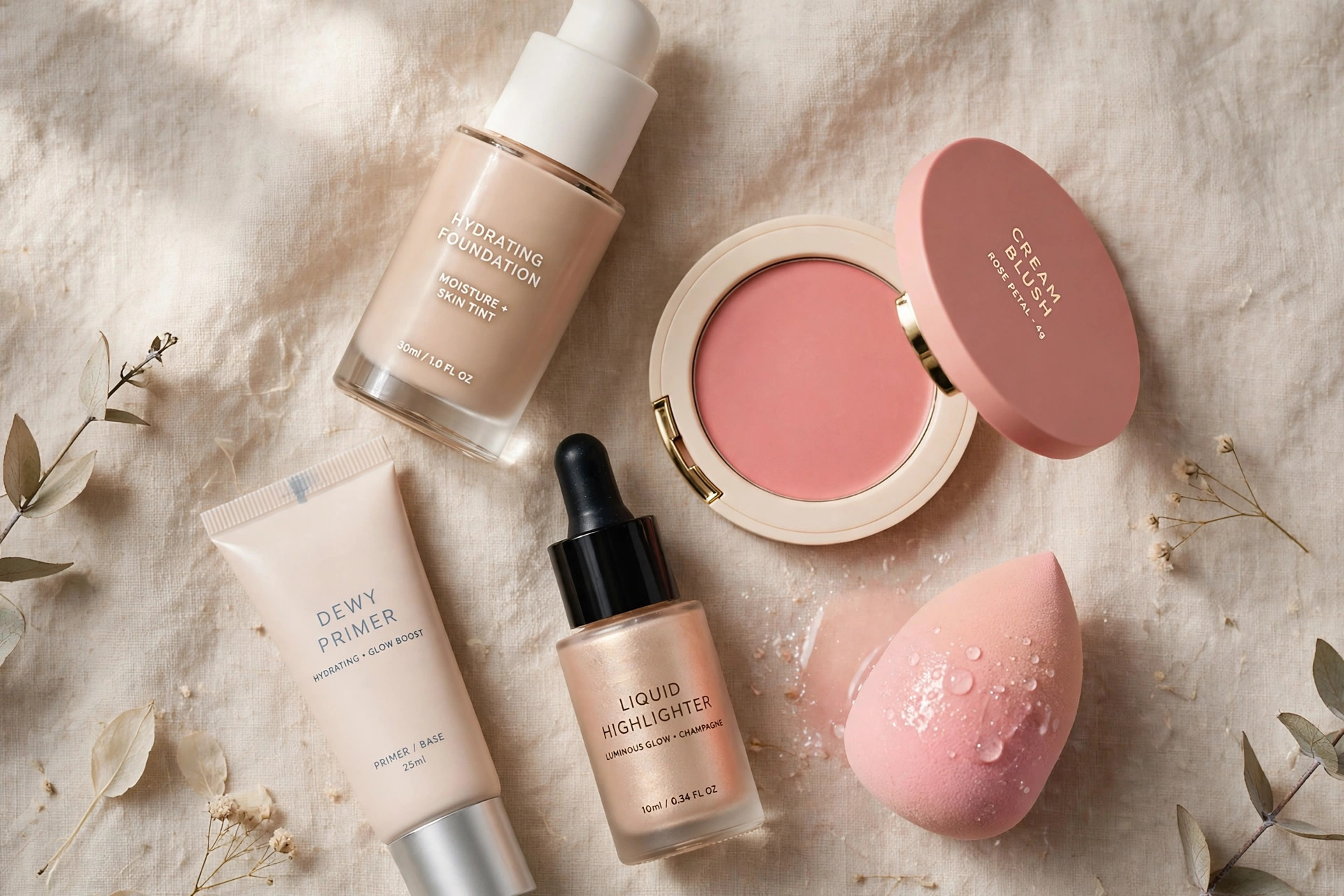
A hydrating primer fills in dry patches and gives foundation something smooth to grip. Look for words like hydrating, dewy, illuminating or glow on the tube, and avoid primers labelled mattifying or pore blurring in winter. Apply a pea sized amount with your fingers and press it into the skin rather than rubbing it in.
Pick a Creamy Foundation or Tinted Moisturizer
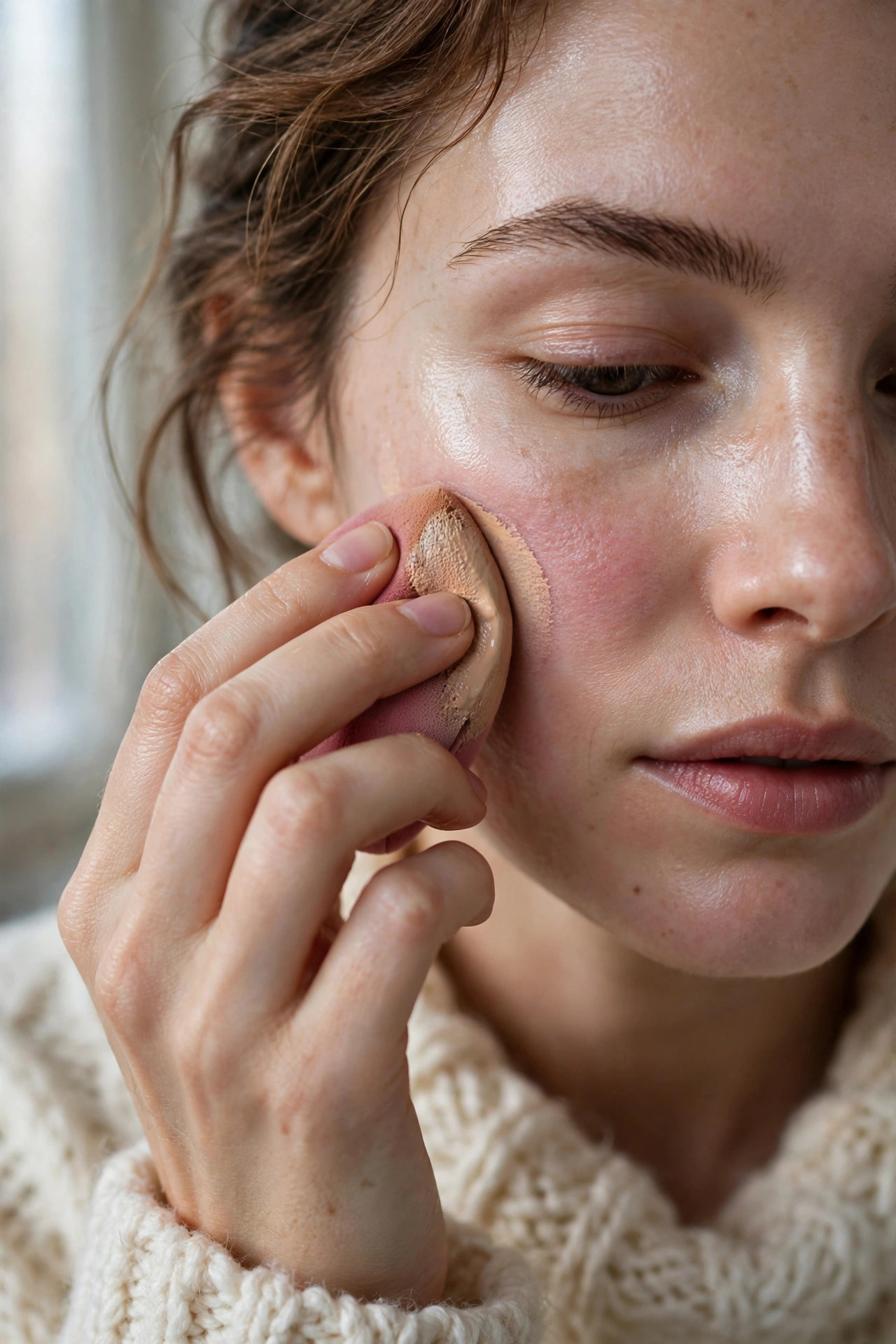
Swap heavy matte foundation for a hydrating liquid foundation, a skin tint or a tinted moisturizer with sheer to medium coverage. These formulas move with your skin instead of cracking as the day goes on. Apply with a damp makeup sponge, which presses product into the skin and adds moisture at the same time, and build coverage only where you need it.
Use Cream Blush, Bronzer and Highlighter
Cream products melt into dry skin and look like a natural flush, while powder blush can look dusty and dry on a winter complexion. Dab cream blush onto the apples of your cheeks with your fingers and blend upward toward your temples. A cream bronzer adds warmth, and a liquid highlighter on the tops of your cheekbones gives a healthy glow without glitter.
Set With a Fine Mist, Not Heavy Powder
Heavy powder is the fastest way to make dry skin look older and drier. If you need to set your makeup, use a tiny amount of finely milled translucent powder only on the areas that crease, such as under the eyes. Then finish with a hydrating setting spray or facial mist to melt the powder into the skin and bring back the glow.
How Do You Apply Makeup on Dry Skin Step by Step?
Follow this order every winter morning and the routine soon becomes second nature. The whole routine takes about ten minutes once you know the steps.
- Cleanse gently with lukewarm water and a creamy cleanser, then pat dry.
- Apply toner, serum and rich moisturizer while skin is still slightly damp.
- Mist with a soothing spray and wait about thirty seconds.
- Apply sunscreen of SPF 30 or higher and let it settle for a few minutes.
- Press a hydrating primer into the skin with your fingertips.
- Blend creamy foundation or tinted moisturizer with a damp sponge, starting at the center of the face.
- Dab on concealer only where needed, then cream blush, bronzer and highlighter.
- Set lightly with a small amount of powder only where you crease, then finish with a hydrating mist.
What Mistakes Make Dry Skin Look Worse?
A few common habits undo all your good prep work. Avoid these and your makeup will look smoother straight away.
- Using too much powder. Powder absorbs the moisture you just added and makes flakes stand out. Use the smallest amount possible, only where you crease.
- Skipping moisturizer to save time. Foundation applied to bare dry skin clings to patches and fades fast. Moisturizer is not optional in winter.
- Applying makeup with a dry brush. Dry brushes drag across flaky skin and leave streaks. A damp sponge or clean fingertips blend far better.
- Choosing a matte foundation in January. Matte formulas are designed to absorb oil, which dry winter skin does not have to spare. Save them for summer.
- Exfoliating too hard before makeup. A harsh scrub leaves skin raw and makeup settles into the irritation. Use a gentle exfoliant and never on the same morning as a big event.
How Do You Keep Makeup Fresh All Day in Winter?
Winter air keeps drying your skin long after you leave the house, so a little midday care goes a long way. Carry a small facial mist in your bag and spritz lightly over makeup when skin starts to feel tight. Press, never rub, if you need to smooth a crease around the nose or under the eyes.
Blot shine with a tissue instead of adding more powder, and reapply lip balm through the day because lips dry out fastest in cold air. If you wear eye makeup, a soft cream shadow stays put better than powder shadow on dry lids.
Add the Finishing Touches
Finish the look with a tinted lip balm or a creamy lipstick, which both add color and moisture at once. For a special evening, lash clusters add gentle definition without the weight of heavy false lashes, and they pair beautifully with the soft winter glow you have built. Keep the rest of the look simple and let the glowing skin do the talking.
Frequently Asked Questions About Makeup for Dry Winter Skin
Can I Wear Powder Foundation if My Skin Is Dry in Winter?
Powder foundation usually looks dry and patchy on winter skin because it has no moisture to blend with. A creamy liquid foundation, a skin tint or a tinted moisturizer will look far smoother. If you love powder, use it only as a light touch over a hydrating base, never as the main coverage.
How Do I Stop Foundation From Looking Cakey on Dry Skin?
Use less product and build it slowly. Start with a thin layer blended with a damp sponge, then add a second thin layer only where you need more coverage. Make sure your moisturizer and primer have fully settled before foundation, and finish with a hydrating mist to melt everything together.
Should I Exfoliate Before Applying Makeup in Winter?
Gentle exfoliation once or twice a week helps makeup sit smoothly by removing loose flakes. Use a mild chemical exfoliant or a soft cloth rather than a harsh scrub, and never exfoliate right before an important event. Always follow exfoliation with a rich moisturizer so skin stays calm and hydrated.
What Is the Best Order for Makeup on Dry Skin?
The best order is cleanser, hydrating toner and serum, rich moisturizer, soothing mist, sunscreen, hydrating primer, creamy foundation, cream blush and highlighter, then a light mist to finish. Each layer should settle for a minute or two before the next one goes on, which stops products from pilling and keeps the finish smooth.
Final Thoughts
Makeup for dry winter skin is less about buying new products and more about changing how you prepare and layer what you already own. Hydrate first, choose creamy formulas, blend with a damp sponge and set with mist instead of heavy powder. Those four changes alone transform a patchy winter base into smooth, glowing skin.
Try the full routine tomorrow morning and notice how your makeup looks at lunchtime compared with today. Once you find the combination that works for your skin, winter becomes the season your makeup looks its best, not its worst.


