
Table of Contents:
- Introduction
- Why Should You Clean Your Hairbrush Regularly?
- What Do You Need to Clean a Hairbrush?
- How to Clean a Hairbrush Properly: Step-by-Step
- How to Clean a Hairbrush With Baking Soda
- How to Clean a Hairbrush From Lint and Stubborn Buildup
- How to Clean Different Hairbrush Types and Avoid Mistakes
- Conclusion
Introduction:
Your hairbrush collects more than loose strands during everyday use. Over time, it can hold hair, lint, dust, oils, dead skin, and styling-product residue. These materials can remain trapped between the bristles and around the brush base. Using a dirty brush may then transfer some of that buildup back onto your freshly washed hair. The American Academy of Dermatology recommends paying attention to hair and scalp care routines. It also emphasizes removing built-up products, excess oil, and dead skin through appropriate cleansing.
Learning how to clean a hairbrush does not require expensive cleaning products. You can usually handle regular buildup with warm water, mild soap, and simple household tools. However, different brush materials need slightly different cleaning approaches. Wooden brushes, padded brushes, and natural-bristle brushes require more careful handling during cleaning.
In this guide from Freaky Thread, you will learn practical ways to clean your brush. You will also discover how to remove lint and stubborn residue effectively. Additionally, you will learn how baking soda can help with certain types of buildup. A consistent cleaning routine can help keep your personal hair-care tools cleaner and easier to maintain.
Why Should You Clean Your Hairbrush Regularly?
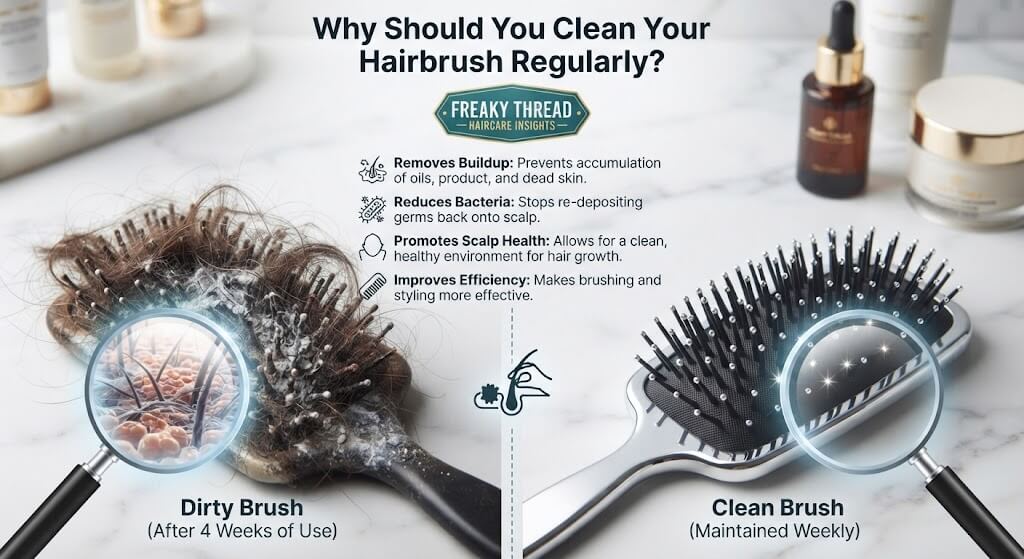
A hairbrush can gradually collect substances that come from your hair and surroundings. Loose strands become wrapped around bristles and can trap dust underneath them. Hair oils may also accumulate, especially when you use the brush frequently. Styling products can create additional residue that sticks around the bristle base.
Cleaning your brush regularly helps remove this accumulated material before it becomes difficult to remove. It also makes everyday brush maintenance much simpler. You should remove loose hair frequently instead of allowing several weeks of buildup. Deeper cleaning can then focus on residue that remains after loose strands disappear.
Your cleaning schedule should depend on your hair and product habits. People who use gels, sprays, oils, or other styling products may notice buildup sooner. People with oily hair may also need to clean their brushes more frequently. The American Academy of Dermatology notes that hair-care products containing oils can leave residue on items that contact the hair.
Knowing how to properly clean a hairbrush also means avoiding unnecessary damage. Excessive soaking can affect some brush materials and components. Gentle cleaning usually works better than aggressive scrubbing or harsh chemical treatments. Always consider the brush construction before choosing a cleaning method.
You May Also Like
What Do You Need to Clean a Hairbrush?
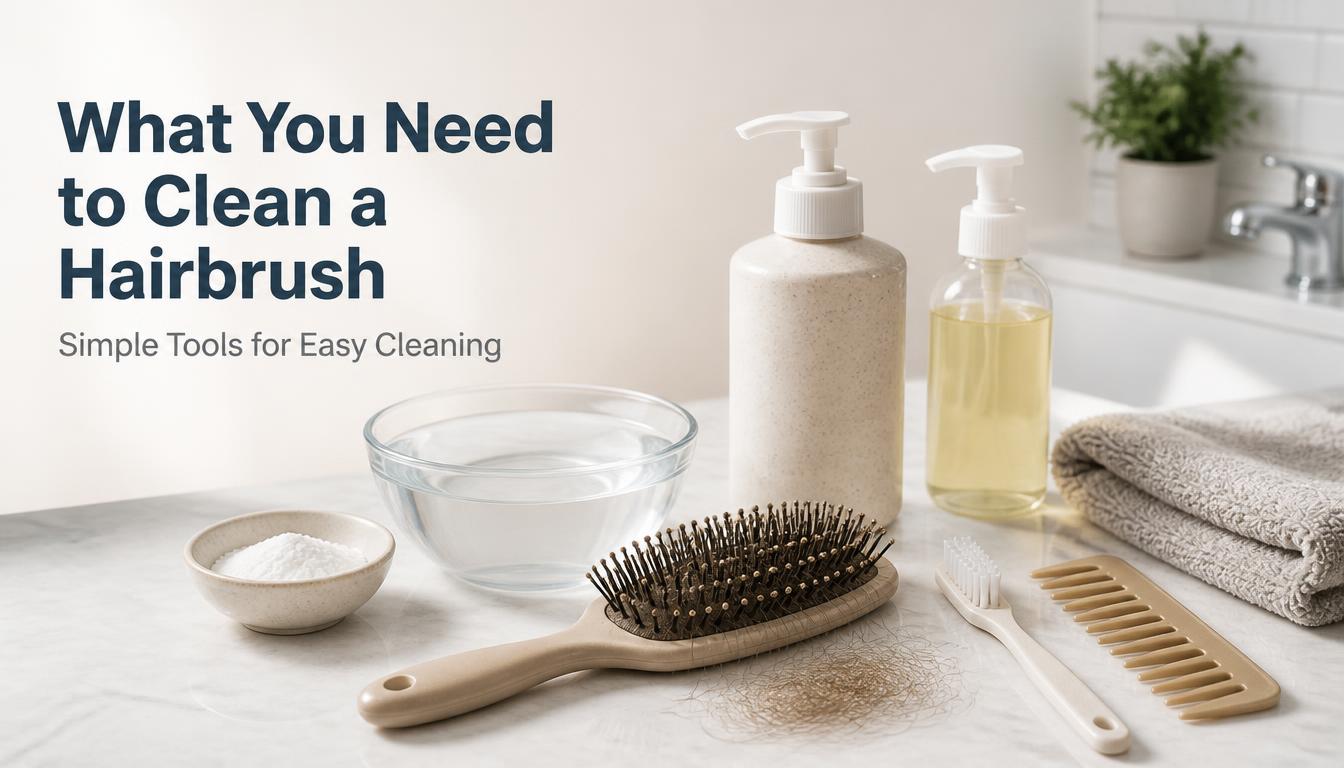
You only need a few basic supplies for most hairbrush cleaning jobs. Warm water can help loosen residue without exposing the brush to excessive heat. A small amount of mild shampoo or gentle soap can help remove oils and product buildup.
You can also use an old toothbrush for cleaning difficult areas. Its small bristles can reach spaces around the main brush bristles. A comb can help pull out tightly tangled hair before washing begins. Finally, keep a clean towel nearby for removing excess water after rinsing.
For stubborn residue, some people choose baking soda as an additional cleaning ingredient. Baking soda can provide mild abrasive action that helps loosen certain types of buildup. However, it should not replace gentle cleaning or careful handling. You should also avoid aggressive scrubbing when the brush contains delicate materials.
Before using water, inspect your brush carefully for special construction. Wooden handles and wooden bases should not remain submerged for extended periods. Padded brushes may also contain areas where water can become trapped. Taking these details seriously can help prevent unnecessary damage during cleaning.
You May Also Like:
How to Clean a Hairbrush Properly: Step-by-Step:
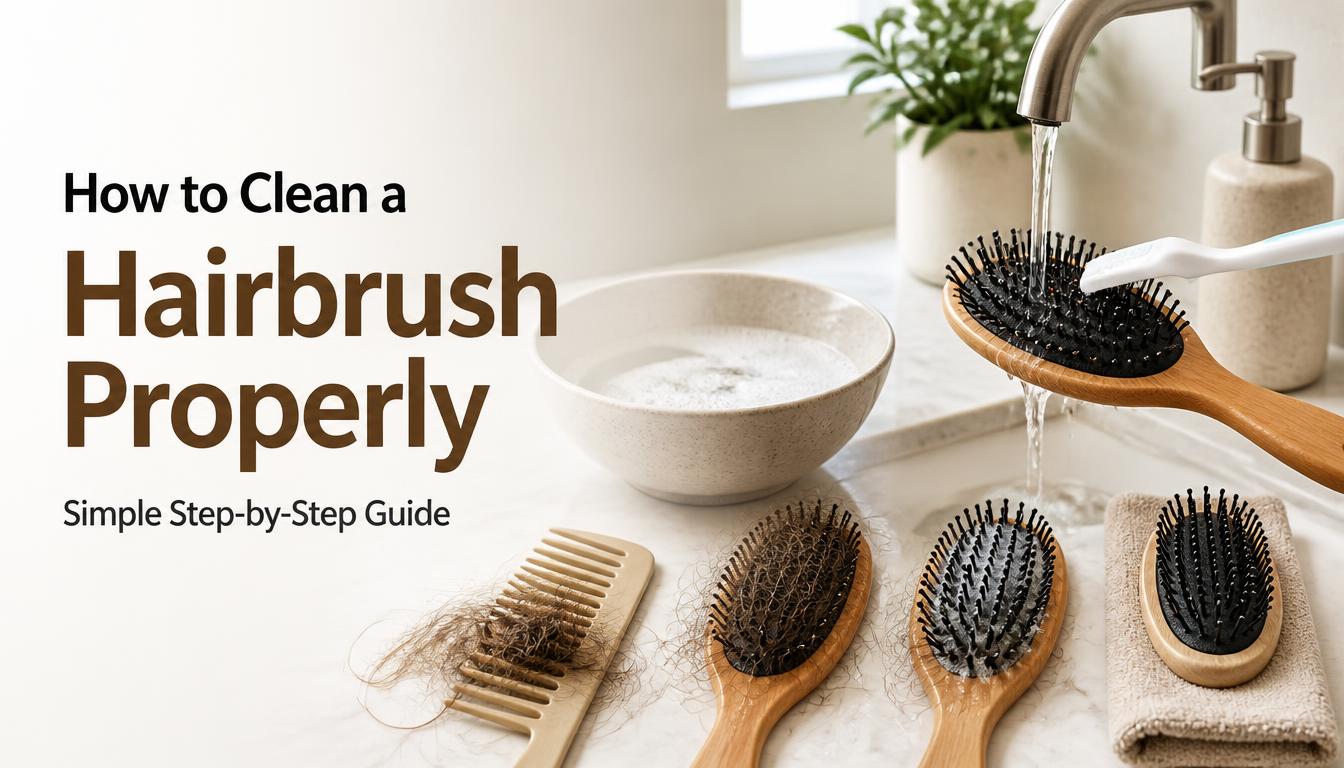
Start by removing every loose strand from the brush. Use your fingers to pull out larger sections of hair carefully. A comb can help lift strands that remain tightly wrapped around individual bristles. Removing hair first allows water and soap to reach the remaining buildup more effectively.
Next, prepare a bowl or sink with comfortably warm water. Add a small amount of mild shampoo or gentle soap and mix it thoroughly. Place suitable plastic brushes into the solution and allow the residue to loosen. Avoid prolonged soaking when your brush contains wood, delicate padding, or other sensitive components.
After loosening the residue, use a small toothbrush to clean between the bristles. Focus especially on areas where oils, lint, and styling products remain visible. Work gently instead of applying excessive pressure against the brush surface. Gentle cleaning is particularly important when bristles or brush pads could become damaged.
Rinse the brush thoroughly with clean water after scrubbing. Make sure you remove all visible soap before drying the brush. Excess cleaning residue should not remain trapped between the bristles. Then shake off excess water and gently pat the brush with a clean towel.
Allow the brush to dry completely before using it again. Place it somewhere clean with enough airflow for moisture to evaporate. Keeping the brush completely dry helps prevent moisture from remaining inside difficult-to-reach areas. For delicate brushes, follow the manufacturer’s cleaning recommendations whenever they are available.
You May Also Like:
How to Clean a Hairbrush With Baking Soda:
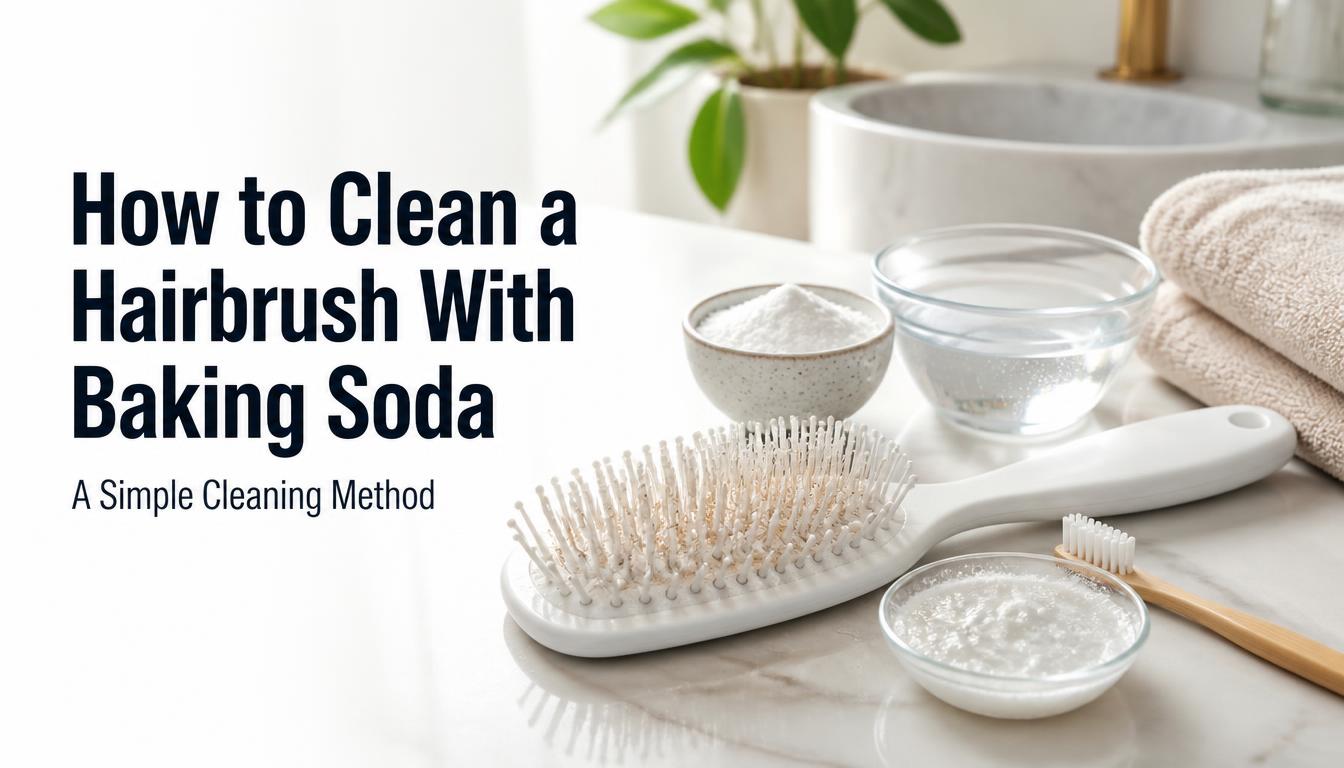
Baking soda can be useful when ordinary washing does not remove stubborn residue. Its fine texture provides gentle abrasive action that can help loosen some accumulated material. However, it should be used carefully rather than treated as a universal disinfectant.
To try this method, mix a small amount of baking soda with warm water. Create a thin paste that you can apply to areas containing visible buildup. Use a soft toothbrush to work the mixture gently around the bristles. Avoid aggressive pressure because excessive scrubbing may damage delicate brush surfaces.
After cleaning, rinse the brush thoroughly with clean water. Removing every trace of baking soda is important before the brush returns to regular use. You should then remove excess moisture using a clean towel. Leave the brush in an airy location until it becomes completely dry.
This method works best as an occasional option for stubborn residue. Regular hair removal and basic washing should remain your primary cleaning routine. If your brush contains wood, leather, delicate padding, or special materials, check its care instructions first. Some materials may react poorly to prolonged moisture or abrasive cleaning.
Remember that baking soda helps with cleaning but does not automatically sanitize every brush. Avoid making claims that it eliminates all bacteria or scalp-related problems. If you have persistent scalp irritation or dandruff, proper hair and scalp care matters more than simply cleaning your brush. The American Academy of Dermatology notes that dandruff can have several causes beyond hygiene.
You May Also Like:
How to Clean a Hairbrush From Lint and Stubborn Buildup:
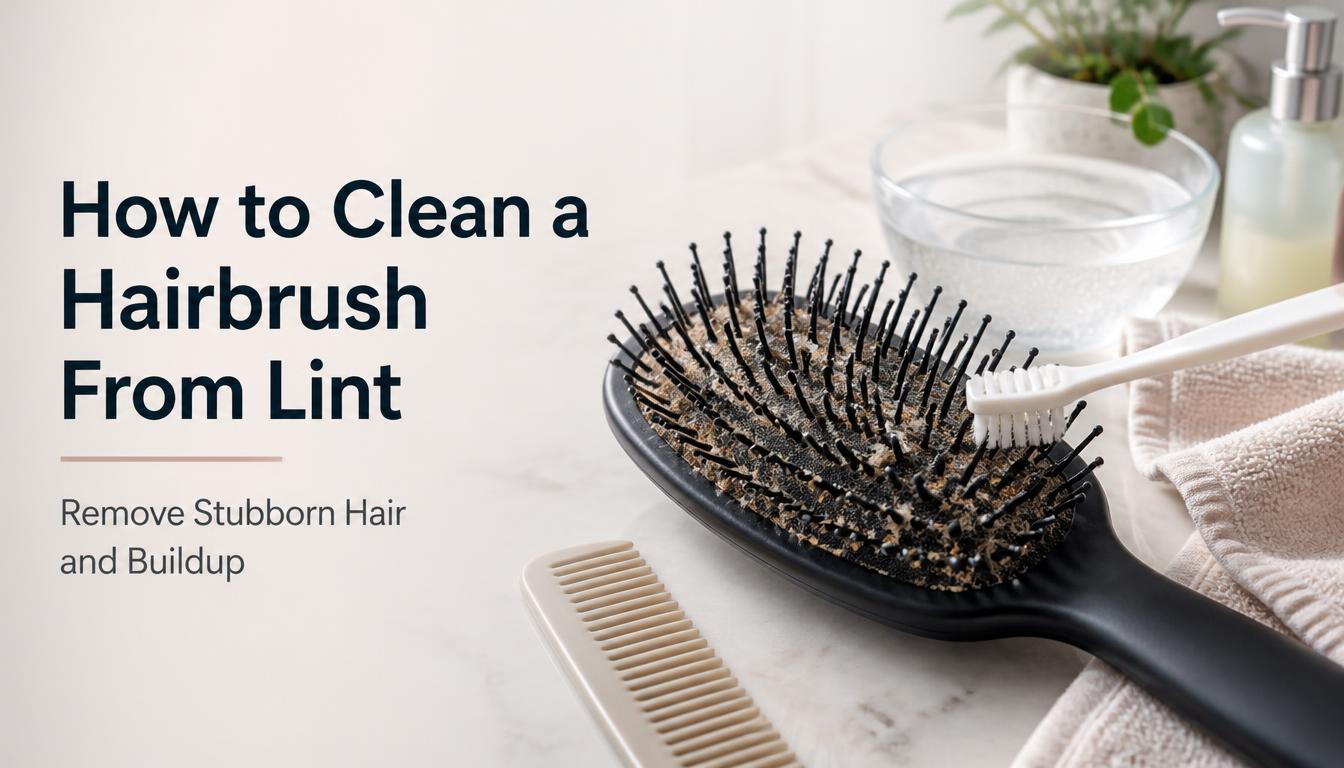
Lint can become surprisingly difficult to remove when it mixes with hair oils and styling products. It often gathers underneath loose strands and becomes compressed against the brush base. The first step involves removing as much hair as possible from the brush.
Use your fingers or a comb to lift trapped strands gradually. Work around individual bristles instead of pulling everything forcefully at once. A small toothbrush can then help loosen lint remaining around the bristle roots. Move the brush gently through these areas until the buildup begins separating.
For oily or sticky residue, warm water and mild soap can make removal easier. Allow suitable brushes to sit briefly in the cleaning solution before scrubbing. Brushes containing wood or sensitive components should receive less water exposure. Never assume every brush can safely remain submerged for the same amount of time.
After cleaning, rinse away loosened debris and soap thoroughly. Inspect the brush from several angles before putting it away. Check between the bristles because small pieces of lint can remain hidden underneath. Once the brush looks clean, allow it to dry completely before storing it.
Prevention can make future cleaning much easier for you. Remove loose hair from your brush after regular use instead of waiting for heavy buildup. Keep the brush away from dusty surfaces when possible. Regular maintenance means less lint becomes trapped between the bristles over time.
You May Also Like:
How to Clean Different Hairbrush Types and Avoid Mistakes:
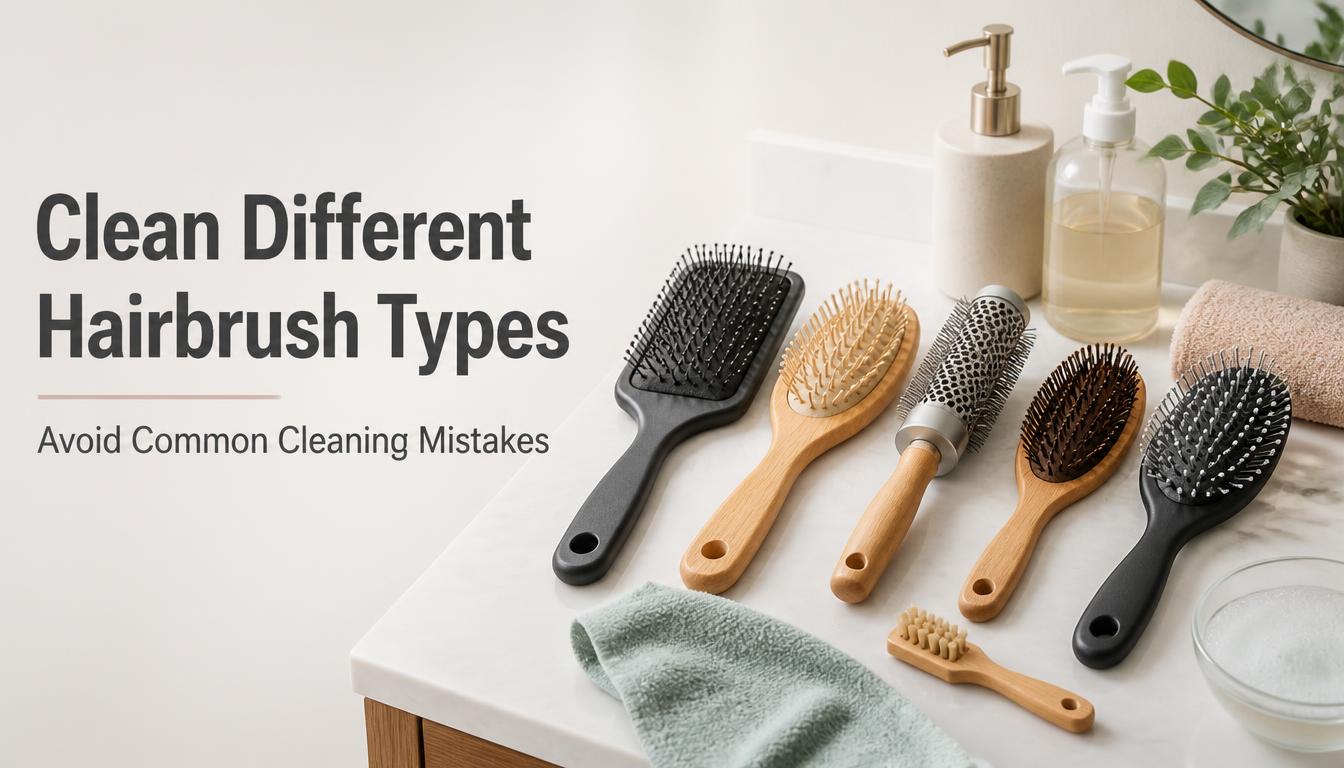
Different brushes require different levels of care during cleaning. Plastic brushes are generally easier to wash because they tolerate water better than many wooden designs. However, you should still avoid unnecessarily harsh chemicals or extremely hot water. A gentle soap solution is usually enough for everyday residue.
Wooden brushes require additional care because prolonged moisture can damage the material. Avoid leaving them submerged for extended periods during cleaning. Instead, use a damp cleaning approach and remove moisture promptly. Natural-bristle brushes should also receive gentle treatment to help preserve their structure.
Paddle brushes may collect residue around their cushion and bristle base. Clean these areas carefully without forcing large amounts of water into the cushion. Round brushes often require extra attention because hair can become tightly wrapped around their surface. Remove trapped hair before attempting any deeper cleaning.
Several common mistakes can make brush maintenance harder. Avoid storing your brush while it remains damp after washing. Do not use excessive force when removing tightly trapped hair. Avoid extremely hot water because unnecessary heat can affect some brush materials.
You should also avoid assuming that stronger cleaners always provide better results. Gentle cleaning is often sufficient for ordinary hair, oil, lint, and product residue. If the brush becomes badly damaged or its bristles lose their shape, replacement may become more practical. Your hair-care routine should also remain gentle because excessive brushing can contribute to hair damage.
You May Also Like:
Conclusion:
Learning how to clean a hairbrush can make your everyday hair-care routine more hygienic and manageable. The process begins with removing trapped hair before addressing oils, lint, dust, and styling-product residue. Warm water and mild soap can handle much of the ordinary buildup found on many brushes.
Baking soda can provide another option when stubborn residue needs additional attention. However, it should be used carefully and rinsed away completely afterward. You should always consider the material and construction of your brush before applying water or cleaning mixtures.
Regular maintenance is easier when you remove loose hair after using your brush. A deeper cleaning routine can then prevent residue from becoming heavily compressed. Different brush materials also require different approaches, especially when wood or delicate padding is involved.
For more practical hair-care and everyday lifestyle guidance, Freaky Thread offers helpful ideas for maintaining simple routines at home. Keep your brush clean, handle your hair gently, and choose cleaning methods that suit your specific brush. A few minutes of regular care can make your hairbrush easier to use and maintain.


