
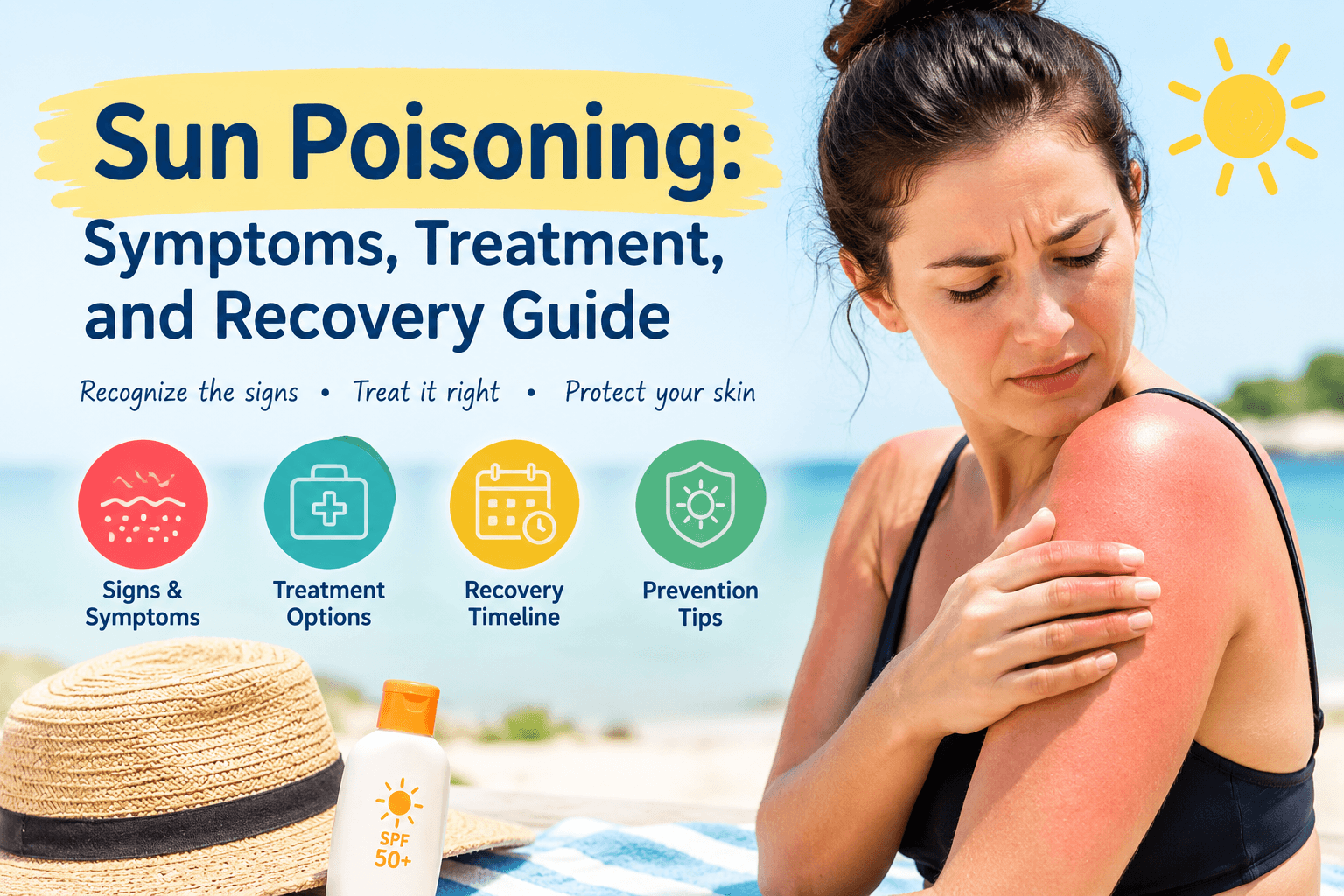
Table of Contents:
Introduction:
Sun exposure can feel refreshing, especially during outdoor activities and warm summer days. However, excessive ultraviolet radiation can cause painful skin damage and serious sunburn symptoms. Many people use the term sun poisoning when describing severe sunburn or certain sunlight-related skin reactions.
Understanding sun poisoning helps you recognize warning signs and take appropriate steps toward recovery. Symptoms can affect your skin and sometimes cause additional discomfort throughout your body. Knowing when to seek medical attention can also help prevent potentially serious complications.
In this guide, Freaky Thread explores sun poisoning symptoms, treatment options, recovery timelines, and practical prevention strategies. You’ll learn how to recognize sun-related skin damage and protect yourself during future outdoor activities.
What Is Sun Poisoning?
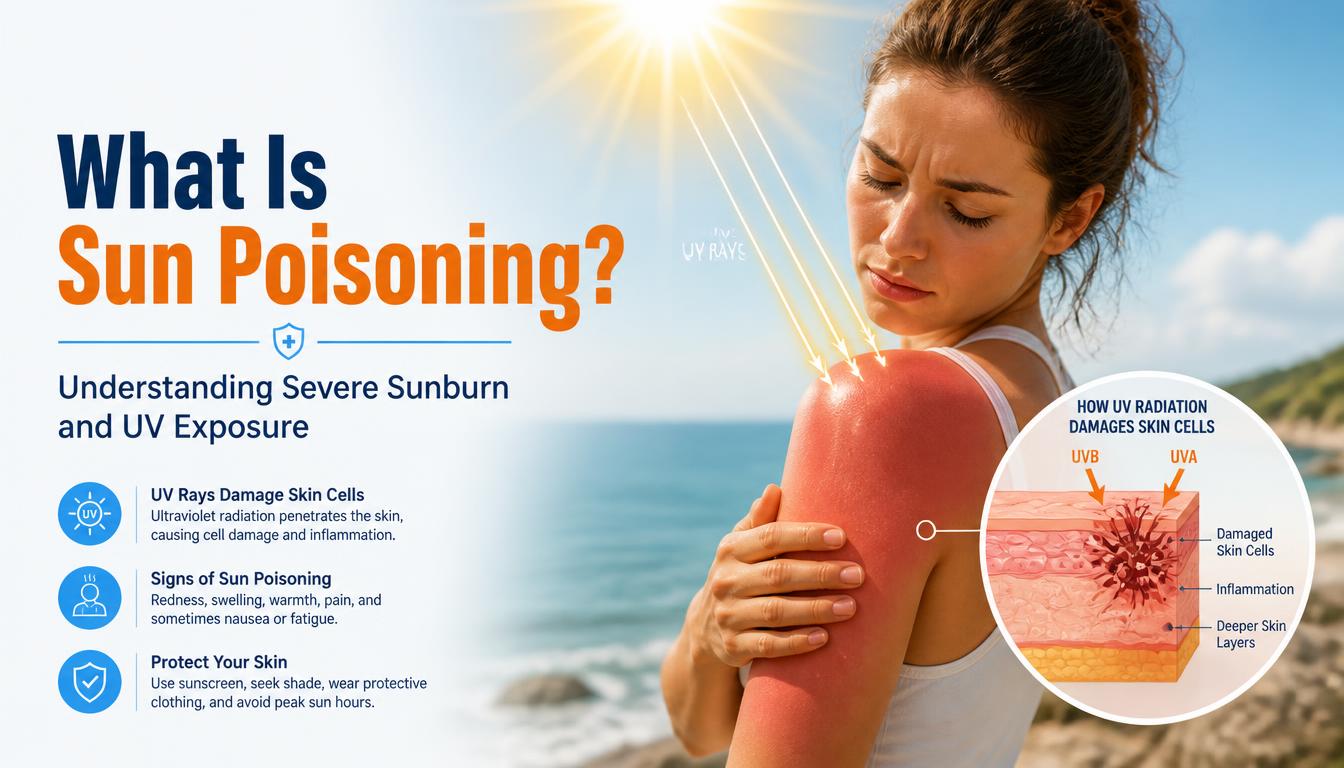
Sun poisoning is a common term for severe sunburn or certain sunlight-related skin reactions. Despite its name, sun poisoning does not mean sunlight has literally poisoned your body. Excessive ultraviolet radiation can damage skin cells and trigger inflammation, causing painful and uncomfortable symptoms.
The term may also describe conditions involving unusual sensitivity to sunlight. These reactions can include itchy rashes, bumps, or other skin changes after sun exposure. Therefore, understanding the difference between severe sunburn and photosensitivity remains important.
Sunburn happens when ultraviolet radiation damages the skin after excessive exposure. UVB radiation plays an important role in causing sunburn, while UVA radiation contributes to deeper skin damage. Both types of ultraviolet radiation can affect your skin in different ways.
Your symptoms depend on exposure duration, ultraviolet intensity, and individual sensitivity. Some people develop noticeable skin damage after relatively short periods outdoors. Certain medications and medical conditions can also increase sensitivity to sunlight.
You may also like:
What Does Sun Poisoning Look Like?
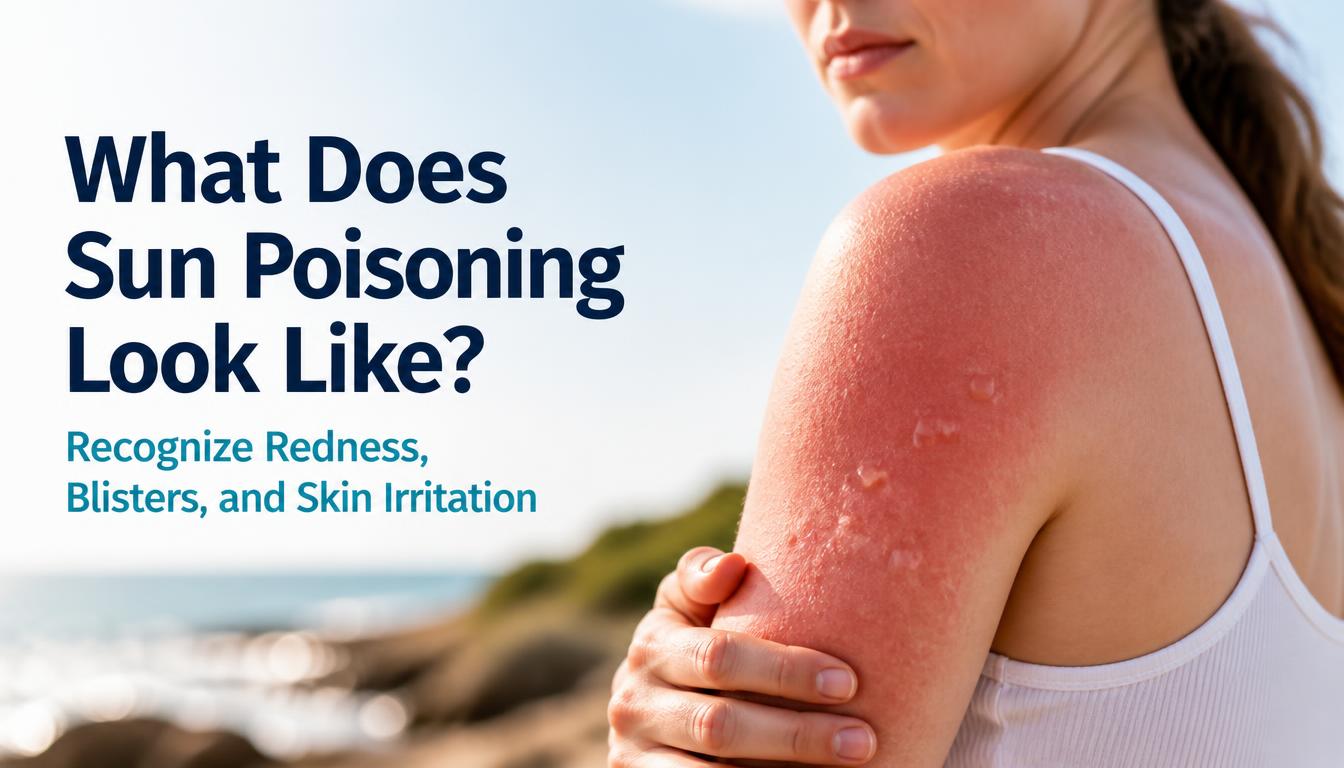
Many people search for what does sun poisoning look like when their skin develops unusual changes. The appearance can vary depending on the severity of sunburn and individual skin tone. On lighter skin, affected areas often appear pink or red, while changes may be harder to recognize on darker skin.
Common visible signs include inflamed skin, swelling, and fluid-filled blisters. The affected area may also feel unusually warm, tender, or painful. Peeling can develop several days after exposure as damaged skin begins shedding.
Sunburn can affect exposed areas such as your face, shoulders, arms, and back. Your ears, scalp, lips, and eyes can also experience sun-related damage. Large blisters or severe swelling may indicate a more serious injury requiring medical attention.
Remember that appearance alone cannot confirm sun poisoning or identify its exact cause. A healthcare professional can assess unusual skin reactions and determine appropriate treatment.
You may also like:
Common Symptoms and Causes of Sun Poisoning:
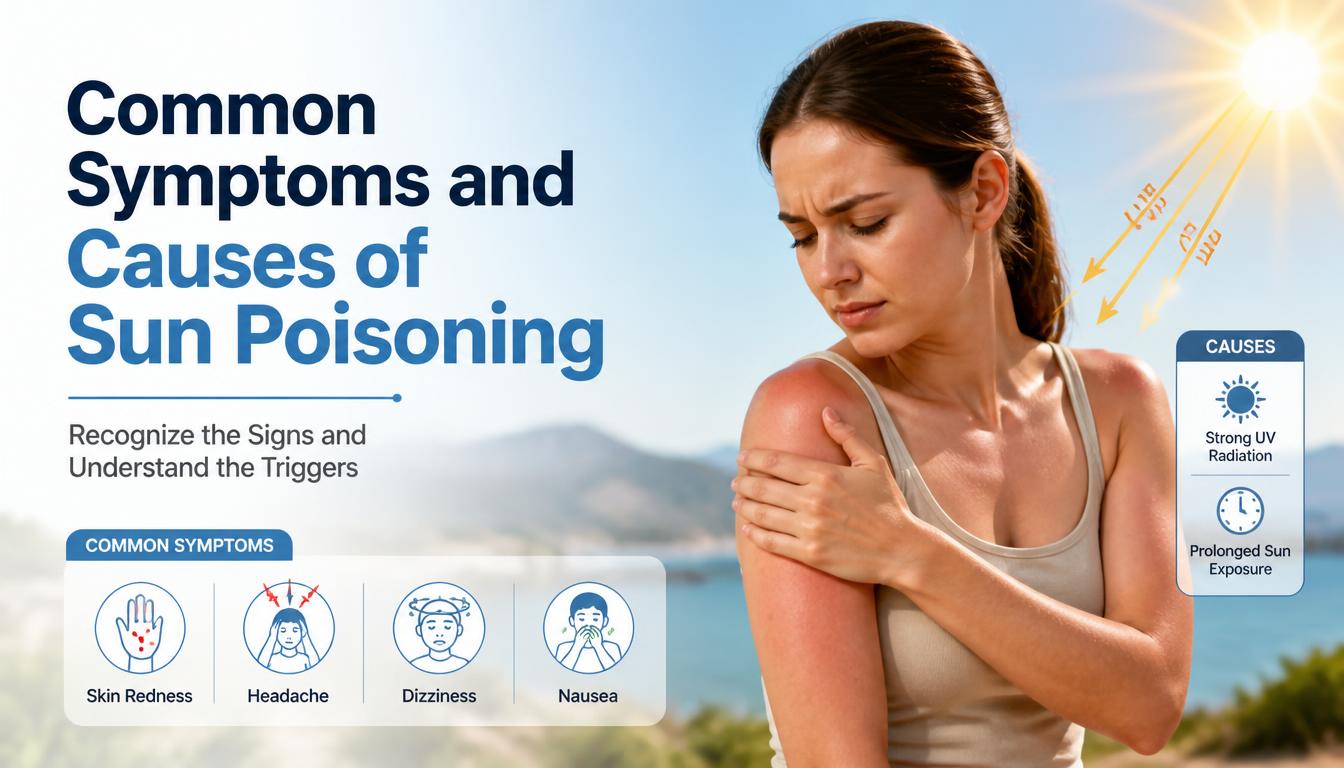
Sun poisoning symptoms can involve your skin and sometimes affect your overall wellbeing. Severe sunburn may cause intense pain, swelling, blistering, and significant skin tenderness. Some people also experience headaches, nausea, fever, or unusual tiredness.
These additional symptoms can occur alongside severe sunburn and may indicate a need for medical assessment. Dizziness and dehydration are particularly important concerns after excessive sun exposure. Symptoms such as confusion or faintness require urgent medical attention.
The main cause involves excessive ultraviolet radiation reaching unprotected skin. Exposure duration, sunlight intensity, altitude, and reflective surfaces can influence sunburn risk. Water, sand, and other surfaces may reflect ultraviolet rays toward your skin.
Some medications can increase sensitivity to sunlight and raise the risk of sunburn. Certain antibiotics, retinoids, and other medications may contribute to photosensitivity. Ask your healthcare professional or pharmacist about potential sunlight-related medication precautions.
You may also like:
How Long Does Sun Poisoning Last?
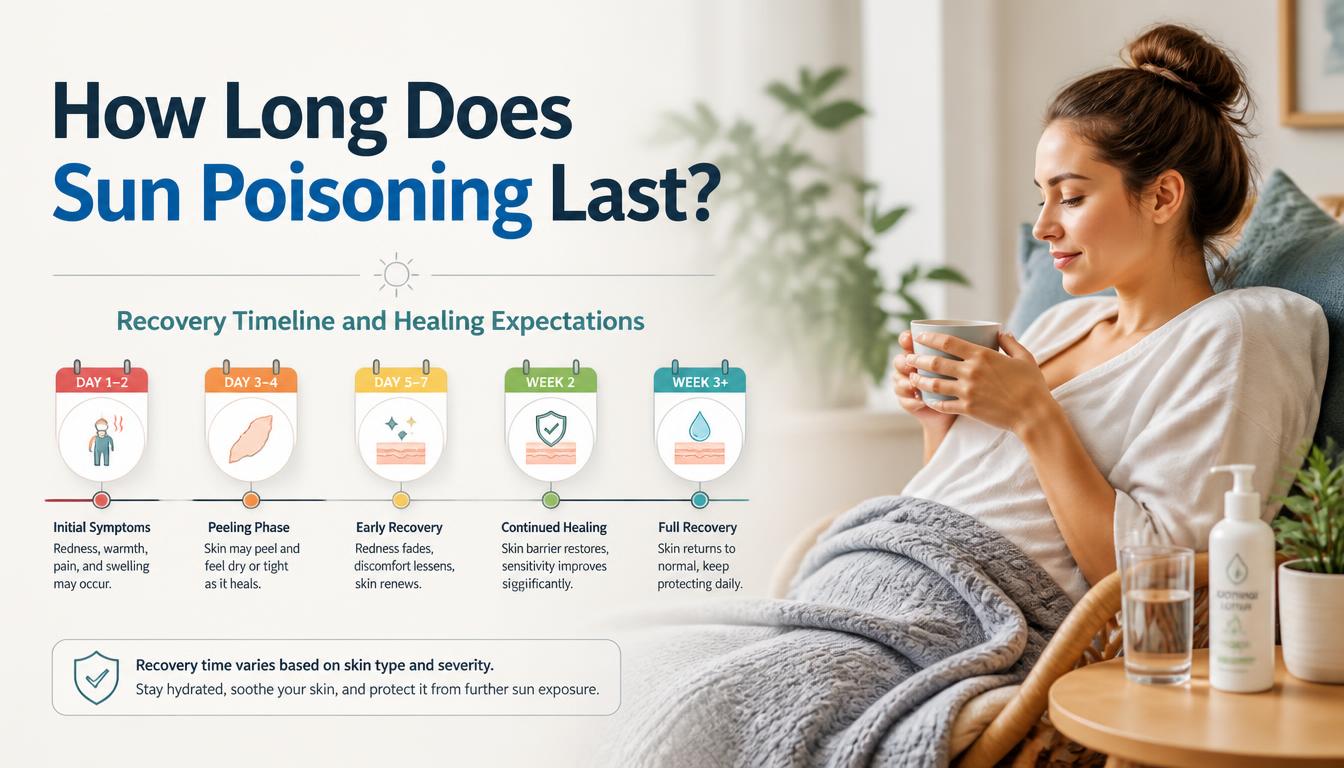
If you wonder how long does sun poisoning last, recovery depends on the severity of your symptoms. Mild sunburn often improves within several days with appropriate supportive care. More severe burns can take longer and may require professional medical treatment.
Sunburn symptoms can worsen during the first day after excessive sun exposure. The skin may become increasingly painful, warm, or swollen before recovery begins. Peeling commonly develops within several days as the damaged outer skin layer sheds.
Your recovery timeline depends on the affected skin area and injury severity. Continued sun exposure can worsen damage and interfere with comfortable recovery. Protecting your skin helps prevent additional ultraviolet exposure during the healing process.
Severe blistering, worsening pain, or significant illness should not be ignored. Contact a healthcare professional when symptoms appear serious or fail to improve.
You may also like:
How to Treat Sun Poisoning Safely:
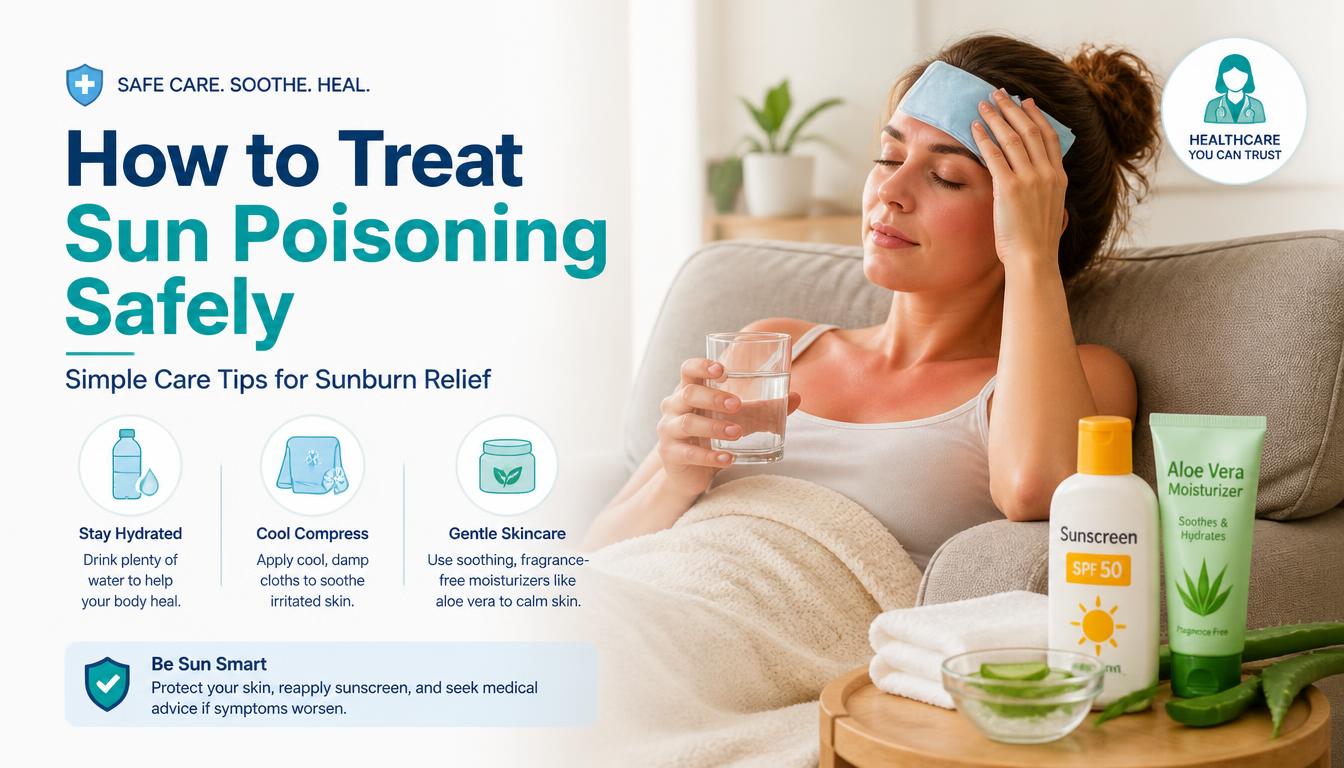
Learning how to treat sun poisoning starts with protecting your skin from additional sunlight. Move indoors or into shade as soon as you notice sunburn symptoms. Avoid further sun exposure until the affected skin has adequately healed.
Cool baths and damp, cool cloths can help relieve uncomfortable skin sensations. Apply a gentle moisturizer containing aloe vera or soy while skin remains slightly damp. Avoid products containing alcohol because they may irritate already damaged skin.
Drink additional water to help reduce dehydration associated with sunburn. If blisters develop, avoid popping them because intact skin provides protective benefits. Keep affected areas clean and protect blisters using appropriate nonstick coverings.
Pain relief medications may help some people, but suitability depends on individual circumstances. Ask a healthcare professional or pharmacist about appropriate options and dosage instructions. Avoid applying benzocaine-containing products because they can cause irritation or allergic reactions.
Seek medical care when symptoms become severe or home care provides insufficient improvement. Medical professionals can assess serious burns and recommend appropriate treatment.
You may also like:
How to Prevent Sun Poisoning:
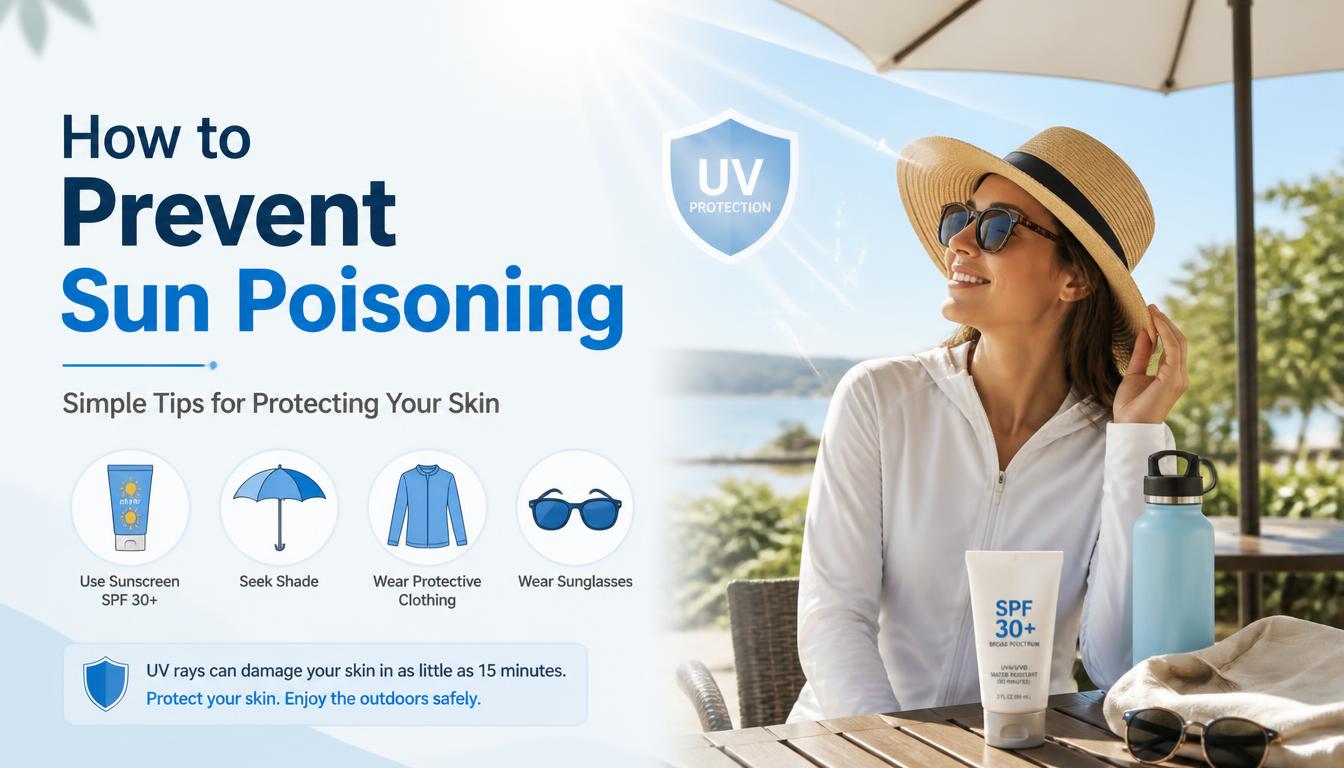
Preventing sun poisoning begins with reducing excessive ultraviolet exposure during outdoor activities. Use broad-spectrum sunscreen with an SPF of 30 or higher. Apply sunscreen generously to exposed skin and follow the product’s reapplication instructions.
Reapply sunscreen approximately every two hours, especially during prolonged outdoor activities. Swimming and sweating can remove sunscreen, requiring more frequent applications. Choose water-resistant products when participating in activities involving water or perspiration.
Protective clothing provides additional coverage beyond sunscreen application alone. Wear lightweight long-sleeved clothing, a wide-brimmed hat, and UV-protective sunglasses. Seek shade whenever possible, particularly during periods of intense sunlight.
Remember that cloudy weather does not eliminate ultraviolet radiation exposure. Sunlight can reach your skin during different weather conditions throughout the year. Check medications and skincare products that may increase sensitivity to sunlight.
Consistent sun protection helps reduce sunburn risk and long-term ultraviolet skin damage. These habits can support healthier skin while allowing you to enjoy outdoor activities.
You may also like:
Conclusion:
Sun poisoning commonly describes severe sunburn or certain sunlight-related skin reactions. Recognizing symptoms early helps you understand when supportive care may be appropriate. Severe pain, extensive blistering, and concerning physical symptoms require professional medical attention.
Knowing how long sun poisoning lasts can help you maintain realistic recovery expectations. However, healing time varies depending on severity, affected areas, and individual circumstances. Avoiding additional sun exposure remains important while damaged skin continues recovering.
At Freaky Thread, we believe practical health information should help readers make informed everyday decisions. Protect your skin through sunscreen, protective clothing, shade, and sensible outdoor habits. If symptoms become severe, consult a healthcare professional for personalized guidance.


