Table of Contents:
Introduction:
Tropical house plants can instantly make an indoor space feel greener and more inviting. Their large leaves, unusual shapes, and rich textures create a beautiful natural atmosphere. Many popular houseplants actually originate from warm tropical environments around the world. They are often adapted to filtered light, warmth, and higher humidity levels.
Growing tropical plants indoors does not always require advanced gardening experience or complicated routines. However, every plant has slightly different requirements for light, water, soil, and humidity. Understanding these basic needs can make indoor plant care much easier. With the right placement and consistent care, many varieties can grow successfully indoors.
In this guide from Freaky Thread, you will discover fifteen beautiful tropical house plants. You will also learn how to choose suitable varieties for your home. Finally, we will cover essential care tips and common problems to watch. These practical tips can help beginners create a healthier indoor tropical garden.
What Are Tropical House Plants?
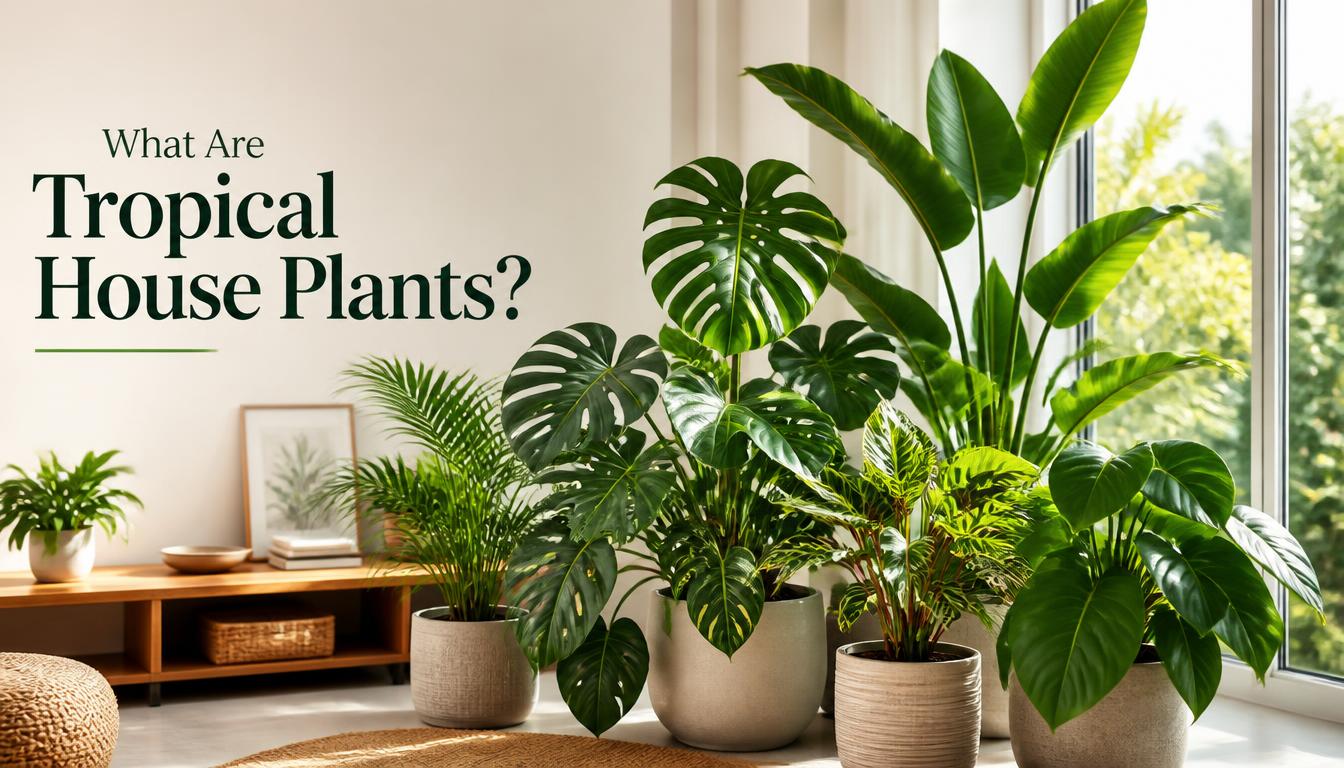
Tropical house plants are species naturally associated with warm tropical or subtropical environments. Many popular indoor plants come from forest regions where temperatures remain relatively warm. Some grow beneath taller vegetation, receiving bright but filtered light throughout the day. These natural conditions influence how they should receive care indoors.
Many tropical plants prefer warm temperatures, consistent moisture, and adequate humidity indoors. However, their exact preferences can vary considerably between different species. Some tolerate moderate indoor conditions better than other tropical varieties. Therefore, researching individual requirements remains important before bringing any plant home.
Light is particularly important because indoor environments provide less light than outdoor locations. Even plants considered suitable for low light usually grow better with sufficient indirect light. Choosing plants based on your home’s available conditions can prevent many common problems.
You may also like:
15 Beautiful Tropical House Plants to Grow Indoors:
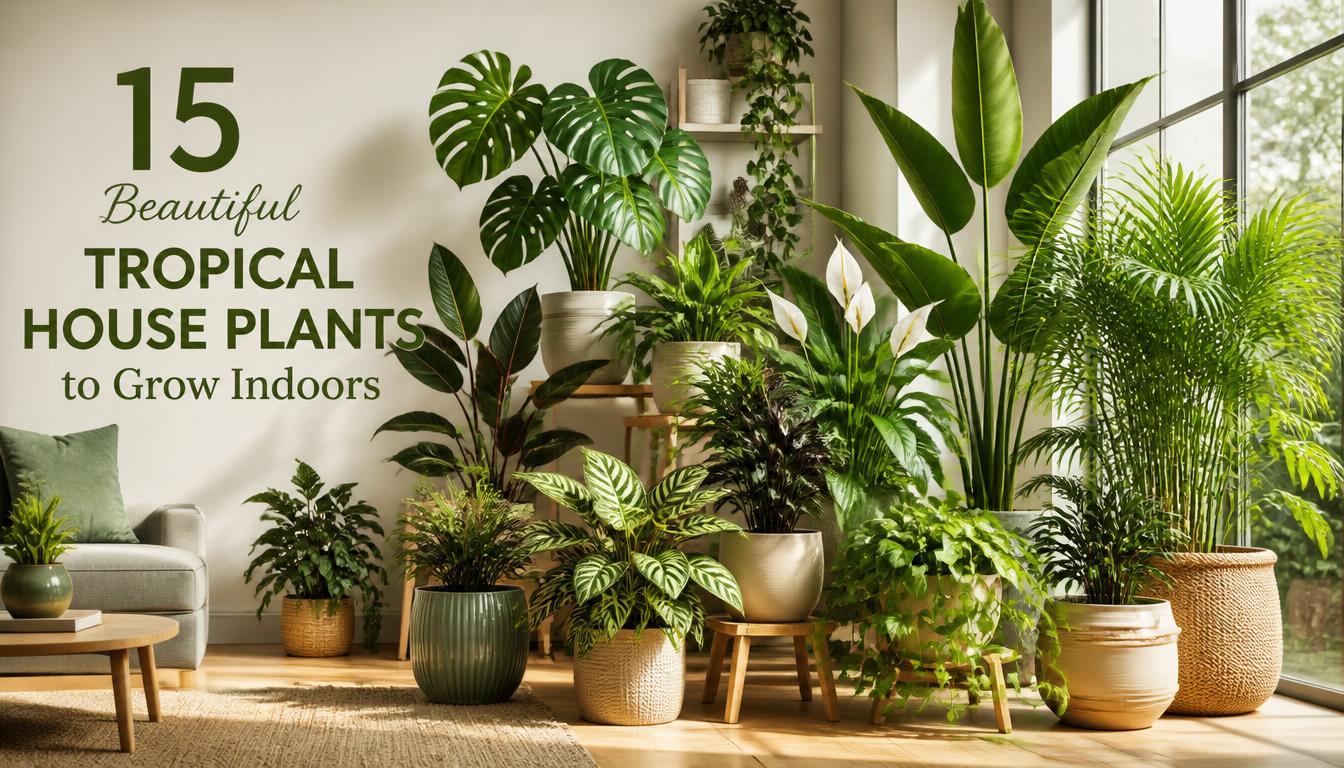
Monstera deliciosa is one of the most recognizable tropical house plants available. Its large leaves develop distinctive splits as the plant matures. Monstera generally prefers bright, indirect light and well-draining soil indoors. Avoid placing it where strong direct sunlight continuously strikes its foliage.
Philodendron offers many varieties with different leaf shapes, colors, and growth habits. Some types grow upright, while others naturally trail or climb. They generally prefer indirect light and slightly moist conditions without constant waterlogging. Pothos is another popular option with attractive trailing foliage and relatively simple care needs.
Peace lilies provide attractive green foliage alongside elegant white flowers under suitable conditions. Areca palms can add height and a softer tropical appearance to larger rooms. Bird of Paradise is another striking choice when you have bright indoor conditions. These varieties can create a dramatic tropical appearance without requiring outdoor garden space.
Bromeliads bring colorful structures and interesting foliage into indoor spaces. Calathea varieties are especially valued for their patterned and decorative leaves. Alocasia offers dramatic foliage with prominent veins and distinctive shapes. These plants can look spectacular indoors when their moisture, humidity, and light requirements are properly managed.
Anthurium is known for colorful flower-like structures and attractive glossy foliage. Rubber plants provide broad leaves and can develop into impressive indoor specimens. Fiddle leaf figs have large leaves and create a strong decorative statement. Crotons add vibrant foliage colors, while banana plants and Syngonium provide additional tropical character indoors.
You may also like:
How to Choose the Right Tropical House Plant:
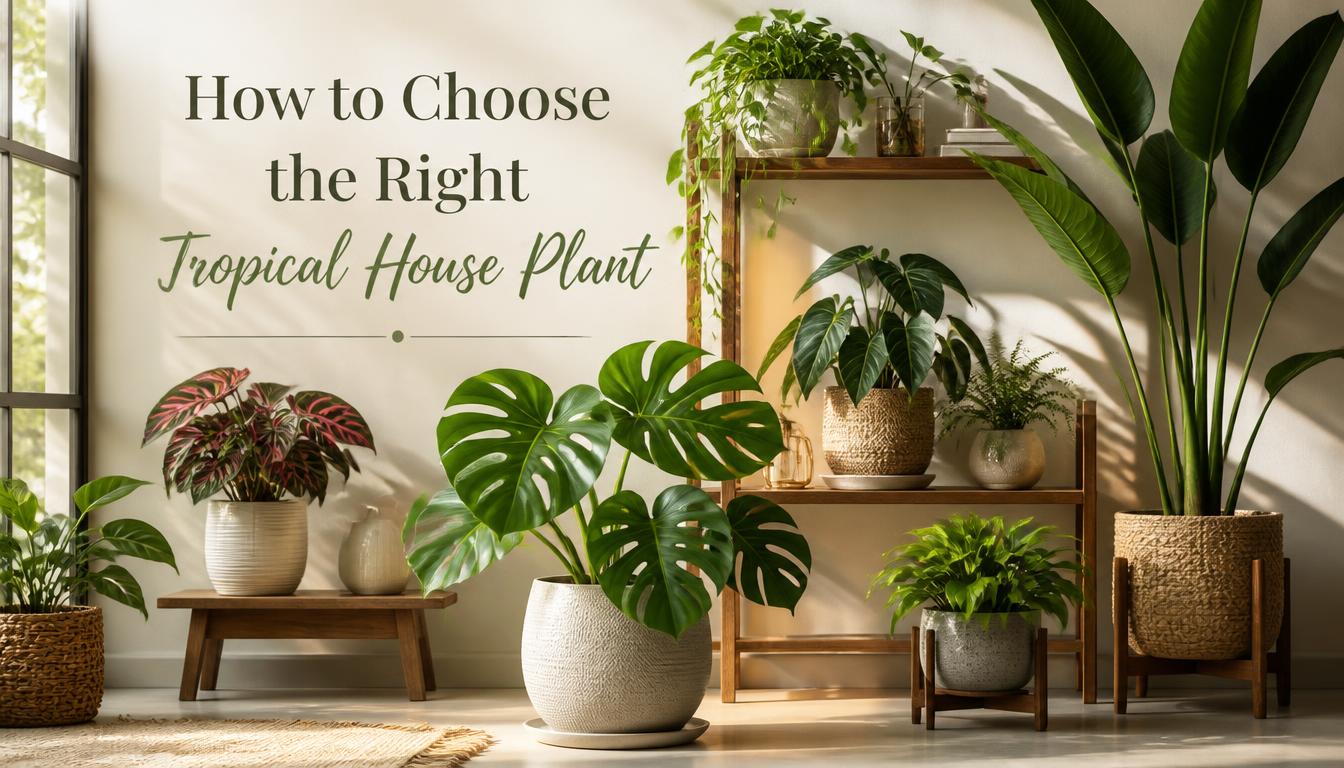
Start by examining the natural light available inside your home before purchasing plants. Bright indirect light works well for many popular tropical house plants. However, some varieties can tolerate lower light better than others. Matching the plant with your available light can support healthier and stronger growth.
You should also consider the amount of space available for your chosen plant. Some tropical varieties remain relatively compact, while others eventually become quite large. Consider both the plant’s current size and its potential mature growth. This approach helps prevent overcrowding and makes ongoing maintenance considerably easier.
Your daily routine should also influence the plants you choose for your home. Beginners may prefer varieties known for relatively straightforward care requirements. Consider watering needs, humidity preferences, and maintenance before making your choice. A suitable plant should fit comfortably into your home and lifestyle.
You may also like:
How to Care for Tropical House Plants:
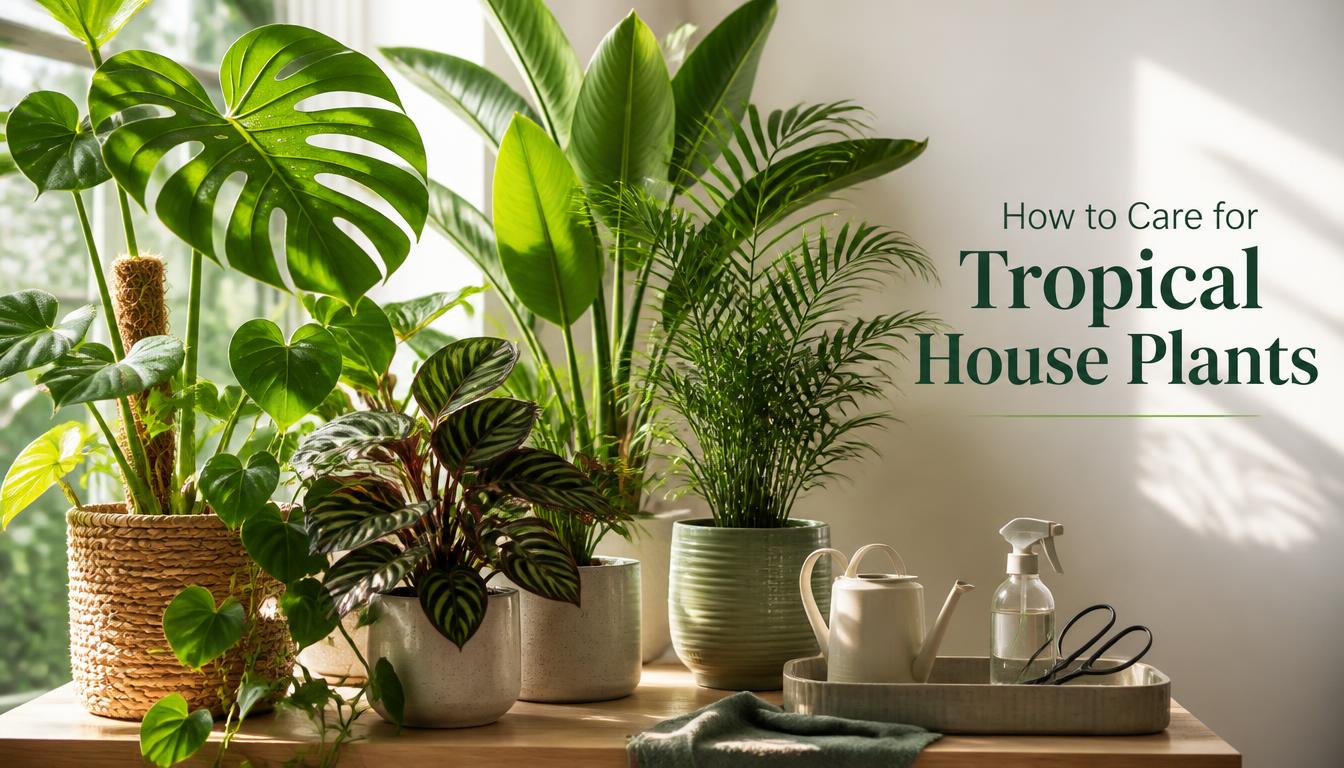
Light, water, humidity, temperature, soil, and nutrients all influence indoor plant health. Most tropical house plants need suitable indirect light for consistent healthy growth. Insufficient light can result in weak growth and pale or poorly developed foliage.
Watering requires careful attention because both excess and insufficient moisture can cause problems. Instead of following a rigid weekly schedule, check the soil before watering. Water thoroughly when appropriate, then allow excess water to drain completely. Never leave ordinary houseplants sitting continuously in standing water.
Humidity can also influence the performance of many tropical plants inside homes. Tropical species often appreciate more humidity than typical indoor environments provide. Grouping plants together or using a humidifier can increase surrounding humidity levels. Keep plants away from heating vents and cold drafts whenever possible.
You may also like:
Common Problems With Tropical House Plants:
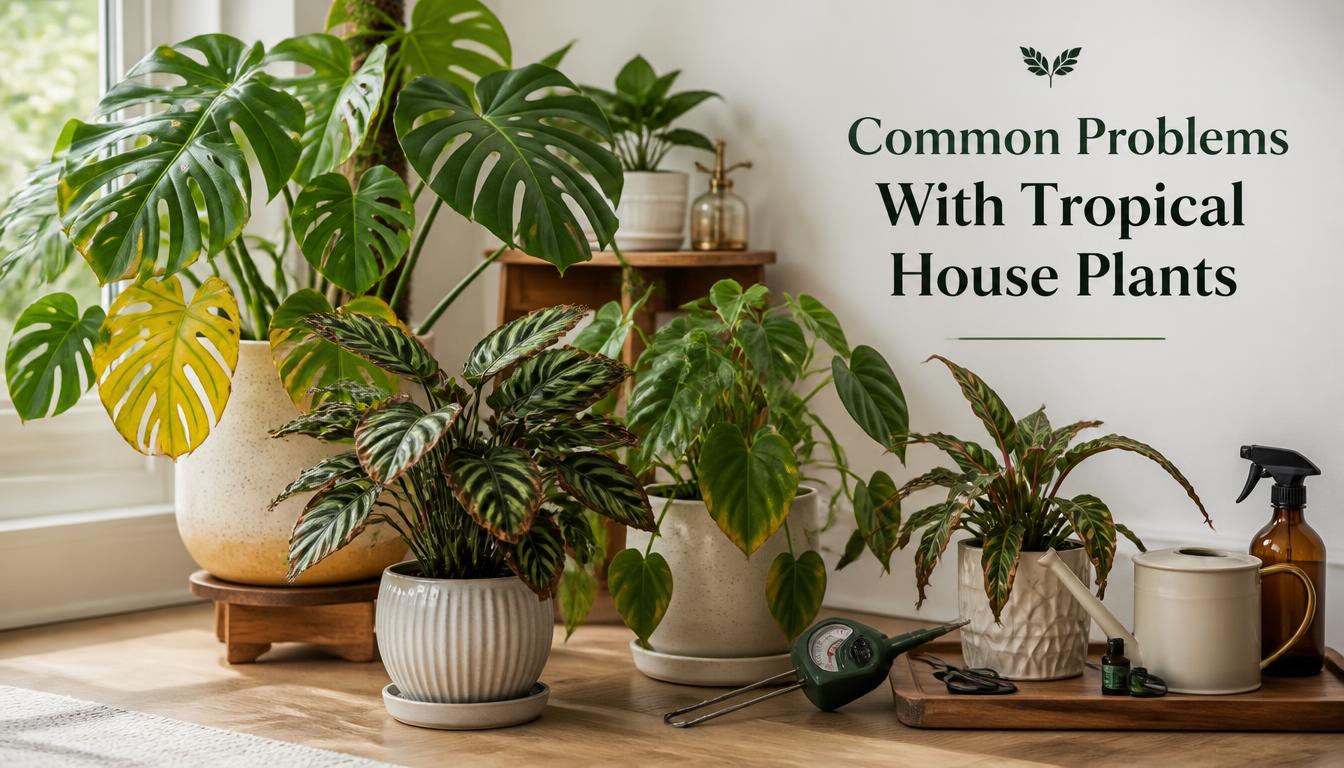
Yellow leaves can develop when plants experience unsuitable watering or environmental conditions. Both excessive and insufficient watering can contribute to leaf yellowing. Therefore, examine the soil before assuming that your plant simply needs additional water. Understanding the plant’s normal moisture requirements can prevent repeated watering mistakes.
Brown leaf edges can sometimes indicate dry indoor air or inconsistent moisture conditions. Tropical plants may struggle when humidity becomes especially low inside heated homes. Grouping plants or using a humidifier can provide additional moisture around sensitive varieties. However, increasing humidity should never replace proper watering practices.
Pests can also affect tropical house plants and damage their attractive foliage. Regularly inspect both upper and lower leaf surfaces for unusual changes. Early detection makes it easier to address many common houseplant pest problems. Removing damaged foliage and maintaining suitable growing conditions can support overall plant health.
You may also like:
How to Keep Tropical House Plants Healthy Year-Round:
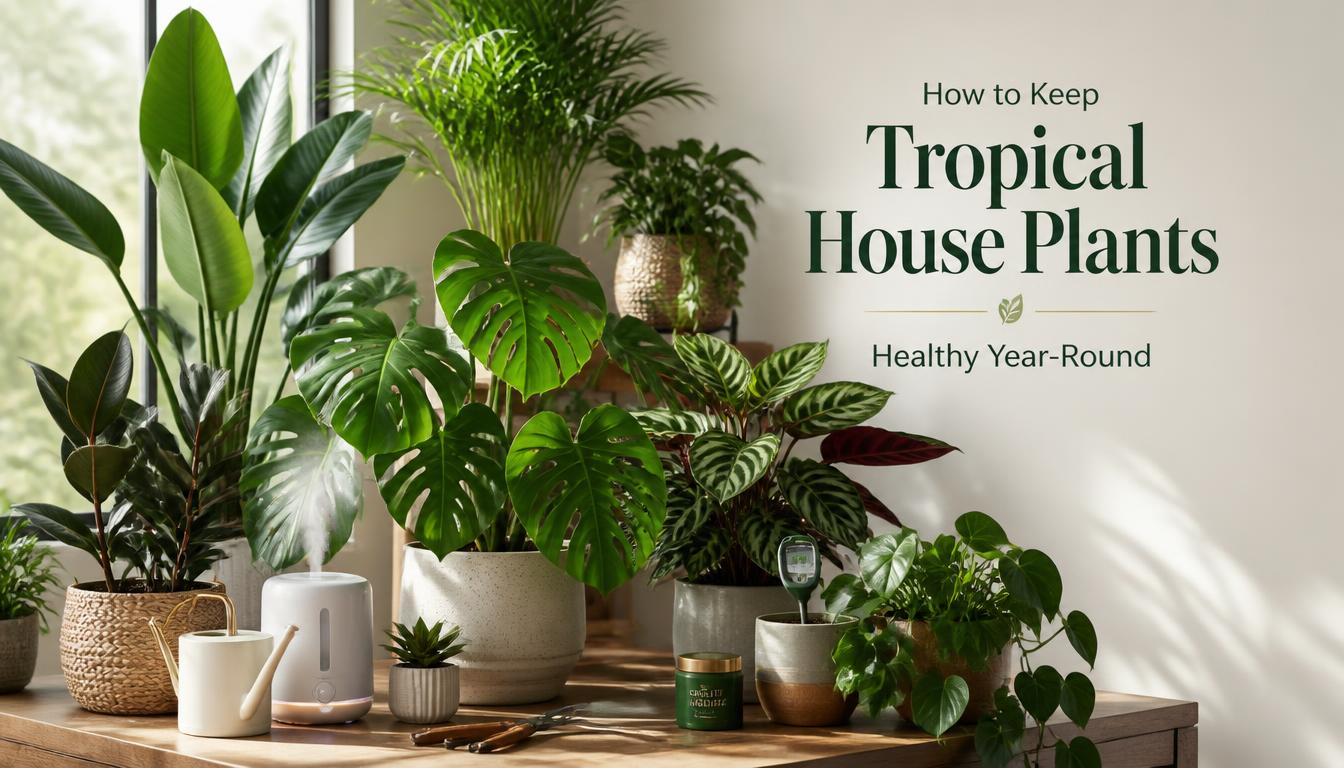
Seasonal changes can affect indoor light, temperature, humidity, and watering requirements. During darker months, plants may receive considerably less natural light than previously. Growth can also slow when environmental conditions become less favorable indoors. Adjusting care according to seasonal changes can help prevent unnecessary stress.
Regular grooming can keep tropical plants looking healthier and more attractive indoors. Remove dead leaves and clean dusty foliage when necessary for better appearance. Pruning can also help maintain manageable shapes in certain tropical varieties. Always research the specific plant before making major pruning or repotting decisions.
Repotting may become necessary when roots outgrow their current container or soil conditions deteriorate. Choose containers with drainage holes so excess water can escape effectively. Avoid moving plants into dramatically larger containers without considering their actual needs. Consistent observation is often more useful than following an inflexible care calendar.
You may also like:
Conclusion:
Tropical house plants can bring impressive greenery and natural character into indoor environments. From Monstera and Philodendron to palms and colorful flowering varieties, choices abound. Each plant offers different foliage, growth habits, and care requirements for indoor gardeners. Selecting the right variety begins with understanding your home’s growing conditions.
Successful tropical plant care depends mainly on suitable light, watering, humidity, soil, and temperature. You do not need a complicated routine to keep many tropical plants thriving. Instead, observe your plants regularly and respond to changes in their growing conditions. This simple approach can help you identify problems before they become more serious.
Whether you are new to indoor gardening or expanding your collection, tropical plants offer plenty. Start with varieties that match your available space, light, and maintenance routine. Freaky Thread brings you practical ideas and helpful guides for creating a beautiful lifestyle. With patience and consistent care, your indoor space can become beautifully green and vibrant.