

Table of Contents:
Introduction:
A urinary tract infection and yeast infection can sometimes cause surprisingly similar uncomfortable symptoms. Both conditions may cause painful urination, making it difficult to identify the underlying problem. However, these infections affect different body areas and usually require completely different treatment approaches. Understanding UTI vs yeast infection symptoms can help you recognize important differences more confidently. Still, symptoms alone cannot always provide an accurate diagnosis without appropriate medical evaluation.
At Freaky Thread, we aim to make confusing health topics easier for readers to understand. A UTI usually affects the urinary system, including the bladder, urethra, and sometimes kidneys. A vaginal yeast infection primarily affects vaginal and vulvar tissues instead of the urinary tract. These differences explain why each condition produces several distinctive symptoms alongside some overlapping complaints. Recognizing those patterns can help you decide when professional medical evaluation becomes necessary.
This guide explains how to tell UTI vs yeast infection using symptoms and other differences. You will learn about their causes, typical symptoms, diagnosis, treatments, and important warning signs. The information can provide useful guidance, but it should never replace professional medical advice. Anyone experiencing severe, persistent, unusual, or recurring symptoms should contact a qualified healthcare professional.
UTI vs Yeast Infection: What’s the Difference?
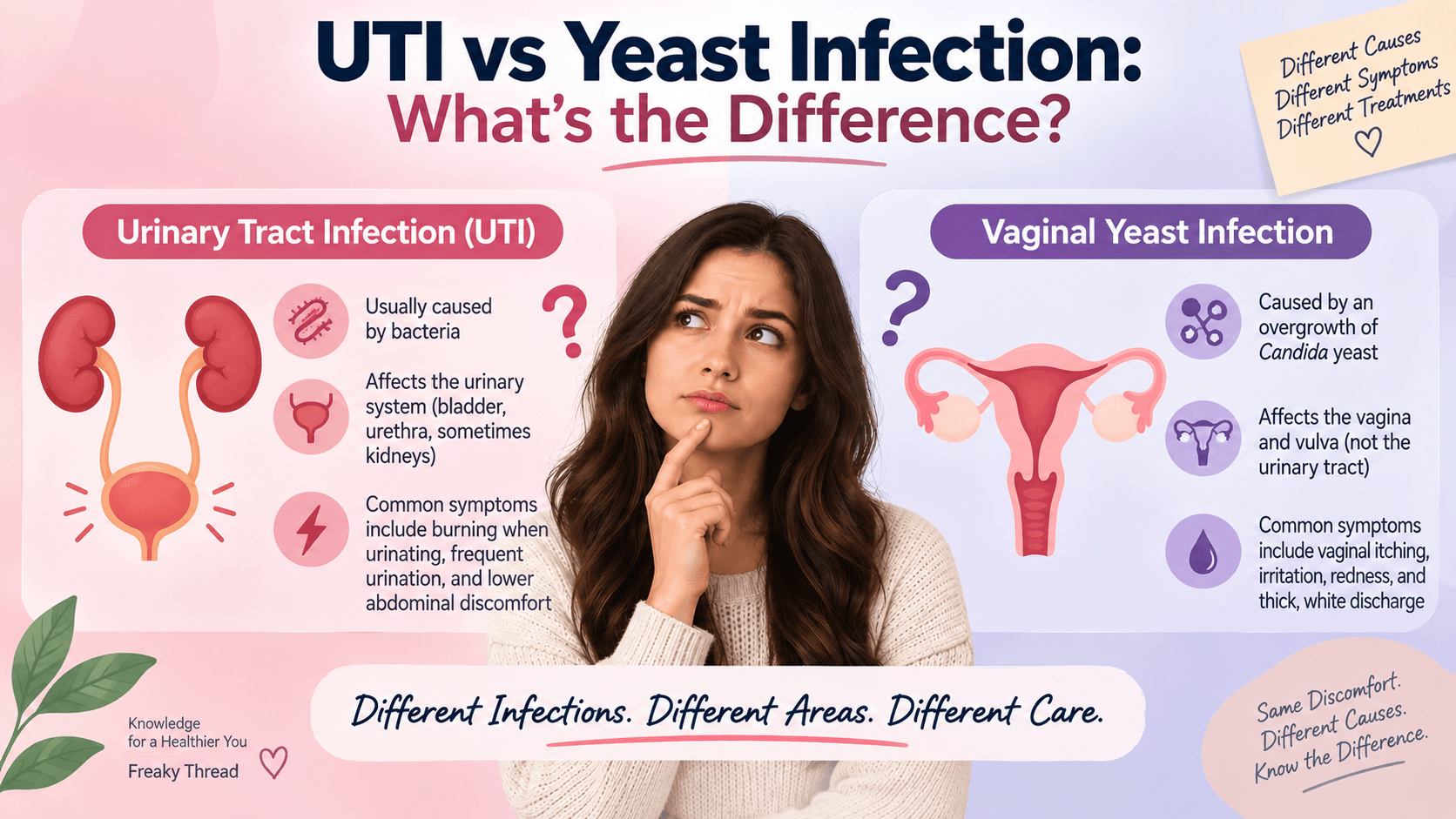
A urinary tract infection develops when microbes, usually bacteria, enter and multiply within the urinary system. Most UTIs involve the bladder, although infections can also affect other urinary tract structures. Bladder infections commonly develop when bacteria enter through the urethra and travel toward the bladder. Women experience UTIs more frequently because their urethras are shorter and located nearer the rectum. These anatomical differences make bacterial entry into the urinary tract easier in many circumstances.
A vaginal yeast infection develops when Candida yeast grows excessively within the vaginal environment. Candida normally lives on several body areas without causing symptoms or requiring medical treatment. Problems develop when this natural balance changes enough to allow excessive Candida growth. Vaginal candidiasis can cause itching, soreness, painful intercourse, uncomfortable urination, and abnormal vaginal discharge. Some severe infections can additionally cause considerable redness, swelling, and cracks around vaginal tissues.
The main difference between UTI and yeast infection involves their location and usual cause. UTIs typically involve bacteria within the urinary tract, while yeast infections involve Candida overgrowth. Their treatments consequently differ because antibiotics target bacterial infections while antifungal medicines treat candidiasis. Identifying the correct condition helps prevent unnecessary treatment and delays in receiving appropriate medical care.
You may also like:
UTI vs Yeast Infection Symptoms:

UTI symptoms generally center around urination and changes involving the bladder or urinary system. Common symptoms include painful urination, increased frequency, and persistent urges despite having little urine available. Some people develop lower abdominal pressure, cramping, bloody urine, or noticeably cloudy urine. These symptoms can vary considerably depending on infection location, severity, and individual health circumstances.
Yeast infection symptoms usually involve the vagina and surrounding vulvar tissues more noticeably. Vaginal itching and soreness are common, while some people experience discomfort during sexual intercourse. Pain or discomfort during urination can also occur because irritated external tissues contact urine. Abnormal vaginal discharge may appear, alongside redness, swelling, irritation, or small skin cracks. These symptoms can resemble other vaginal conditions, making accurate diagnosis especially important for recurring problems.
Comparing UTI vs yeast infection symptoms reveals an important overlap involving discomfort during urination. However, urinary urgency and frequency generally point more strongly toward a urinary tract problem. Prominent vaginal itching, soreness, irritation, and abnormal discharge suggest vaginal candidiasis more strongly instead. Because symptoms can overlap with other conditions, these patterns should never guarantee self-diagnosis.
You may also like:
How to Tell UTI vs Yeast Infection:

Learning how to tell UTI vs yeast infection starts with identifying where symptoms primarily occur. Frequent urination and persistent urinary urgency commonly suggest involvement of the bladder or urinary tract. Lower abdominal pressure alongside painful urination can also fit the typical pattern of bladder infection. Cloudy or bloody urine provides another reason to seek evaluation for possible urinary problems.
A yeast infection usually produces noticeable symptoms around vaginal and vulvar tissues instead. Strong itching, soreness, redness, swelling, and abnormal discharge can indicate vaginal candidiasis more strongly. Discomfort during sexual intercourse also appears among recognized symptoms associated with vaginal yeast infections. However, painful urination alone cannot reliably distinguish yeast infections from urinary tract infections.
Sometimes, symptoms remain unclear because several medical conditions can produce similar genital or urinary discomfort. Healthcare professionals can use symptoms, physical examinations, and appropriate laboratory testing to determine likely causes. Seeking evaluation becomes particularly important when symptoms are new, severe, recurrent, or difficult to distinguish. Avoid assuming every episode of painful urination automatically represents either infection without considering other possibilities.
You may also like:
What Causes UTIs and Yeast Infections?

UTIs commonly occur when bacteria from the skin or rectal area enter the urethra. Those bacteria can travel upward and multiply inside the bladder, producing inflammation and uncomfortable symptoms. Previous UTIs, recent sexual activity, pregnancy, and certain urinary abnormalities can increase infection risk. Spermicides and changes affecting normal vaginal bacteria may also increase susceptibility among some individuals.
Yeast infections occur when Candida grows excessively and disrupts the usual vaginal microbial environment. Pregnancy and hormonal changes can increase susceptibility to vaginal candidiasis for some individuals. Certain medications and weakened immune function can also increase the likelihood of developing candidiasis. However, many otherwise healthy people develop uncomplicated vaginal yeast infections without obvious triggering factors.
Antibiotic exposure deserves special attention when comparing risk factors for these two conditions. Antibiotics treat bacterial infections but can sometimes affect protective bacteria living throughout the body. This disruption can create conditions that allow Candida to multiply more easily within vaginal tissues. Therefore, some individuals notice yeast infection symptoms during or following treatment with certain antibiotics.
You may also like:
How Are UTI and Yeast Infections Diagnosed and Treated?

Healthcare professionals diagnose bladder infections using medical history, physical examination, symptoms, and laboratory testing when appropriate. Urinalysis can identify blood and white blood cells that may appear during urinary infections. A urine culture can identify common bacteria and help guide decisions about appropriate antibiotic treatment. Additional testing may become necessary when infections repeatedly return or underlying urinary problems are suspected.
Bacterial bladder infections are commonly treated using antibiotics prescribed by an appropriate healthcare professional. The selected medication and treatment duration can depend on bacteria, severity, allergies, and recurring infections. Patients should follow medication instructions carefully and complete treatment exactly as their healthcare professional recommends. Incorrect antibiotic use can contribute to resistance and make future bacterial infections harder to treat.
Vaginal yeast infections require antifungal treatment rather than antibiotics used for bacterial urinary infections. Treatment options can include topical or oral antifungal medicines depending on individual medical circumstances. Healthcare professionals may examine vaginal discharge or perform laboratory testing when diagnosis remains uncertain. Recurrent or complicated candidiasis can require longer treatment plans and additional professional medical assessment.
You may also like:
When Should You See a Healthcare Professional?

Contact a healthcare professional when urinary or vaginal symptoms become severe, persistent, recurrent, or concerning. Professional evaluation is also sensible when symptoms remain difficult to identify or treatments seem ineffective. Getting the correct diagnosis matters because several infections and noninfectious conditions can produce similar symptoms. Proper testing can reduce the likelihood of treating the wrong condition with inappropriate medication.
A bladder infection can sometimes spread upward toward one or both kidneys without appropriate treatment. Kidney infection symptoms can include fever, chills, nausea, vomiting, and pain around the back. Pain may also develop around the side or groin when infection reaches the kidneys. These symptoms require prompt medical attention because kidney infections can cause serious health complications.
Pregnant individuals with possible urinary infections should contact their healthcare professional for appropriate medical guidance. Medical assessment is also important when infections repeatedly return despite previously successful treatment. People with complicated health conditions may require individualized diagnosis and treatment rather than standard approaches. Seeking professional advice promptly can help identify complications and determine the most appropriate treatment.
You may also like:
Conclusion:
Understanding UTI vs yeast infection differences becomes easier when you focus on symptom location. UTIs generally produce urinary symptoms, including burning, urgency, frequency, and lower abdominal discomfort. Yeast infections more commonly produce vaginal itching, soreness, irritation, and abnormal vaginal discharge. Both conditions can cause discomfort during urination, which explains why confusion frequently occurs between them.
Neither condition should be diagnosed confidently from one symptom because several health problems can overlap. Healthcare professionals can use examination and laboratory testing when symptoms do not clearly indicate one condition. Correct diagnosis matters because bacterial UTIs and vaginal yeast infections require different medication types. Antibiotics commonly treat bacterial bladder infections, while antifungal medications are used for vaginal candidiasis.
Freaky Thread encourages readers to use reliable health information while recognizing the limits of self-diagnosis. Seek medical advice when symptoms are severe, unusual, persistent, recurring, or accompanied by warning signs. Fever, chills, vomiting, or significant back pain alongside urinary symptoms deserve particularly prompt attention. Knowing how to tell UTI vs yeast infection can guide your next steps more confidently. However, professional evaluation remains the safest choice whenever the cause of symptoms remains uncertain.


