

Table of Contents:
- Introduction
- The Origins of Kosher Dietary Laws and Why They Still Matter Today
- What Makes Food Kosher: The Core Rules Every Consumer Should Know
- Meat, Dairy and Pareve: Why Separation Is Central to Kosher Food
- Which Animals, Fish and Birds Are Considered Kosher and Which Are Not
- How Kosher Certification Works and What Those Symbols Actually Mean
- Common Misconceptions About Kosher Food That Mislead Most People
- Final Thoughts
Introduction:
Food labels often influence purchasing decisions, yet many consumers do not fully understand what they mean. Among the most commonly misunderstood labels is kosher certification. While many people associate kosher food exclusively with Jewish dietary practices, the reality is much broader and more interesting. Understanding what makes food kosher can help consumers make informed choices while gaining insight into one of the world’s oldest dietary systems.
Kosher dietary laws have guided food preparation and consumption for thousands of years. Today, kosher products are purchased by people from various backgrounds for reasons that extend beyond religious observance. Whether driven by faith, dietary preferences, or curiosity, understanding kosher food starts with learning the principles behind it.
The Origins of Kosher Dietary Laws and Why They Still Matter Today:
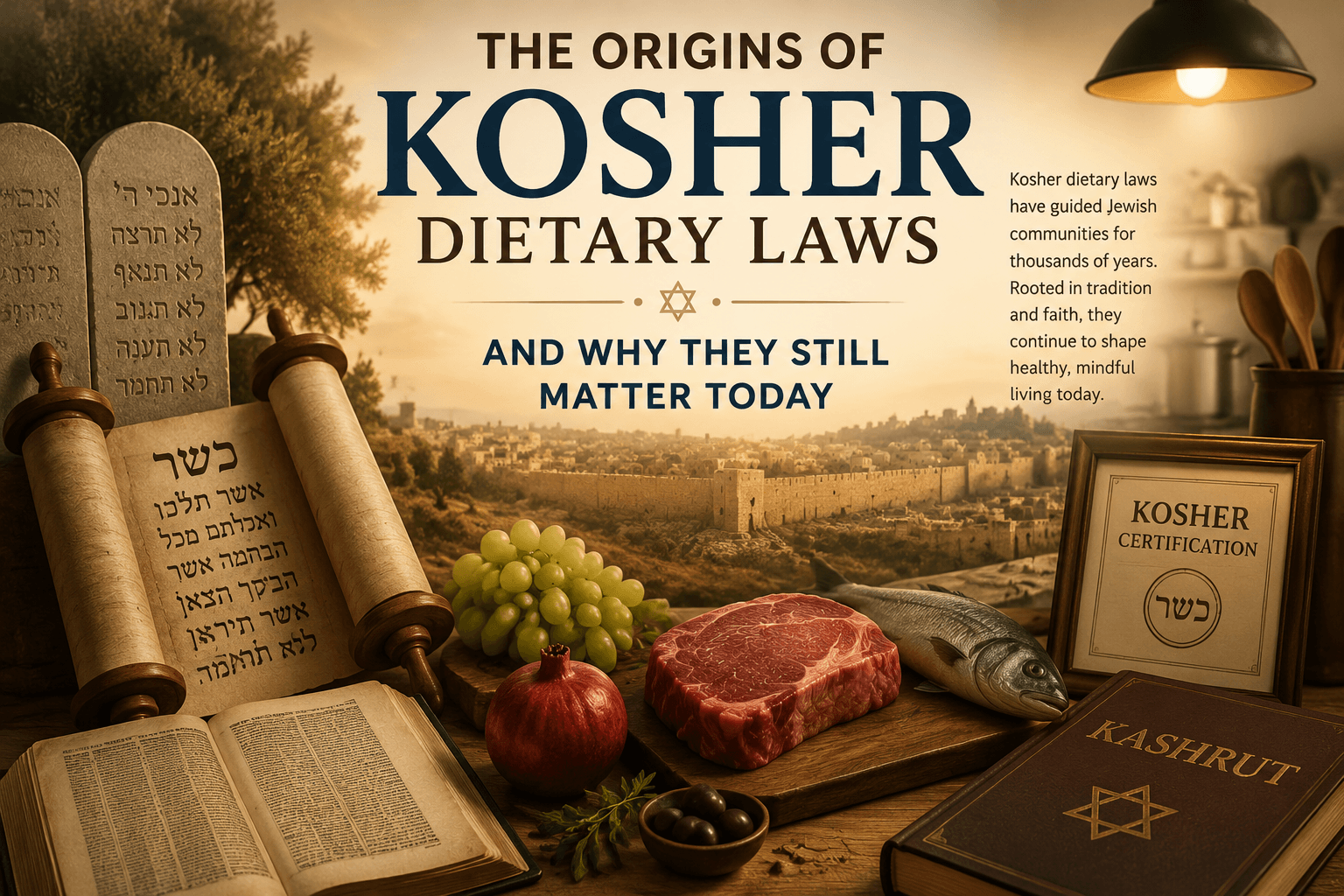
Kosher dietary laws originate from the Torah, the foundational text of Judaism. These laws, known collectively as Kashrut, establish detailed guidelines regarding which foods can be eaten and how they must be prepared. For observant Jewish communities, following these dietary rules remains an important expression of faith and religious identity.
Many people assume kosher food only matters to Jewish consumers. However, kosher certification has become relevant to a much wider audience. Some individuals appreciate the additional oversight involved in kosher production. Others choose kosher products because they have specific dietary restrictions or allergies.
The continued importance of kosher laws reflects both religious commitment and cultural tradition. Families pass these practices from generation to generation, preserving customs that have existed for centuries. At the same time, modern food manufacturing has adapted to meet growing consumer demand for certified kosher products.
The principles behind kosher laws emphasize mindfulness and intentionality in food choices. Rather than simply focusing on what can or cannot be eaten, kosher practices encourage greater awareness of food sources and preparation methods.
As readers of Freaky Thread explore food cultures around the world, kosher traditions offer valuable insight into how faith, history, and food intersect in everyday life.
What Makes Food Kosher: The Core Rules Every Consumer Should Know:
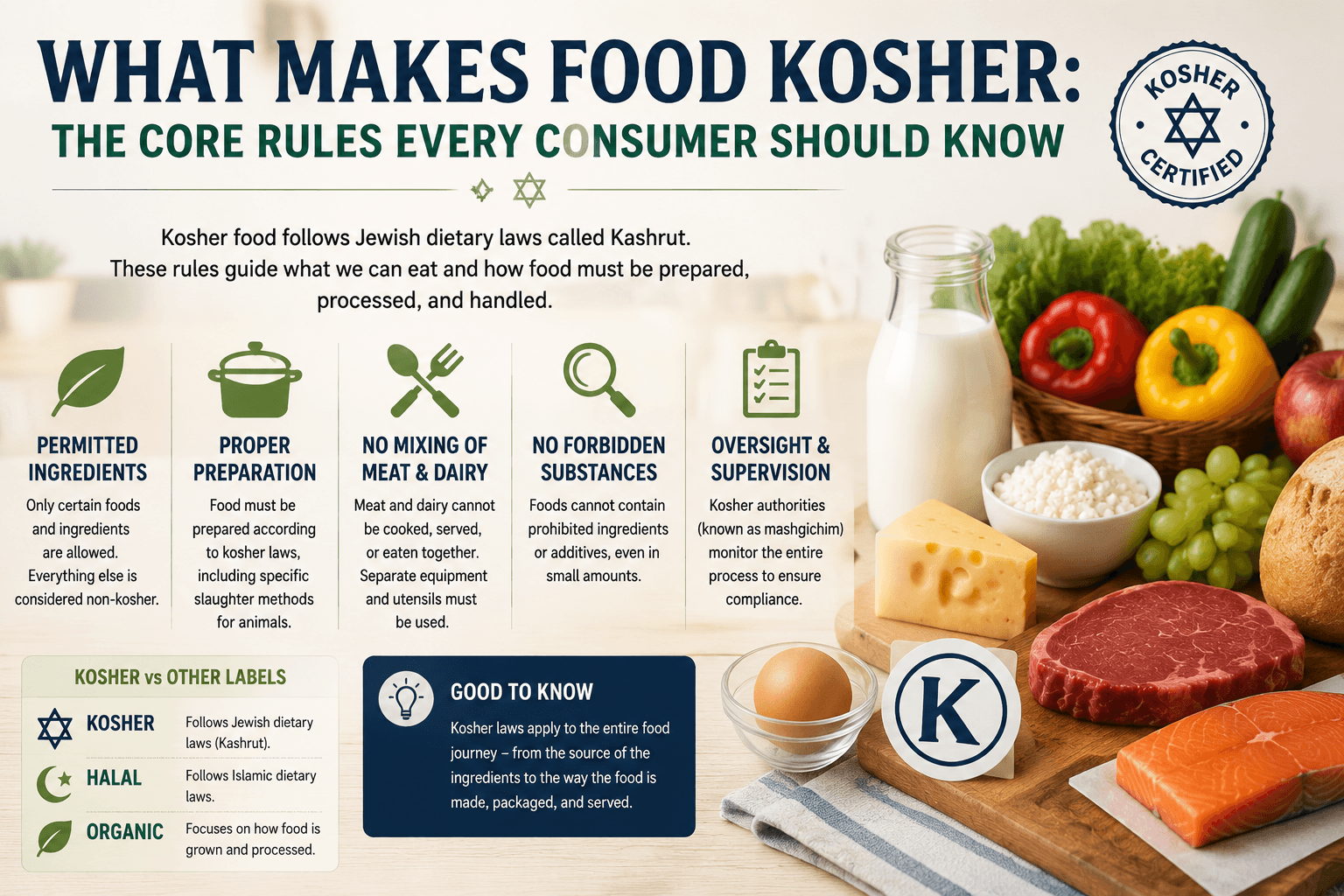
To understand what makes food kosher, it is necessary to understand several core dietary principles. Kosher status depends on both the type of food and the way it is prepared, processed, and handled.
Certain foods are naturally kosher, while others require specific preparation methods. Fruits, vegetables, grains, and many plant-based products generally qualify as kosher when free from prohibited additives or contamination. However, animal products must meet stricter requirements.
One common misunderstanding involves comparing kosher food with organic or halal food. Although these systems share certain similarities, they serve different purposes. Organic certification focuses on agricultural practices and chemical use. Halal certification follows Islamic dietary guidelines. Kosher certification follows Jewish religious law.
Food can also lose its kosher status through improper processing. For example, ingredients that are individually kosher may become non-kosher if they are mixed with prohibited substances or processed using non-kosher equipment.
Kosher regulations apply throughout the entire production chain. Ingredients, manufacturing equipment, packaging procedures, and storage conditions may all be reviewed during certification. This comprehensive approach helps ensure compliance with kosher standards.
Understanding what makes food kosher requires looking beyond the ingredient list and considering the entire production process.
Meat, Dairy and Pareve: Why Separation Is Central to Kosher Food:
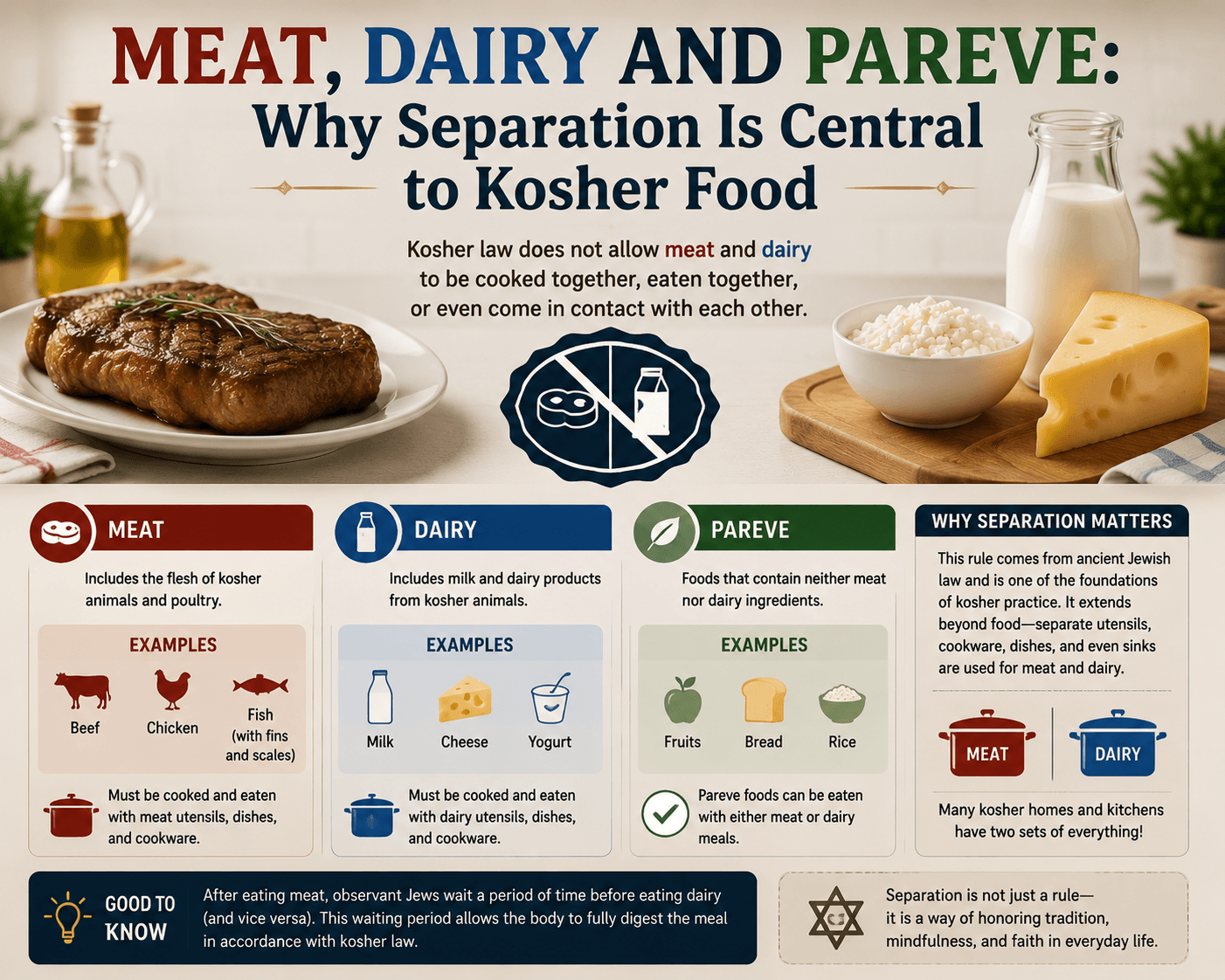
One of the most distinctive aspects of kosher dietary law involves separating meat and dairy products. This rule surprises many people because it affects not only meals but also kitchen practices and food preparation methods.
Under kosher law, meat and dairy cannot be cooked together, served together, or consumed within certain waiting periods. Because of this requirement, observant households often maintain separate cookware, utensils, dishes, and storage areas for meat and dairy foods.
The concept of pareve plays an important role in maintaining this separation. Pareve foods contain neither meat nor dairy ingredients. Common examples include fruits, vegetables, grains, eggs, nuts, and fish.
Because pareve foods are neutral, they can generally be eaten with either meat or dairy meals. This flexibility makes them especially useful in kosher meal planning. Many packaged foods display a pareve certification symbol to indicate their neutral status.
The requirement for separation extends into commercial food production. Manufacturers producing both meat and dairy products must follow strict procedures to prevent cross-contamination. Equipment may require special cleaning protocols before switching between production categories.
Although these practices may seem unusual to those unfamiliar with kosher laws, they form one of the central foundations of kosher food preparation.
Which Animals, Fish and Birds Are Considered Kosher and Which Are Not:
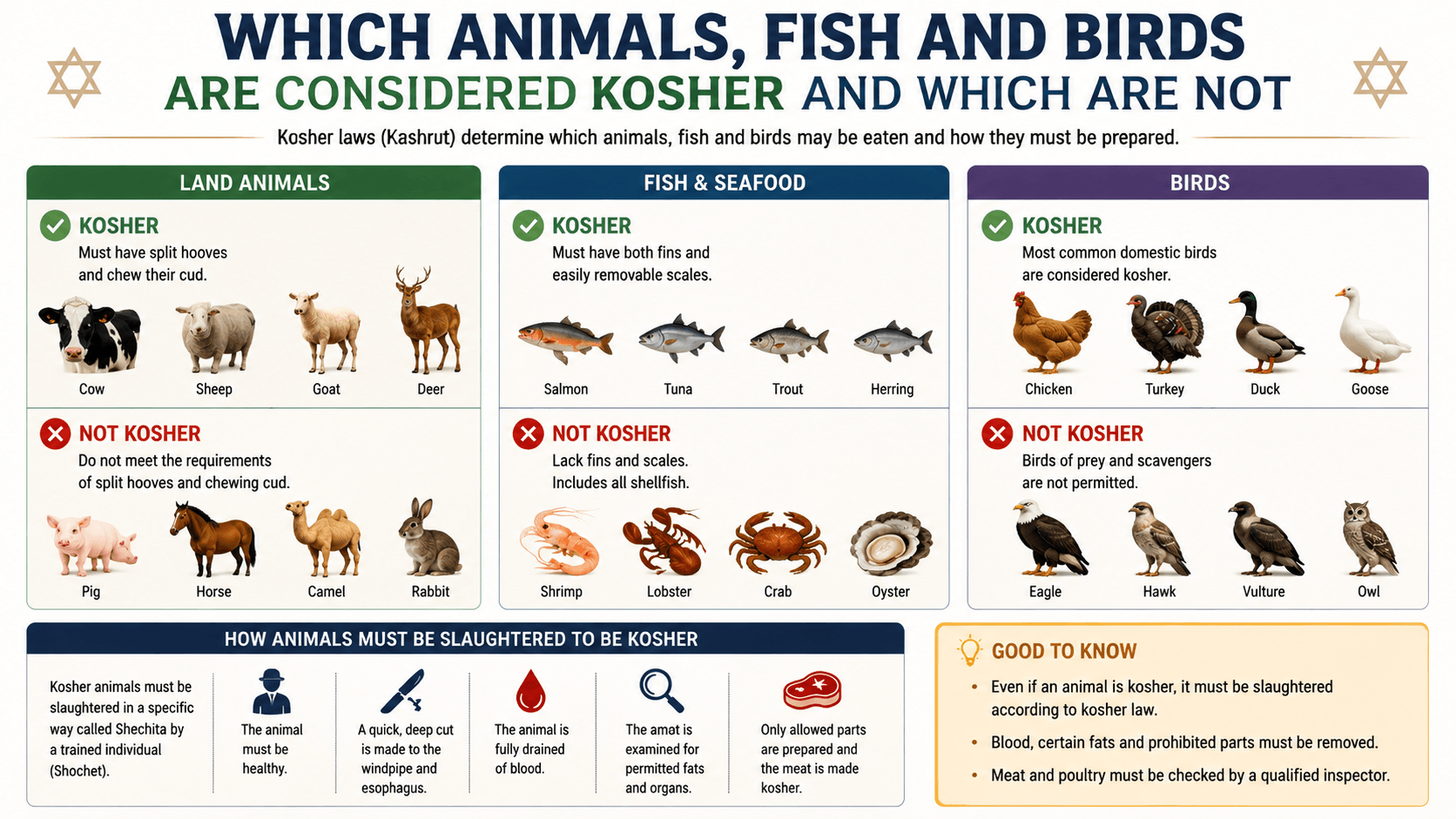
The rules governing animal products are among the most recognized aspects of kosher dietary law. However, many people know only a few examples and are unfamiliar with the broader criteria.
Land animals must meet two requirements to qualify as kosher. They must have split hooves and chew their cud. Animals such as cows, sheep, goats, and deer meet these conditions. Pigs have split hooves but do not chew cud, making them non-kosher.
Fish must possess both fins and easily removable scales to qualify as kosher. Salmon, tuna, carp, and herring are common kosher fish species. Shellfish, shrimp, lobster, crab, oysters, and similar seafood are not considered kosher because they lack the required characteristics.
Bird classifications are based largely on traditional interpretations. Chickens, ducks, geese, and turkeys are generally accepted as kosher. Birds of prey and scavenger species are typically prohibited.
Beyond species selection, kosher law also requires specific slaughter methods. The process, known as shechita, is performed by a specially trained individual called a shochet. The procedure is designed to minimize animal suffering while meeting religious requirements.
Following slaughter, additional inspections help verify that the animal meets kosher standards. Certain fats, blood, and prohibited portions must also be removed before the meat can be certified kosher.
These detailed requirements demonstrate that what makes food kosher involves both the source of the food and the methods used to prepare it.
How Kosher Certification Works and What Those Symbols Actually Mean:
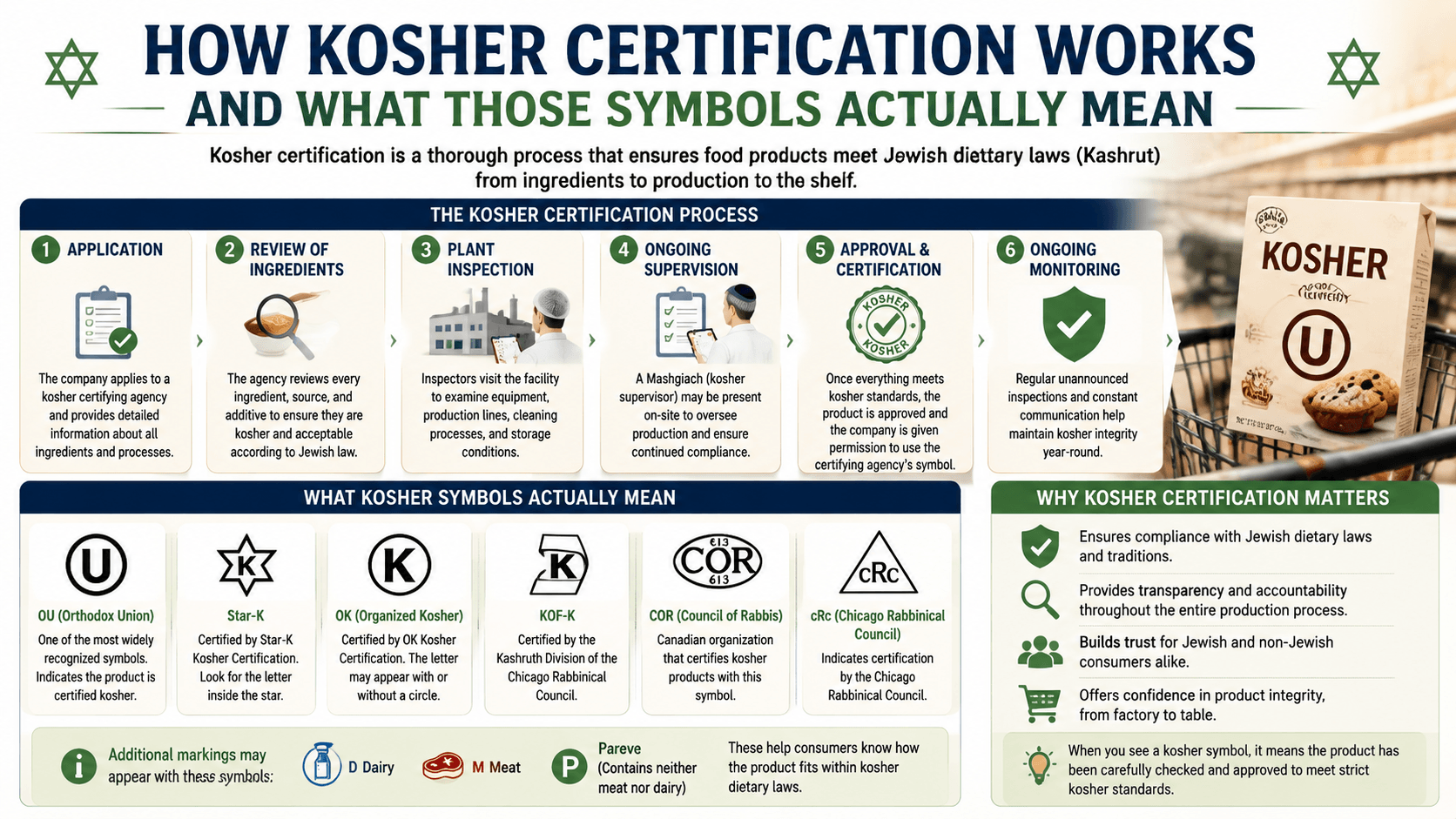
Many consumers notice kosher symbols on food packaging without understanding their significance. These symbols represent certification by organizations that verify compliance with kosher standards.
Kosher certification agencies inspect ingredients, manufacturing processes, equipment, and facilities. Companies seeking certification must meet specific requirements before receiving approval to display a kosher symbol.
Several major certification organizations operate internationally. Each uses its own trademarked symbol, which can create confusion among shoppers. Despite visual differences, these symbols generally indicate that the product has undergone kosher review.
The certification process often involves regular facility inspections and ongoing monitoring. Certifying agencies may review supplier records, ingredient sources, production schedules, and sanitation procedures. This oversight helps maintain consistency and compliance.
Some products carry additional designations. Labels may indicate whether a product is dairy, meat, or pareve. These markings help consumers follow kosher dietary requirements more easily.
For many shoppers, kosher symbols provide additional confidence regarding ingredient transparency and manufacturing oversight. Although certification standards vary slightly between organizations, all certified products must comply with established kosher principles.
Understanding certification symbols helps consumers better understand what makes food kosher and why certification carries value in today’s marketplace.
Common Misconceptions About Kosher Food That Mislead Most People:
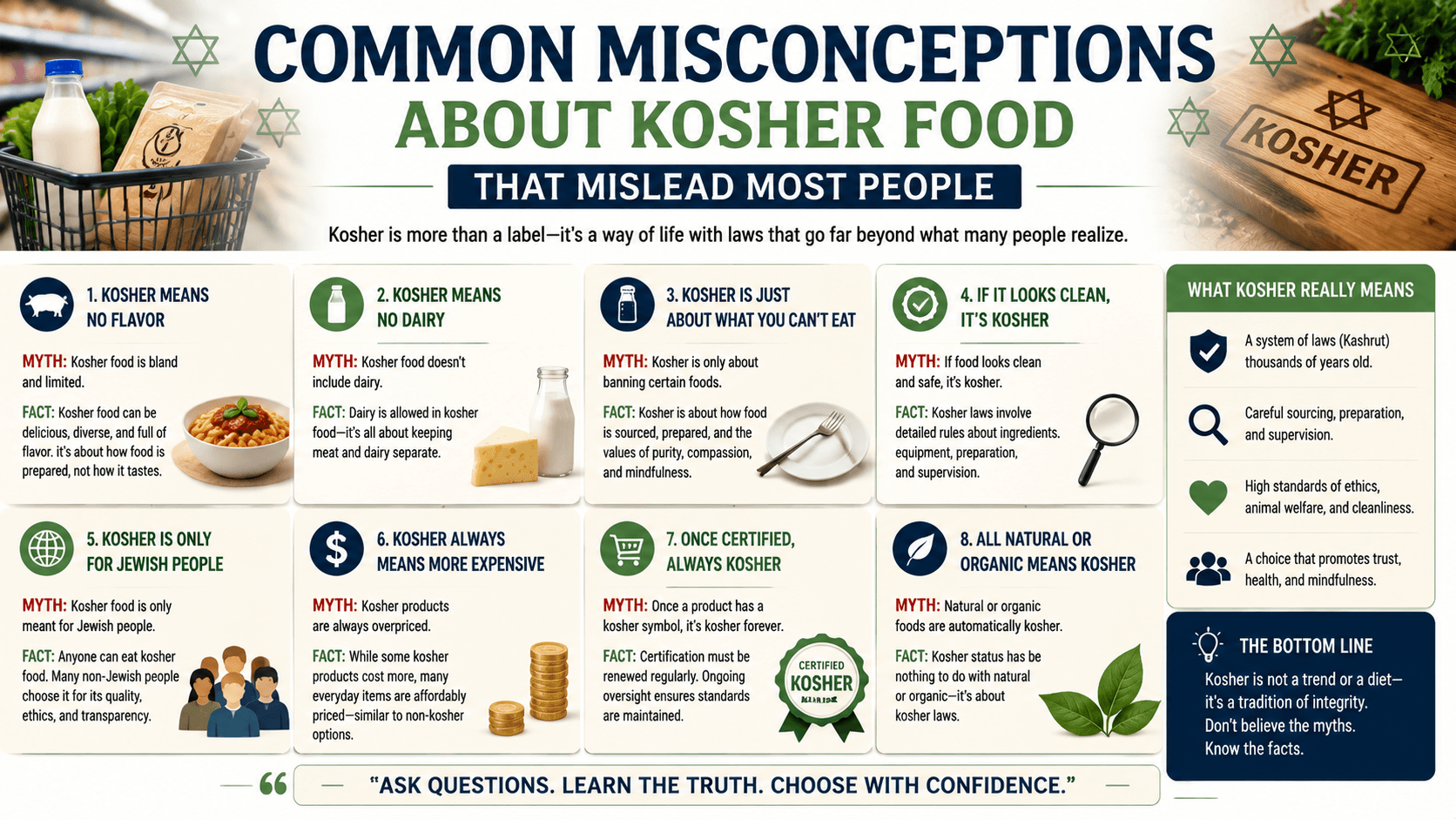
Despite widespread availability, kosher food remains surrounded by misconceptions. One of the most common myths suggests that kosher food has been blessed by a rabbi. In reality, kosher certification focuses on compliance with dietary laws rather than religious blessings.
Another misconception assumes that all kosher food is automatically healthier than non-kosher food. Kosher certification does not evaluate nutritional quality. A kosher cookie remains a cookie, regardless of its certification status.
Some people also believe kosher food exists exclusively for religious communities. While Jewish consumers represent a significant portion of the market, many non-Jewish consumers regularly purchase kosher products for various personal reasons.
Confusion between kosher and halal standards is also widespread. Although both systems involve religious dietary guidelines and certain overlapping principles, they remain distinct traditions with different requirements.
Others mistakenly assume kosher laws only concern meat products. In reality, kosher regulations affect a wide range of foods, including baked goods, beverages, processed foods, dairy products, and packaged snacks.
Learning the facts behind these misconceptions helps consumers develop a clearer understanding of kosher food and its role within modern food systems.
Final Thoughts:
Understanding what makes food kosher involves far more than recognizing a symbol on a package. Kosher dietary laws combine religious tradition, detailed food standards, careful preparation methods, and ongoing certification oversight. These practices have guided food choices for thousands of years while continuing to influence modern food production.
From the separation of meat and dairy to the certification process behind packaged foods, kosher rules create a structured framework that promotes consistency and accountability. While rooted in Jewish religious tradition, kosher products are now used by people from many different backgrounds.
Whether motivated by faith, curiosity, dietary preferences, or food transparency, consumers who understand kosher principles gain a deeper appreciation for one of the world’s most established dietary systems. Looking beyond the label reveals a fascinating combination of history, culture, and food practices that continue to remain relevant today.


